Get in touch with NEXO Beauty Labs Company
NEXO LABS
ISO Certified
Private Label Skincare Manufacturing
Private Label Skincare Manufacturing Across Six Categories
10,000 units per SKU
Samples in 3–7 business days
Production within 15 days after approval
Six categories, one brief
Private label skincare manufacturing at NEXO Beauty Labs covers six product categories from one brief: facial cleansers, moisturizers, barrier repair, facial serums, capsule serums, and sheet masks and treatment pads. Our minimum order is 10,000 units per SKU. We prepare formula and texture samples in 3–7 business days once your brief is accepted.
You choose one of three development routes, and that choice — not the category — sets how much is already decided and how much still has to be tested. A brand launching one cleanser and a brand building a four-product range run on the same clocks and through the same approvals; only the number of decisions changes.
Start Your Skincare Program
Formula ownership and confidentiality terms are settled during supplier qualification, before you send a reference product or a formula.
Minimum order
10,000 units per SKU for most skincare products
Commercial production
Within 15 days after formula approval and packaging confirmation
Formula and texture samples
3–7 business days after the brief is accepted
International sample delivery
5–7 business days after dispatch
Development routes
Three development routes: mature formula, formula adaptation, custom development
Category scope
Six skincare categories under one brief
Formulation library
5,000+ formulation resources as development starting points
With every bulk shipment
A commercial invoice, packing list, batch Certificate of Analysis and Safety Data Sheet
Private Label
Six Skincare Categories Under One Manufacturing Brief
Most brands arrive with one product in mind. Category scope still matters on day one because a skincare line rarely stops at one product, and moving the second one to a second supplier restarts qualification, sampling and packaging approval from zero.
All six categories run on the same brief, the same minimum and the same three clocks. Each category page below carries its own formats, active systems and packaging detail.
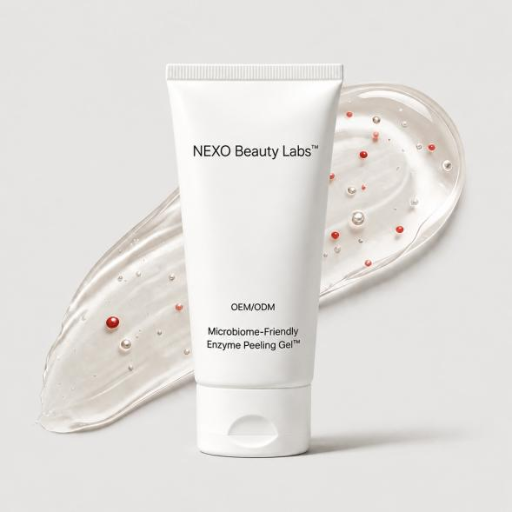
Facial Cleanser Manufacturing
Eight cleanser formats: gel and pore-care, micellar water, mousse, balm, oil, powder, jelly and single-dose capsule cleansing. Amino-acid surfactant systems, salicylic acid and niacinamide pore care, and botanical oil removal systems.
Explore Format
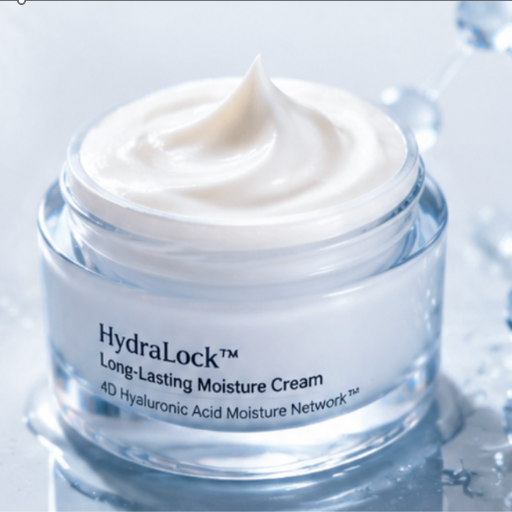
Private Label Moisturizers
Four moisturizer texture directions: lightweight, rich, overnight and water-in-oil. Hyaluronic acid, ceramide NP, panthenol, squalane, saccharide isomerate and ectoin systems, in jar, tube or airless pump.
Explore Format
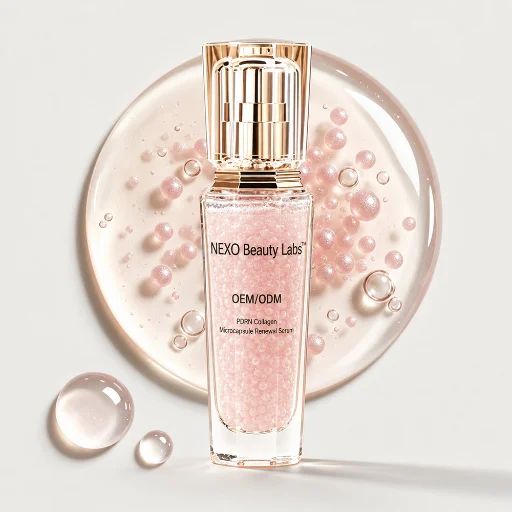
Private Label Facial Serums
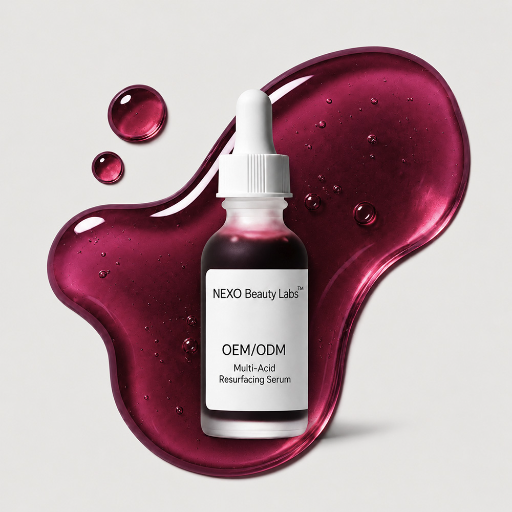
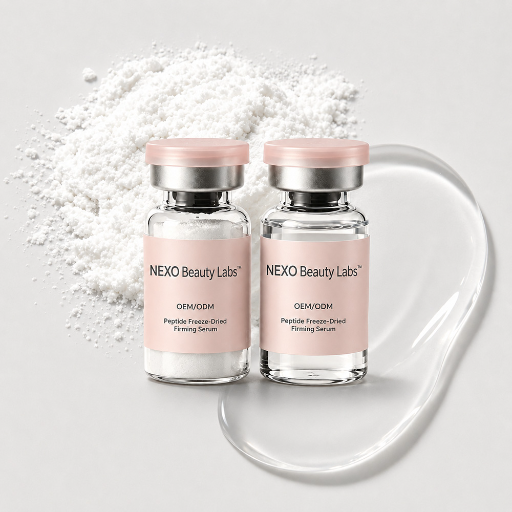
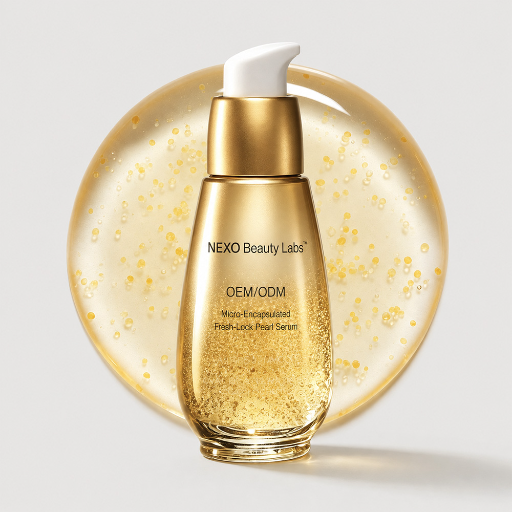
Four serum systems: barrier repair, anti-aging, brightening and hydration. Advanced formats include micro-encapsulated pearl serums, freeze-dried actives and dual-phase oil serums.
Explore Format
Barrier Repair Cream Manufacturing
Three barrier-care technology platforms: biomimetic lipid repair using a ceramide complex with cholesterol and free fatty acids, sensitive-skin recovery, and microbiome balance.
Explore Format
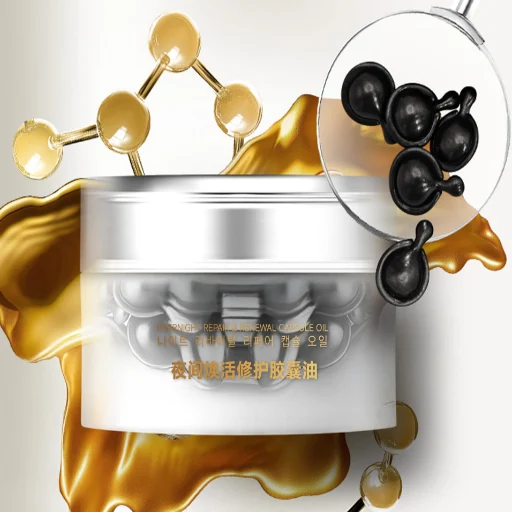
Capsule Serum Manufacturing
Plant-based capsule technology with anhydrous oil-serum systems. Capsule fills at 0.5 ml, 1.0 ml and 1.5 ml, with custom capsule color and shape.
Explore Format
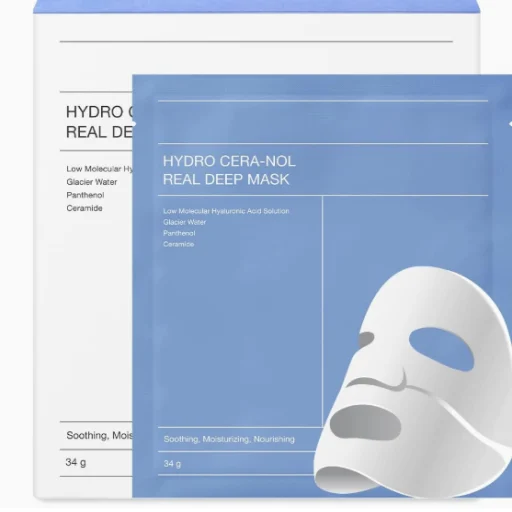
Sheet Mask Manufacturing
Six facial-treatment formats: hydrogel mask, sheet mask, sleeping mask, essence pad, clay mask and stick mask. PDRN, recombinant collagen, centella and tranexamic acid systems.
Explore Format
The Range Sequencing Ladder
The Range Sequencing Ladder is the table we build every multi-product brief against. It sets the order categories are developed in, what has to be fixed before we can sample, and what each step locks down for the steps after it.
The order is not arbitrary. It follows the sequence your customer applies the products in — cleanse, treat, moisturize, then targeted treatment — because that is the order retail listings, routine content and repeat purchase follow.
| Step | Category or decision | Fix before we can sample | What this step locks |
|---|---|---|---|
| 0 | Target market | First launch market and intended claims | Which market files, labeling rules and responsible-person duties apply |
| 0 | Development route | Mature formula, formula adaptation or custom development | How many decisions stay open, and how many sample rounds are likely |
| 0 | Order shape | Number of SKUs and pack size per SKU | Total unit commitment at 10,000 units per SKU |
| 1 | Facial cleansers | Format family, rinse feel, dispensing | Surfactant system and pack type; least dependent on the rest of the range |
| 2 | Facial serums | Active direction, texture, single or advanced format | Active load that the moisturizer must sit on top of |
| 3 | Moisturizers | Texture direction and pack format | Emulsion type and viscosity; constrains jar, tube or airless choice |
| 4 | Barrier repair | Which platform, and whether it is a cream, gel or essence | Overlap with the moisturizer; decides whether it is one product or two |
| 5 | Sheet masks and treatment pads | Substrate, essence direction, individual pack format | Converting and sachet decisions unrelated to the bulk lines |
| 6 | Capsule serums | Fill size, capsule color and shape, anhydrous or oil system | Capsule tooling and single-dose packaging, decided last because it is the most format-specific |
Formulation Platforms, Active Systems and the Custom Route
We develop against a library of 5,000+ formulation resources built up across skincare, hair care and body care since 1999. These are developed bases used as starting points, not a catalog of finished products, and every one of them still needs texture, pack and claims decisions before it becomes your product.
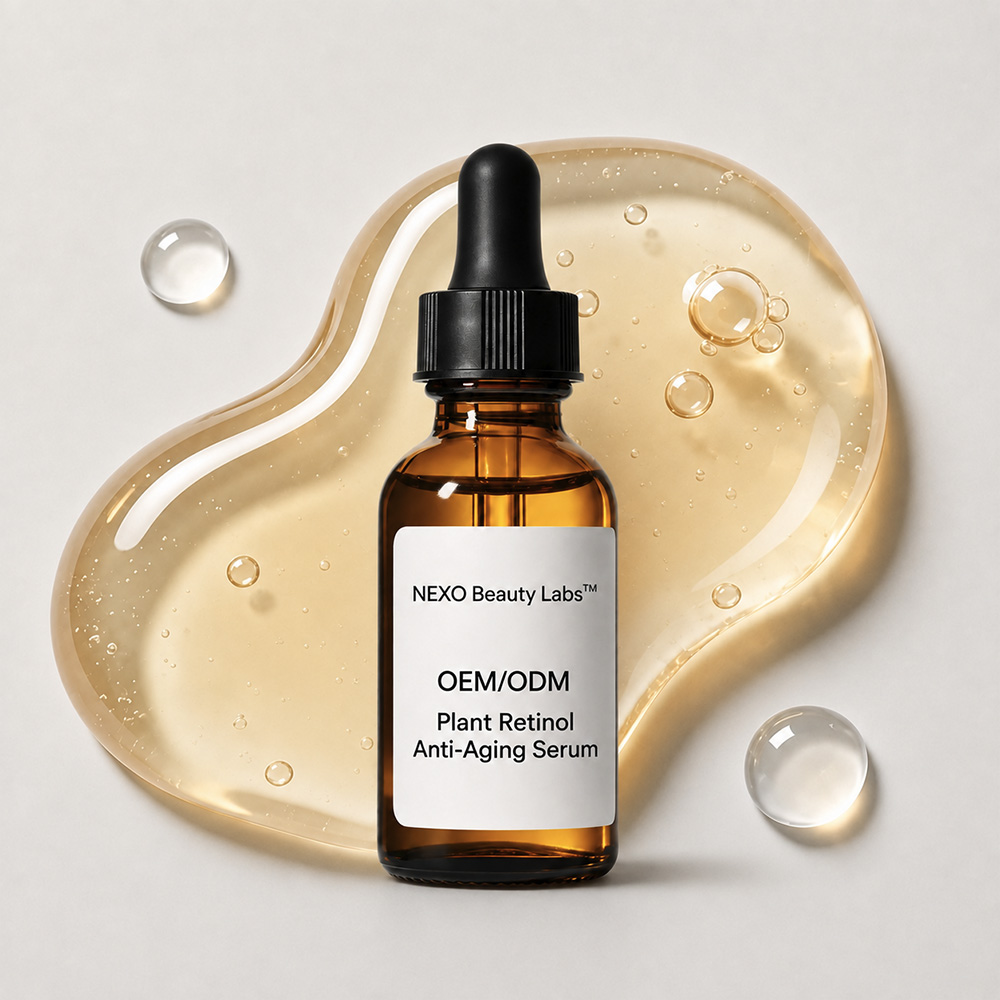
Active and platform systems we brief against
| System | Ingredient directions | Categories it usually lands in |
|---|---|---|
| Hydration | Multi-molecular hyaluronic acid, glycerin, saccharide isomerate, panthenol, polysaccharides | Moisturizers, serums, masks |
| Biomimetic lipid repair | Ceramide complex with cholesterol and free fatty acids, plus squalane | Barrier repair, moisturizers |
| Sensitive-skin recovery | Panthenol, ectoin, centella asiatica, beta-glucan | Barrier repair, treatment pads |
| Microbiome balance | Bifida ferment lysate with prebiotics, postbiotics and ectoin | Barrier repair, serums |
| Advanced anti-aging | PDRN and sodium DNA, peptide complexes, retinol alternatives such as bakuchiol, collagen-support ingredients | Serums, capsule serums, hydrogel masks |
Active and platform systems we brief against
| System | Ingredient directions | Categories it usually lands in |
|---|---|---|
| Brightening and antioxidant | Vitamin C derivatives, niacinamide, glutathione, tranexamic acid, alpha-arbutin | Serums, treatment pads, sleeping masks |
| Gentle cleansing | Amino-acid surfactants with ceramide and panthenol | Facial cleansers |
| Pore care and clarifying | Salicylic acid with niacinamide and botanical extracts | Facial cleansers, treatment pads |
| Makeup removal | Dual-phase oil systems, squalane, betaine, botanical oils | Cleansing oils and balms, micellar water |
| Encapsulation and single-dose | Plant-based capsule technology and anhydrous oil-serum systems for actives that are hard to hold stable in a water phase | Capsule serums, capsule cleansing |
Encapsulation is a formulation strategy, not a marketing format. The published patent record on retinol stabilization is largely a record of encapsulation attempts, because labile actives lose potency in an aqueous phase over shelf life [4]. That is the reason a capsule or an anhydrous system is worth its tooling cost for some actives and not others.
Water decides how a formula has to be protected. An anhydrous oil-serum or capsule system carries no free water for microorganisms to use, which is the situation ISO 29621 addresses when it sets out how to identify finished products that are microbiologically low risk on a risk-assessment basis. An aqueous serum built on the same active is a different problem with a different preservation plan.
Custom skincare formulation route
Custom skincare formulation is the route where the formula architecture is built to your brief rather than adapted from a base. It is also the route that changes the commercial shape of the order, which is the part most first-time buyers do not expect.
A custom formulation opens more raw-material, sample and revision work than adapting a mature formula. Custom cosmetic formulation is the right choice when the texture, active system, positioning or packaging interaction you need cannot be reached by adjusting an existing base — and the wrong choice when speed matters more than a proprietary formula architecture.
| Route | What is already decided | What stays open | Best when |
|---|---|---|---|
| Mature formula | Formula architecture, emulsion, base sensory profile | Branding, packaging, fragrance direction, positioning | Speed and a proven starting point matter more than a proprietary formula |
| Formula adaptation | Base architecture and raw-material set | Texture, fragrance, selected active directions, pack and dispensing | You want distinction without reopening every emulsion decision |
| Custom development | Nothing beyond our platform know-how | Formula architecture, sensory target, validation and revision checkpoints | The product you need cannot be reached by adjusting an existing base |
Textures, Product Formats And Packaging Directions
One concept behaves completely differently as a gel, a balm, a hydrogel or a single-dose capsule. Format and packaging are one decision, not two, because viscosity, air exposure, dispensing and decoration all meet at the pack.
| Category | Formats Briefed | Packaging Directions |
|---|---|---|
| Facial Cleansers | Gel, pore-care gel, micellar water, mousse, balm, oil, powder, jelly, single-dose capsule | Bottle, jar, sachet, capsule |
| Moisturizers | Lightweight cream, rich cream, overnight cream, water-in-oil cream | Jar, tube, airless pump |
| Facial Serums | Aqueous serum, ampoule, oil serum, micro-encapsulated pearl serum, freeze-dried active, dual-phase oil | Dropper bottle, airless pump, ampoule |
| Barrier Repair | Cream, lightweight serum, soothing gel, essence, hydrogel mask | Jar, tube, airless pump, individual pack |
| Capsule Serums | Anhydrous oil-serum capsule at 0.5 ml, 1.0 ml or 1.5 ml | Jar, blister, single-dose capsule |
| Sheet Masks And Treatment Pads | Hydrogel mask, sheet mask, sleeping mask, essence pad, clay mask, stick mask | Sachet, individual pack, jar, tube, stick |
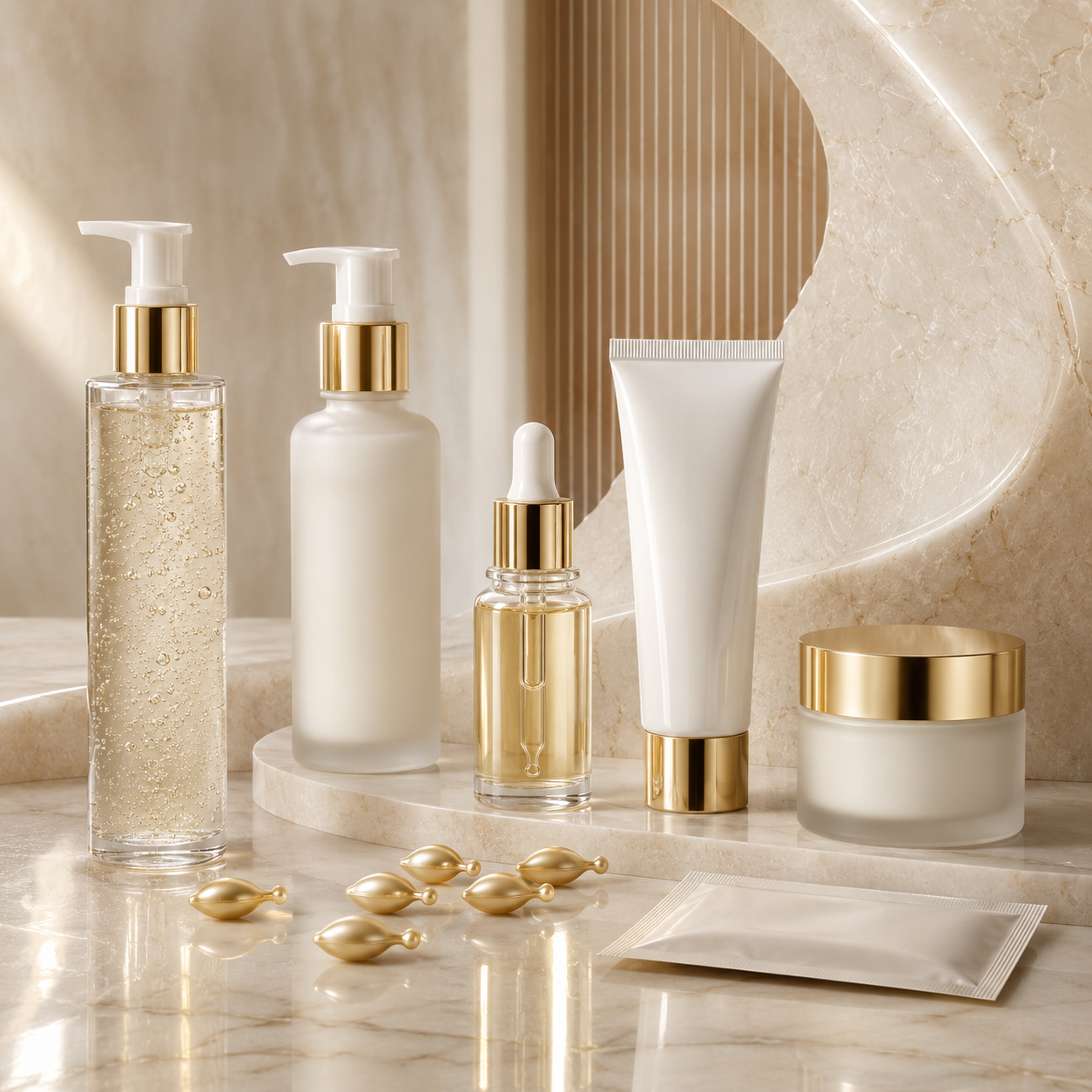
What You Can Customize
- Active ingredient direction and skin-focus target
- Texture and sensory profile
- Fragrance direction, or a fragrance-free target
- Silicone-free, vegan and clean formula directions, subject to formula and market confirmation
- Capsule color, capsule shape and fill size
- Packaging format, decoration scope, label and carton
A format being briefable is not a statement that it is compatible with any given formula. Pack compatibility is confirmed against the approved sample, not against the concept.
Pack choice also changes how the product has to be protected in use. Preservation efficacy is assessed on the finished product by the challenge-test method in Iso 11930, and an open jar a user dips a finger into does not present the same in-use exposure as an airless pump.
Where Format Decisions Go Wrong
The mistake buyers make here is treating the pack as decoration chosen after the formula is signed off. A jar is not a substitute for an airless pump on an oxygen-sensitive serum, and a sachet is not interchangeable with a stick once fill viscosity is fixed.
Change the pack after sample approval and the work goes back to a fresh 3–7 business day sample round, because the sample then has to be re-made against the new pack rather than judged against the concept. The risk sits in the schedule rather than the formula: a late pack change costs you another sample round plus its delivery leg and buys you nothing on unit price, and it is the part of a first launch buyers most often get wrong.
Nexo Beauty Labs briefs format and pack as one decision for that reason. Fixing both before sampling keeps the within 15 days production window intact, because commercial production starts only after formula approval and packaging confirmation. Send your format and pack shortlist with the brief and a single sample round can answer both.
Program Specifications for a Multi-Category Skincare Range
These are the working points every program in this range runs on. Formula-specific performance, final ingredient composition, packaging compatibility and target-market files are decided inside the project rather than implied by this table.
Every row below is a program working point rather than a product specification. Product-level release criteria, batch records and retained documentation are set per project and run under the cosmetic good manufacturing practice guidelines in ISO 22716.
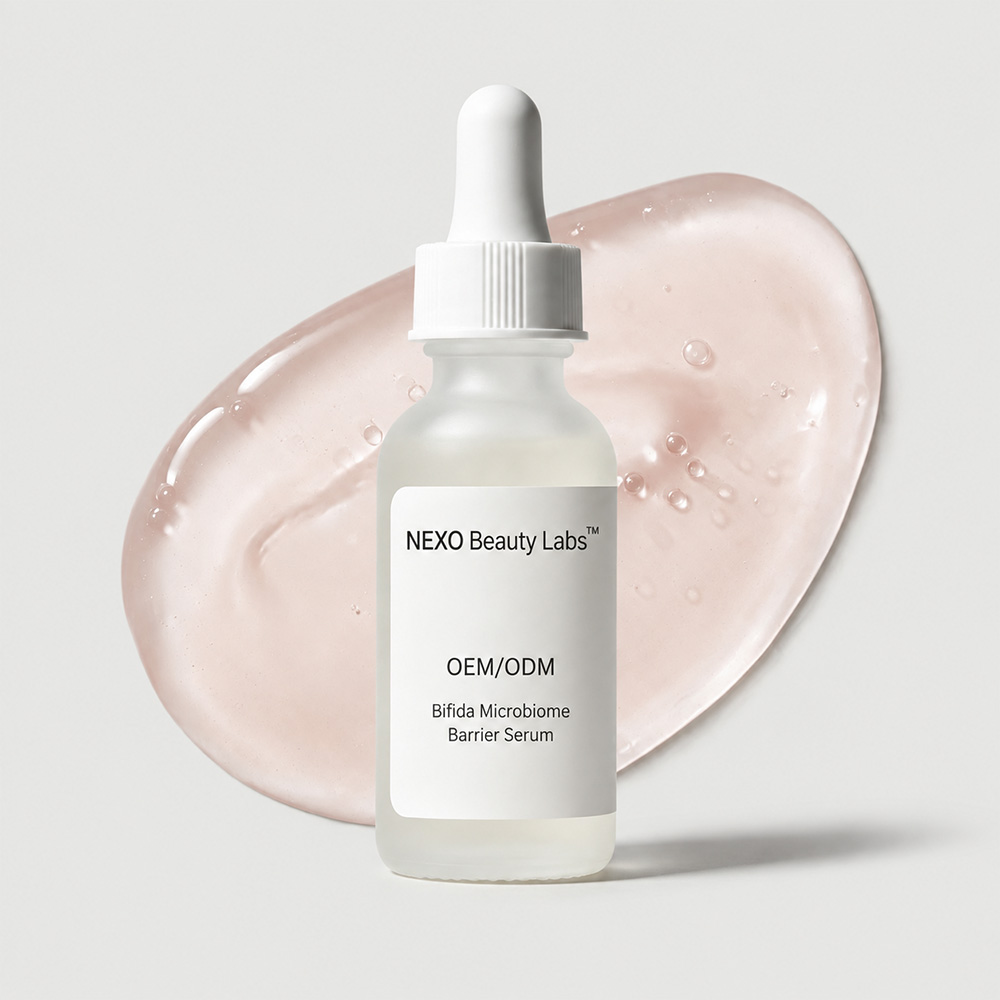
| Program item | Working point | Applies to | What you supply |
|---|---|---|---|
| Minimum order | 10,000 units per SKU | Most skincare products, all six categories | SKU count, size, pack, decoration and shipping plan |
| Formula and texture sample | 3–7 business days | Formula matching or a customized sample | An accepted brief and a reference direction |
| International sample delivery | 5–7 business days | After sample dispatch | Destination and shipping details |
| Commercial production | Within 15 days | After formula approval and packaging confirmation | Packaging arrived and passed inspection |
| Development routes | 3 routes | Every category | Which route, before sampling starts |
| Category scope | 6 skincare categories | One brief, one minimum, one set of clocks | Which categories are in this launch |
| Capsule fill sizes | 0.5 ml, 1.0 ml, 1.5 ml | Capsule serums and capsule cleansing | Fill size, capsule color and shape |
| Cleanser format families | 8 formats | Facial cleansers | Format family and rinse feel |
| Facial-treatment formats | 6 formats | Masks and treatment pads | Substrate and individual pack format |
| Formulation library | 5,000+ formulation resources | Skincare, hair care and body care | Reference product or formula direction |
Quality Control, Testing and Batch Documentation
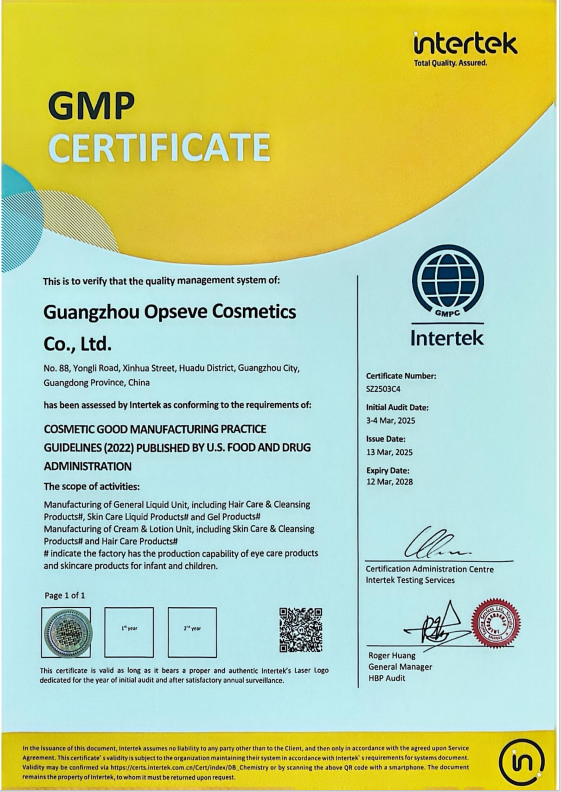
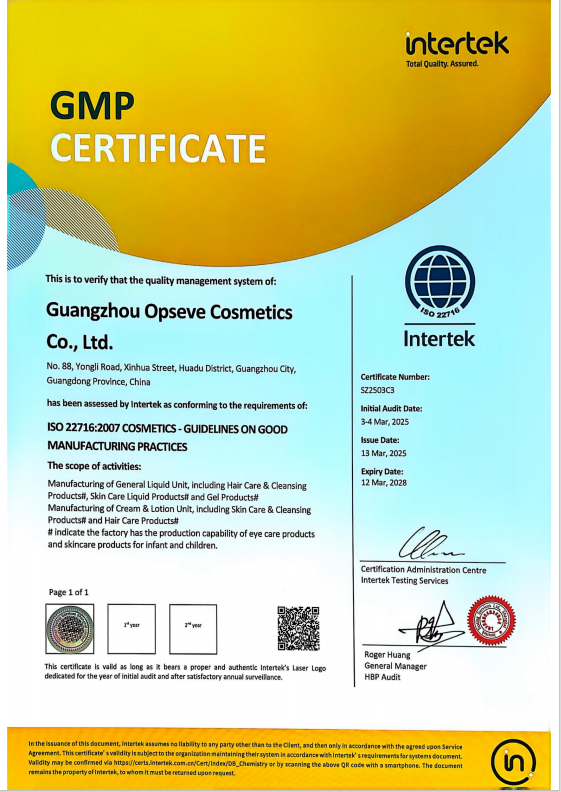
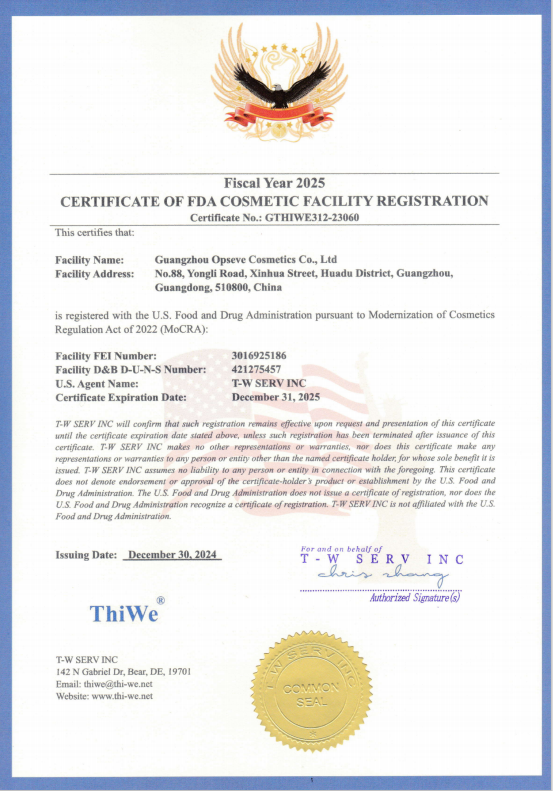
Cosmetic GMP is the part of this conversation with a defined external answer. ISO 22716 covers the production, control, storage and shipment of cosmetic products, and it was adopted in 2007 by the International Cooperation on Cosmetic Regulations — the United States, Canada, the European Union and Japan — as the basis for national cosmetic GMP guidance .
For anything sold into the European Union this is commercial, not reputational: EU Regulation 1223/2009 requires cosmetic products placed on the EU market to comply with cGMP based on ISO 22716 . It is a market-access condition, and a compliance question your supplier either answers with a certificate number or does not answer.
Our manufacturing site and its certification
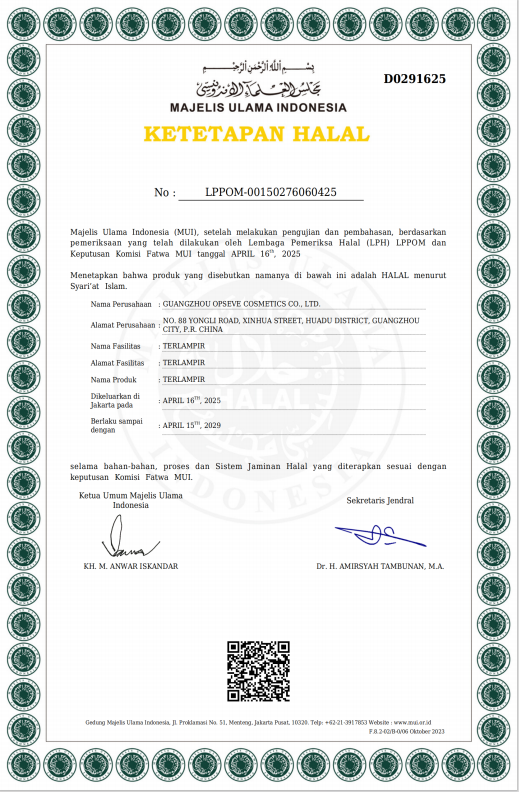
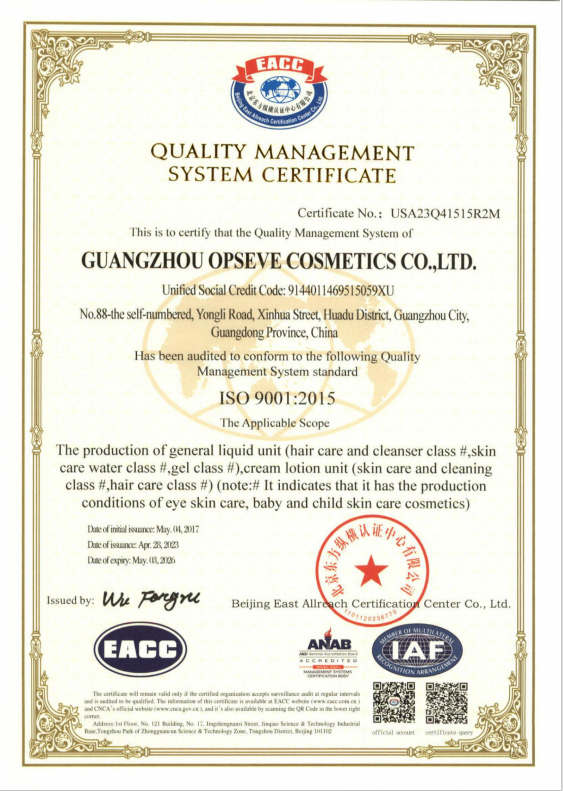
Production runs at Guangzhou Opseve Cosmetics Co., Ltd., No. 88 Yongli Road, Xinhua Street, Huadu District, Guangzhou, China. The site holds Intertek certificate SZ2503C3 for ISO 22716:2007 cosmetic good manufacturing practices, and Intertek certificate SZ2503C4 assessed against the Cosmetic Good Manufacturing Practice Guidelines (2022) published by the U.S. Food and Drug Administration. Both are listed as current entries in Intertek’s own certificate registry, checked on 17 August 2026, with an expiry date of 12 March 2028.
The certified scope of activities covers the General Liquid Unit — hair care and cleansing products, skin care liquid products and gel products — and the Cream & Lotion Unit, covering skin care and cleansing products and hair care products.
The registry entry also records that the site holds production capability for eye-area skincare and for skincare intended for infants and children. Certification applies to the manufacturing site and its process control. It is not a statement about the performance of any individual product, and it is held by the manufacturing entity rather than by the NEXO Beauty Labs brand.
What we run on every batch
- Incoming inspection of raw materials and packaging components against the approved specification.
- Formula performance evaluation against the approved sample — appearance, odor, texture and dispensing.
- Stability testing coordination on the finished composition in its intended pack.
- Shelf-life assessment based on the stability data for that specific product.
- Packaging compatibility testing, because a formula that is stable in bulk is not automatically stable in your container.
- Batch release against defined criteria, with a Certificate of Analysis issued before the balance is due.
Stability data and what it can support
A common shortcut in this market is that three months of accelerated testing at 45 °C proves a two-year shelf life. It is repeated widely enough to look like a rule. It is not one.
“It’s pertinent that a protocol be developed based on the product type, using know-how in how products change over time, and determining for what attributes products should be evaluated… this variability makes it completely plausible to develop a 2- or 3-year shelf life off a 3-month accelerated stability test, depending on the product and temperature conditions used. It’s not meant to be a blanket statement, but one that should be backed in scientific reasoning.” Valerie George, cosmetic chemist, writing in Happi, 2 January 2025
The practical consequence for your brief is that a shelf life is a product-specific conclusion drawn from that product’s own data in its own pack, not a number inherited from a testing calendar. A cleanser and a capsule serum do not behave the same way, and neither do the same formulas in a jar and in an airless pump.
Market-facing duties and who holds them
In the United States, the responsible person is the manufacturer, packer or distributor whose name appears on the product label. That allocation is decided by your labeling and contracting, not by where the product is made, and it needs to be settled before artwork is finalized.
For the European Union, a responsible person established in the EU holds the product information file, a qualified safety assessor signs the Cosmetic Product Safety Report, and the product is notified through the Cosmetic Products Notification Portal before it is placed on the market .
We supply the manufacturing and batch documentation those roles need. We do not take on the responsible-person role itself, and no manufacturing statement on this page should be read as transferring it.
×
![Enlarged Image]()
From Brief to Shipment in Six Steps
Buyers in this market consistently name vague or inconsistent communication during early discussions as the first warning sign, ahead of price. Each step below names the decision it closes and who has to make it.
1. Concept discussion.
Target market, brand position, categories in scope, intended claims direction and expected order quantity. This is where the Range Sequencing Ladder gets filled in for your specific launch.
2. Route and brief.
Choose mature formula, formula adaptation or custom development per category, and record the texture, active direction, pack direction and claims intent that the sample will be judged against.
3. Formula and texture sample.
Prepared in 3–7 business days after the brief is accepted, then dispatched with international delivery in 5–7 business days.
4. Sample evaluation.
Compare spread, absorption, residue, fragrance, appearance and after-feel against one written reference. Revisions start a new decision cycle and are recorded against the last approved sample.
5. Packaging confirmation.
Align viscosity, fill size (0.5 ml, 1.0 ml or 1.5 ml where the format is a capsule), dispensing, closure, label area and decoration before component quantities are locked. Artwork is finalized after the pack, not before.
6. Commercial production and shipment.
Completed within 15 days after formula approval and packaging confirmation, released against the approved sample and specification, and shipped with the batch documentation set kept under ISO 22716.
What to have ready before the first call
| Input | Why it changes the answer | If you do not have it yet |
|---|---|---|
| First launch market | Decides labeling rules, notification path and who holds the responsible-person duty | Say so — it becomes the first decision rather than a hidden assumption |
| Categories and SKU count | Sets the total unit commitment at 10,000 units per SKU | Start from one category and add on the reorder |
| Reference product or texture benchmark | Turns a sensory description into something a formulator can match | A competitor product you like is a valid reference |
| Pack direction | Constrains viscosity, fill and decoration, and often the formula itself | Bring the constraint instead — size, price point, retail channel |
| Claims you intend to make | Determines what evidence the finished product has to carry | Name the claims you are considering, not only the ones you are sure of |
| Formula ownership and confidentiality expectations | Decides what can be adapted, what stays exclusive, and what happens if you move suppliers later | Raise it in supplier qualification — it is easier to settle before a formula exists than after |
Manufacturing Base and Development Record
56 production lines across the manufacturing base.
5,000+ formulation resources — developed bases across the three product families, used as starting points for adaptation and custom work rather than sold as finished products.
Six skincare categories under one brief, one minimum and one qualification pack.
Intertek SZ2503C3 (ISO 22716:2007) and SZ2503C4 held by the manufacturing site, both current in the Intertek registry and valid to 12 March 2028.
Our cosmetic manufacturing base dates back to 1999, which gives the team more than 25 years of cosmetic manufacturing experience across skincare, hair care and body care. The NEXO international business team has served global beauty brands, e-commerce companies, distributors and private label partners since 2020.
Our role covers product development, formulation work, production management and quality control in one manufacturing program. Where a brand needs third-party efficacy testing coordinated as part of an approved scope, we arrange it; the claims that testing can support remain a decision for the brand and its market advisers.
We work as a private label cosmetic manufacturer and as a contract manufacturer on the same lines. Some briefs arrive as a private-label request that starts from a base in our library; others arrive as a specification for a formula that does not exist yet. Private label and custom development share the same release criteria and produce beauty products carrying your brand rather than ours.
Brands that engage us as a skincare manufacturer for one product often come back to us as a cosmetics manufacturer for the next, which is the practical reason the six categories sit under one qualification pack. Batch release runs against defined acceptance criteria rather than an assurance that output is high-quality — the criteria are the part you can audit.
Private Label Skincare Manufacturing Planning Tools
Range Sequencing Ladder Planner
Select the skincare categories in your launch. The planner returns the development order the Range Sequencing Ladder uses, the inputs that must be fixed before each category can be sampled, and the total unit commitment at your minimum.
Multi-SKU Order Exposure Estimator
At a 10,000-unit minimum per SKU, the number that decides your risk is the SKU count, not the unit price. Enter your own sell-through assumption and this returns the total units on the floor and how many months of cover that represents.
Market Duty Allocator
Pick your first launch market and this returns which duties sit with the brand owner, which sit with the manufacturing site, and what has to be ready before the first shipment. Duty allocation follows your labeling and contracting, not the place of manufacture.
Private Label Skincare Manufacturing FAQ
Six: facial cleansers, moisturizers, barrier repair, facial serums, capsule serums, and sheet masks and treatment pads. They share one minimum, one set of clocks and one supplier-qualification pack. Hair care, body care and sun care are separate NEXO lines.
A mature formula keeps the decision set smallest — the architecture is fixed and you decide branding, pack and fragrance direction. Formula adaptation reopens texture, fragrance and selected actives from an existing base. Custom development builds the formula architecture around a new brief and needs the clearest market and claims inputs, because each additional objective changes the formulation problem.
Private label starts from a formula that already exists; contract manufacturing builds one to your specification. The practical difference shows up in the commercial terms rather than in the marketing language: a custom formula carries more sampling, more revision cycles and a higher minimum than a stock base, at any supplier.
Yes. Formula adaptation starts from a base in our library or from a reference product you supply, and adjusts selected sensory or brand elements against a defined comparison with the approved sample.
10,000 units per SKU for most skincare products. Each SKU is a separate commitment, so a three-product launch is 30,000 units of finished goods.
The 10,000-unit figure applies to most skincare products across all six categories. Route-specific confirmation is part of the project discussion, because pack format and decoration scope affect what a practical first order looks like.
3–7 business days after the brief is accepted, for formula matching or a customized sample. International sample delivery is a separate 5–7 business days after dispatch.
Physical commercial production, starting after formula approval and packaging confirmation. It is not release, testing completion, regulatory clearance, delivery or market readiness. Formula development, stability and challenge testing, market notification and freight all sit outside it, and typically account for most of a first-launch calendar.
Development route, formula scope, raw-material choices, product size, packaging, decoration, testing plan, order quantity and logistics. Send a complete brief and those variables come back priced together, with the payment and trade terms confirmed for your order.
Incoming material inspection, formula performance evaluation against the approved sample, stability testing coordination on the finished composition, shelf-life assessment, and packaging compatibility testing. Batch release runs against defined criteria and a Certificate of Analysis is issued before the balance falls due.
A commercial invoice, packing list, batch Certificate of Analysis and Safety Data Sheet. A certificate of origin is issued on request. Market-specific filings such as US facility registration or EU notification belong to the party placing the product on the market.
The manufacturer, packer or distributor whose name appears on the product label. In a private label arrangement that is usually the brand, but it follows the label and the contract rather than the place of manufacture, so it should be settled before artwork is finalized.
A responsible person established in the EU holding the product information file, a Cosmetic Product Safety Report signed by a qualified safety assessor, and notification through the Cosmetic Products Notification Portal before placement on the market. Manufacturing must also comply with cGMP based on ISO 22716, which is what certificate SZ2503C3 addresses at site level.
Either. Packaging directions we brief against include jar, tube, airless pump, bottle, sachet, stick and single-dose capsule. Whichever way it is sourced, the pack has to pass compatibility and filling assessment against the approved formula before component quantities are locked.
It depends on the route and on what is agreed in writing at the start, and it is worth resolving early: in private label arrangements across this industry the position typically differs from custom development work. Raise formula ownership and confidentiality in supplier qualification, before a reference product or formula changes hands.