Get in touch with NEXO Beauty Labs Company
Private Label Moisturizers
Private Label Moisturizers and Ceramide Face Cream Manufacturing
NEXO Beauty Labs develops private label moisturizers for beauty brands that need a clear development route, a defined texture, and packaging decisions that can move into commercial production. Start with a mature base, adapt an existing direction, or build a custom formulation around the way your skin care product should feel, dispense, and fit your range.
- 3 business days for formula/texture samples
- 5–7 business days for international sample delivery
- 10,000-unit MOQ
- Jar, tube, or airless pump directions
A useful first conversation is concrete
Bring your target market, texture reference, preferred pack, ingredient direction, claims plan, and expected order quantity. We use those inputs to define the development route before the formula, label, and packaging work drift into separate projects.
Your enquiry can start with a formula concept, a texture benchmark, or a product gap in your skincare line.
3 routes
Mature formula, formula adaptation, or custom development
10,000 units
Confirmed minimum order quantity
25+ years
Cosmetic manufacturing expertise built from a 1999 foundation
3 business days
Formula and texture sample development
5–7 business days
International sample delivery after dispatch
Within 15 days
Commercial production after packaging arrives and passes inspection
Manufacturing foundation
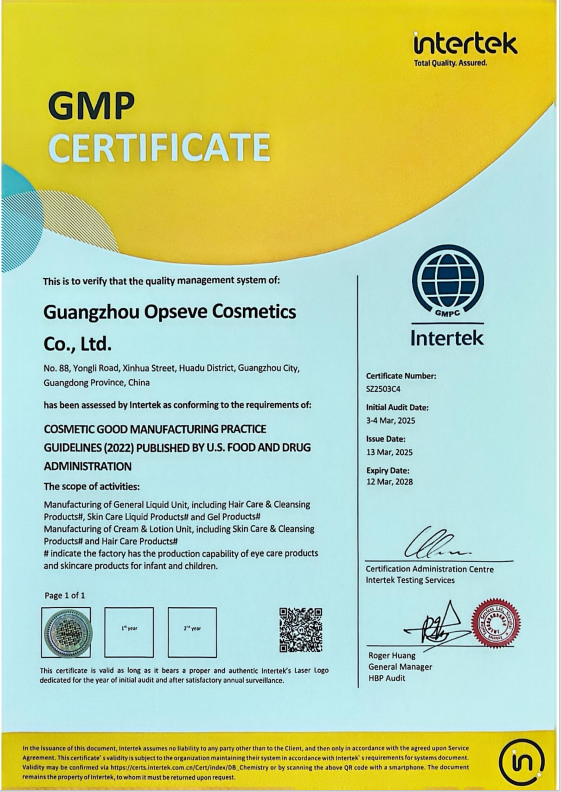
NEXO Beauty Labs is a cosmetic OEM and ODM partner for skincare, hair care, and body care. Our capabilities include skincare product development, formulation innovation, scalable manufacturing, production management, and quality control. Our manufacturing foundation dates back to 1999, giving the team more than 25 years of cosmetic manufacturing expertise.
Development
Moisturizer Development Routes
NEXO combines product development, formulation work, production management, and quality control in one manufacturing program. As a private label skincare manufacturer, our role is to help turn a defined brief into products for the market while keeping route, pack, testing, and approval decisions visible. Your chosen route controls how much is already decided, how much needs to be tested, and how many brand-specific choices remain open. Published prototype evidence shows why those test and approval gates matter even when products begin from the same development program.
Mature formula
Choose an available moisturizer direction when speed and a proven development starting point matter more than a proprietary formula architecture. Branding, packaging, fragrance direction, and product positioning still need a written brief.
- Best for a faster private label launch
- Useful when the desired texture is already clear
- Keeps the decision set smaller
Formula adaptation
Start from an existing formulation and adjust selected sensory or brand elements. This route fits a beauty brand that wants more distinction without reopening every raw-material and emulsion decision.
- Texture, fragrance, and selected active directions
- Pack and dispensing review
- Defined comparison against the approved sample
Custom development
Build the cream around a new brief when the target texture, ingredient system, positioning, or packaging interaction cannot be reached through a light change. Custom development needs the clearest market and claims inputs because each extra objective changes the formulation problem.
- New formula architecture
- Brand-specific sensory target
- Planned validation and revision checkpoints
Route decision
A private label and custom program should not be chosen from a slogan. Choose the least complex route that can still deliver the product distinction your brand needs, then protect that decision with an approved sample and an exact manufacturing brief.
Route mismatch becomes a real risk because a 10,000-unit commitment magnifies a poor development choice. NEXO Beauty Labs resolves that risk by defining what is fixed, what can be adapted, and what must be developed and validated before commercial production.
Commercial comparison
A skincare brand comparing private label skincare routes may see RainShadow Labs and other established names across the beauty industry. NEXO’s private label skin care offer ties the private label cosmetic brief to confirmed MOQ and milestone conditions, because high-quality beauty products and care products need more than generic promises.
What procurement teams should challenge
Buyers worry that slow or vague communication will surface after packaging, deposits, or launch dates are committed. MOQ is not useful by itself: a private label skincare low MOQ search can hide formula-route, pack, testing, and inventory assumptions. Formula revisions, texture changes, and pack changes can become the real critical path even when a production window looks fast.
For buyers comparing wholesale skincare private label programs or a skincare manufacturer China search result, the common assumption that the smallest quantity is the safest commitment is not always true. Cheapest is not always best when the pack cannot dispense the approved texture. This is the trade-off, and the catch is that formula, pack, claims, and destination-market duties are not interchangeable. Locking any one of them before the others are visible is the wrong call.
Ingredient presence is a formulation direction, not finished-product proof. Match claims to the approved formula and the evidence available for the intended market.
Hydration, Barrier and Active-Ingredient Directions
A moisturizer is a finished system, not a stack of fashionable ingredients. Humectant, emollient, occlusive, antioxidant, botanical, lipid, and active-ingredient choices need to work with the emulsion, sensory target, skin types, pack, and intended claims. Formulation research also shows that prototype stability and sensory behavior need to be assessed on the finished composition rather than inferred from an ingredient list.
Hydration system
Hyaluronic acid, glycerin, saccharide isomerate, panthenol, and polysaccharide directions can be discussed for hydration and moisture retention. A useful brief states whether the product should feel weightless, cushioned, rich, or suitable under makeup.
Best fit: a daily moisturizer, deep hydration concept, or a formula designed to hydrate without an overly heavy finish.
Ceramide and lipid system
Ceramide NP, AP, or EOP, cholesterol, phytosphingosine, and squalane may be explored as skin-identical lipid directions. A private label ceramide cream still needs an emulsion and validation plan; a multi-ceramide complex name alone does not prove barrier repair or reduced transepidermal water loss.
Best fit: a richer facial moisturizer concept intended to nourish dry or stressed skin and address dryness comfort. Finished-product evidence must support any moisture-loss or skin-barrier claim.
Comfort and botanical system
Panthenol, oat, aloe, Tremella, Dendrobium, ectoin, and other botanical directions can be reviewed for a calm, soothe, or comfort-led concept. Any sensitive skin, barrier-compromised, microbiome, postbiotic, skin flora, or innate immune system language needs market-specific review and finished-product support.
Best fit: a formula story built around comfort and resilience rather than an aggressive anti-aging promise.
Active skincare system
Peptide, vitamin C, retinol-support, niacinamide, antioxidant, avocado oil, shea butter, or other active directions can be scoped by compatibility and positioning. Final INCI, concentration, stability, and claims should follow the approved formulation rather than a wish list.
Best fit: a moisturizer that complements an active serum, sunscreen, or treatment step without turning this page into a separate hair care, body care, eye shadow, lipstick, or lip gloss offer.
Ceramide brief checkpoint
For a private label ceramide cream, specify the texture, day or night use, target pack, preferred ceramide direction, supporting lipids, and the wording you plan to place on the label. NEXO can formulate against that brief; the finished formula and its substantiation determine which claims can move forward.
Texture and Packaging Directions
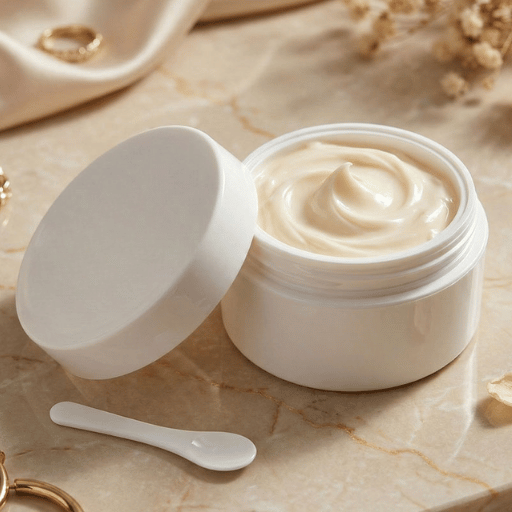
One moisturizing concept can feel completely different as a lightweight emulsion, rich cream, overnight cream, or water-in-oil system. Packaging belongs in that decision because viscosity, air exposure, dispensing, decoration, and everyday use all meet at the pack. Published sensory testing found meaningful differences in spread, absorption, stickiness, greasiness, and smoothness among prototypes.
| Direction | What it helps define | Packaging questions |
|---|---|---|
| Lightweight daily cream | Fast spread, lower residue, easy layering with other skincare products | Tube or airless pump; dose, closure, and label area |
| Rich barrier cream | Cushion, nourishment, squalane or ceramide direction, overnight comfort | Jar, tube, or airless format; fill behavior and user access |
| Overnight cream | Longer wear, smooth finish, richer sensory profile | Jar or controlled-dose pack; decoration and secondary packaging |
| Water-in-oil cream | More occlusive sensory direction and moisture-retention positioning | Pump compatibility, filling behavior, and pack interaction |
Pack formats to brief
- Jar for direct access and richer textures
- Tube for portable, familiar dispensing
- Airless pump for controlled dispensing and reduced repeated exposure
Claims and finish choices
- Fragrance direction or fragrance-free target
- Silicone-free, vegan, or clean beauty requests as options requiring formula and market confirmation
- Artwork, label, carton, and decoration scope
Project Specifications for Moisturizer Programs
These are the confirmed planning facts for the current NEXO moisturizer offer. Formula-specific performance, final ingredient composition, packaging compatibility, and target-market files are decided inside the project rather than implied by this table. U.S. and EU market-readiness responsibilities include safety and product-information work that must be assigned to the appropriate market role.
| Project Item | Confirmed Working Point | Buyer Input |
|---|---|---|
| Development routes | 3 routes | Mature formula, adaptation, or custom formulation |
| Formula / texture sample development | 3 business days | Accepted brief and reference direction |
| International sample delivery | 5–7 business days | Destination and shipping details |
| Commercial production | Within 15 days | Packaging must have arrived and passed inspection |
| Minimum order | 10,000 units | SKU, size, pack, decoration, and shipping plan |
| Packaging directions | 3 core formats | Jar, tube, or airless pump |
| Texture directions | 4 starting formats | Lightweight, rich, overnight, or water-in-oil |
| Current ingredient discussion set | 6 named directions | Hyaluronic acid, ceramide, panthenol, peptide, ectoin, or squalane |
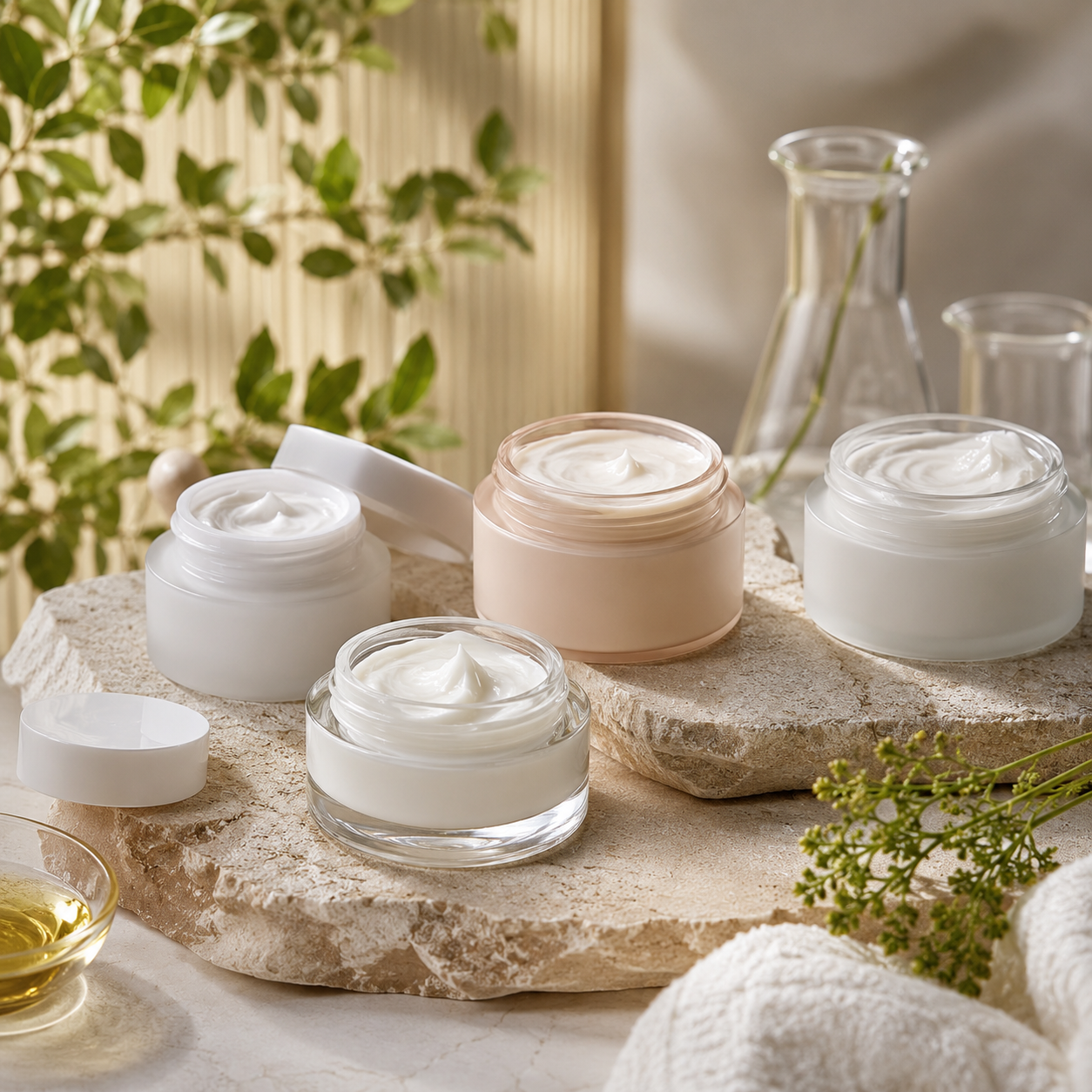
Formula, Sample and Packaging Validation
Formula intent is only the starting point. A peer-reviewed 2025 topical-formulation study found that three of four prototypes remained physically stable while one phase-separated; the formulas also differed in spreading, absorption, stickiness, greasiness, and smoothness.
What that means for a private label face cream manufacturer brief
- Validate the actual formula, sensory target, dispensing format, and pack combination planned for sale. That study is not evidence for a NEXO product result; it is a practical reason to keep development gates visible.
- Freeze the brief. Record the route, target market, texture, packaging direction, ingredient priorities, and claims intent.
- Review the formula and texture sample. Compare spread, absorption, residue, fragrance, appearance, and after-feel against one written reference.
- Confirm the pack direction. Align viscosity, fill, dispensing, closure, user handling, label area, and decoration before component quantities are locked.
- Define formula-specific checks. Agree on the stability, compatibility, safety, microbiology, quality-control, or third-party efficacy work required for the product and market.
- Approve the commercial standard. Tie production to the approved sample, packaging specification, artwork, quantity, and acceptance criteria.
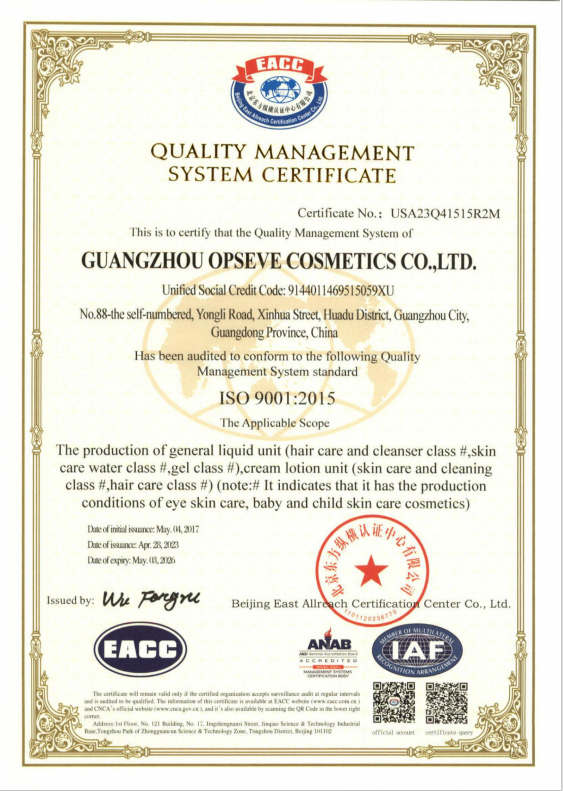
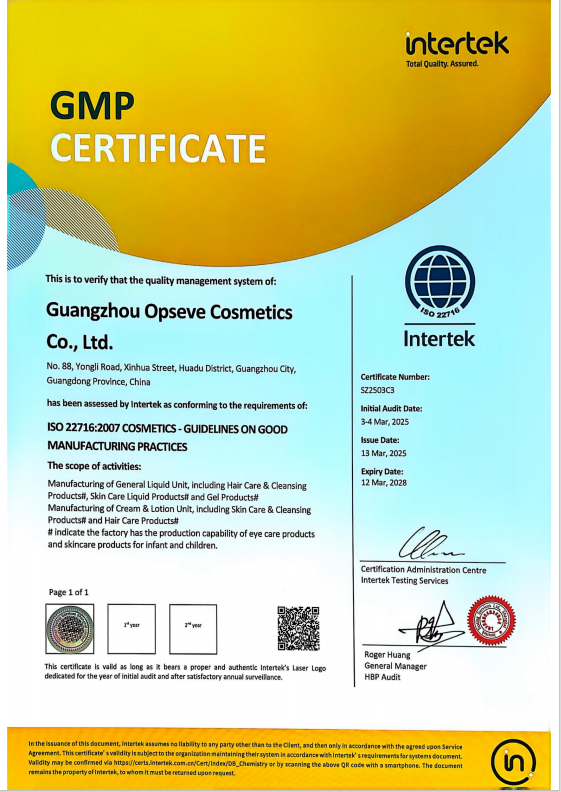
We support formula optimization, ingredient selection, sample development, production management, quality control, and third-party efficacy-testing coordination where it is part of the approved scope. Brand teams and their market advisers still need to decide which claims and market obligations apply to the finished cosmetic.
❮
❯
✖
Cases That Need a Different Starting Point
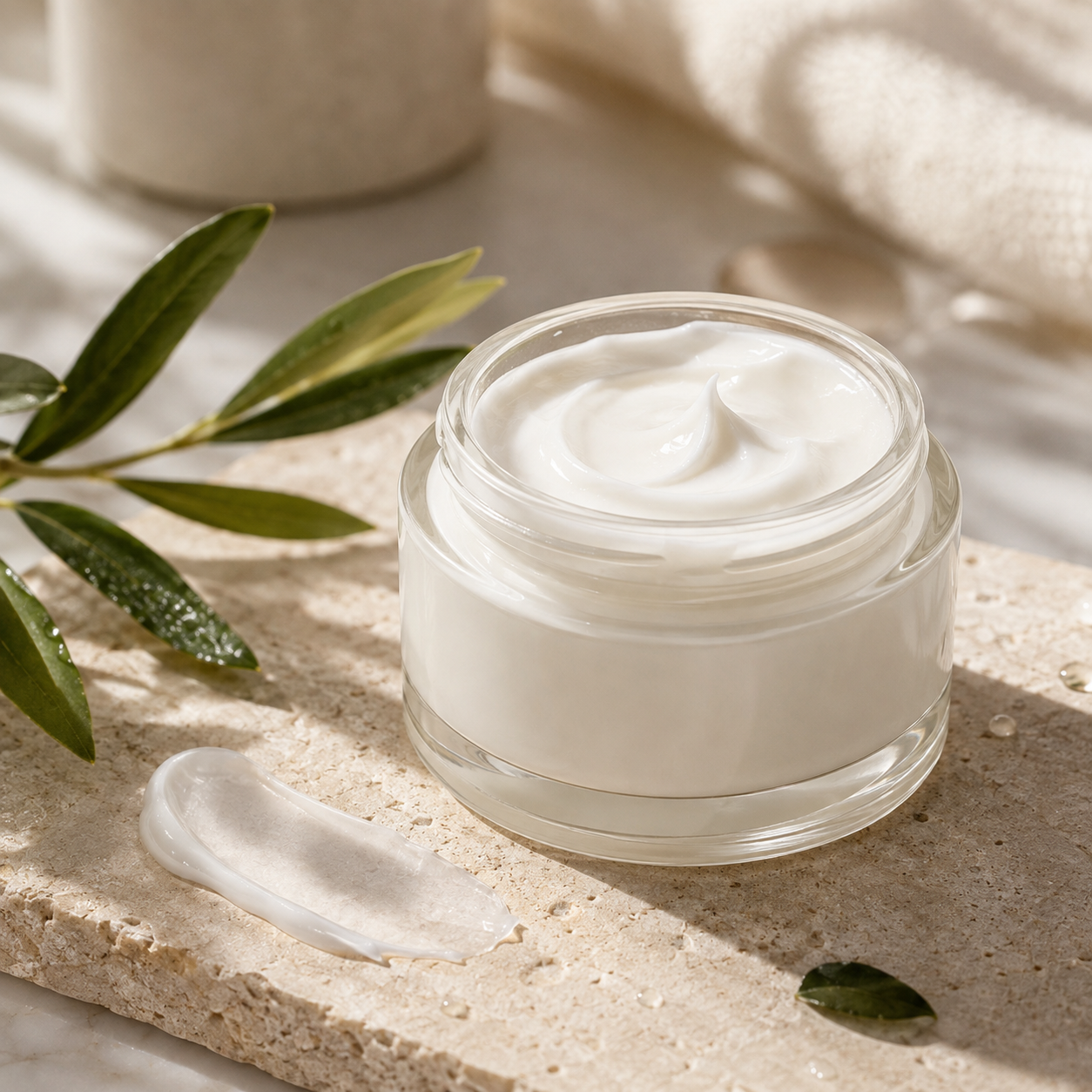
Private label moisturizers fit projects with a clear cosmetic use, a realistic 10,000-unit volume, and enough room to align the formula, pack, label, and market scope. Some briefs need a different route before sample work begins, especially when intended use or market responsibility changes the evidence and notification path.
| Situation | Why it works against the project | Better next step |
|---|---|---|
| A brief depends on a drug or disease-treatment claim | Intended use may change the regulatory path and required evidence. | Resolve classification and claims strategy with qualified market counsel before formula release. |
| An order cannot support 10,000 units | Confirmed MOQ creates excess inventory and cash exposure. | Validate sell-through, reduce SKU count, or choose a route designed for a smaller launch. |
| A brand wants every active in one cream | Compatibility, texture, stability, cost, and claim objectives can conflict. | Rank must-have ingredients and move secondary ideas into a serum or future sibling product. |
| Packaging is not yet selected but artwork is being finalized | Label area, fill, closure, and decoration limits may force late changes. | Lock the pack direction before final artwork and commercial quantities. |
| A product must ship with an unverified certification or efficacy statement | Identity and performance claims need exact scope and supporting records. | Obtain the applicable evidence before the statement enters the label or sales copy. |
Private Label Moisturizer Planning & Execution Tools
01
Tool 01
Private Label Moisturizer Formula Route Selector
Choose the route that matches how much is already defined. The result is a briefing aid, not a formulation or market-compliance approval.
Access Tool02
Tool 02
MOQ Inventory Estimator
NEXO’s confirmed minimum order quantity is 10,000 units. Enter your own sell-through and landed-cost assumptions to see the inventory exposure; no price is prefilled.
Access Tool03
Tool 03
Sample-to-Production Timeline Planner
Map the three confirmed milestones without merging them into one launch promise. Business-day dates exclude weekends; public holidays, revisions, testing, packaging supply and freight beyond sample delivery are not estimated.
Access Tool04
Tool 04
Texture and Packaging Brief Builder
Turn product ideas into a cleaner first RFQ. The listed actives are formulation directions, not a promise that every ingredient will appear in one finished formula.
For a more detailed buyer checklist, read our moisturizer formulation and manufacturing guide.
Access ToolFAQ for Moisturizer Buyers
01
Which development route is fastest for a private label moisturizer?
A mature formula route keeps the decision set smallest, while formula adaptation and custom development open more variables. NEXO develops the initial formula and texture sample in 3 business days after the brief is accepted.
02
Can NEXO make a private label ceramide cream?
Yes. Ceramide NP, AP, EOP, cholesterol, phytosphingosine, squalane, and other lipid directions can be discussed, but the approved formula determines the final INCI and claim scope.
03
Can the texture be changed to match a reference face cream?
Texture and sensory adaptation can be part of the brief. Send the reference, then state what should stay and what should change across spread, absorption, residue, richness, fragrance, and finish.
04
Which packaging formats are available?
Current project directions include jars, tubes, and airless pumps. Format choice depends on texture, dispensing, filling, exposure, decoration, target size, and consumer use.
05
What is the minimum order quantity?
Our confirmed MOQ is 10,000 units. Use the MOQ Inventory Estimator to compare that quantity with your own sell-through and landed-cost assumptions.
06
How long do formula samples take?
Formula and texture sample development is 3 business days. International sample delivery is a separate 5–7-business-day milestone.
07
How long does commercial production take?
Commercial production is completed within 15 days after packaging arrives and passes inspection. Packaging manufacture, transport, inspection, revisions, testing, and commercial freight are separate project dates.
08
Does NEXO manage US MoCRA responsibilities for my brand?
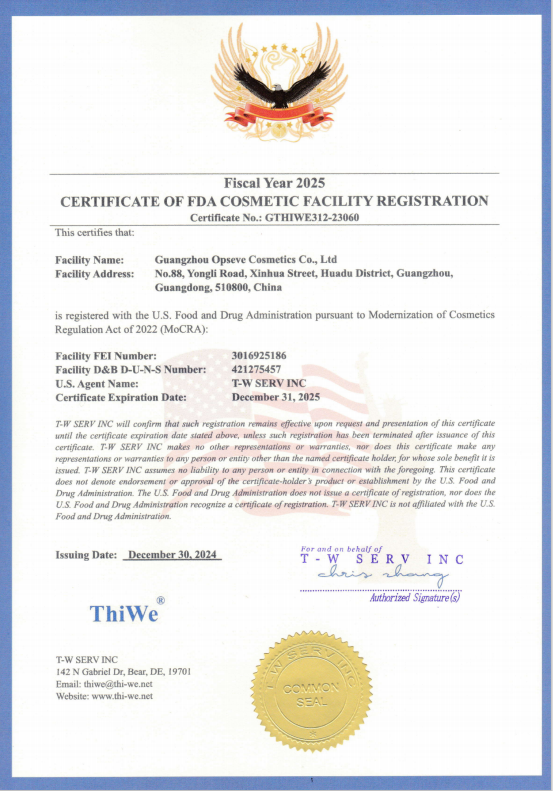
MoCRA assigns duties to the responsible person and includes facility-registration, product-listing, adverse-event, and safety-substantiation requirements.1 Define who owns each task for the finished cosmetic; manufacturing support should not be read as automatic transfer of every responsibility.
09
What does an EU moisturizer launch need?
EU rules include a product safety report, an EU responsible person, and centralized CPNP notification before placement on the market.2 Set those owners before label and commercial production decisions are locked.
10
Can I request fragrance-free, vegan, or clean beauty positioning?
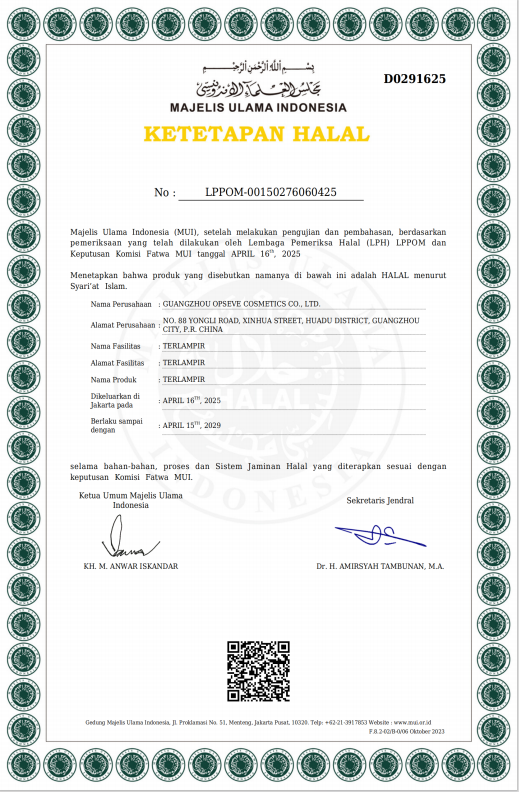
Those directions can be included in the formulation brief. Availability and public wording depend on the approved formula, raw-material documentation, manufacturing scope, target market, and the standard or retailer rule the brand plans to use.