Get in touch with NEXO Beauty Labs Company
Cosmetics Manufacturer for Export — Global Cosmetic Manufacturing for International Beauty Brands
NEXO Beauty Labs develops and manufactures skin care, hair care, body care and personal care products for cosmetic brands selling outside China, and for the distributors and private label partners who carry those beauty products into their own markets. You can start from a product concept, from a market reference product, or from a formula you already own.
Your formulas, briefs and reference products are treated as confidential, and a non-disclosure agreement is signed before development work begins. Every project runs under a signed non-disclosure agreement covering your product concepts, formulation information and confidential business requirements.
- Quotes returned within 48 hours on business days
- First samples within 3 working days
- Commercial production in 10–15 working days
- Minimum order from 10,000 units
Global Cosmetic Manufacturing at a Glance
-
Manufacturing floor
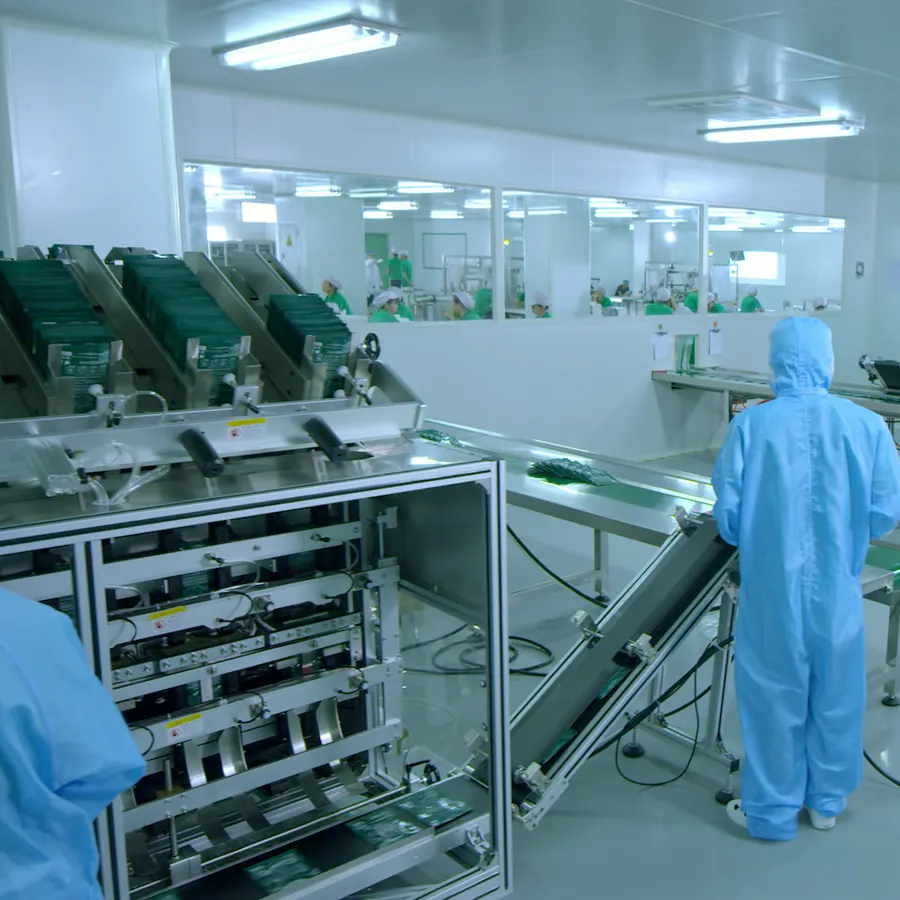
36,000 square metres with 56 production lines on a single Guangzhou site, with formulation, filling and packing in-house -
Formula library
5,000+ market-ready formula solutions across skincare, hair care, body care and personal care -
Serum capsule output
Up to 6,000,000 serum capsules per day -
Sunscreen output
Up to 200,000 sunscreen units per day -
Formulation patents
65 patent certificates supporting formulation and product development -
Quality systems
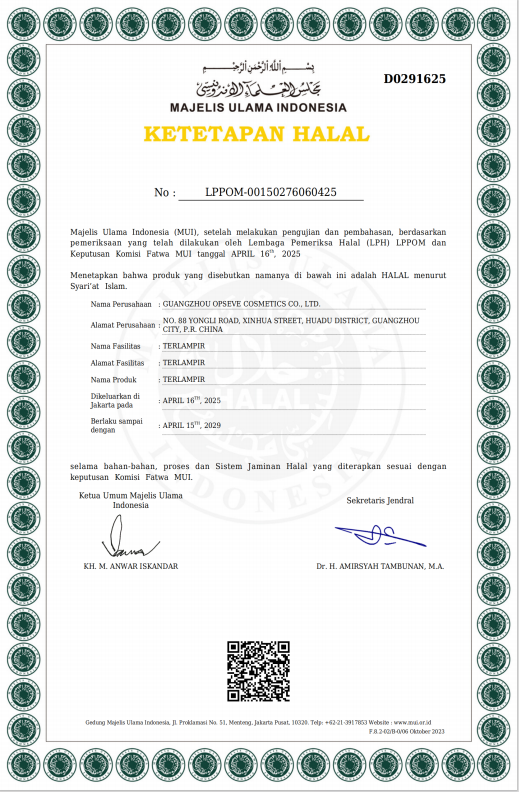
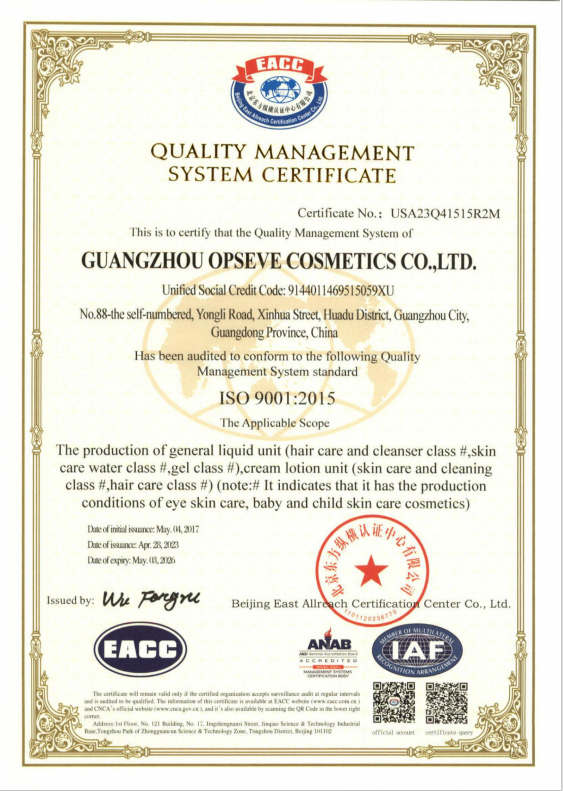
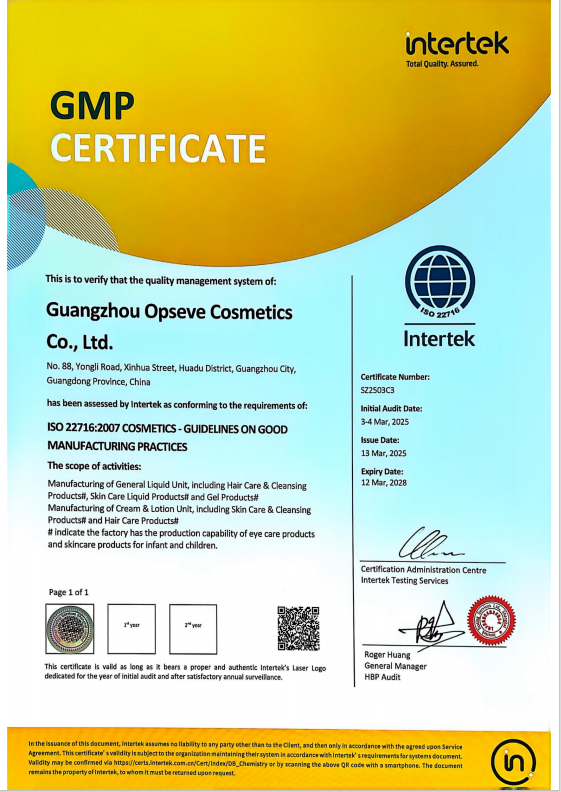
ISO 22716, GMPC and ISO 9001 systems, Halal certification, and FDA cosmetic facility registration -
Markets manufactured for
North America, Europe, Asia-Pacific and Southeast Asia -
Manufacturing since
1999, more than 25 years of cosmetic manufacturing, with a dedicated international business team since 2020
Cosmetic Manufacturing Services: Skincare, Hair Care and Body Care Production
Suppliers in the beauty sector are differentiated from other partners by two key elements: by whom the bulk actually comes and how many people it passes through before reaching you. Formulation, filling, and packing happen in-house at a NEXO Beauty Labs site in Guangzhou. This ensures the team who develops your bulk is your same team who’s scaling it, and your product has not changed hands from lab to line.
Skincare manufacturing
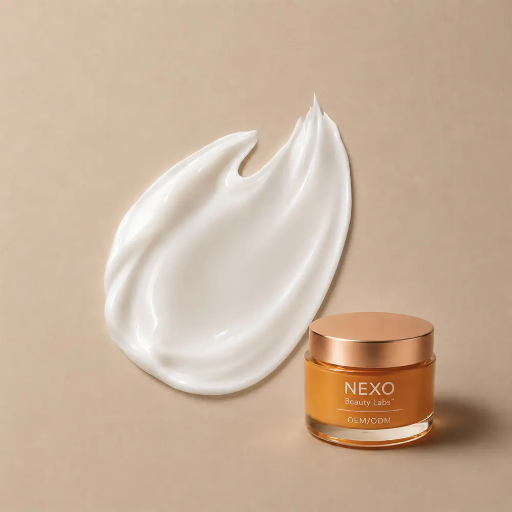
Emulsions, aqueous systems, gels, anhydrous formats and encapsulated serums, from a first bench sample through to commercial batches. Serum capsule filling runs to 6,000,000 capsules per day, and sunscreen to 200,000 units per day.
Hair care manufacturing
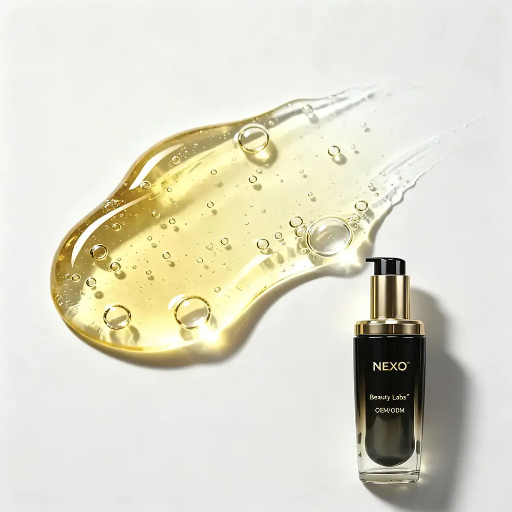
Surfactant systems, conditioning emulsions, treatment masks, leave in formats. Bulk compatibility with your chosen pack will be verified before quantity commitment.
Body and personal care manufacturing
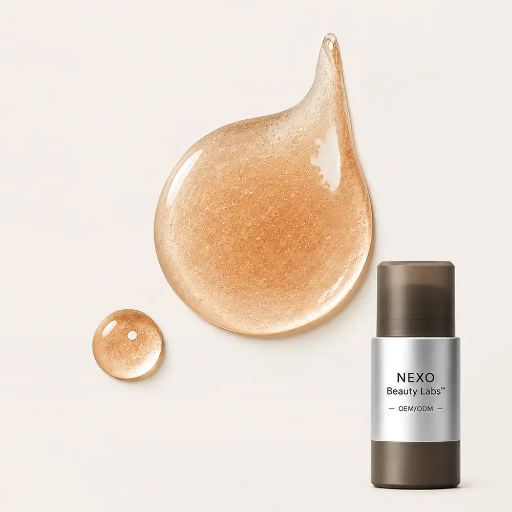
Washes, lotions, butters, scrubs and hand care carried on the same formulation and filling system. Categories may be consolidated into one production program rather than requiring multiple suppliers.

Formulation research and development
Formulation development and technical innovation are supported by Winskin Life Science Research Institute, and 65 patent certificates sit behind the formulation portfolio. Our R&D team prepares initial samples within 3 working days of receiving your product requirements.
Product families we manufacture most often
- Facial serums, ampoules and encapsulated serum capsules
- Moisturisers, creams, lotions and barrier repair formats
- Cleansers, cleansing balms, micellar waters and foaming washes
- Sheet masks, wash-off masks, sleeping masks and eye patches
- Sunscreen and daily protection products
- Shampoos, conditioners, hair masks and scalp treatments
- Body lotions, body washes, scrubs and hand creams
- Toners, essences, mists and post-treatment products
Product Categories and the Market-Ready Formula Library
Most briefing happens in the skincare product, but the same three pathways service hair, body and personal care skincare products that are built from an existing reference take less time to place. For each product category below, you will be shown the three paths you can take from there, a ready-market formula in the supplier library, your custom formulation developed for your specific brief, or an existing formula/product from our existing references that we can build your formula from. The product you choose dictates timing of development rather than the route to manufacturing.
| Category | Representative formats | Usual starting point | Packaging formats commonly used |
|---|---|---|---|
| Facial serum | Water-based serum, oil serum, biphasic serum, ampoule | Library formula or reference match | Dropper bottle, pump bottle, airless bottle |
| Encapsulated serum | Single-dose serum capsule, twist-off capsule | Library formula | Capsule strip, capsule jar, carton |
| Facial cream and moisturiser | Oil-in-water emulsion, rich cream, gel cream, night cream | Library formula or custom formulation | Jar, airless jar, tube, pump bottle |
| Facial cleanser | Foaming cleanser, cream cleanser, cleansing balm, micellar water | Library formula | Tube, pump bottle, jar, flip-top bottle |
| Toner and essence | Hydrating toner, exfoliating toner, essence, facial mist | Library formula or reference match | Bottle with reducer, spray bottle |
| Sheet mask | Cellulose sheet, bio-cellulose sheet, hydrogel sheet | Library formula | Sachet, multi-pack carton |
| Wash-off and sleeping mask | Clay mask, cream mask, gel sleeping mask | Library formula or custom formulation | Jar, tube, single-dose sachet |
| Eye care | Eye cream, eye serum, hydrogel eye patch | Custom formulation or reference match | Airless tube, applicator tube, patch jar |
| Sunscreen and daily protection | Emulsion sunscreen, sunscreen stick, tinted protection | Custom formulation | Tube, airless bottle, stick pack |
| Body lotion and body butter | Light lotion, rich body butter, after-sun lotion | Library formula | Pump bottle, jar, tube |
| Body wash and cleansing | Shower gel, cream wash, exfoliating wash | Library formula | Flip-top bottle, pump bottle, refill pouch |
| Scrub and exfoliant | Sugar scrub, salt scrub, enzyme powder | Library formula or custom formulation | Jar, tube, sachet |
| Hand and foot care | Hand cream, hand wash, foot balm | Library formula | Tube, pump bottle, jar |
| Shampoo and conditioner | Sulphate-free shampoo, conditioning rinse, scalp tonic | Library formula or reference match | Flip-top bottle, pump bottle, sachet |
| Hair treatment | Hair mask, leave-in treatment, hair oil, scalp serum | Custom formulation or reference match | Jar, tube, dropper bottle |
A category not listed here
Submit product type, market context and your reference, and we can quickly tell you if it fits our existing formulation and filling systems before you commit anything further (and we will tell you early).
Start a Manufacturing BriefSend us any one of these
A product concept or ingredient direction, a target-market brief, a market reference product, or your own existing formula, raw materials and technical specifications. Any one of these is enough to begin.
Packaging, Filling Formats and Component Sourcing
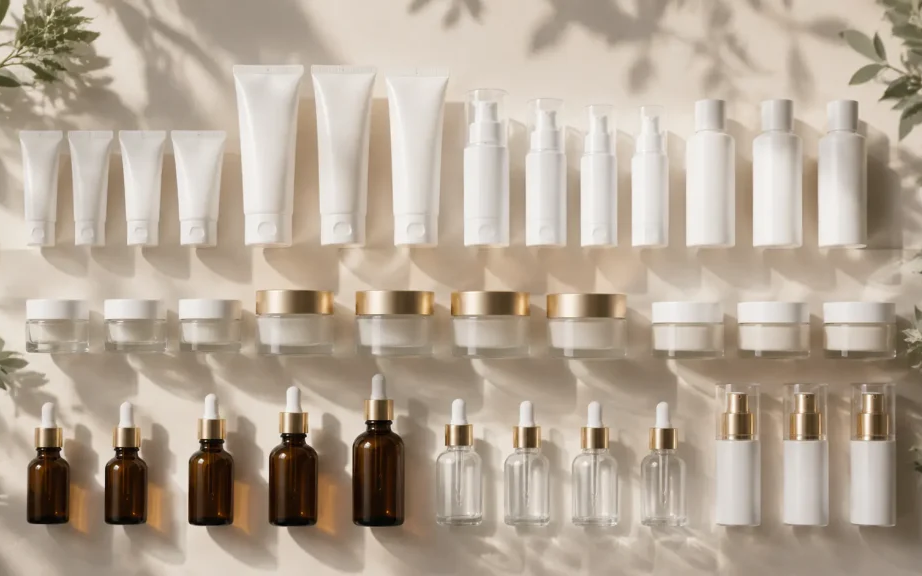
Packaging selection, custom packaging solutions, supplier coordination and packaging sourcing run through integrated packaging support. You can nominate your own component supplier instead, and the bulk will be filled to that pack.
| Format | What it suits | Component route |
|---|---|---|
| Airless bottle and airless jar | Oxidation-sensitive actives, high-viscosity creams | Integrated packaging support, or your nominated supplier |
| Dropper bottle | Serums, oils, ampoule-style products | Integrated packaging support, or your nominated supplier |
| Pump bottle | Lotions, cleansers, body products | Integrated packaging support, or your nominated supplier |
| Laminated and extruded tube | Creams, cleansers, masks, hand care | Integrated packaging support, or your nominated supplier |
| Jar and refill jar | Rich creams, balms, scrubs, wash-off masks | Integrated packaging support, or your nominated supplier |
| Single-dose sachet | Sheet masks, sample programmes, travel sets | Integrated packaging support |
| Serum capsule | Single-dose actives, dosage-controlled routines | Integrated packaging support |
| Flip-top and disc-top bottle | Shampoos, body washes, conditioners | Integrated packaging support, or your nominated supplier |
| Spray and mist bottle | Toners, mists, scalp tonics, setting products | Integrated packaging support, or your nominated supplier |
| Stick pack | Balms, sunscreen sticks, solid formats | Integrated packaging support |
Where component sourcing usually costs you time
Bulk is manufactured to a schedule that works with the plant; not the components. Where a designated supplier component misses the shipping date, filling will be held up for it. This is the trade-off you accept for bringing your own component manufacturer on the program; the cost and relationship are yours, the delays become yours as well.
How the pack is checked against the bulk
Co-ordinated test partner testing is run for packaging and stability at the same time for efficient validation versus your product; tests are performed versus a completed bulk which includes pack type with actual filled product. Fill and Packaging inspection are included in your products defined release specification.
Release Specification, Stability Testing and Production Lead Times
Every batch is released against a written specification agreed for your product, not against a general house standard. The table below is the operating envelope a first project runs inside.
Release testing per batch: Appearance and odour, pH, viscosity, microbiological testing, filling weight and packaging inspection, with batch consistency evaluated before release
6 stages: incoming material inspection, in-process control, bulk product inspection, filling and packaging inspection, finished product inspection, and batch review and release
Within 3 working days of receiving your product requirements
Approximately 5–7 working days, depending on destination
10–15 working days after formula approval, packaging confirmation and production preparation
Within 48 hours on business days
From 10,000 units per product, with flexible evaluation for new launches and market-testing projects
Batch identification, production records, quality inspection records, retained production samples and finished product release records
How stability and compatibility testing is arranged
Your test plan is coordinated with the appropriate partner companies and may include for stability testing, packaging compatibility testing, sensory evaluation and human efficacy testing; you know at the outset which reports will exist.
- Stability testing verifies the bulk product will maintain both its physical and microbiological characteristics over its shelf life.
- Packaging compatibility testing confirms interaction between the bulk product and the packaging components does not cause changes in either.
- Sensory evaluation tests product’s texture, application and aroma according to brief instructions.
- Human efficacy is a requirement for product or market claims and are conducted with test partners.
Quotation Mechanism, Minimum Order Quantity and Commercial Terms
The price depends on the formula, the ingredients it contains, the pack you chose, the fill format, the quantity. There are no standard price lists of developed product, because two items at exactly same fill value may have multiple price discrepancies because of ingredients alone.
Where your price comes from
| Driver | Effect on cost | How to reduce it |
|---|---|---|
| Formula route | A custom formulation carries development work that a library formula has already absorbed | Start from a market-ready library formula and adjust it, rather than developing from zero |
| Active ingredient selection | A small number of high-cost actives can dominate the unit cost of the bulk | Agree the performance you need first, then let formulation choose the actives that reach it |
| Packaging components | Component cost frequently exceeds bulk cost, especially in airless and multi-part packs | Choose a stock component for a first run and move to custom tooling once volume is proven |
| Order quantity per product | Setup, changeover and cleaning are absorbed across the run, so short runs carry the highest unit cost | Consolidate variants onto one bulk where the formula allows, instead of splitting into small runs |
How your quotation is produced
- Send the product requirements and a quotation is returned within 48 hours on business days. Minimum order quantity starts from 10,000 units per product, and flexible MOQ evaluation may be available for new product launches, market-testing projects and special development requirements, assessed by product category. Ask about MOQs for custom formulas and for library formulas separately when you compare suppliers, because the two rarely carry the same number.
- Payment runs on a 50% deposit at order confirmation, with the balance settled before shipment
- Trade terms are FOB China as standard; EXW, CIF and DDP are quoted on request
- Confidentiality is covered by a non-disclosure agreement over your product concepts, formulation information and confidential business requirements, signed before development starts
The Export-Readiness Screen
Most sourcing checklists do not proceed beyond whether a factory has a certification. The following six questions are the real decision points when it comes to getting your product on market, and each is followed by an indication of who must answer it.
| # | What to verify | What a complete answer looks like | Who must hold it |
|---|---|---|---|
| 1 | Which quality standard, audited by whom, covering which site | A named standard, a named auditor and a certificate whose address matches the address where your product will actually be made | The manufacturer supplies it; you verify the address matches |
| 2 | Facility identification for the destination market | The registration or facility identifier your own filing must cite, supplied in writing before you file | The manufacturer supplies the identifier; you make the filing |
| 3 | Who is the legal responsible party in the destination market | A named legal entity established in that market, with the appointment accepted in writing | You appoint it; an exporting manufacturer cannot hold this role |
| 4 | Ingredient review against destination market rules | A documented review of the formula against the restrictions and permitted lists of each market you will sell in | Jointly: the manufacturer supplies the formula detail, your responsible party owns the assessment |
| 5 | Stability and compatibility data on the actual pack | Test reports run on the bulk in the pack you are shipping, not on a laboratory container | The manufacturer arranges the testing; you keep the reports on file |
| 6 | Batch traceability and retained samples | Batch identification, production records, quality inspection records, retained samples and release records available on request | The manufacturer holds them; you should confirm the retention practice before the first order |
Markets Served and Who Holds Which Responsibility
We currently manufacture for brands selling in North America, Europe, Asia-Pacific and Southeast Asia, shipping as the exporter from China while the importer of record in your market is you. Each market places its legal duties on a different party, and the split below is the one that surprises first-time importers most often.
Middle East and Halal markets
The holder of Halal certification is located at the facility so is a prerequisite for market entry where Halal certified premises required - rather than a market claim - .
Halal cosmetic manufacturing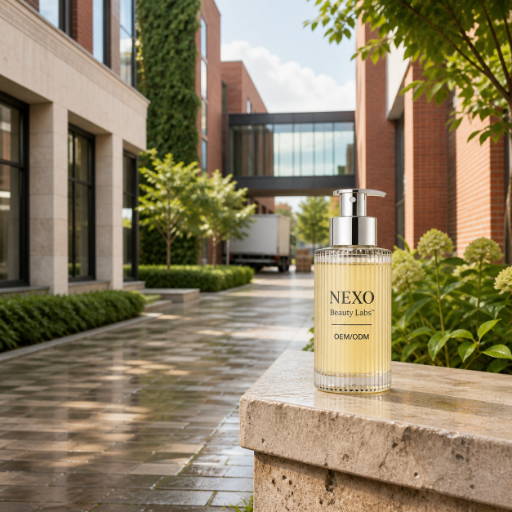
Europe
EU placement requires a resident responsible person in that market to facilitate the process based on the PIF content supplied by manufacturer.
Cosmetic manufacturing for Europe
Latin America
Market specific countries require their local importers or registration holder to register based on the product technical files supplied with the delivery.
Cosmetic manufacturing for Latin America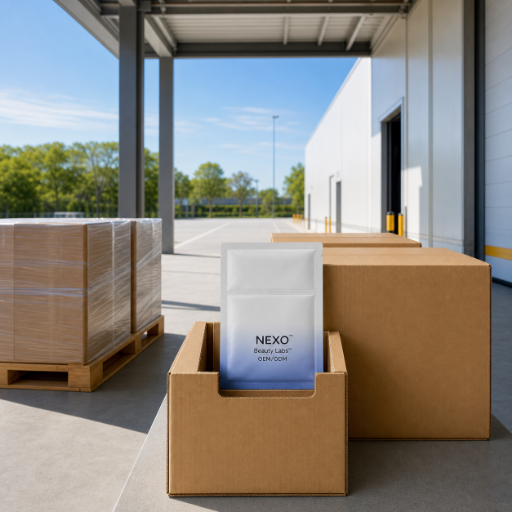
Export documentation support
The supplier carries this load. export paperwork, technical product file, ingredients information as well as records of manufacture, pack & test, ships with order - ensuring the party to file does not chase for it once the stock is dispatched.
Cosmetics export manufacturing supportWho holds which duty
| Duty | Who the law places it on | What we supply toward it |
|---|---|---|
| US cosmetic facility registration | The facility that manufactures or processes the product | The registration is held on our site, and the facility identifier is supplied to you in writing |
| US cosmetic product listing | The responsible person — the manufacturer, packer or distributor whose name appears on the label | Product and ingredient information for the listing, plus the facility identifier the listing must cite |
| EU responsible person | A legal or natural person established in the European Union; for an imported product this is the importer | The technical and ingredient content that the appointed responsible person needs — the role itself cannot be held by a manufacturer outside the Union |
| EU product information file | The responsible person, keeping the file accessible at a single address inside the Union | Formulation, manufacturing and quality records that feed the file |
| Import compliance at the border | The importer of record in the destination market | Export papers, product technical files and quality records with every shipment |
| Label content and claims | The brand owner, in the market where the product is sold | Ingredient information and batch identification; claim substantiation testing is arranged on request |
However read across middle column and one thing emerges in all of the markets - duty follows the name on the label, not the name on the factory. If the operational element can be subcontracted there’s no escaping personal responsibility so the key question of an OEM type relationship, from your perspective, is can this manufacturer give me what I need to do this?
OEM and ODM Routes: Who Owns the Formula and How a Project Runs
Private label cosmetics, white label, contract manufacturing, OEM and contract development may at times be used interchangeably, but these cosmetic contract manufacturing paths, while distinct to some degree for service offerings, are not specific legal definitions, and the name used provides insufficient clarity as to who owns what in your program. What determines a path are the answers to two main questions: Who originates the formula?
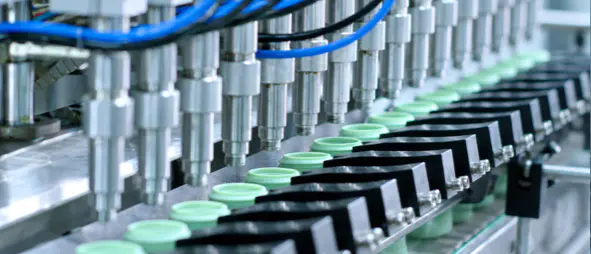
| Route | What you bring | What we do | Where the formula comes from | Best when |
|---|---|---|---|---|
| OEM — you own the formula | Your existing formula, raw material specifications and technical data sheets | Technology transfer, scale-up, production and filling to your specification | Yours, before the project starts | You already have a proven product and are changing or adding a manufacturing site |
| ODM — developed to your brief | A product concept, ingredient direction and target-market brief | Formulation development, sampling, stability and compatibility testing, then production | Developed for your project; ownership of the developed formula is fixed in writing before development starts | You know the product you want but do not have a formula for it |
| Library formula with your brand | Brand, artwork, packaging decisions and market selection | Selection from 5,000+ market-ready formula solutions, adjustment where needed, filling and packing | The existing library formula, which is not exclusive to one brand unless agreed otherwise | Speed to market matters more than a formula nobody else can use |
| Reference-matched formula | A market reference product you want a comparable product to | Reference sample evaluation, formula analysis, sample development and approval | Developed against your reference; ownership is fixed in writing in the same way as an ODM project | You have a benchmark product and want something comparable you can sell under your own brand |
Who develops the formula (and maintains formula custody) afterwards? A well-understood formula ownership path provides the basis upon which it will be possible to move your product manufacturing to different site(s) in the future, and it contributes significantly to the value of a beauty brand when it is offered up for sale. We strongly advise clarity and definition of this point at product briefing stages.
STEP 01
Brief and confidentiality
You send a product concept, a target-market brief, a reference product or your own formula, and a non-disclosure agreement is signed.
STEP 02
Quotation
A quotation is returned within 48 hours on business days.
STEP 03
Sampling
First samples are prepared within 3 working days of receiving your product requirements, with international delivery of approximately 5–7 working days.
STEP 04
Formula & packaging approval
You review and accept a sample product and final prototype packaging, based on which the agreed upon release specification(s) for your product(s).
STEP 05
Test program
Stability, package interaction, consumer sensory evaluation and human efficacy claims tests, arranged through our integrated network of service providers as market claims and testing requirements dictate.
STEP 06
Production and release
Commercial manufacturing runs 10–15 working days, and the batch is released only after batch review with the record set complete.
Caution: However, it is especially necessary to caution about an OEM type deal. If a technology transfer goes poorly, then it is typically not a missed deadline. It is a drift of a formulation that no longer has the appearance of the sample, or a market filing does not yet reflect the actual product. The transfer is therefore documented, and the release spec determined prior to the run of the first commercial batch.
Quality Systems, Six-Stage Inspection and Export Documentation
Quality control is organized as six checkpoints from raw material receiving to release, so a problem is caught at its stage of origin. There is a batch record associated with each stage.
How every order is checked
Incoming material inspection
All incoming raw materials and packaging materials are tested for specification before entering production.
In-process control
Testing is done of the process parameters during mixing, as any deviation found at this point will be caught while the batch can still be corrected.
Bulk product inspection
Finished bulk product is inspected against specification for final release prior to filling.
Filling and packaging inspection
In-process inspection takes place on filling weight, seal integrity, label correctness, and package appearance.
Finished product inspection
Retail packaged goods are tested as the customer will receive them.
Batch review and release
Records are reviewed as a set, and the batch is released only when the file is complete.
What ships with your order
- Export documentation for the shipment
- Product technical files
- Ingredient information
- Quality records for the batch
Behind those documents sit the batch records: batch identification, production records, quality inspection records, retained production samples and finished product release records.
These are the records a market authority or a customer audit will ask you to produce, and they are the reason retention practice is worth confirming before your first order rather than after an enquiry arrives.
Quality systems and certifications held
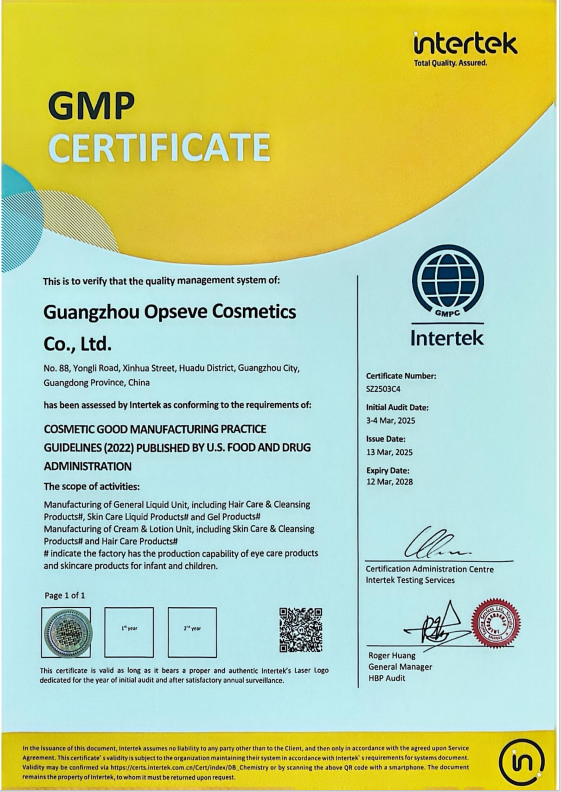
- ISO 22716 cosmetic good manufacturing practice system
- GMPC cosmetic good manufacturing practice system
- ISO 9001 quality management system
- Halal certification
- FDA cosmetic facility registration
How to read a certificate
The same care should be paid to certifications. A management system audit only indicates that an appropriate system was operational at a particular location and time; it provides no assurance for your carton, and you are not free from your contractual obligation to the manufacturer without a separate batch release certificate. A surprisingly high proportion of all dispute arises from the assumption that a company certificate travels with the product.
If a certificate cannot name the standard, the auditor and the site, treat it as marketing. The document that speaks for what is in your carton is the batch release record.
At NEXO Beauty Labs, we secure all quality certifications on our product manufacturing site(s) (see quotation) and each product batch is dispatched with a batch-specific release record.
One point should be made very clearly, as it is consistently misunderstood in this business. A cosmetic facility listing with the FDA is a listing, not a certification, for which there is no certificate issued; its purpose is solely to identify a unique facility that your product listing must reference.
Manufacturing Evaluation Tools
Cosmetic Manufacturing FAQs
For any OEM project, what is provided to the factory is the existing formulation to manufacture to a specified standard. For an ODM project, the formulation is created by the manufacturer according to the brief to produce. Effectively the difference comes down to who owns the formulation and source of it; this is detailed in the ownership row, by route, above.
That is decided by your agreement, not by the route name, which is why we fix it in writing before development work starts. It is worth settling early: formula ownership determines whether you can move production to another site later, and it is one of the things examined when a beauty brand is valued or sold. The non-disclosure agreement covering your product concepts and formulation information is separate from ownership and is signed before you send anything.
Cosmetic good manufacturing practice is a systems standard: EN ISO 22716:2007 is the version harmonised for use in the European Union, and it describes how production, quality control and record keeping are organised. FDA facility registration is an administrative filing that tells the agency a facility exists and what it makes. A good manufacturing practice certificate says how a site is run; a registration does not say anything about how a site is run.
No, they do not, and there is no such designation for cosmetics; FDA regulations explicitly state their facility registration/product listing is not an FDA approval or listing program and issue no Certificates of Product Registration or other endorsements or approvals; advertisers that claims an "FDA approved" or "FDA certified" cosmetic is advertising a product which is not.
Your product’s country of manufacture’s facility must be registered.
Whoever bears your country's registration responsibility - usually an importer, agent or responsible person who may be the manufacturer,packer or distributor's designated representative whose names is listed on product's label - responsible for listing their imported or manufactured product with listing of the ingredients.
Regulation (EC) No 1223/2009 requires a responsible person established inside the Union for every cosmetic product placed on the market, and Article 4(5) states that for an imported product each importer is the responsible person for the product it places on the market. A manufacturer established outside the Union can only designate such a person by written mandate, which that person must accept in writing. That is why we supply the file content rather than claiming to handle European compliance — the role is not legally available to us.
Stability and packaging compatibility testing are arranged through coordinated testing partners, and the programme is agreed with you before it starts. Accelerated testing conditions for cosmetics are described in ISO/TR 18811:2018, which sets out storage at 40 °C ± 2 °C and 75% ± 5% relative humidity as a standard accelerated condition. Testing is run on the bulk in the pack you will actually ship, because a result on a laboratory container does not transfer to a different closure and material.
Our standard minimum order quantity starts from 10,000 units per product. For new product launches, market testing projects or special development requirements, flexible MOQ evaluation may be available based on product category and project needs. Send the product type and the quantity you have in mind and we will tell you which applies before you invest time in a brief.
Commercial manufacturing is completed within 10–15 working days after formula approval, packaging confirmation and production preparation. That window starts when those three things are settled, not when the order is placed. Sampling runs ahead of it: first samples within 3 working days of receiving your product requirements, plus approximately 5–7 working days for international delivery.
Any one of these is enough: a product concept or ingredient direction, a target-market brief, a market reference product, or your own existing formula, raw materials and technical specifications. You do not need a finished formula to begin. Quotations come back within 48 hours on business days.
A non-disclosure agreement covering your product concepts, formulation information and confidential business requirements is signed before development work begins. It covers what you send us as well as what is developed during the project. Ownership of a developed formula is a separate matter and is fixed in the project agreement, so it is worth raising both at the same time.
Export papers, product technical files, ingredient information and batch quality records ship with the order. Behind them, each batch carries batch identification, production records, quality inspection records, retained production samples and finished product release records. Those records are what an audit or a market authority enquiry will ask you to produce.
Bulk orders run on a 50% deposit at order confirmation, with the balance settled before shipment. We ship FOB China as standard, and EXW, CIF and DDP are quoted on request. Terms are confirmed in the written quotation rather than negotiated after production has started.
Yes it does the obligation follows the labeling the border. This would be the facility doing the manufacturing that gets their place of business registered by the destination where they are targeting their consumers, the individual or company whose label appears would then have to Register product the various ingredients associated with that particular product. We provide the identifier which can be included on your filed 3510(d), along with a breakdown of what would behind that specific identification.
Fix ownership in writing before development starts, not after the first reorder. Your product concepts, formulation information and confidential business requirements are covered by a non-disclosure agreement signed before any development work begins, and ownership of a formula developed for your project is settled in the same document set. If you arrive with your own formula it stays yours, and we work to it under technology transfer.
Start with the six checks in the export-readiness screen above, and treat any answer that cannot name a standard, an auditor and a site as incomplete. Shortlists usually mix skincare manufacturers, contract fillers and trading companies, and the three are not interchangeable, so put the same six questions to each of them. Written answers you can set side by side tell you more than a presentation does.
North America, Europe, Asia-Pacific and Southeast Asia. Market-specific pages cover Halal cosmetic manufacturing, manufacturing for Europe, manufacturing for Latin America and export manufacturing support. Tell us the destination markets in your brief, because they affect ingredient selection before they affect paperwork.