Get in touch with NEXO Beauty Labs Company
ISO Certified
Cosmetic Factory Capabilities
Cosmetic Factory Capabilities for Beauty Brands
NEXO Beauty Labs’ cosmetic factory capabilities connect product concepts to commercial production across skincare, hair care, and body care. We combine professional research and development capabilities, formulation innovation, and scalable manufacturing. We combine global market insights with product development and manufacturing support.
- Manufacturing foundation since 1999
- OEM and ODM routes
- Global project support
Request a Factory Review
Share the formula status, product format, packaging direction, target market, and expected quantity for a project-specific review.

1999
Manufacturing Foundation Since 1999
OEM & ODM
OEM and ODM Routes
Global
Global Project Support
Factory Capability at a Glance
A capability page is the start of due diligence
Our manufacturing foundation dates back to 1999, with more than 25 years of cosmetic manufacturing expertise. Our international business team has supported global projects since 2020. The risk is evaluating factory fit from one headline or one number; that mistake hides formula and package variables.
Every formula, package, target market, and quantity creates a different manufacturing path. The useful next step is a project-to-capability match, not a generic promise that every cosmetic product fits the same production line.
Nexo Beauty Labs is a cosmetic contract manufacturer supporting OEM and ODM programs for beauty brands that need product development and cosmetic manufacturing in one coordinated conversation. The route depends on whether the brand brings an existing formula, a product benchmark, or an open development brief. The risk is a process gap because an undefined handoff can separate the formula, package, and approval path.
1999
Manufacturing foundation
25+ years
Cosmetic manufacturing expertise
3 categories
Skincare, hair care, body care
2 routes
OEM and ODM support
Factory Capability Summary for Product Teams
Product development
We connect beauty product concepts to commercial production by aligning the formula, product format, packaging direction, and market requirements.
Formulation support
We support formulation innovation and custom formulation conversations for defined skincare, hair care, and body care goals.
Manufacturing coordination
We support scalable manufacturing while keeping batch, filling, packaging, quality control, and final product review inside the project discussion.
Product Categories Across Skincare, Hair Care and Body Care
We support skincare, we support hair care, and we support body care product development and manufacturing. The exact range of products is confirmed against formula type, viscosity, filling method, package, and target market. An OEM buyer faces mismatch risk when comparing a 30 mL serum application with a 250 mL shampoo application.
Skincare products
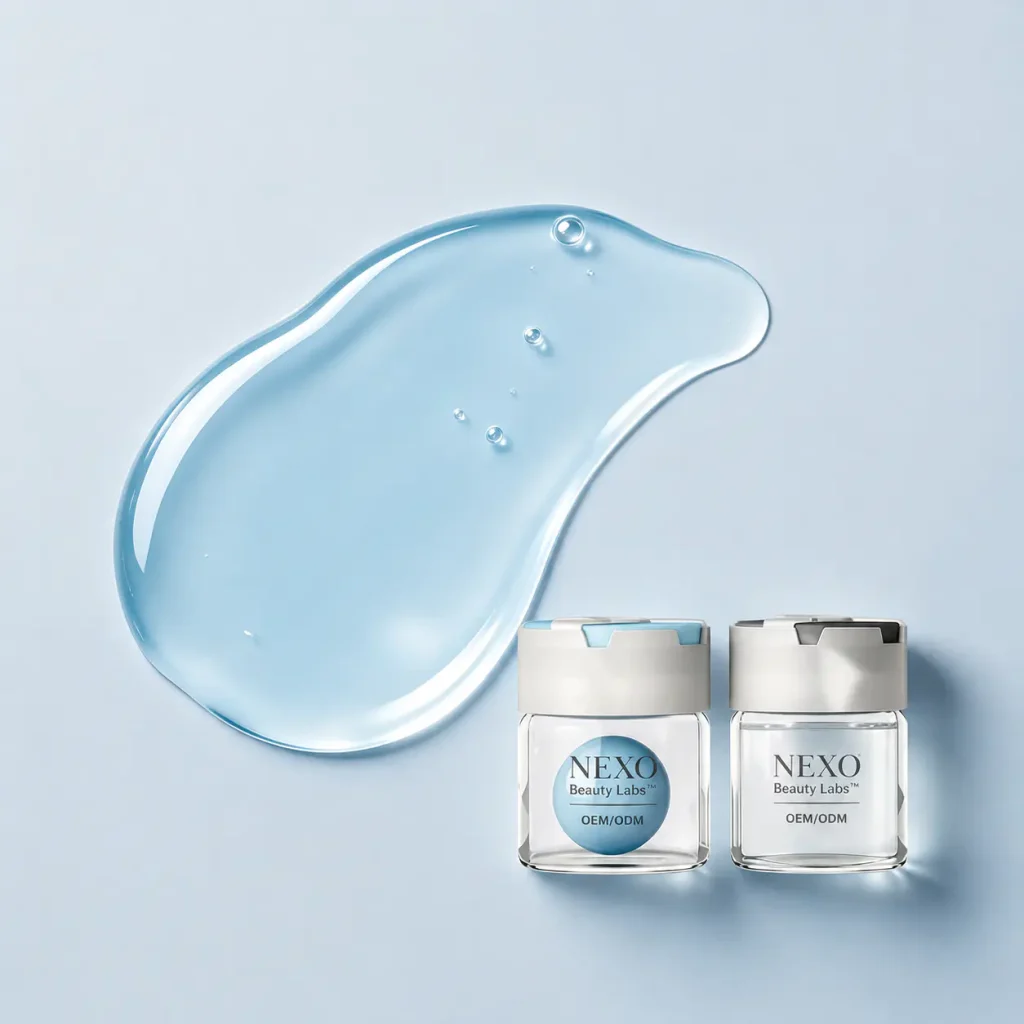
Serums, ampoules, creams, lotions, cleansers, and masks can enter a capability review with their intended use and packaging direction clearly stated.
Hair care products
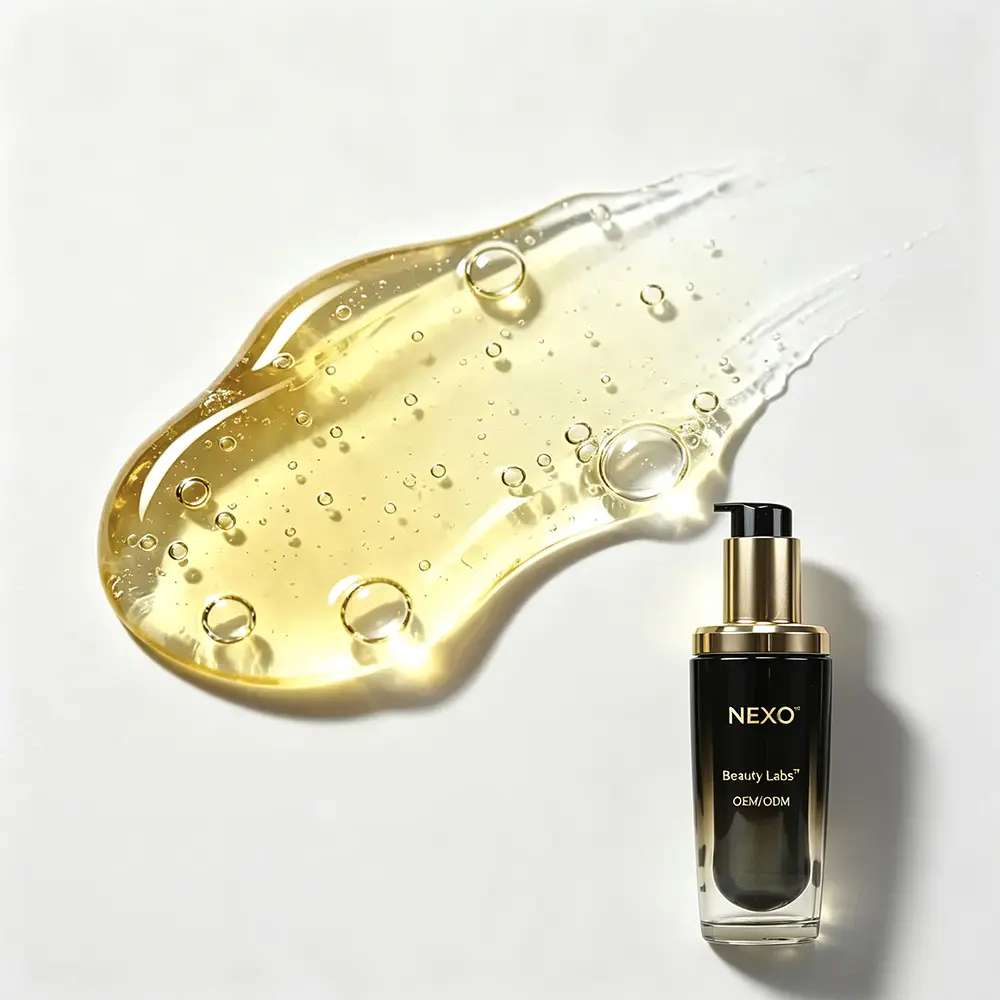
Shampoos, conditioners, hair masks, and oils require a formula-and-package match before the manufacturing route is defined.
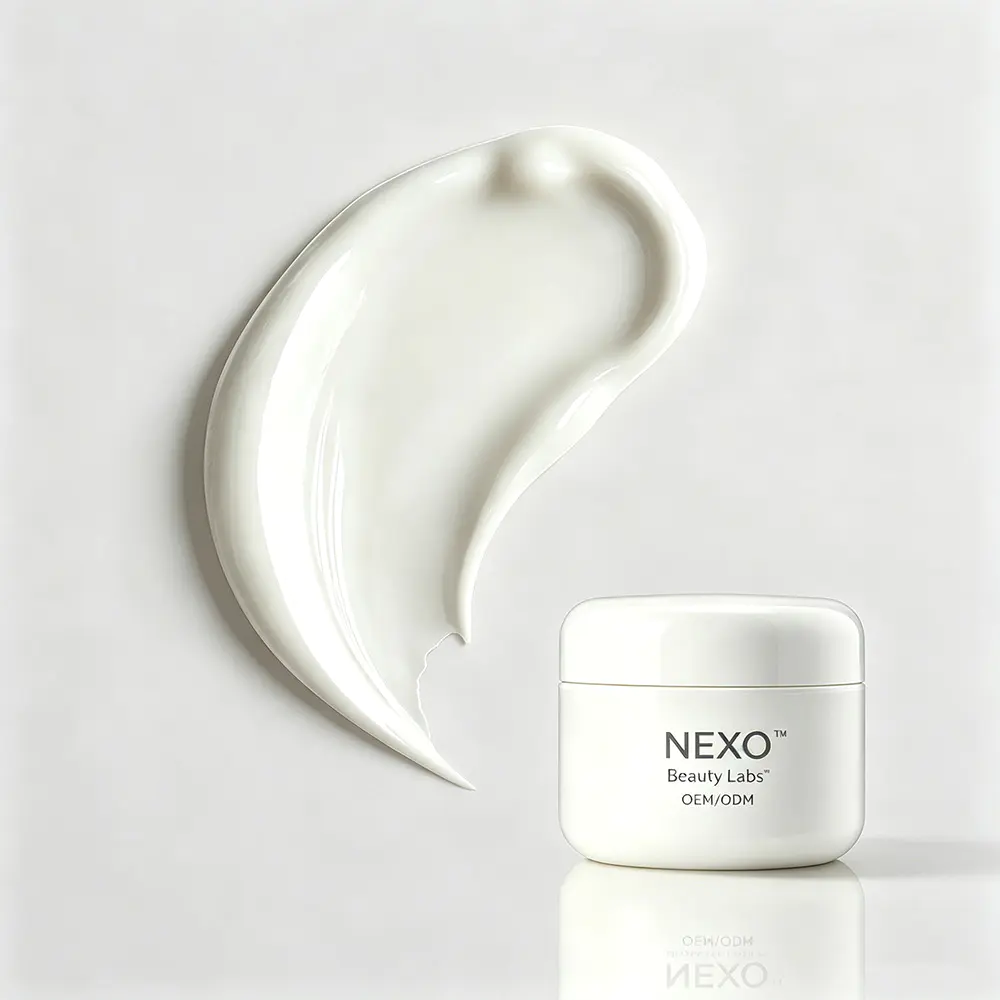
Body and personal care products
Body care such as lotions, oils, and scrubs can be reviewed within the confirmed personal care products scope.
Format examples belong in the brief
An OEM buyer faces mismatch risk when comparing a 30 mL serum bottle with a 250 mL shampoo bottle as if they were the same production and packaging application. These are brief examples, not a confirmed NEXO manufacturing envelope.
Separate fit review for adjacent categories
Color cosmetics, over-the-counter (OTC) products, and organic formulations are not automatically covered by a skincare, hair care, or body care statement. Put those requirements in the brief so NEXO can confirm scope instead of relying on a broad category label. For United States classification, the FDA looks at intended use and product claims.
Formula and Packaging Decisions Stay Connected
The risk is a formula-package mismatch because a laboratory formula does not automatically scale into a repeatable manufacturing process. Process development needs the formula strategy, manufacturing sequence, packaging interaction, expected variability, and control points to travel together.
NEXO Beauty Labs review principle: treat the formula, process, package, and market requirements as one manufacturing system before scale-up decisions are made.
Formula-side inputs
- Target product profile and intended use
- Existing formula, benchmark, or open formulation brief
- Raw material constraints and ingredient preferences
- Texture, appearance, viscosity, fragrance, and claims direction
Package-side inputs
- Tube, bottle, jar, sachet, or other primary package
- Fill volume and closure direction
- Artwork, label, secondary packaging, and market language
- Compatibility questions that must be resolved before scaling
Regulatory category follows intended use
In the United States, the Food and Drug Administration (FDA) explains that intended use and product claims help determine whether a product is a cosmetic, a drug, both, or soap. A category label is not a substitute for an intended-use review, and a common assumption about “cosmetic” status can therefore be wrong.
Factory Capability Evidence Map
This table separates confirmed NEXO facts from project variables that still require review. It gives a brand team a usable starting point without borrowing a competitor’s numbers. The FDA inspection checklist supplies external context for facility and quality questions, not proof of NEXO certification.

| Capability fact | Confirmed value | How to use it |
|---|---|---|
| Manufacturing foundation | Since 1999 | Establishes the history stated by NEXO. |
| Cosmetic manufacturing expertise | More than 25 years | Frames experience without adding facility or capacity figures. |
| International business team | Since 2020 | Supports the global project-contact context. |
| Core product categories | 3 | Skincare, hair care, and body care. |
| Development routes | 2 | OEM and ODM. |
| Capability-match brief | 7 inputs | Category, market, formula, format, packaging, quantity, launch window. |
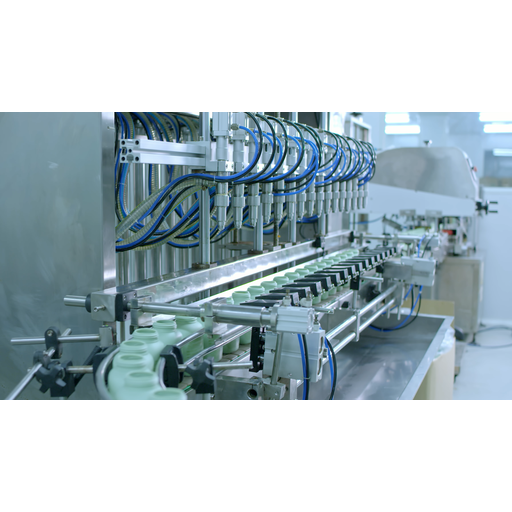
| Bound visual library | 24 client-supplied factory images | Provides visual context without proving certification or capacity. |
Quality Evidence for Market-Ready Cosmetics
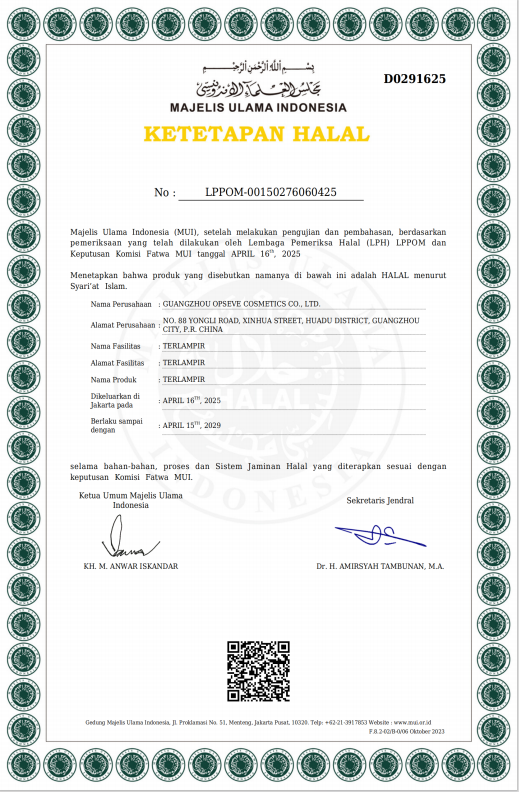
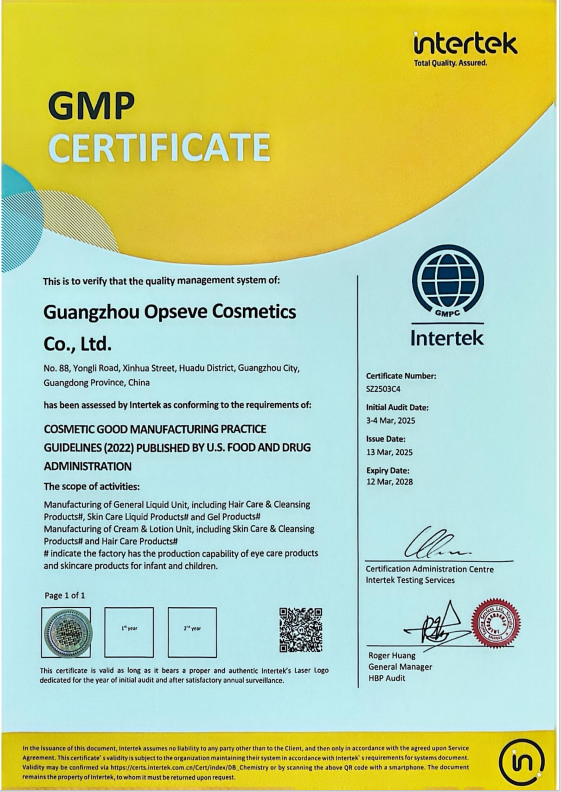
Quality control is not one certificate, one inspection photo, or one final product check. A certificate can create false confidence if buyers do not request product-specific safety, stability, challenge and compatibility evidence. The risk persists because facility and product documents answer different questions; NEXO Beauty Labs uses the FDA checklist as external buyer context.
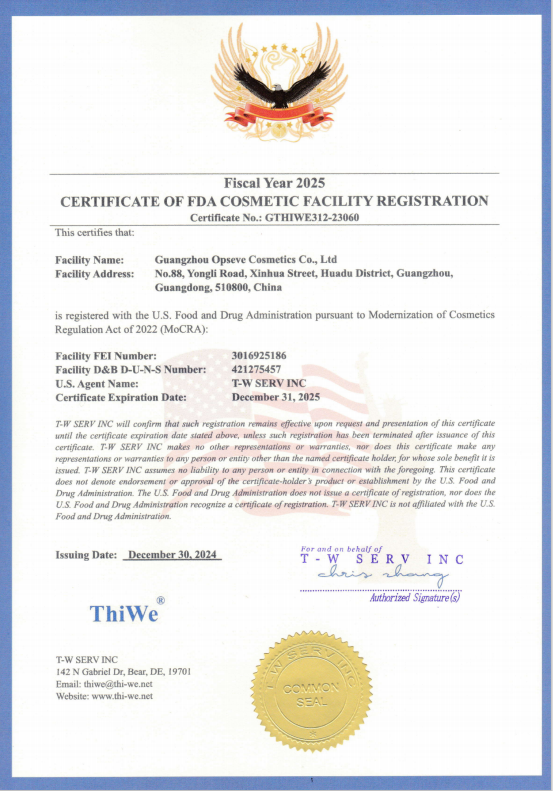
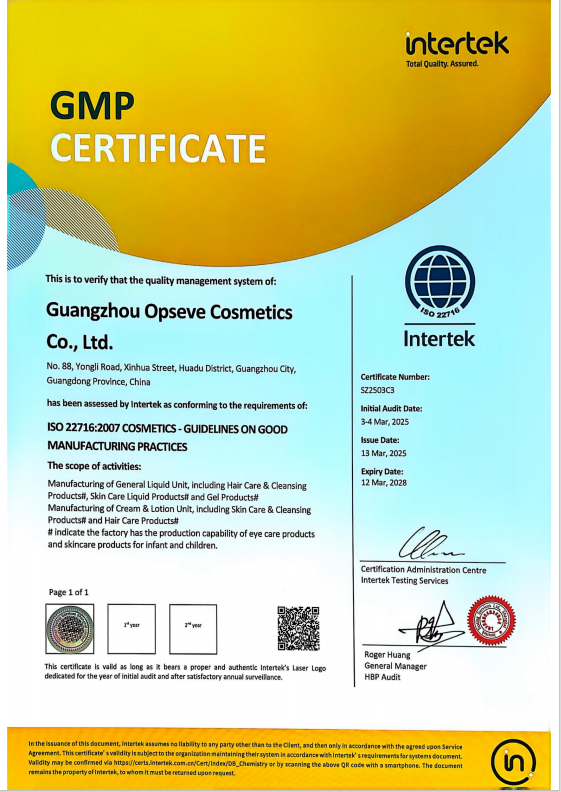
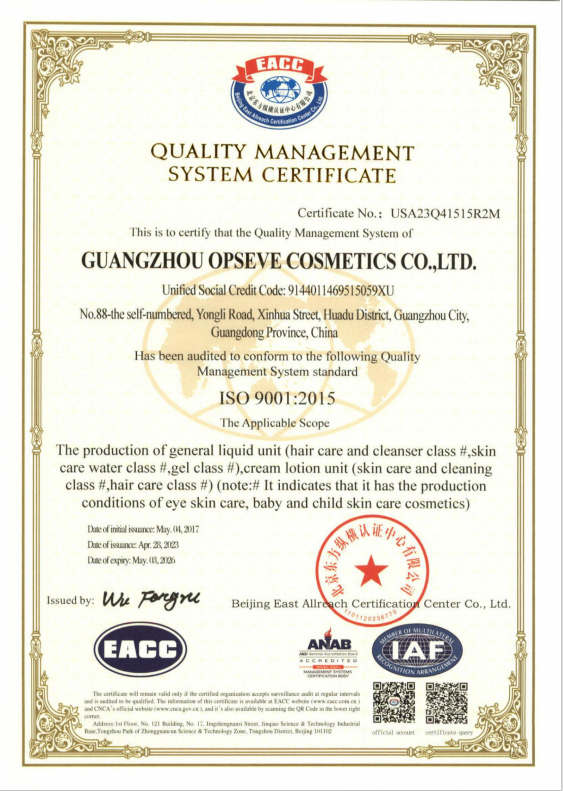
Facility-level evidence
Ask for the issuer, date, site scope, activity scope, and current status of any facility document. Do not treat a facility certificate as product-specific safety evidence.
Product-level evidence
Match safety substantiation, stability testing, compatibility work, and claims support to the exact formula, package, intended use, and target market.
Project-level responsibility
Define the specification, approval path, deviation route, change control, release documents, and record access in the commercial agreement.
Evidence must match the decision
The risk of mismatched evidence persists because facility and product documents answer different questions. Contrary to a common assumption, a facility certificate is not a substitute for formula-, package-, claim-, and market-specific evidence. NEXO Beauty Labs uses the FDA checklist as external buyer context.
×
![Enlarged Cosmetic Evidence]()
How We Work: A Coordinated Cosmetic Manufacturing Workflow
NEXO Beauty Labs connects product concepts to commercial production through a staged review, while the exact deliverables and timing remain project-specific. The sequence below is a decision path, not a promise that every project uses identical tests, documents, or approval rounds.
Brief alignment
Clarify category, consumer, intended use, target market, formula status, package, quantity, and launch direction.
Development route
Choose the OEM or ODM path and identify formula, sourcing, packaging, and approval responsibilities.
Sample review
Evaluate agreed product and package attributes, record feedback, and define what moves forward.
Scale-up review
Translate the formula strategy into a manufacturing process with explicit variability and control questions.
Commercial handoff
Confirm the approved configuration, production route, checks, release expectations, and change-control contacts.
Cosmetic Factory Capability Assessment Tools
Factory Capability Match
Check whether your current project brief contains the seven inputs needed for a useful factory review. This tool measures brief completeness; it does not approve a formula, quote a project, or confirm manufacturing fit.
Cosmetic Project Brief Builder
Turn a loose product idea into a copyable project brief. The output records what the brand knows and clearly marks open items; it does not create a quote or supply missing commercial terms.
Responsibility Evidence Map
Mark whether each project responsibility is open, has an owner, or has both an owner and named evidence. The score measures mapping completeness only; it does not judge compliance or replace an agreement.
FAQ: Frequently Asked Questions
These answers define the public capability boundary. Project-specific commercial terms, documents, and responsibilities are confirmed through a factory review.
01
Module
Yes. NEXO supports both routes.
Provide the product category, target market, formula status, product format, packaging direction, expected quantity, and target launch window. Those seven inputs make the next conversation specific.
No. It requires a scale-up review first.
No. Facility-level documents and product-specific safety evidence answer different questions, so review issuer, date, site scope, product scope, and market responsibility separately.
They depend on the formula, package, quantity, development route, target market, and documentation needs. NEXO evaluates those terms after reviewing the project brief.
Our international team supports global beauty brands, e-commerce companies, distributors, and private label partners. Project fit is confirmed through a capability review rather than a generic brand label.
Formula ownership is not automatic in contract manufacturing. Before development starts, the agreement should define background intellectual property, new project work, permitted use, transfer rights, exclusivity, confidentiality, and termination consequences. If ownership changes after a payment or milestone, that trigger should be written explicitly.
Review the legal contracting party, proposed production site, process ownership, subcontracting boundaries, quality responsibilities, document pack, and change-control route. Confirm which statements apply to the exact formula, package, market, and facility in your project. Factory photos provide useful context, but they do not replace those checks.