Get in touch with NEXO Beauty Labs Company
Sunscreen Manufacturing
Sunscreen Manufacturing for Private Label and Custom Brands
We act as your sunscreen contract manufacturer for beauty brands, distributors & e-commerce teams to bridge formulation, dosage form, packaging, testing and commercial supply in the correct order.
- Private label and custom development routes
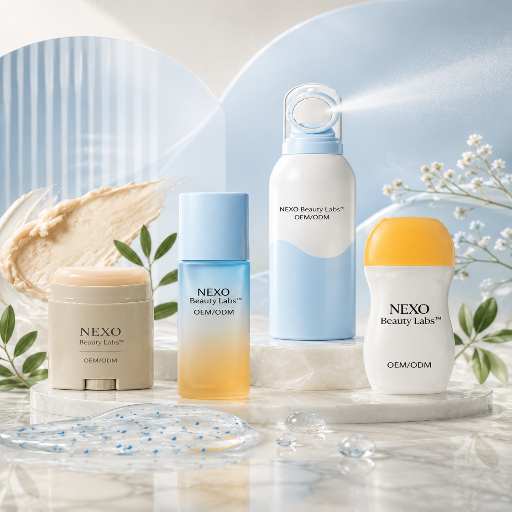
- Cream, lotion, essence, stick and spray formats
- Mineral, chemical, hybrid and skincare-infused platforms
One programme, six linked decisions
Since 1999
Manufacturing foundation
56 lines
Across cosmetic categories
200,000 units
Stated daily sunscreen filling capacity
10,000 units
Standard starting minimum per product
NEXO Beauty Labs Sunscreen Manufacturing Capabilities
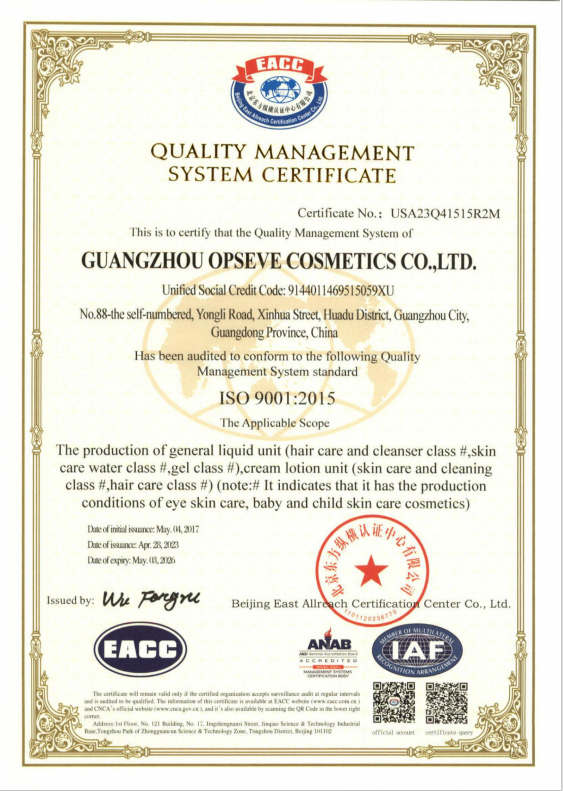
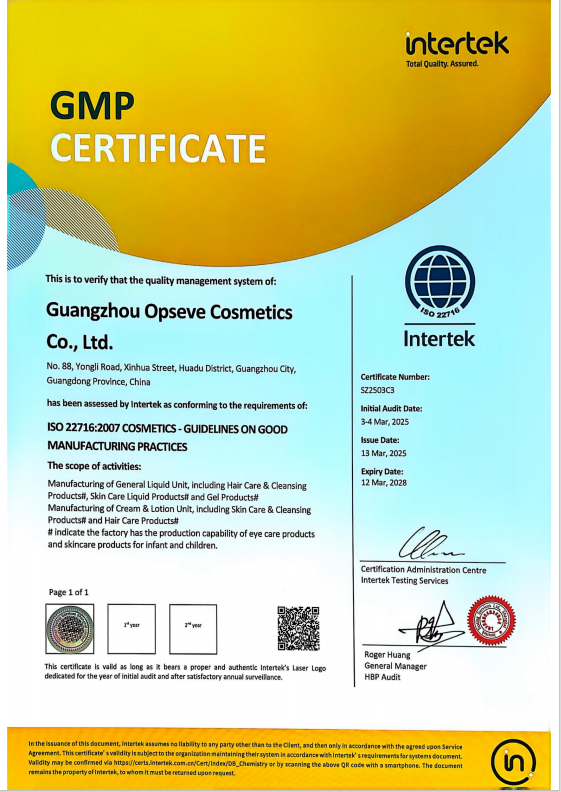
NEXO pairs 25+ years of cosmetic manufacturing experience with global business support for brands worldwide since 2020.
Buyer risk:
When buyers compare private label sunscreen manufacturers, a format mismatch can delay a launch by 25–45 days because formula, packaging and tests are connected. NEXO Beauty Labs resolves that gap through ISO 22716-controlled production, a written sample plan and a specific project response; send your target market and format. NEXO provides full-service contract manufacturing across ready-to-brand, turnkey and custom formulation routes for sun care and related skincare products.
Development
Formula direction
Choose a ready-to-brand platform, adjust an existing base, or develop a custom sunscreen around your target market, sensory brief and claim plan.
- More than 5,000 formula resources
- Texture and finish adjustment
- Sample feedback and change control
Manufacturing
Scale with route control
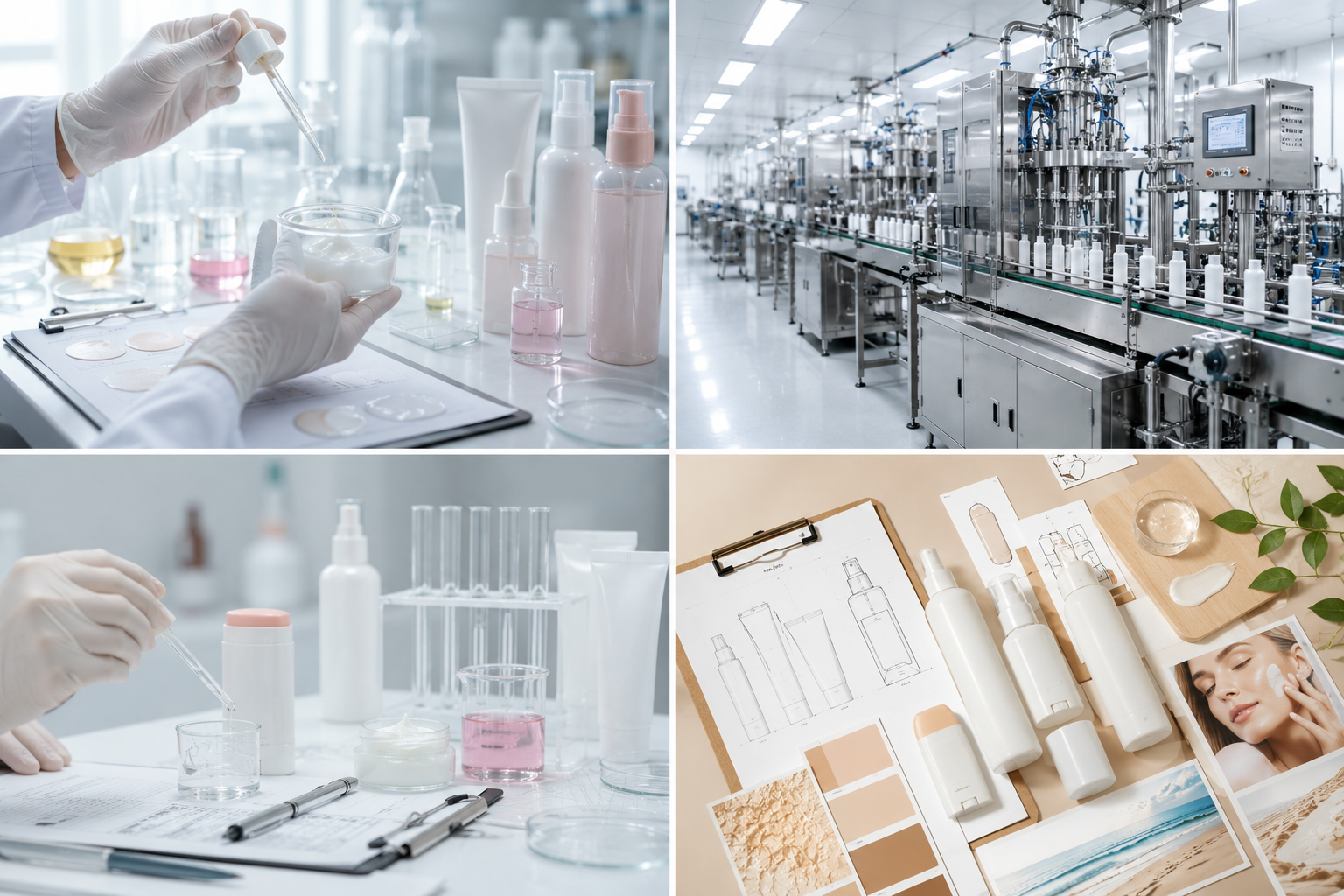
Our manufacturing platform supports development through commercial production, with the scheduled line and release plan matched to the approved dosage form and pack.
- 56 production lines across cosmetic categories
- Sunscreen filling capacity stated at 200,000 units per day
- Production timing set against line allocation and testing
Launch support
Evidence and documents
Testing support, quality records and shipment documents are planned before production so the brand team knows what must be ready for release.
- SPF and UVA/PA testing coordination
- Stability and packaging compatibility testing
- COA and MSDS documentation support
Programme fit
Brief the route before sampling
For skincare brands looking for sun care products, the brief starts with market demand, intended types of products, whether the route uses mineral and chemical filters or hybrid SPF, and the sunscreen lotion, stick or spray format. Brands seeking full-service contract manufacturing then lock the manufacturing process, MOQ, packaging design, packaging options and the evidence behind claims about how the product will protect the skin.
Route question
Brief input
Buyer decision
Sun care market
Define the sunscreen market, intended sun care category, range of products and whether the launch is one SPF product or a wider sun care line.
Helps a skincare brand choose the right sunscreen route without duplicating packaging or test work.
Filter and protection
Organic sunscreen filters absorb UV radiation; mineral filters are dispersed in the formula. Lock UVA and UVB and sun protection factor claims, then record how an oil-in-water or water-in-oil emulsion will control texture and agglomerates.
Connects sunscreen options to the formula and finished evidence instead of a label-only choice for brands.
Supplier scope
Compare manufacturing services, private label services, the product development process, safety and quality controls, and how the product manufacturer moves approved products to market.
Separates a sunscreen supplier from a packaging-only vendor and confirms whether full turnkey support is required.
Product routes
Sunscreen Product Families
Each family below opens a dedicated manufacturing page. Private-label sameness creates concern about brand differentiation, so the formula, pack and finished-test route are confirmed as one project.
01
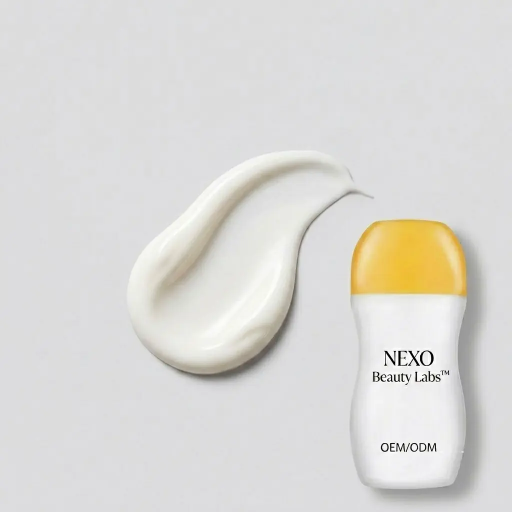
Private Label Sunscreen
Start from an established sunscreen platform, then align texture, fragrance, packaging, claims and artwork with your brand brief.
Explore the route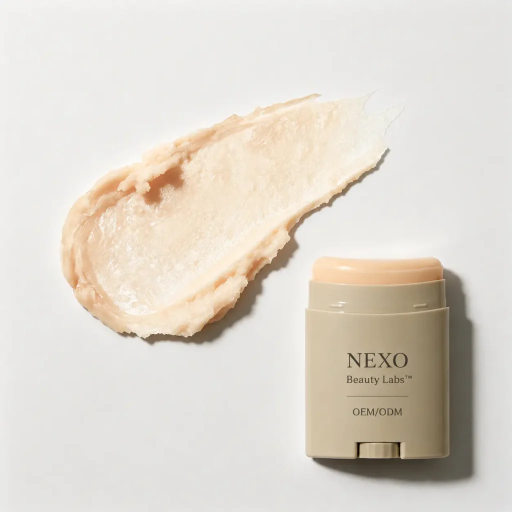
02
Sunscreen Stick Manufacturing
A private label sunscreen stick needs an anhydrous or structured route built around glide, payoff, hardness, heat behaviour and the selected oval or round component.
Explore stick manufacturing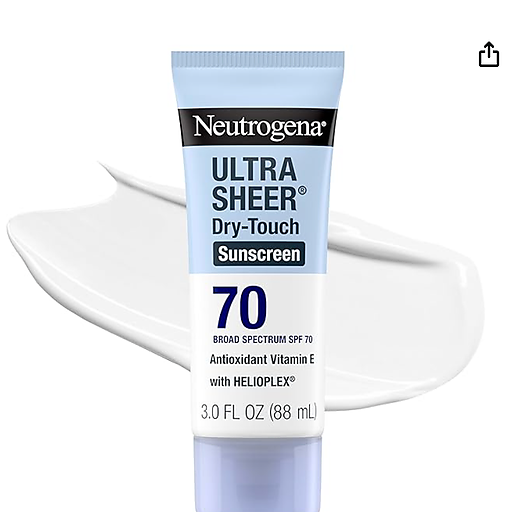
03
Mineral Sunscreen Manufacturing
A private label mineral sunscreen needs a zinc oxide or titanium dioxide system built around dispersion, whitening, spread, stability and the finished application film.
Explore mineral sunscreen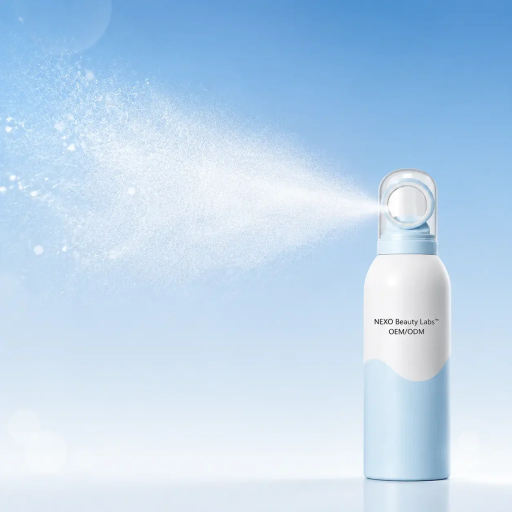
04
Sunscreen Spray Manufacturing
A private label spray sunscreen must match viscosity, spray pattern, delivery hardware, pack compatibility and application coverage to the intended user and market.
Explore spray manufacturingFormulation and Texture Platforms
The filter system does not work alone. Dispersion, emulsion structure, film formation, sensory finish and packaging all influence the product that reaches finished testing. Finished SPF and UVA evidence then follows the selected ISO 24444 and ISO 24443 route.
The trade-off:
White cast, greasy feel and irritation can become switching triggers because sunscreen formulation ingredients change dispersion, spread and the application film. A private label sunscreen for sensitive skin therefore needs a defined finish and test brief, not just a higher headline SPF.
Claim language:
For a chemical sunscreen or hybrid sun protection brief, filters are screened against the destination market and intended protection from UV rays. A reef or reef-friendly request becomes a precise exclusion and claim brief rather than a blanket status.
Mineral
Zinc oxide and titanium dioxide routes need controlled dispersion, compatible rheology and a clear sensory target for spread and visible residue.
- Tinted or untinted direction
- Coated or uncoated material review
- White-cast and drag assessment
Chemical
Organic filter systems are selected against the destination market, photostability, solubility, sensory finish and intended claim set.
- Filter compatibility review
- Lightweight finish targets
- Formula-specific test planning
Hybrid
Hybrid systems combine filter types to balance protection, aesthetics and formulation constraints without assuming the same route works in every market.
- Broad-spectrum target
- Dispersion and solvent balance
- Finished film evaluation
Skincare-infused
Supporting ingredients can build a stronger use story, but each addition is reviewed for compatibility, stability, claims and possible test impact.
- Hydration and barrier support
- Fragrance-free options
- Sensitive-skin brief alignment
Research and development route
For a sunscreen brand or private label cosmetics buyer, making sunscreen into a shelf-ready SPF product is a research and development decision, not a packaging-only task. In an emulsion route, the sunscreen manufacturing process controls the oil and water phases, oil phase and active ingredients, then checks safety and efficacy, UV protection and packaging options for the selected types of sunscreen. This gives OEM and white label buyers a clearer choice between mineral and chemical sunscreen, sunscreen lotions and other personal care formats before the manufacturing facility schedules production.
Mineral load, emollient choice and rheology are reviewed together because poor dispersion can change stability, feel and the application film.
Stick development adds wax structure, payoff, heat behaviour and hot-pour controls.
Oval and round components change fill volume, cooling, swipe area and pack-compatibility checks.
Commercial planning
Minimum Order, Samples and Production Timing
The starting minimum order quantity is 10,000 units per product. Packaging components, the number of variants and the selected development route are checked before the commercial quantity is fixed.
First-order tension: Early-stage founders want to test demand before scaling, while packaging-component minimums may set a higher floor than the formula batch. The common assumption that the cheapest first order is always the best launch is not always correct; use the worksheet to expose the hidden constraint.
24 hours
Initial project response
We return an initial project response within 24 hours on business days, identifying missing brief inputs and the next route decision.
7–14
Initial sample stage
Initial sunscreen samples are prepared in 7–14 business days after the development brief is accepted.
25–45
Production planning window
Production is scheduled in 25–45 days, with the route confirmed against formula, packaging, testing and line availability. The release record follows ISO 22716 controls.
10,000 units
Standard starting minimum per product
Testing, Quality and Market-Route Support
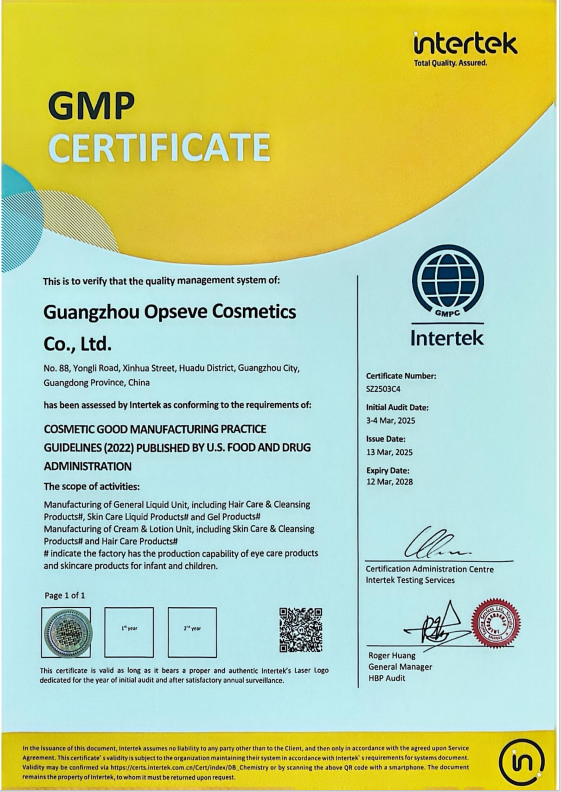
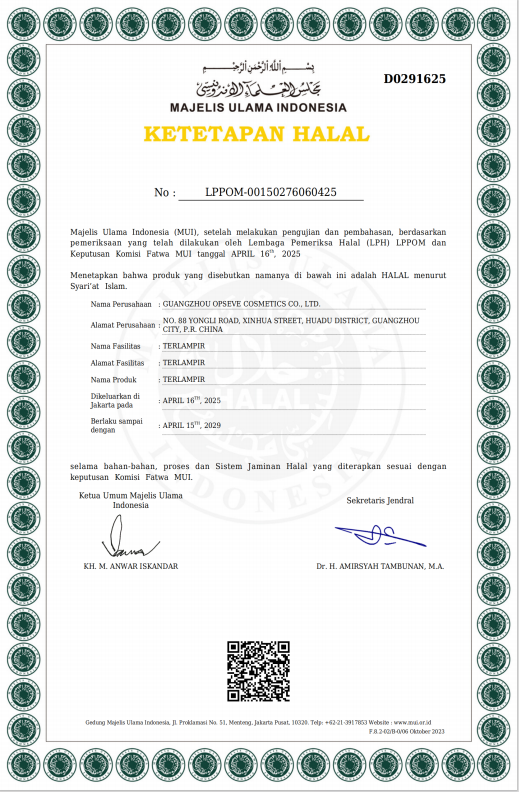
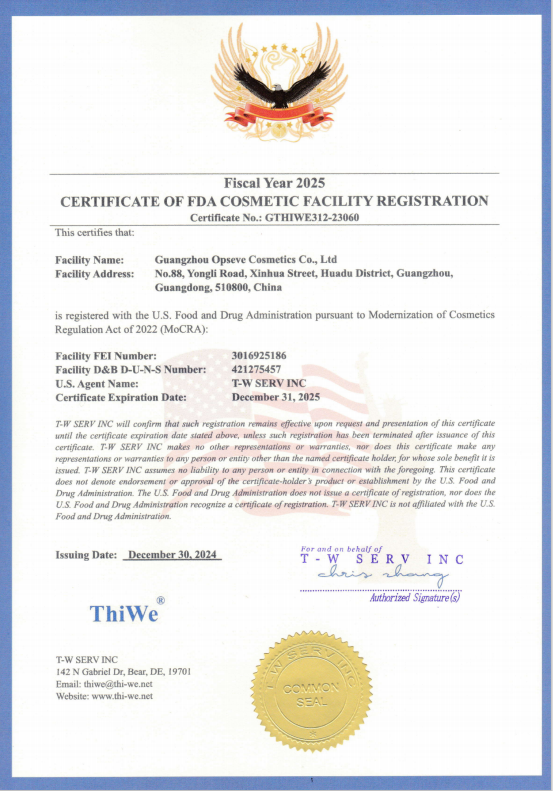
Manufacturing-system certificates, formula screening and finished-product claim tests answer different questions. We plan them as separate checkpoints so a certificate number is never asked to do the job of an SPF or UVA result.
Release risk: A GMP certificate is not a substitute for ISO 24444 SPF or ISO 24443 UVA evidence because the system, product and claim are different proof objects. NEXO Beauty Labs resolves the gap with packaging compatibility testing, a defined test plan and batch-release documents.
- Formula and raw-material review
- Appearance, viscosity and sensory evaluation
- Scale-up and process-setting review
- Change record after sample feedback
- SPF and UVA/PA testing support
- Stability testing
- Packaging compatibility testing
- Human efficacy testing support where scoped
- Approved-formula and pack check
- In-process quality control
- Finished-product inspection
- COA and MSDS documentation support
System Certificates
Global Market Route
| Market route | Programme question | Factory-side support | Brand-side owner |
|---|---|---|---|
| United States | Does the sunscreen follow the current OTC monograph drug route? | Formula and manufacturing inputs, batch documents and coordinated testing within the confirmed route | Drug establishment, compliant labeling and product-level effectiveness responsibilities must be confirmed before scope approval |
| European Union | Which Annex VI filters, material forms and claims are proposed? | Formula, ingredient, manufacturing and quality information for the safety file | Responsible Person, safety assessment, portal notification and exact nanomaterial review |
| Australia | Is sunscreen the primary therapeutic purpose or secondary to a cosmetic purpose? | Manufacturing and quality inputs aligned to the confirmed product route | Australian sponsor, product classification, listing/registration and applicable evidence |
×
![Zoomed Image]()
From Product Brief to Commercial Production
Each stage closes a specific decision before the next stage spends time or money. A material change is routed back to the earliest affected checkpoint instead of being absorbed informally.
Critical-path risk: A late formula or pack change can delay the 25–45-day production window and create avoidable rework because the approved sample, test plan and line settings are linked. Send your launch date and open decisions so NEXO can map the affected stage.
01
Brief and route selection
Share target market, product family, SPF/UVA direction, claims, desired finish, pack concept, order quantity and launch date.
02
Formula direction
Select a ready-to-brand, adjusted-base or custom route, then confirm the filter system and the ingredients that are required or excluded.
03
Samples and acceptance
Review texture, spread, residue, colour, scent, application and pack interaction against written acceptance notes.
04
Testing and packaging compatibility
Lock the test plan, laboratories, samples, component materials and the changes that would require a repeat check.
05
Production and quality control
Approve the production formula and components, schedule the line, complete in-process controls and inspect the finished batch under the ISO 22716 production record.
06
Release documents and shipment
Complete the agreed release package, including COA and MSDS documentation support, then prepare shipment against the selected delivery route.
Strategic Sunscreen Manufacturing & Launch Protocols
Process Management
Sunscreen Programme Dependency Register
Mark each decision that has a named owner and a written answer. The result identifies how many upstream dependencies can still reopen formula, packaging, testing or production work.
Access RegisterInventory & Packaging
First-Order Exposure Worksheet
Compare the planned units per product with the packaging-component minimum. The worksheet identifies which number sets the physical first-order quantity; it does not calculate price or return on investment.
View WorksheetQuality Control
Sample Acceptance Protocol
Approve a sunscreen sample in four layers. Sensory preference, application, packaging and evidence readiness remain separate so one positive first impression does not hide an unresolved launch dependency.
Review ProtocolTimeline Planning
Sunscreen Launch Critical Path Planner
Model a planning path from samples through testing, packaging and production. Testing and packaging are shown in parallel after sample approval; the result is a planning estimate, not a delivery promise.
Open PlannerKnowledge Base
Sunscreen Manufacturing FAQ
Use these answers to prepare the first brief. Route-specific details are confirmed in the written project response.
What is the starting minimum order for sunscreen manufacturing?
The standard starting minimum is 10,000 units per product. The quoted route also checks packaging-component minimums, variant count and any test samples that sit outside sellable inventory.
Can NEXO support both private label and custom sunscreen?
Yes. A project can start from a ready-to-brand platform, an adjusted base or a custom formula, with the route selected against the target market, claim set, timing and differentiation required.
Which sunscreen formats can be developed?
Development routes cover cream, lotion, essence, stick and spray formats. Each format receives its own formula, filling, pack-compatibility and finished-test review.
Can mineral, chemical and hybrid filters use the same process?
No single process applies to every system. Mineral, chemical and hybrid routes differ in dispersion, solubility, rheology, film formation, sensory finish and market-specific filter options.
How long does the first sample stage take?
Initial sunscreen samples are prepared in 7–14 business days after the development brief is accepted. Formula complexity, requested changes and component availability can move the critical path.
How long does sunscreen production take?
Production is scheduled in 25–45 days. The window is planned against approved formula, confirmed packaging, required testing, line allocation and batch release.
Which sunscreen tests can NEXO support?
Support can include SPF and UVA/PA testing, stability testing, packaging compatibility testing, sensory evaluation and human efficacy testing. The exact methods, including ISO 24444 or ISO 24443 where applicable, laboratories and sequence follow the target market and claim set.
Which documents are available with the production programme?
COA and MSDS documentation support is available for the production programme. Additional ingredient, technical, test or shipment documents are scoped in the project response.
Can one sunscreen formula be used for the United States, Europe and Australia?
Do not assume one route covers all three. Product class, permitted filters, Responsible Person or sponsor duties, testing, labeling and manufacturing requirements are reviewed market by market.
What should be included in the first sunscreen brief?
Send the target market, dosage form, SPF/UVA direction, claim list, filter preference, sensory target, prohibited ingredients, pack concept, quantity, launch date and any reference products.