Get in touch with NEXO Beauty Labs Company
Halal Cosmetic Manufacturing for Global Beauty Brands
Choosing a halal cosmetic contract manufacturer is not a yes-or-no question about one factory. The right answer depends on which market you sell into and which certification body signs your certificate. Those two choices decide what your production line, your ingredient file and your label have to look like.
NEXO Beauty Labs manufactures skincare, sun care, masks, hair care and body care to your halal requirements from a 36,000 m2 facility in Guangzhou with 56 production lines. This page gives you the production control we run, the project files we hand over, and the questions to ask every factory on your shortlist.
- Quotes back within two business days
- First samples in 3-7 business days
- Production in 10-15 working days
- Minimum order from 10,000 units per SKU
Project Confidentiality
A Non-Disclosure Agreement covering your product concept, formulation information and commercial requirements can be signed before technical details are exchanged.
36,000 m2
Cosmetic manufacturing facility
56
Production lines
6,000,000 / day
Serum capsule capacity
200,000 / day
Sunscreen unit capacity
5,000+
Market-ready formula resources
Since 1999
Manufacturing foundation
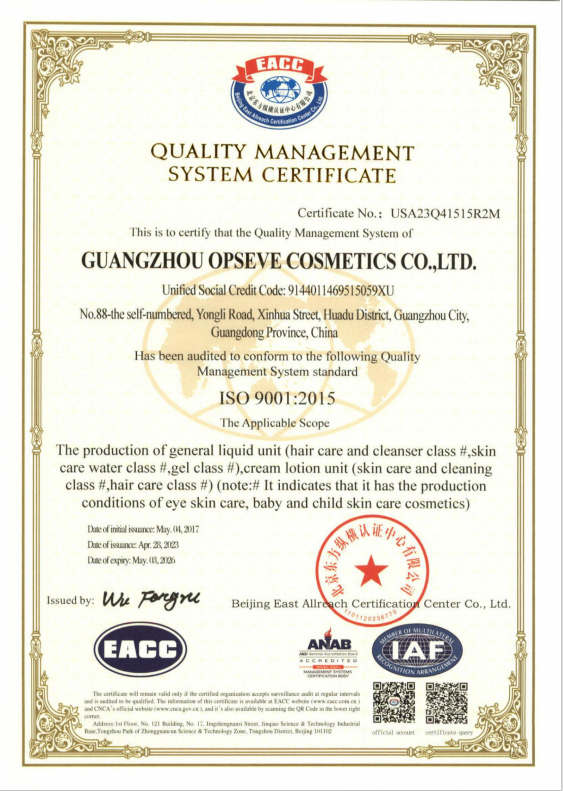
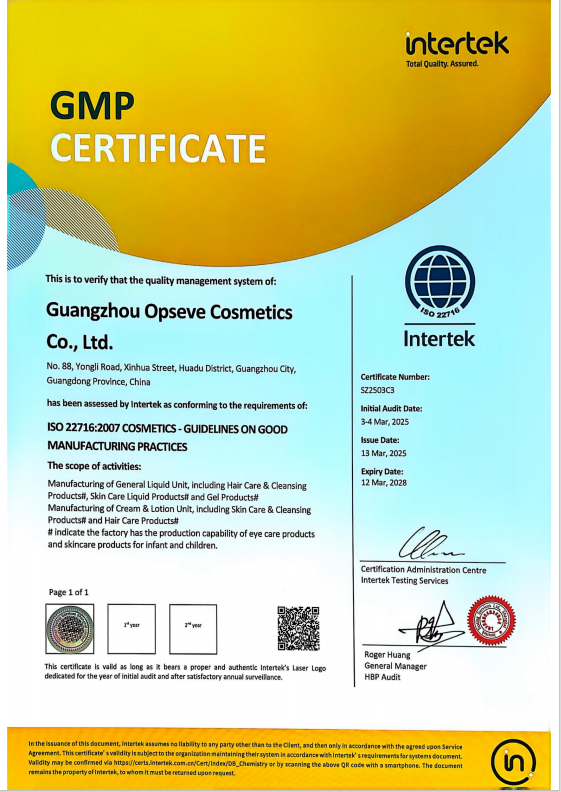
Happi reported the Saudi halal cosmetics market at USD 3.57 billion in 2024 and projected USD 11.16 billion by 2033, a compound annual growth rate of 13.5 percent, citing ResearchAndMarkets.com. Our international business team has supported brands developing beauty products across North America, Europe, Asia-Pacific and Southeast Asia since 2020, with manufacturing controls organised under ISO 9001 and ISO 22716.
Halal Cosmetics Contract Manufacturing Services
Halal cosmetics contract manufacturing projects arrive in one of three states, and the starting point sets the sampling clock. We take all three, and we tell you at quotation which one you are in.
You select from more than 5,000 market-ready formula resources across skincare, hair care, body care and personal care. Ingredient screening is applied to the selected base before sampling.
You send a reference sample and we develop toward its texture, sensory profile and performance. Where an original ingredient is not acceptable under your halal requirements, we propose a substitute and show it on the sample.
You send a brief and we build the formula from target market, brand positioning, desired texture and performance goals. Formulation development and technical innovation are supported by Winskin Life Science Research Institute.
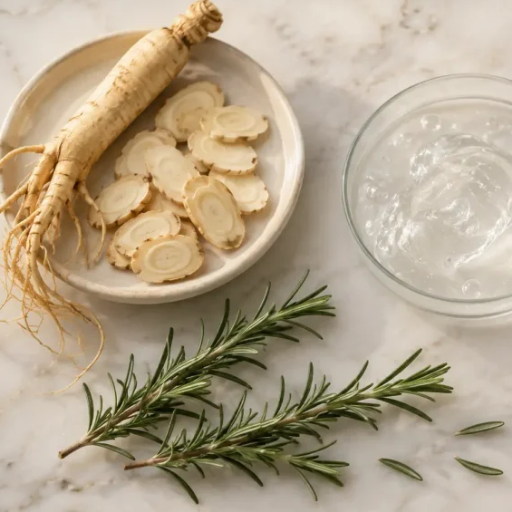
- Skincare – serums, essences, emulsions, creams and facial oils; this is the halal skincare manufacturer role most briefs start from, and it runs through our private label skincare manufacturing programme.
- Serum capsules – plant-based single-dose formats with precise filling and heat resistance.
- Sun care – cream, lotion, fluid and stick textures across dosage formats.
- Cleansers and masks – you can see how we build cleanser formulas for private label brands before you brief us.
- Hair and scalp care – shampoos, conditioners, hair oils, leave-in serums and treatments.
- Body and personal care – lotions, butters, washes and hand care.
| Task | OEM route | ODM route |
|---|---|---|
| Formula origin | You supply the formula or reference | We develop from our library or your brief |
| Ingredient screening against halal requirements | We run it | We run it |
| Packaging selection | You specify, we source and coordinate | We propose, you approve |
| Stability and compatibility testing | We arrange | We arrange |
| Label content and market claims | You own | You own |
| Halal certificate for the finished product | Issued by the body you select under its certification process | Issued by the body you select under its certification process |
Halal Private Label Cosmetics - Ingredient and Formulation Control
Ingredient control starts before the first sample. Every raw material in your formula is screened against the requirements of the certification body you are targeting.
porcine-derived and non-halal animal derivatives are excluded from halal projects; where an animal-derived material is required, its source documentation is collected before use.
every ingredient in your formula is supplied with its INCI name for your certifier and for your label.
where a raw material is halal-certified, the certificate or declaration is collected and filed against the formula; where it is not, it is flagged before sampling rather than after.
the acceptable position on ethanol is set by your certification body, not by us; see the comparison below before you fix your specification.
if an ingredient, a supplier or a process step changes, it is reported and re-approved rather than substituted silently.
batch records, supplier records, cleaning logs and production records are kept so the chain can be reconstructed on audit.
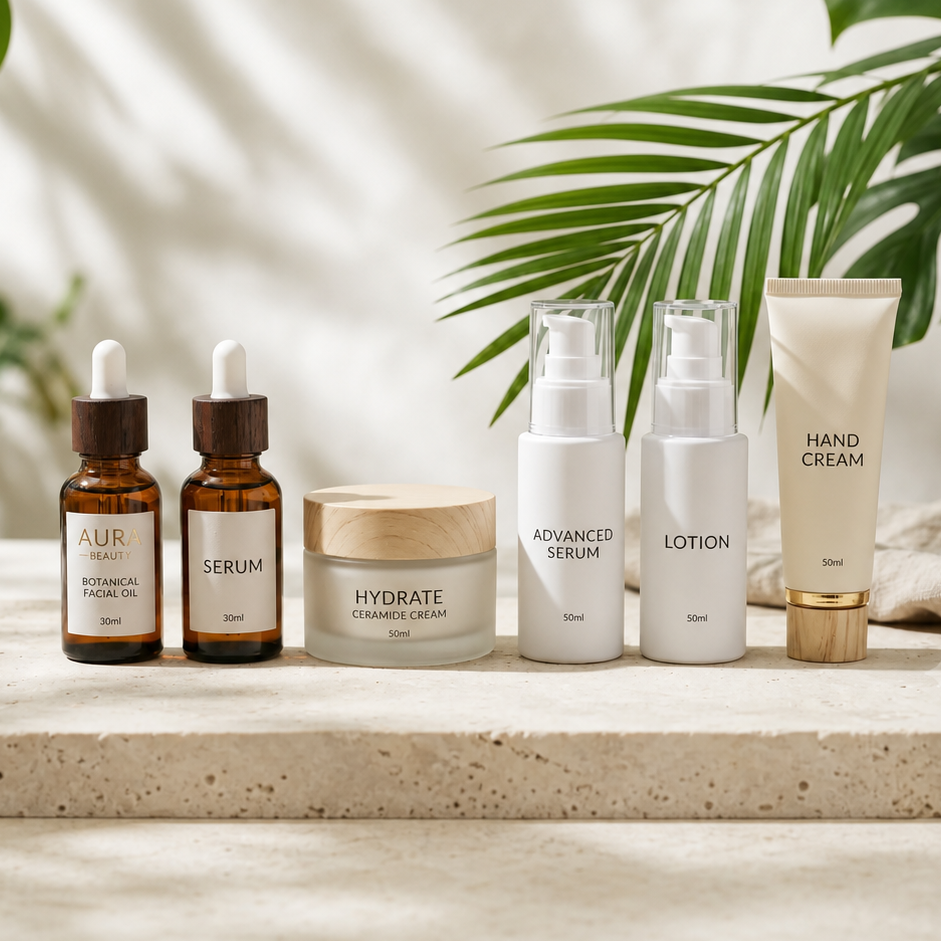
Public guidance covers different materials, product routes and institutional scopes, so its numbers are not interchangeable. The table records four published positions from two American Halal Foundation pages, a 2019 academic review and LPPOM MUI. Use it to frame a written question for your certifier, not as a universal formula limit.
Two positions come from the same certification body on two of its own pages, while the academic review is not a certifier. We therefore do not collapse the four rows into one halal percentage. We build your formula to the written position of the body you select and record that choice at quotation.
"The first thing we ask on a halal brief is not what texture you want. It is which certifier you are going to. A formula that clears one body's ingredient position can fail another's on a single solvent, and that is a resampling cycle nobody budgeted for."
— NEXO Beauty Labs Formulation Team
| Source and scope | Published position on ethanol in cosmetics |
|---|---|
| American Halal Foundation, certification requirements table | Ethanol and other intoxicating alcohols are not permitted. |
| American Halal Foundation, certification process page | Denatured or synthetic alcohols may be permissible in limited and justified use, at concentrations generally under 0.5 percent. |
| Academic review in Cosmetics (MDPI, 2019) | The review reports that ethanol is allowed in topical formulations provided it does not exceed 1 percent. It cites a 2016 food-industry paper for that statement, so this is an academic discussion rather than a certifier's cosmetics rule. |
| LPPOM MUI, citing MUI Fatwa No. 11 of 2018 | Ethanol use in cosmetics is not limited by content, provided it does not originate from the khamr industry and is not medically harmful. The 0.5 percent residue figure applies to beverages. |
Packaging, Filling and Labeling
Packaging is not outside the halal question. A 2023 academic review of halal control points in packaging manufacture found that the ingredients, additives and processing aids used in direct-contact paper, glass, metal and plastic packaging are themselves in audit scope.
- Packaging sourcing - packaging components are sourced and coordinated through suppliers, and the material declarations that come with them are filed alongside your formula documentation.
- Filling formats - tubes, jars, bottles, airless pumps, sticks and single-dose capsules, matched to the texture rather than the other way round.
- Compatibility testing - packaging compatibility is tested with your approved formula before production commitment.
- Label content - ingredient declaration, market language and mandatory statements are prepared for your destination market; the claims themselves stay yours.
Halal Logos Are a Label Decision, Not a Default
Malaysia's National Pharmaceutical Regulatory Agency states that a halal logo on a cosmetic label is voluntary, but may only be used after certification and approval by JAKIM or a JAKIM-recognised body. The same guidance requires cosmetic labels to carry Bahasa Malaysia and/or English. Neither of those is a formulation question, and both can block a shipment.
Get the certification-system comparison for your target market → Tell us where you sell and we will send the label and logo conditions that apply there.
Request a ConsultationProduction Specifications and Standard Lead Times
These are the figures a halal skincare manufacturer gets asked for on the first call, and the two conditions on the production clock are the ones that move dates. We publish them here so you can compare us before that call rather than after it.
Minimum order quantity
From 10,000 units per SKU, with flexible evaluation for new launches and market tests
Quotation turnaround
Within two business days, with unit price, lead time and the documentation set named
First samples
3-7 business days after the brief is agreed
International sample delivery
5-7 business days, depending on destination
Production run
10-15 working days after formula approval and packaging confirmation
Serum capsule capacity
Up to 6,000,000 capsules per day
Sunscreen capacity
Up to 200,000 units per day, across our sunscreen manufacturing lines
Production lines
56 lines across a 36,000 m2 facility
Formula library
5,000+ market-ready formula resources
Production runs 10-15 working days, and the clock starts at formula approval and packaging confirmation, not at the purchase order. That distinction is the single most common source of dispute in this industry, so we would rather write it on the page than argue it later.
Pricing Mechanism, Payment Terms and Delivery
Price depends on formula complexity, packaging specifications, order volume and the tests your market requires, rather than a fixed price list. Two brands ordering the same serum at the same volume can arrive at different unit prices because one opted for custom glass and additional stability protocols.
How Your Quote Is Produced
Quotes come back within two business days, with unit price, lead time and the document set named. If a number in your brief will cause a problem later, we say so in that reply, not at the sampling stage.
01
Deposit
payment runs on a deposit of 30-50 percent by bank transfer at order confirmation, with the balance settled before shipment.
02
Delivery terms
we ship FOB from a South China port, with CIF or DDP quoted on request.
03
Confidentiality
a Non-Disclosure Agreement covering your product concept, formulation information and commercial requirements can be signed before technical details are exchanged.
04
What we need to start
a product concept, a target formula or INCI direction, a reference sample you want matched, or a packaging specification.
Packaging-Led Order Floor
The formula rarely sets the order floor. Packaging does, and the trade-off is tooling cost against exclusivity: stock components can remove custom tooling and lower the floor, while a custom mould adds exclusivity but can bind both volume and schedule.
| Packaging route | Published starting volume | What it does to your first order |
|---|---|---|
| Custom glass with exclusive shape and tooling | Coverpla's made-to-measure programme starts production at 5,000 units, per Packaging Europe, November 2025 | Tooling amortisation sets a hard floor that no formula minimum can lower |
| Stock packaging from a component supplier | Aptar stock formats, including airless, reported at 5,000 pieces on a four-week lead time at Luxe Pack Makeup in Los Angeles, March 2019 | Shortens the clock and removes tooling from the critical path |
| Customised tubes | Reported from 500 pieces at the same 2019 event | The lowest-friction route to a small launch volume |
| Decorated stock components | Reported at 20,000 pieces in the same 2019 report | Decoration, not the formula, becomes the binding constraint |
Those four figures are published programmes from European and North American component suppliers, not our minimums. Our own production minimum is separate and starts at 10,000 units per SKU.
Quality Control and Halal Compliance Documentation
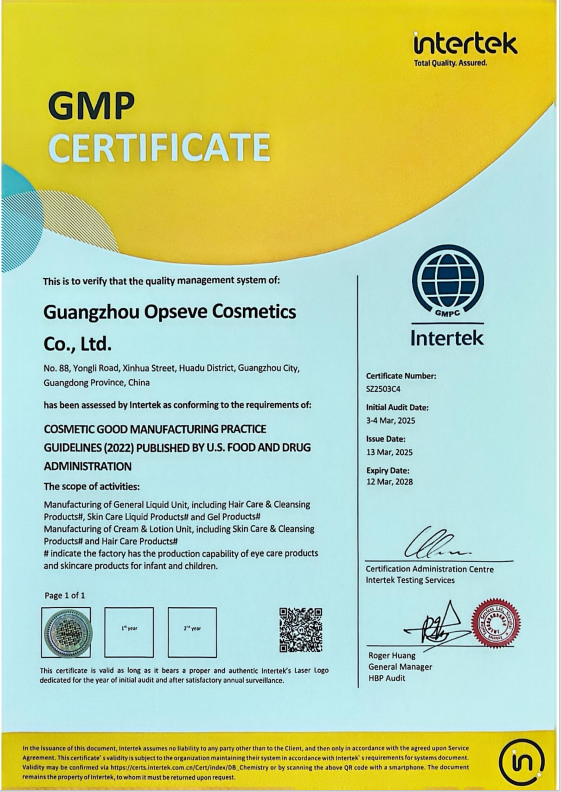
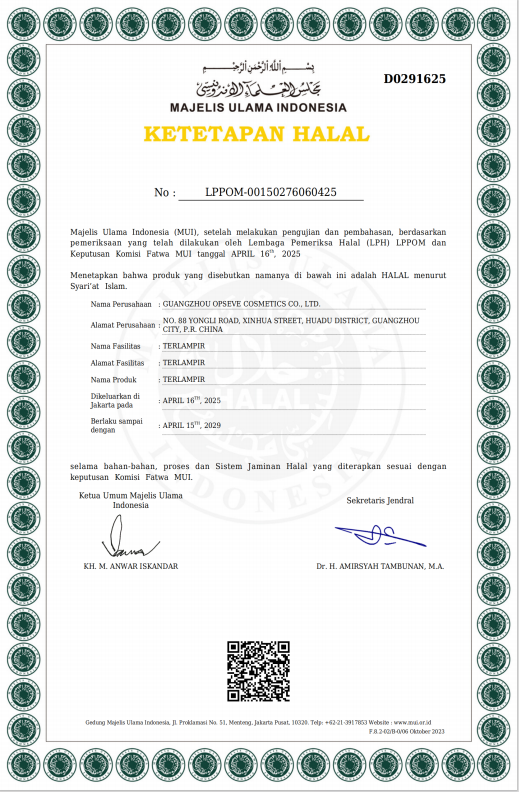
Buyers who search for a halal certified cosmetics manufacturer are usually asking two questions at once: does the factory run the controls, and who issues the certificate. NEXO Beauty Labs runs the controls - production control, ingredient screening, cleaning and segregation procedures and batch traceability records are ours to run and to be audited - while the halal certificate itself is issued by the certification body you select for your target market. That sentence is the whole scope, and everything below sits inside it.
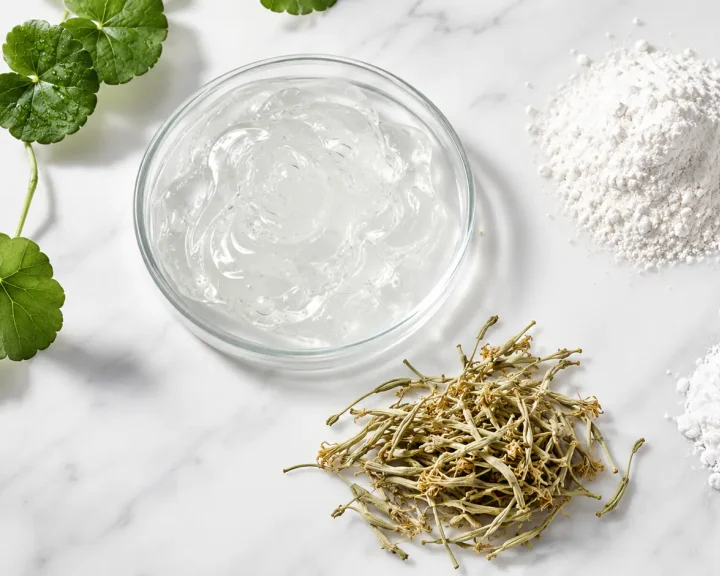
What a certifier audits at a cosmetics manufacturer is the quality system first and the halal control points second. A halal certificate sits on top of high-quality manufacturing practice and is not a substitute for it, which is the reason the audit starts with the quality records rather than the ingredient list.
- ISO 9001 - quality management system.
- ISO 22716 - cosmetics good manufacturing practice, the GMP standard written for this industry.
- GMPC - good manufacturing practices for cosmetics, applied across our manufacturing and quality systems.
- Project files - relevant records are provided according to project requirements.
- Site visits - our research and development centre can be visited by appointment, so the quality system can be inspected rather than taken on trust.
The risk is approving a shared line before the certificate scheme has defined the required controls. The reason is that halal certification organizations define scope under their own schemes rather than through one universal factory label. Unlike a generic "halal-friendly" claim, the American Halal Foundation publishes a conditional shared-equipment route with full cleaning and a validated sertu procedure where porcine contact has occurred; obtain the selected certifier's written segregation and line-release requirements before approving production.
| System | Markets served | Shared production line | Cleaning requirement |
|---|---|---|---|
| American Halal Foundation | North America | Conditionally permitted | Full cleaning plus a validated sertu procedure, described as a seven-wash sequence including one wash with soil or mud where porcine contact has occurred |
| Your selected destination-market scheme | Target market | Confirm in writing | Obtain the scheme's requirements for segregation, cleaning, line release and certificate scope before production planning |
Shared lines get the attention because they are easy to argue about. They are one link in a chain, and a certifier walks the whole chain. The certificate that makes your finished product halal certified is issued at the end of that chain, not at the start of it.
| Link | Document to ask any factory for |
|---|---|
| 1. Raw material origin | Supplier halal certificates or declarations, filed per material |
| 2. Formula and ingredient screening | Full INCI list with the screening decision recorded per ingredient |
| 3. Production line and cleaning | Written cleaning procedure, the sertu record where it applies, and who signs the line release |
| 4. Batch traceability | Batch records, production records and retained-sample records |
| 5. Packaging materials | Material declarations for direct-contact components |
| 6. Storage and transport | Segregation arrangements for finished goods and raw materials |
| 7. Personnel practice | Training records and the standard operating procedures staff actually follow |
| 8. Label and logo recognition | Confirmation that your destination market recognises the issuing body |
Halal Evidence Request Sheet
A certificate proves a factory passed an audit on a date. It does not prove your formula, your pack format or your run eighteen months from now will be handled the same way. Ask every factory on your shortlist these seven questions, including us.
- Which body issued the certificate, and is it recognised in the market you sell into?
- What is the certificate number, and what are its issue and expiry dates?
- Does the scope cover your exact product category and your private-label item, or only a different product line?
- Is the halal production dedicated or shared, and if shared, what is the written cleaning and sertu procedure?
- Who signs the line release, and where is that signature recorded?
- How are raw material halal certificates collected, filed and refreshed when they expire?
- What is the change-reporting mechanism when an ingredient, supplier or process step changes?
Two public tools verify most of that without asking the factory: IAF CertSearch and the halal certificate database at verify.halalcc.org. A logo on a website is not evidence, and the red flag is a supplier who answers "halal-friendly" when the question was about third-party certification.
Quality Control Across the Production Cycle
Incoming
Raw material inspection against specification, with supplier certificates checked at receipt.
In process
Formula evaluation and production monitoring, with line conditions recorded per batch.
Release
Stability testing, packaging compatibility testing, sensory evaluation and finished product inspection before shipment.
Human efficacy testing is arranged with external laboratories when your market or your claim set requires it. A factory that presents outsourced testing as in-house capability gets found out during your certifier's audit, not before it.
Ask us first, then ask every other factory on your shortlist the same seven.
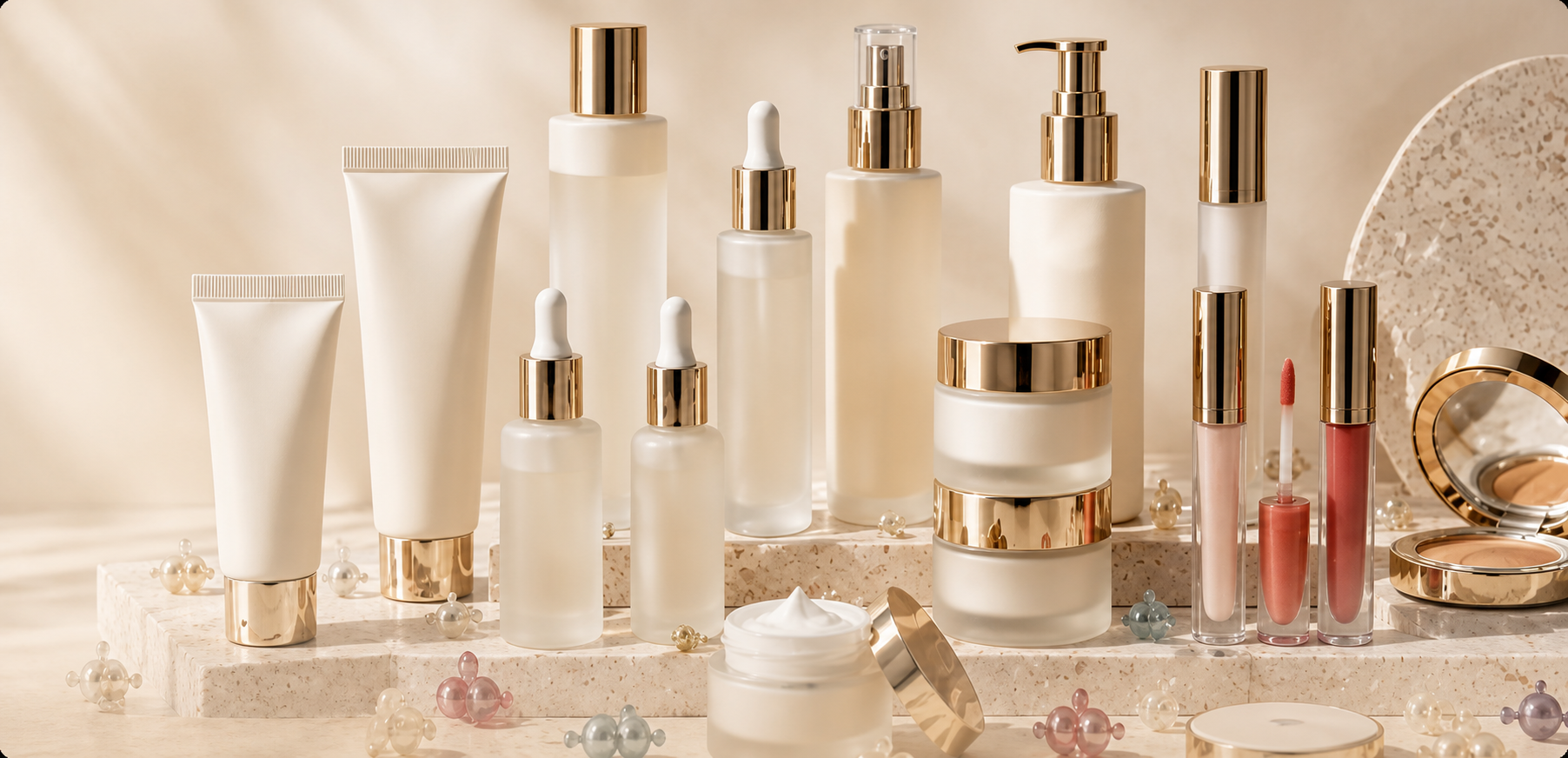
How We Work: From Brief to Shipment in Six Steps
Published accounts of why brand owners change cosmetic contract manufacturers point at production delays, poor communication, quality inconsistency, rising minimum orders and lack of support. Those are process failures, not formulation failures, which is why ours is written down rather than described in adjectives. Ask any halal cosmetic contract manufacturer what happens at step four when you reject a sample, because that answer separates suppliers more reliably than a certificate does.
-
Requirement and confidentiality
You send the concept, target market and any reference. A Non-Disclosure Agreement can be signed before technical details are exchanged.
-
Formula direction and quotation
We identify which of the three starting routes you are in and return a quote within two business days, including unit price, lead time and the documentation set.
-
Sampling
First samples are prepared in 3-7 business days, with international delivery in a further 5-7 business days.
-
Sample evaluation and approval
You evaluate texture, sensory profile and performance. Samples are evaluated and approved before any production commitment.
-
Production
The run takes 10-15 working days from formula approval and packaging confirmation, with line conditions recorded per batch.
-
Release and shipment
Finished product inspection, then shipment FOB from a South China port, with CIF or DDP quoted on request.
Export Paperwork and Market-by-Market Requirements
Every shipment carries export paperwork, product technical files, ingredient information and batch quality records. What differs by market is what your buyer or regulator does with them. Brands searching for a Middle East cosmetic OEM ODM manufacturer are really asking whose certificate their destination market accepts, which is a question about the issuing body rather than about where the factory stands.
Market Mandate Status Map
One assumption costs you more time than any other: that halal certification is legally required wherever Muslim consumers are the market. It is not, and the real map is more specific.
Gulf Cooperation Council states
No published blanket halal mandate for cosmetics.
Saudi Arabia's Food and Drug Authority extended mandatory halal certification and halal shipment certification to a defined list of food categories from November 2023, as reported by SGS in January 2024, and GSO 2055 is the Gulf halal standard covering food and cosmetics. Cosmetics still require product listing with the authority before sale, and requirements differ by country.
Indonesia
Compulsory after 17 October 2026 under Government Regulation No. 42 of 2024, which BPJPH lists alongside medicines, chemical products, genetically engineered products and consumer goods.
BPJPH counted 81,343 domestic and 7,558 imported cosmetic products already certified as of May 2025.
Malaysia
The halal logo is voluntary on the label, but usable only after certification by JAKIM or a JAKIM-recognised body.
Labels must carry Bahasa Malaysia and/or English.
United States
No halal mandate.
Separately, the responsible person named on the label completes facility registration and product listing; registration and listing are not approval and produce no certificate.
Standards Your Certifier May Work To
We reference these because your certifier will, and knowing which number applies to your market shortens the conversation. Naming a standard is not the same as holding a certificate to it, and we do not present it as one.
- OIC/SMIIC 4:2018 - general requirements for halal cosmetics, published by the Standards and Metrology Institute for Islamic Countries.
- MS 2200-1:2008 and MS 2200-2:2013 - Malaysian standards covering animal-derived materials, and cosmetics and personal care.
- GSO 2055-4:2014 and GSO 2055-1:2026 - Gulf Standardization Organization requirements, with the general-requirements part updated.
Request a formula-match assessment → Send a reference sample or your target INCI direction and get a feasibility and timing read before you commit to anything.
Halal Manufacturing Planning Tools
-
Tool / 01
Check Your Halal Manufacturing Evidence Pack
Mark only the evidence you have actually received. The score measures document readiness for a certifier discussion; it does not validate a certificate or approve a formula.
Access Check Your Halal Manufacturing Evidence Pack -
Tool / 02
Compare Your Halal Cosmetic Development Starting Route
Select the material you can provide today. The comparison identifies the matching development route and the two brief items that should be fixed before quotation.
Access Compare Your Halal Cosmetic Development Starting Route -
Tool / 03
Check Whether a Published Manufacturing Window Fits Your Plan
Select one stage and enter the working days available. The checker compares that number with NEXO’s governed stage range; it does not add stages together or promise a shipment date.
Access Check Whether a Published Manufacturing Window Fits Your Plan
FAQ: Halal Cosmetics Manufacturing Questions
It requires ingredient compliance with no haram substances, documented halal sourcing for animal-derived materials, controlled or excluded alcohol depending on the certifying body, cross-contamination control on the line, written procedures, batch traceability and change management. The American Halal Foundation publishes these as a requirements table, and each row maps to a document rather than a statement of intent.
It depends on the certification scheme. The American Halal Foundation publishes a conditional route for shared equipment after full cleaning and a validated sertu procedure where porcine contact has occurred. Obtain your selected body's segregation, cleaning and line-release requirements in writing before assessing a factory.
Not universally. LPPOM MUI, citing MUI Fatwa Number 11 of 2018, states that ethanol use in cosmetics is not limited by content provided it does not come from the khamr industry and is not medically harmful, and notes that the 0.5 percent residue limit often quoted online applies to beverages. Other bodies take a stricter line, so the specification follows your certifier rather than a general rule.
Published figures across certifiers typically range from around USD 3,000 to 5,000 per year, and the American Halal Foundation describes a four to seven week end-to-end process with an on-site audit of three to five hours. Cost depends on the number of facilities, the number of products and product complexity, and is set by the certifier rather than by us.
Our minimum order is from 10,000 units per SKU, with flexible evaluation for new launches and market tests. Packaging is usually what sets your real floor: custom glass programmes commonly start at several thousand units because of tooling, while stock components and customised tubes can start considerably lower.
First samples are prepared in 3-7 business days, with international delivery in a further 5-7 business days, and production runs 10-15 working days after formula approval and packaging confirmation. Both approvals sit on the critical path, so the clock does not start at the purchase order.
No. The halal certificate is issued by the certification body you select for your target market, and we would be misrepresenting the process if we implied otherwise. What we run and hand over is the production side: ingredient screening, supplier paperwork, cleaning and segregation procedures, batch traceability records and the technical file your certifier asks for.
Check five things: the identity of the issuing body, the certificate number with its issue and expiry dates, whether the scope covers your exact product or private-label item, whether your destination market recognises that body, and the entry in a public database such as IAF CertSearch or verify.halalcc.org. A logo on a website proves nothing on its own.
For cosmetics, not yet across the Gulf states: Saudi Arabia's November 2023 extension of mandatory halal certification, as reported by SGS, names food categories, not cosmetics. Indonesia is the market with a firm cosmetics deadline, compulsory after 17 October 2026 under Government Regulation Number 42 of 2024. Commercially it is often required by your buyer or retailer even where the law does not demand it, which is worth asking your distributor directly.
The responsible person is the manufacturer, packer or distributor named on the label, and that party completes facility registration, maintains the product listing, keeps safety substantiation and reports adverse events. Registration and listing are not approval and produce no certificate, so no supplier can hand you compliance as a document. We supply the technical files, ingredient information and batch records that support your filing.