Get in touch with NEXO Beauty Labs Company

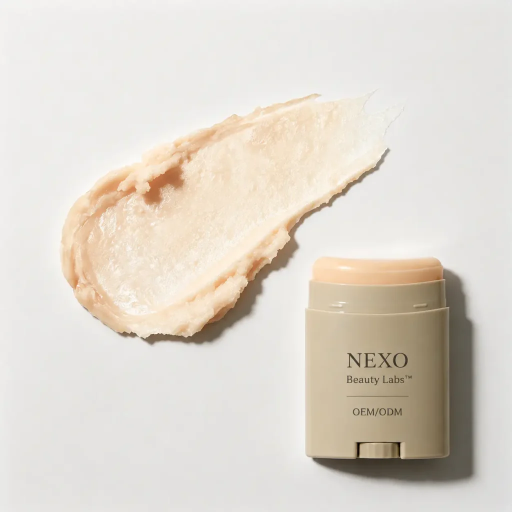
Sunscreen Stick Manufacturing
Sunscreen Stick Manufacturer for Private-Label and OEM Brands
- Formula development in 3-7 working days
- Production in 7-10 working days after formula approval
- 10,000 units starting order quantity, with a trial route before it
- SPF substantiated to ISO 24444 by an independent accredited laboratory
As a sunscreen stick manufacturer we build anhydrous, wax-based SPF sticks for brand owners who need the formula, the fill and the paperwork to land together. Sticks get cast rather than emulsified, and that single difference reaches into the wax system, the mould, the cooling curve and the evidence a market will accept for the SPF on your label.
Request a Manufacturing Quote
🔒 Your brief, target markets and artwork are handled as confidential commercial information.
Formula development
3-7 working days on an existing platform
Production window
7-10 working days after formula approval
Starting order quantity
10,000 units, with a low-risk trial route ahead of it
Payment terms
30-50% deposit on order confirmation, balance before shipment
With every batch
Certificate of Analysis and Safety Data Sheet
SPF evidence basis
ISO 24444 in vivo testing at an independent accredited laboratory
Sunscreen Stick Manufacturing Capability and Cosmetic Production Base
Solid anhydrous composition held together by a high-melting-point wax system: that is what a sunscreen stick is, and stick-type sunscreen patent filings such as TW202600117A describe exactly that structure. It is what gives the format its portability and its mess-free application, and it is also why the manufacturing problem looks nothing like a lotion.
Cosmetic Manufacturing Base Behind the Programme
01
Cosmetic manufacturing since 1999; the international business team supporting export brands since 2020.
02
56 production lines across the cosmetic categories the site runs.
03
Sunscreen production capacity of 200,000 units per day for the site as a whole, counting every sunscreen format it runs.
04
More than 5,000 formula resources available as starting platforms.
05
Vacuum emulsifying vessels, automatic liquid filling, a class-100,000 filling workshop and two-stage reverse-osmosis water treatment on site.
06
The site’s cosmetics GMP assessment is held against ISO 22716:2007. Its certificate numbers, validity dates and registered production units are published in full further down this page.
“The question we get asked last is the one that decides the project. Not what SPF can you hit, but what evidence will the destination market accept for that SPF on a stick. We now put that conversation first, because it is the item with the longest lead time and the least room to improvise.”
UV Filter Classes and Their Status by Jurisdiction
Destination market decides which filters you may use, not the factory, and the permitted lists disagree with one another. We confirm the exact filter set against your target markets during the brief, before any sample is cast. Whichever set a market allows, the numbers printed on the finished stick still come from ISO 24444 and ISO 24443 testing rather than from the permitted list itself.
Structuring and Skin-Feel Materials
01
ITEM 01
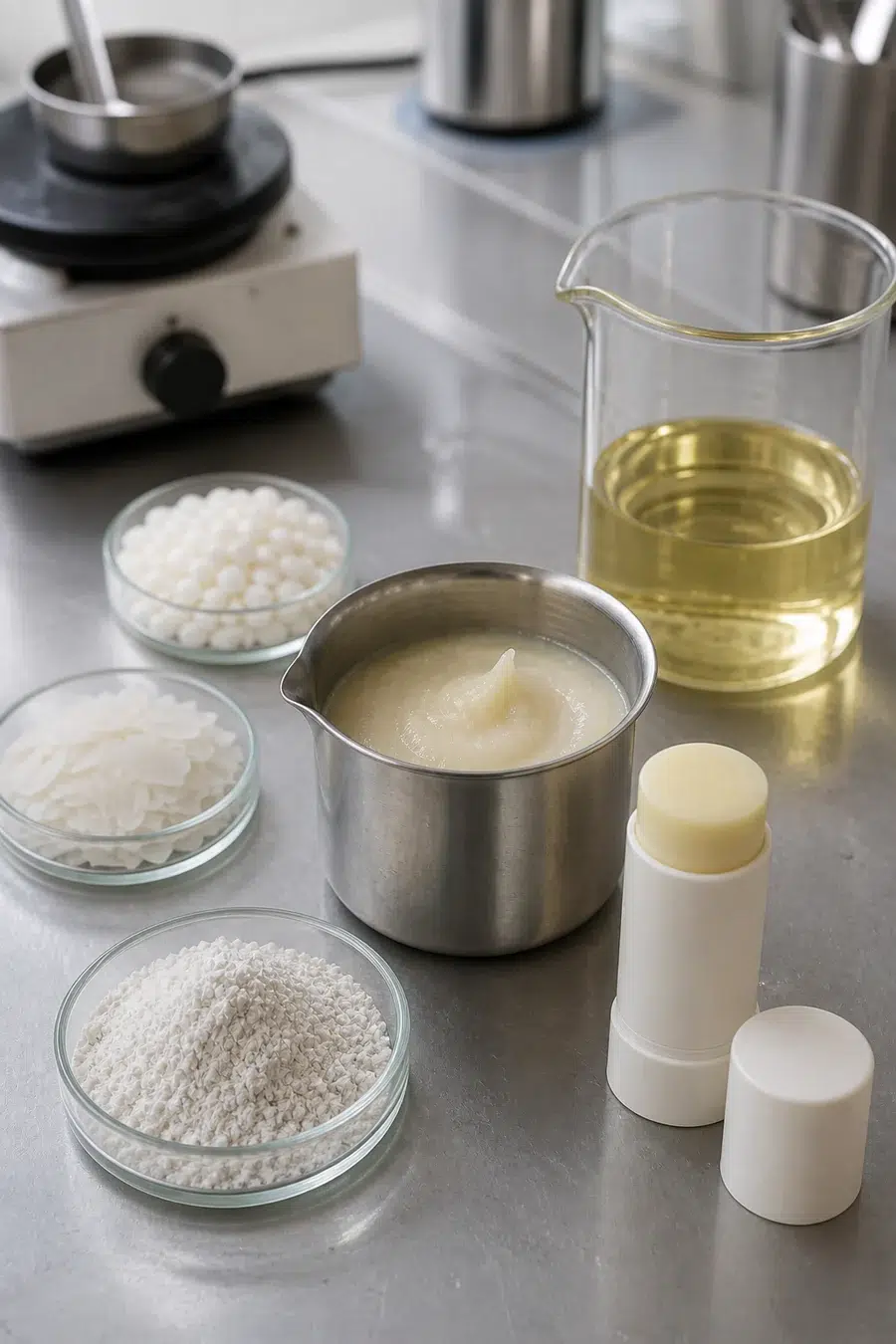
High-melting-point waxes hold the stick upright in transit and in a hot climate; the melting point band is set against your destination market, not against a default.
02
ITEM 02
Liquid carnauba wax appears in anhydrous sunscreen patent filings for colour retention in the cast body.
03
ITEM 03
Silica aerogel is described at 5% and above in anhydrous sunscreen compositions where a dry, non-greasy finish is the target.
04
ITEM 04
Porous spherical powders absorb surface oil and give the dry-touch matte finish that daily-wear face sticks are bought for.
05
ITEM 05
Butters and emollient esters control glide and payoff, which is the single sensory property a stick lives or dies on.
06
ITEM 06
Skincare additions we work with include ceramide, ectoin, panthenol, hyaluronic acid, centella asiatica, niacinamide and antioxidants.
A filter or material that is not on this page
Send the grade and your target markets with your brief and we will confirm availability, regulatory position and lead-time impact in the quotation.
Module Overview
Stick Textures, Skin Feel and Packaging Formats
Payoff and finish will separate two sunscreen products that carry the same SPF and the same filter set. These are the finishes we build to, and the property each one is judged on at sample review. None of them changes the evidence route: the SPF number still rests on ISO 24444 in vivo testing of the finished product.
Pack Formats We Fill
-

Twist-up barrels
the default for face and body sticks.
-

Push-up barrels
where a lower unit cost matters more than a premium feel.
-
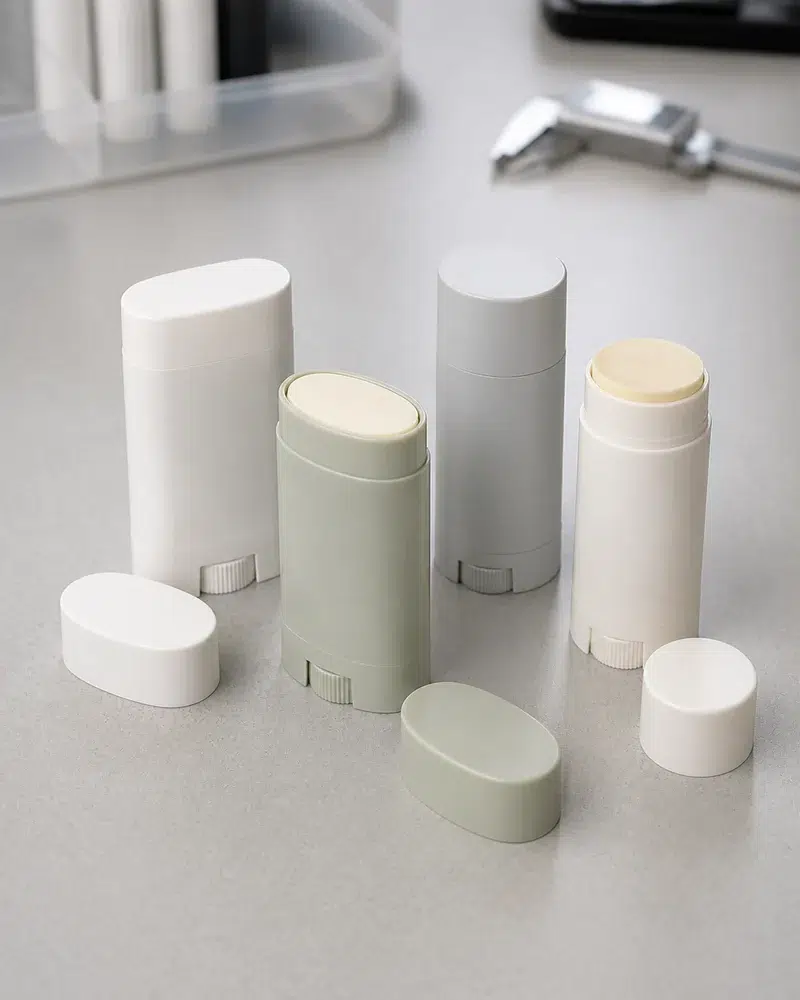
Oval and round cross-sections
oval covers cheeks and shoulders in fewer passes.
-
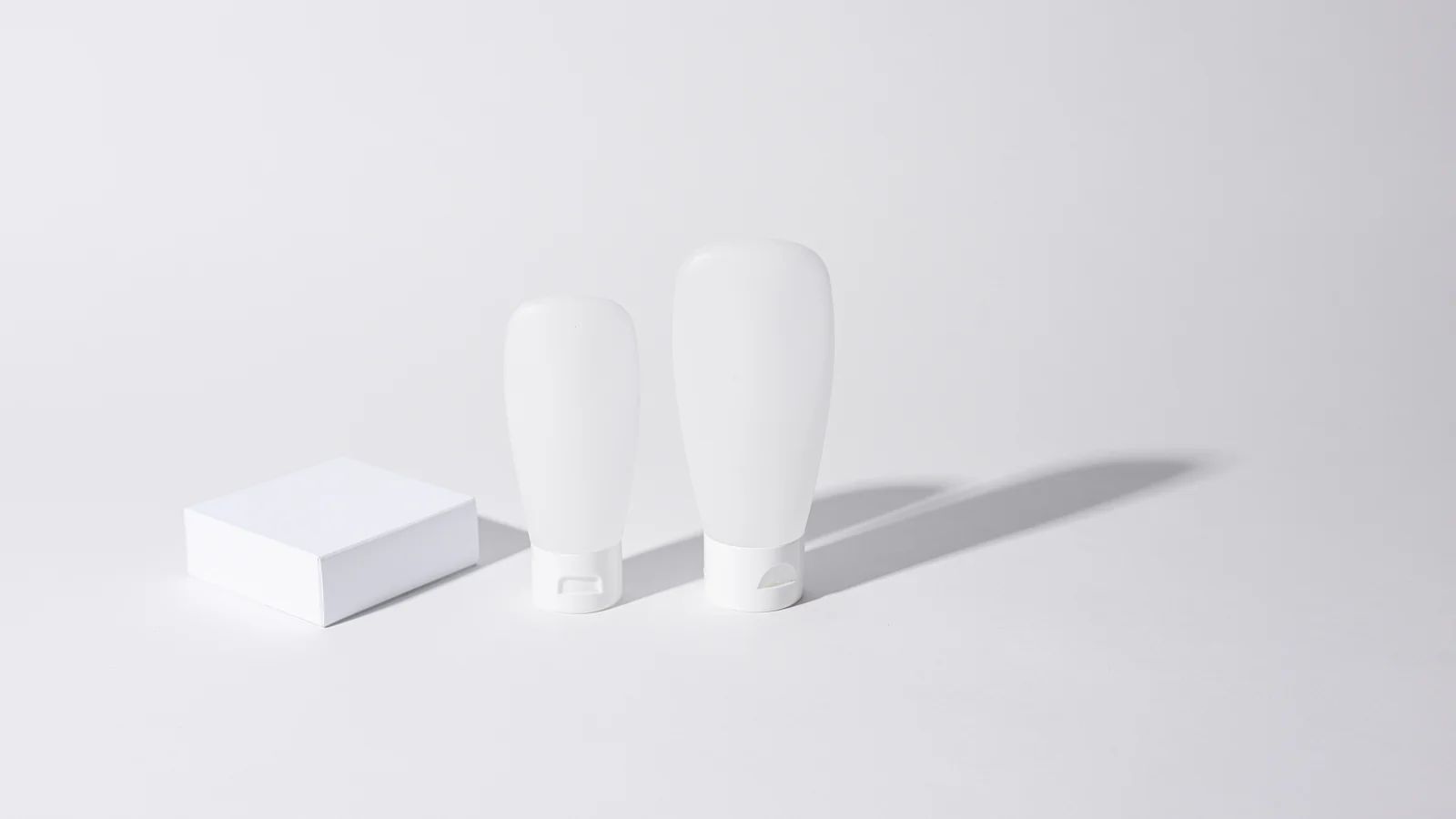
Roll-on and applicator formats
for glow and touch-up positioning.
Fragrance can be added, adjusted or left out entirely; unfragranced is the default for sensitive-skin lines.
Every stick product we quote is filled in the barrel it will ship in, so payoff is judged on the real pack rather than on a laboratory mould.
Packaging options are customizable inside these formats; secondary pack and decoration are quoted with the barrel.
On a stick, pack decisions are not cosmetic decisions. Barrel geometry sets how much product each pass deposits, and that mechanism is what the next section is built on.
Invisible / clear
What it is built from
Organic filter system in an oil phase with no opacifying mineral load
What we judge it on
Zero visible residue on deeper skin tones, at a lightweight texture
Fit
Daily face wear, over makeup
Dry-touch matte
What it is built from
Porous spherical powders plus silica in the wax body
What we judge it on
Oil control at hour three, not at minute one
Fit
Oily and acne-prone skin positioning
Dewy / glow
What it is built from
Higher emollient ester fraction, lower powder load
What we judge it on
Glide without slip or migration
Fit
Skincare-led brands
Tinted sunscreen stick
What it is built from
Pigment dispersion carried in the cast body
What we judge it on
Shade stability from mould to month twelve
Fit
Hybrid complexion products
Mineral-only
What it is built from
Non-nano zinc oxide and titanium dioxide together, or zinc oxide alone, with no organic filter
What we judge it on
White cast against SPF payoff
Fit
Sensitive-skin and clean-beauty lines
Kids and sport
What it is built from
Higher wax fraction for heat and sweat resistance
What we judge it on
Structural integrity across the destination climate’s peak temperature
Fit
Outdoor and family ranges
Lip-safe stick
What it is built from
Food-contact-grade material selection in the same anhydrous chassis
What we judge it on
Taste, drag and filter selection
Fit
Range extension from a face stick
Pricing Mechanics, Order Quantity and Lead Time
Custom sunscreen sticks do not have a price list. Price follows the filter system, the pack, the batch size and how much of the testing dossier the programme has to build from scratch; your figure comes back in a written quotation.
01
What Moves Your Unit Cost
Cost Driver Analysis6 Drivers
02
Lead Time & Clock Starts
Manufacturing Roadmap3 Stages
What Moves Your Unit Cost
| Driver | Effect on cost | How to bring it down |
|---|---|---|
| Filter system | Largest single input on a mineral stick; loading and grade both move it | Fix the target markets first so the filter set is chosen once |
| Existing platform or new formula | A new formula adds sample cycles and a full testing dossier | Start from a platform and customise what the brand actually needs |
| Barrel and secondary pack | Custom tooling moves both cost and lead time | Take a stock barrel for the first run and tool later |
| Batch size | Set-up is amortised over the run | Consolidate shades or sizes into one production window |
| Testing scope | Each additional claim is a separate test with its own report | Drop claims the brand will not actually use in market |
| Number of destination markets | Each market adds its own filter check and dossier | Plan the market launch one country at a time, then extend the dossier |
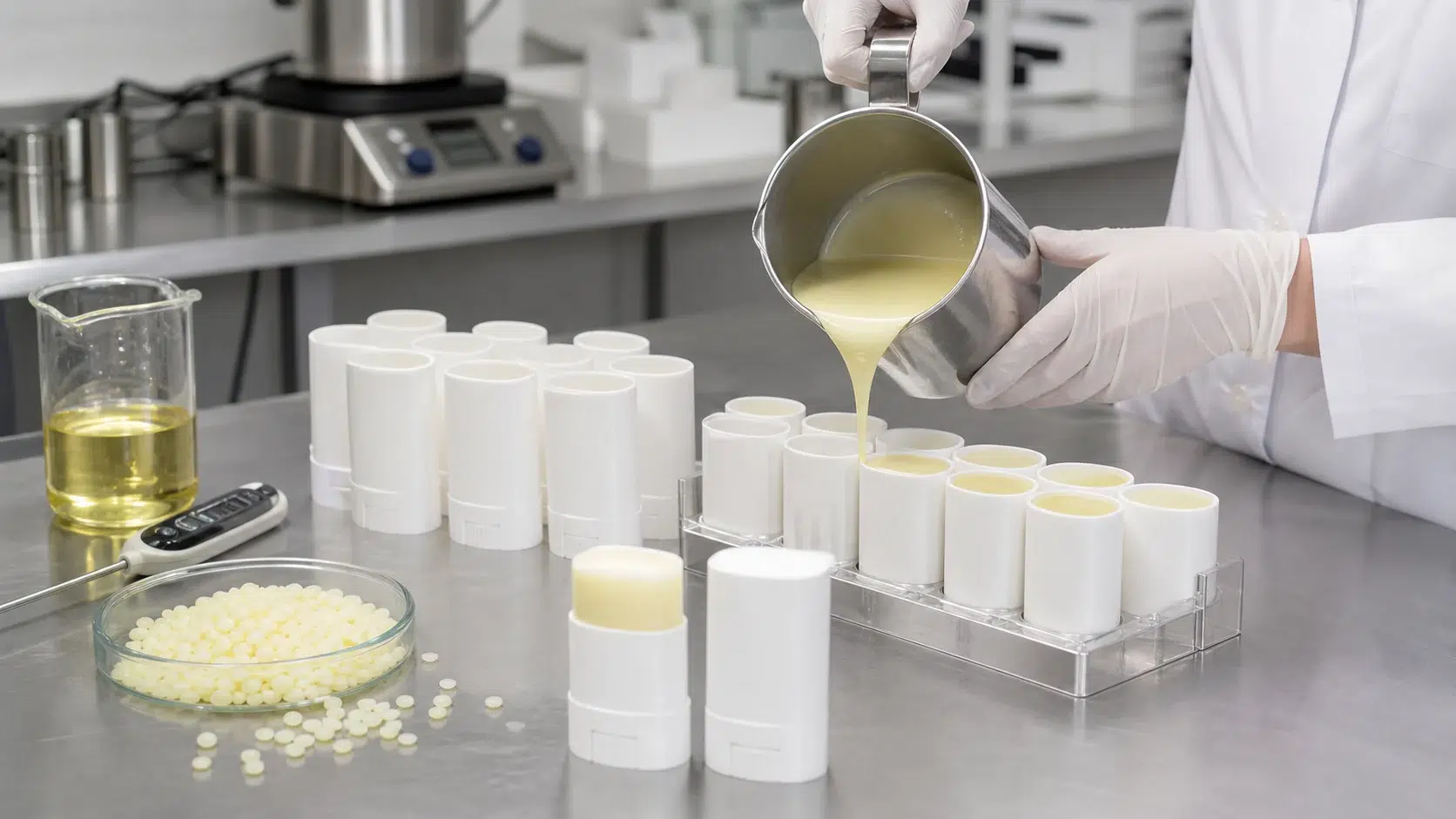
Formulation & Tooling
Optimizing formula platforms & standard tooling cuts up to 35% of initial sample turnaround.
Standardized Platforms Available
Lead Time and Where the Clock Starts
| Stage | Window | What it covers |
|---|---|---|
| Formula development | 3-7 working days | Working from an existing platform to an evaluable sample |
| Production | 7-10 working days after formula approval | Compounding, casting, filling and finished-goods inspection |
| Concept to market-ready product | Around 60 days | The end-to-end figure, including the stages above |
That 7-10 working days window covers the production stage, measured from formula approval. It does not absorb third-party SPF testing, packaging procurement or artwork approval, which is why the end-to-end figure is the one to plan against.
Production Cadence
High-precision automated filling lines ensure exact weight distribution and zero-void casting.
Rapid 7-10 Day Casting Window
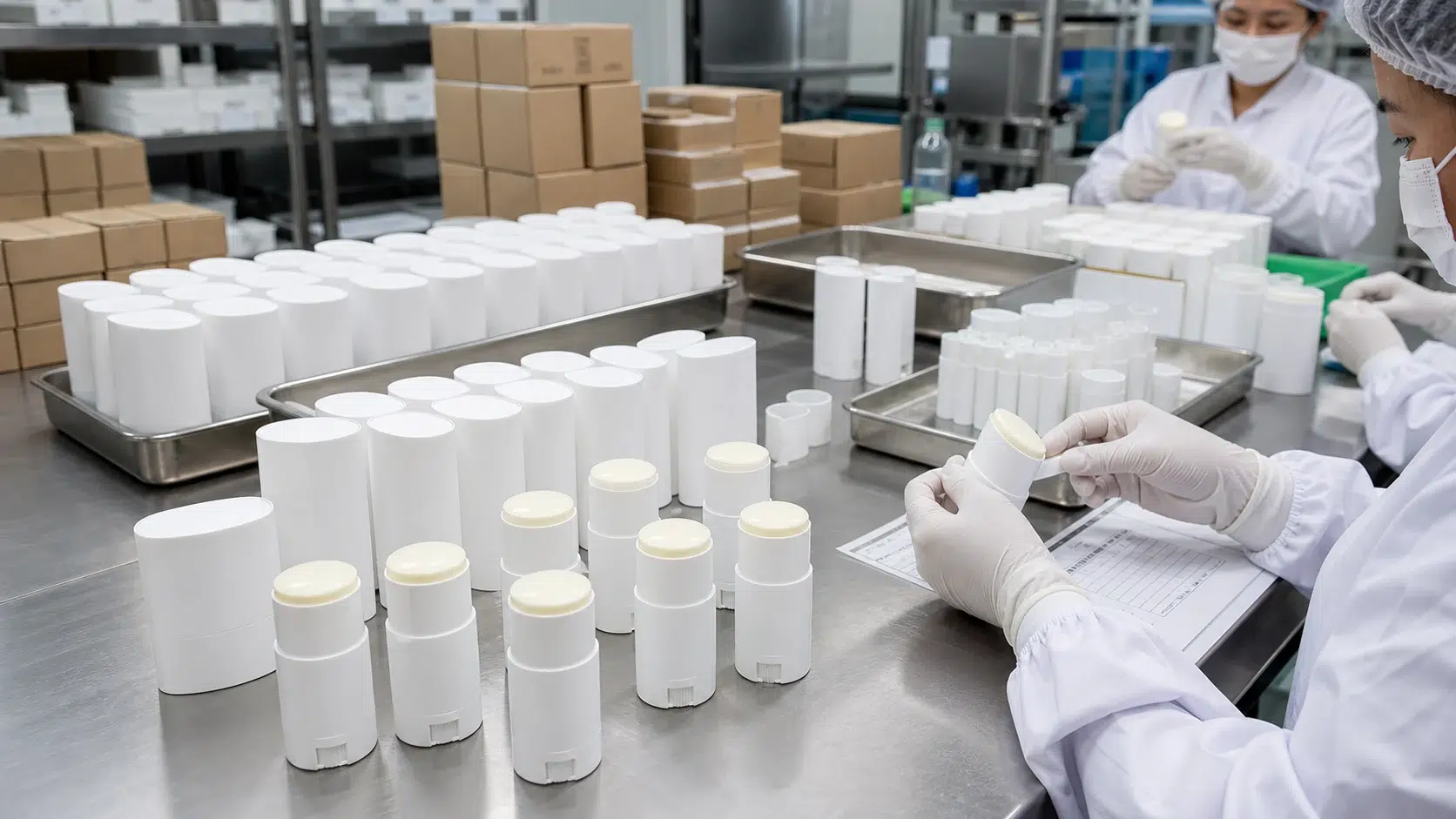
Order Quantity, Stated Both Ways
Starting order quantity, or MOQ, is 10,000 units per stock keeping unit for a branded production run.
Before that run there is a lighter route. We support low-risk trial orders, small-batch testing and sampling so a brand can evaluate a platform before committing to the full quantity.
That floor exists because a cast stick needs a mould set, a filling changeover and a purged line; below a certain run those fixed steps dominate unit cost instead of the formula.
Commercial Terms
- Payment is 30-50% deposit on order confirmation with the balance before shipment, by bank transfer.
- A Certificate of Analysis and a Safety Data Sheet ship with the order.
- Final inspection and shipping documentation are completed before release.
Certificate Scope, Third-Party Testing and Batch Documentation
Experienced sourcing teams do not ask a cosmetic factory whether it holds a certificate. They ask what that certificate’s registered scope covers. Published audit checklists for sunscreen sourcing put certificate validity and scope at position one, because a cosmetics GMP scope is registered against specific production units rather than against a company.
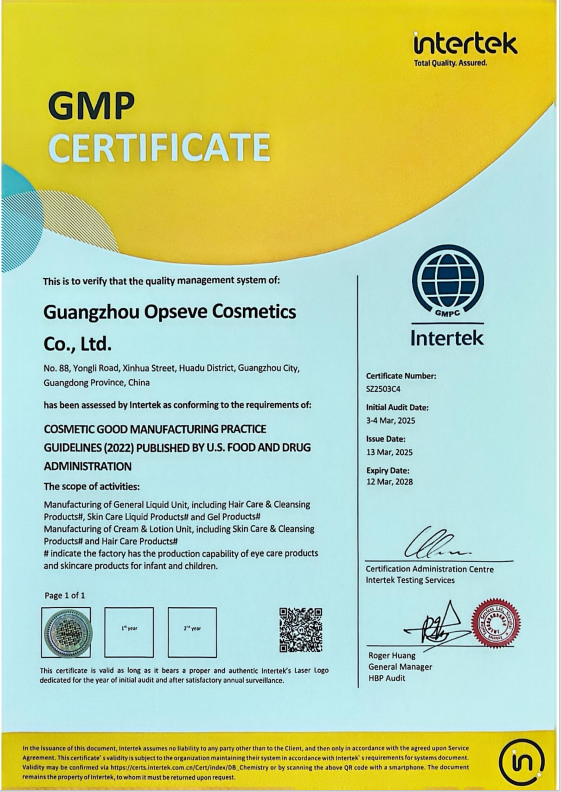
ISO 22716:2007 Cosmetics GMP
Registered Scope
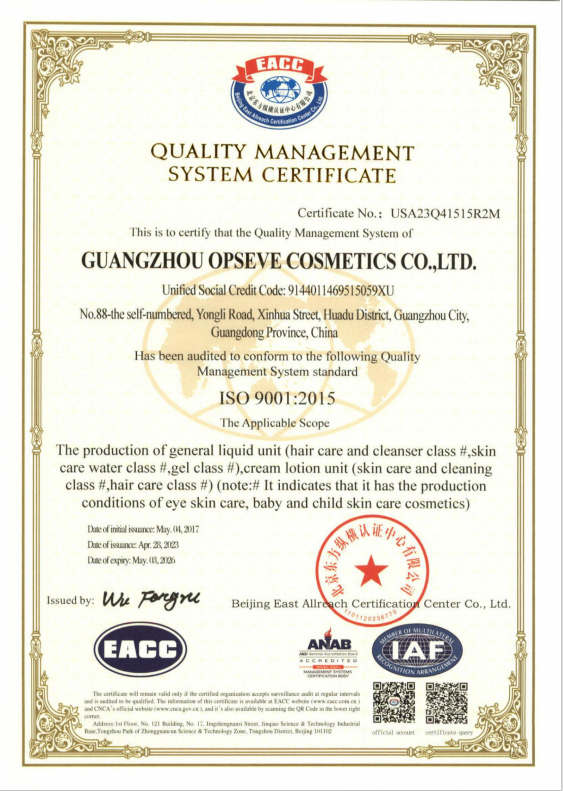
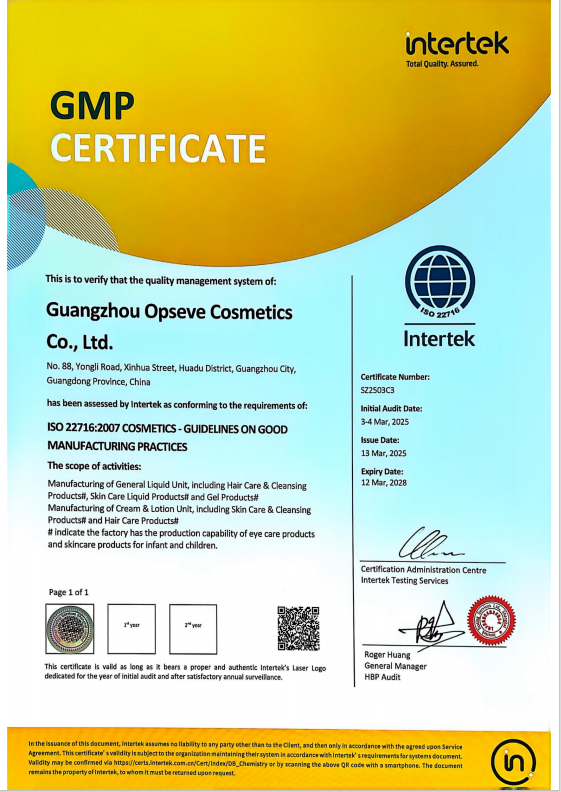
Manufacturing of General Liquid Unit, including hair care and cleansing products, skin care liquid products and gel products; manufacturing of Cream & Lotion Unit, including skin care and cleansing products and hair care products.
Assessed by Intertek (FDA Guidelines 2022)
Registered Scope
Same registered scope as SZ2503C3. Assessed against “Cosmetic Good Manufacturing Practice Guidelines (2022) published by U.S. Food and Drug Administration”.
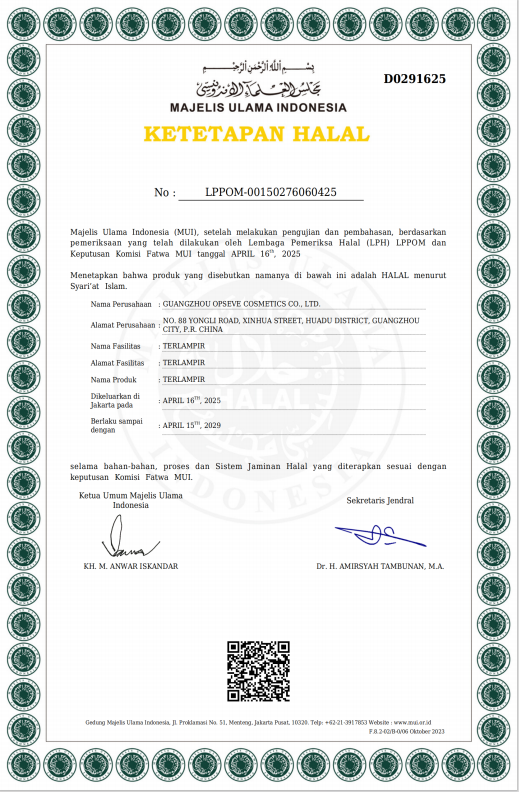
Halal Determination
Registered Scope
Issued at company level; the covered product schedule is annexed to the certificate.
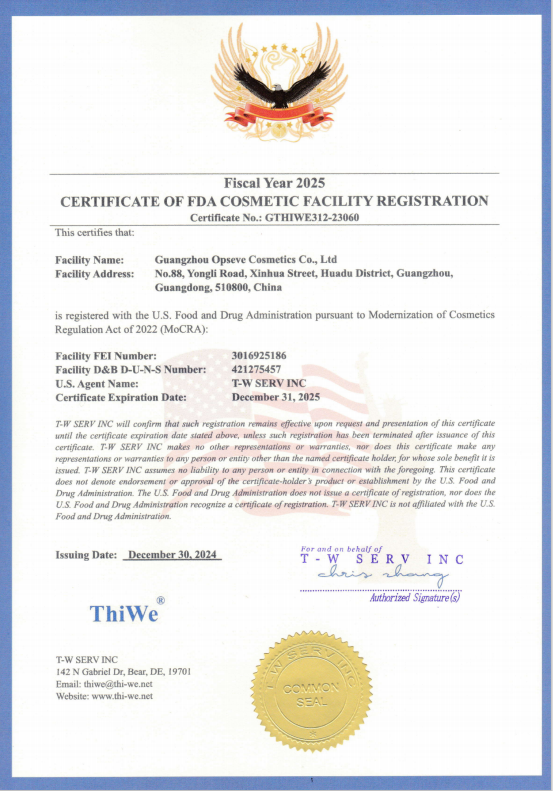
Ask any supplier to confirm ISO 22716 certificate validity and scope in writing before you brief it, and read the scope line rather than the badge. Both certificates above are Intertek assessments, not regulatory approvals, and both are registered to the manufacturing site named on them, Guangzhou Opseve Cosmetics Co., Ltd. The registered units are the liquid unit and the cream and lotion unit, so every claim on this page about a cast stick is tied to a test method in the SPF Claim Evidence Chain above rather than to a badge.
How Every Stick Order Is Checked
- Incoming filter and wax raw materials are checked against the approved formulation sheet before compounding.
- The melted phase is verified for uniformity and air release before the batch is poured to mould.
- First cast sticks are checked for fill weight, hardness and surface finish before the run continues.
- Finished goods are sampled for appearance, payoff and filter assay against the same written acceptance criteria.
- Retained samples are held for the declared shelf life alongside the batch record.
Manufacturing Base and Inspection Capability
Sunscreen sticks run on the same cosmetic manufacturing base as the site’s other categories. For a cast product the equipment that matters is the compounding, filling and inspection line, not the emulsification train.
For the wider service scope, explore Sunscreen Manufacturing.
Compounding and filling
Vacuum emulsifying vessels for the oil-phase melt.
Automatic liquid filling equipment.
A class-100,000 filling workshop.
Two-stage reverse-osmosis water treatment serving the site.
Inspection and retention
High-precision weighing for filter and wax dosing.
Heavy-metal screening on incoming materials.
A retained-sample room held against the declared shelf life.
Batch records tied to each Certificate of Analysis.
Brand Types We Build Stick Programmes For
Skincare-led brands
Cosmetic brands extending an existing range of skincare products into a portable sunscreen stick without changing the skincare story.
Clean and sensitive-skin lines
Zinc-based mineral-only sticks built on non-nano zinc oxide, for clean beauty and sensitive skin positioning where filter selection is the brand promise.
Outdoor and family ranges
Higher wax fraction for heat and sweat across the sunscreen line, with water resistance declared in the usual bands.
Distributors and e-commerce sellers
Platform-based sticks where speed to a market-ready product outweighs a bespoke formula.
Judge the payoff before you commit a run
Ask for a stick sample built on an existing formula platform. You evaluate glide, payoff and finish on the real barrel first, and the full order quantity stays a later decision.
Sunscreen Stick Manufacturing Engineering Tools
Stick Programme Readiness Check
Select your target markets and required label claims below. The system will automatically generate the corresponding regulatory evidence, filings, and responsible parties.
Access Tool
Application-Density Calculator
SPF is measured at 2 mg per square centimetre. Enter how much product one pass of your stick deposits and the area it has to cover to determine how many passes are required to reach the tested density.
Access Tool
Stick Programme Timeline Planner
Enter how many weeks away your launch is and the planner works backwards through the stages, showing which ones still fit and which one is already squeezing the others.
Access Tool
Sunscreen Stick Manufacturing FAQ
Sticks are anhydrous solids held in shape by a wax system and cast into a mould while hot, rather than emulsions homogenised and filled. That changes the equipment, the cooling curve and the failure modes: voids, bloom and softening replace separation and phase instability. The two types of sunscreen share a filter list and almost nothing else on the production floor.
Targeted, touch-free application that survives a bag and can be reapplied over makeup without a mirror. Its wax body also holds filters in place under sweat better than a light emulsion does. The counterweight is the Application-Density Gap, which is why payoff per pass belongs in the brief.
Dispersion happens in the melt: mixing to displace air pockets, then homogenisation until the phase runs uniform, and only then pouring. Published formulation work shows the same zinc oxide can differ by an order of magnitude in SPF depending on how and where it is dispersed.
Yes. We select the wax system against the destination climate, trading a firmer, higher-melting body against payoff per pass.
Dry-touch matte builds using porous spherical powders are designed for exactly that, and it is the finish most often specified for daily facial wear.
Yes. Anhydrous compositions reaching SPF 50 and above on non-nano zinc oxide alone, with no organic filter, are described in patent US20190183754A1, and that is the route a mineral-only brief follows. Briefs that arrive asking for a mineral sunscreen stick manufacturer or a white label sunscreen manufacturer are served from the same platform library, with the difference sitting in who owns the formula.
Contact is limited to the exposed face of the stick, because the applicator never sits in a reservoir. Preservative efficacy and enumeration are still run on the finished product; an anhydrous format has to demonstrate microbiological safety rather than assume it.
Market classification decides that, not the format. Sunscreen is an over-the-counter drug in the United States, a cosmetic in the EU under Regulation (EC) No 1223/2009, and a therapeutic good in Australia, and each of those routes carries its own filings.
Manufacturing them is not the constraint. A cosmetics GMP certificate, ISO 22716 or otherwise, is simply not the instrument the United States drug route runs on. That route needs establishment registration renewed every year between 1 October and 31 December, a labeler code and a drug listing, with a United States agent named in the filing.
Certificates SZ2503C3 and SZ2503C4 are Intertek assessments registered against the General Liquid Unit and the Cream & Lotion Unit, valid to 12 March 2028. A cast stick is not one of those registered units, which is why the claim evidence for a stick is built on test method and laboratory, as set out row by row in the SPF Claim Evidence Chain above.
Unit cost comes back in a written quotation and follows the drivers listed above. Published figures for the surrounding work vary enough to treat as a spread rather than a quote: laboratory price lists put an in vitro screen near EUR 450 and in vivo SPF determination at EUR 1,495 to EUR 1,635, brand founders have reported USD 20,000 to USD 30,000 per stock keeping unit once every claim is substantiated, and formula development is quoted separately at roughly USD 2,000 to USD 15,000. Those are other people’s published numbers, not ours.
Starting order quantity is 10,000 units per stock keeping unit for a branded run, and a low-risk trial and small-batch testing route runs ahead of it so a platform can be evaluated first.
Formula development runs 3-7 working days on an existing platform, and production runs 7-10 working days after formula approval. Around 60 days is the realistic concept-to-market figure once testing, packaging and artwork are counted, and accelerated stability alone is typically a 12-week study.
A Certificate of Analysis and a Safety Data Sheet travel with the order, and final inspection documentation is completed before release. Stability and packaging-compatibility reports are held against the approved formula and supplied on request.