Get in touch with NEXO Beauty Labs Company
Cosmetic Contract Manufacturing for Global Beauty Brands
NEXO Beauty Labs runs cosmetic contract manufacturing programs for beauty brands, e-commerce sellers, distributors and private label partners, and specializes in personal care manufacturing across skincare, hair care and body care. Our manufacturing foundation dates back to 1999, and since 2020 our international business team has worked with brands outside China.
- Quotation returned in one business day — written, from a named contact.
- First samples in 3 working days, plus 5–7 working days for international sample delivery.
- Production in 10–15 working days, counted from formula approval, packaging confirmation and completed production preparation.
- Minimum order quantity from 10,000 units per stock keeping unit — for launch volumes below that, start at Low MOQ Skincare Manufacturing.
A Non-Disclosure Agreement can be signed before you send formulation information, product concepts or confidential business requirements.
- Minimum order quantity
- From 10k units/SKU. Below that, see Low MOQ Manufacturing
- Quotation turnaround
- One business day
- First samples
- 3 working days
- Sample delivery
- 5–7 working days, intl. courier
- Production lead time
- 10–15 working days post approval
- Formula library
- 5,000+ formulas ready
- Payment terms
- T/T, 30–50% deposit, balance prior to ship
- Trade terms
- EXW, FOB, CIF; DDP for selected regions
Cosmetic contract manufacturing is the arrangement where a brand owns the product and the market, and a manufacturing partner owns the formula work, the raw material sourcing, the batch and the quality record. With NEXO that means a full-service, turnkey program: formula from a ready-made library or developed to your brief, packaging components coordinated for you, five quality checkpoints on every batch, and a written commitment on quantity, schedule and payment before you release a deposit. What we do not do is stand between you and your own regulatory obligations — in most markets those sit with the brand owner.
Every figure above is a commitment we will repeat in writing on your quotation.
Categories and Services We Manufacture
This program covers three personal care product families: skincare, hair care and body care. Color cosmetics and fragrance-led products sit outside it, so if that is your category this is not the right factory to brief. Within the three families we manufacture leave-on and rinse-off formats, from water-thin serums to thick balms and sticks.
Skincare
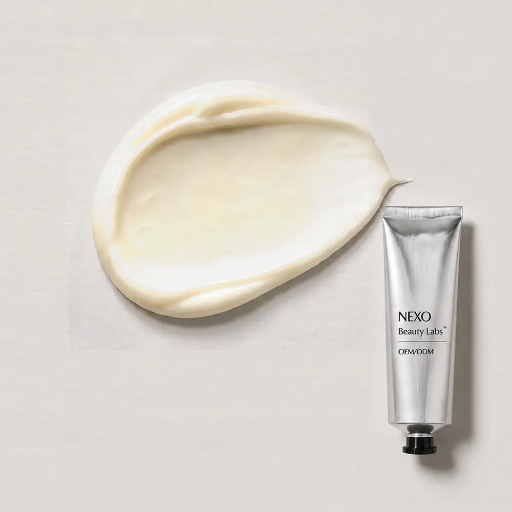
Serums, essences, moisturizers, creams, cleansers, masks, eye products and sunscreen bases. This is the deepest part of the ready-made formula library and the fastest route to a first sample.
Private label skincare manufacturing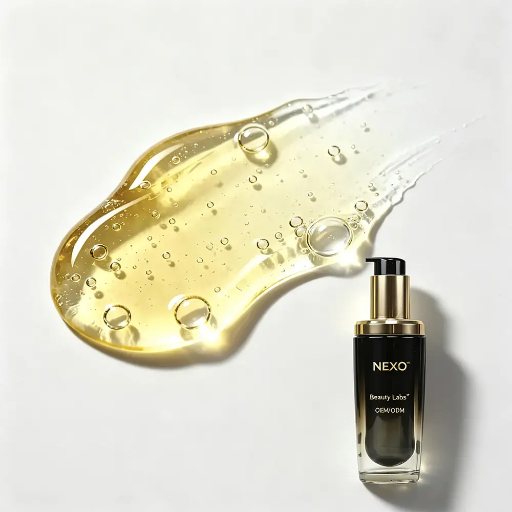
Hair Care
Shampoos, conditioners, masks, scalp serums, leave-in treatments and styling products. Surfactant systems and preservation are confirmed against your target market before sampling.
Hair care manufacturing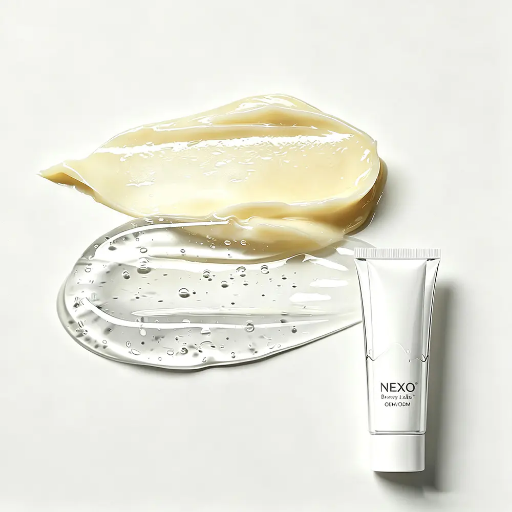
Body Care
Body washes, lotions, butters, scrubs, hand care and deodorant formats. Fill viscosity and component compatibility drive most of the packaging decisions in this family.
Body care manufacturingThe Five Ways a Brand Buys From Us
Buyers arrive using different words for what is often the same commercial route. All five run as turnkey programs — we coordinate formula, components, production and paperwork rather than handing you a bill of materials to chase. Each card below uses an identical field set, so pick the one that matches how much of the product you want to own.
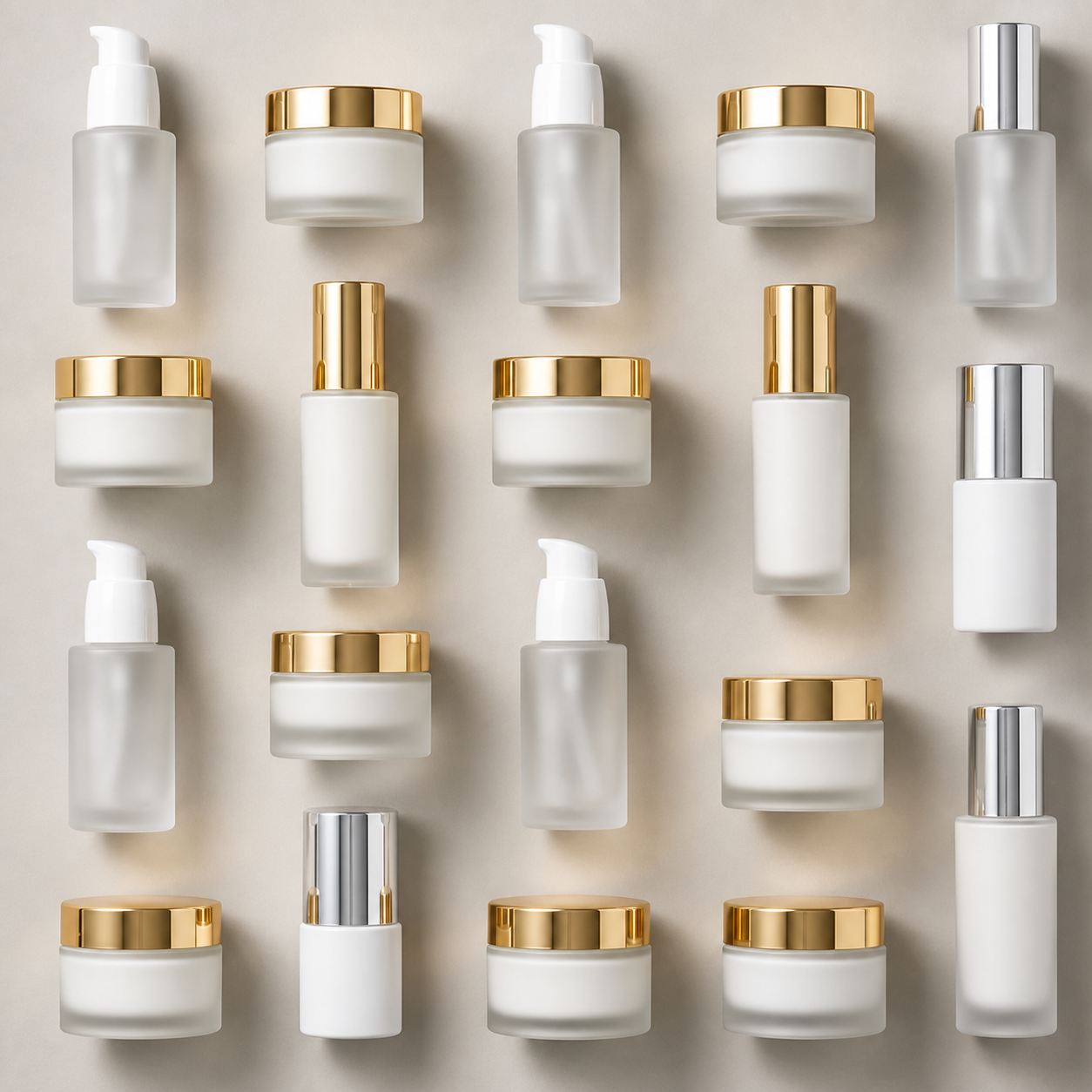
Private Label Cosmetics
- What you getAn existing formula from our library, filled into your chosen packaging and branded with your artwork.
- Formula sourceReady-made library formula, unmodified or lightly adjusted.
- Who owns the formulaWe do. You own the brand, the artwork and the market.
- Best forA new brand or a retailer adding a line quickly, where speed to market matters more than formula exclusivity.
White Label Skincare
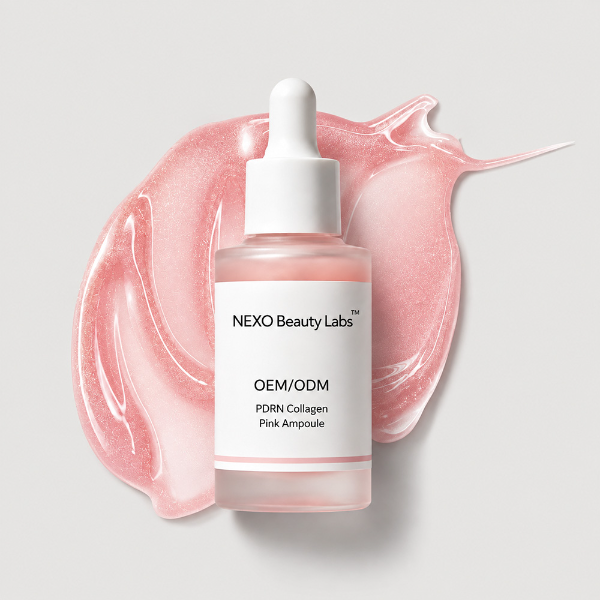
- What you getA finished, proven skincare product taken as it is, with your own label cosmetics branding applied.
- Formula sourceReady-made library formula, unmodified.
- Who owns the formulaWe do, and the same formula may be sold to others.
- Best forDistributors and e-commerce sellers testing a category before committing to custom formulation.
Low MOQ Skincare Manufacturing
- What you getA launch or market-test batch below this page's standard minimum order quantity.
- Formula sourceReady-made library formula, with packaging chosen from stocked components.
- Who owns the formulaWe do.
- Best forA first order of 500–3,000 units per SKU, where the goal is to prove demand before scaling.
OEM Cosmetic Manufacturing
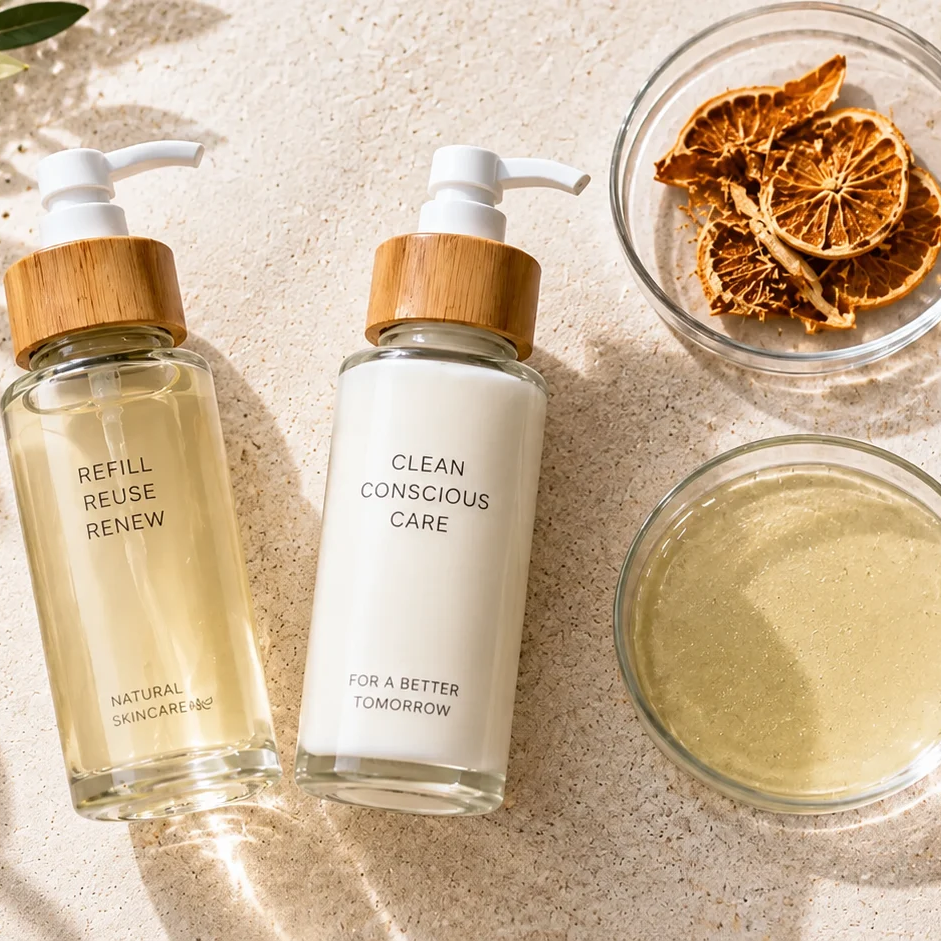
- What you getYour specification manufactured to your brief, including custom scents, colors, actives or textures.
- Formula sourceDeveloped to your brief, or your existing formula reproduced.
- Who owns the formulaAgreed in writing at quotation, before development starts.
- Best forAn established beauty brand that needs the cosmetic product to be its own and not resold to anyone else.

ODM Cosmetic Manufacturing
- What you getA concept we design, formulate and manufacture, presented to you as a finished product development proposal.
- Formula sourceDeveloped in-house against a category brief rather than a finished specification.
- Who owns the formulaWe do, with exclusivity terms negotiable per project.
- Best forBrands that want a differentiated beauty product without running their own research and development.
Not Sure Which One Applies
- What you getA written route recommendation with the quantity, schedule and cost consequences of each option.
- Formula sourceDecided after we see your brief, not before.
- Who owns the formulaConfirmed as part of the same recommendation.
- Best forAnyone whose category, budget and launch date have not yet been reconciled with each other.
Formula Sources and Development Inputs
Three routes lead to a formula that can be manufactured, and they differ in what you must supply, not only in what they cost. Each route below states what we need from you, what comes back, and the point at which that route most often stalls. A project can start from a reference sample, from an existing formula with its ingredient specification, or from a written product brief.
- What you send us
- Your category, target market, price position and a shortlist of textures or claims you want to match.
- What comes back
- A shortlist from the 5,000+ ready-made formulas, with sample units for evaluation and the ingredient list for each.
- Where this route stalls
- Late-stage claim changes. A formula selected for texture is sometimes rejected weeks later because a claim it cannot carry was added to the brand plan after selection.
- What you send us
- A written product brief covering target market, positioning, actives you want present, textures to avoid, and any packaging already chosen.
- What comes back
- A development sample against the brief, the raw material list behind it, and a note on which parts of the brief the sample does not yet meet.
- Where this route stalls
- Briefs that specify an active and a texture that fight each other. We flag the conflict at brief review rather than after the first sample round.
- What you send us
- The formula with its ingredient specification, or a reference sample for formula analysis, plus your current supplier's fill and packaging details.
- What comes back
- A feasibility note naming any raw material we would need to substitute, followed by a matching sample.
- Where this route stalls
- Raw material substitution. A single unavailable grade can change texture or stability enough that the reproduction needs a second round.
Formula and Packaging Are Decided Together, Not in Sequence
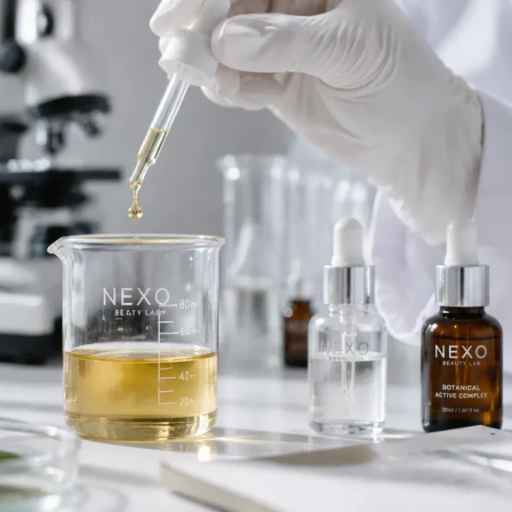
A formula that passes on the bench can still fail in the container you picked. Fill viscosity, pump or dropper compatibility, headspace and material contact all interact with the formula, and we check them before components are ordered rather than after. Custom formulation projects that treat packaging as a later decision are the ones that lose the most calendar time.
Custom cosmetic formulation
Send a Formula or Reference Sample
Nothing prepared yet is a normal place to start. Describe the product in plain words, or name a reference product you like, and we will come back with which of the 5,000+ ready-made formulas are a useful beginning. Questions are free, and there is no development fee.
Ask About Ready-Made FormulasPackaging, Decoration and Component Sourcing
Packaging components are sourced and coordinated through packaging suppliers, and the table below says plainly which steps we run and which we arrange on your behalf. The distinction matters because a sourced component carries its own minimum and its own lead time, neither of which we set. Where a component is sourced, its supplier's minimum can sit above the order quantity you had in mind.
| Component or decoration | What we confirm before ordering | Run by us or sourced |
|---|---|---|
| Bottles, jars and tubes | Fill volume, headspace, material contact with the formula | Sourced through packaging suppliers |
| Pumps, droppers and airless systems | Dose per stroke against formula viscosity, dip tube length | Sourced through packaging suppliers |
| Caps, closures and seals | Torque, liner compatibility, leak performance in transit | Sourced through packaging suppliers |
| Sachets, ampoules and single-dose formats | Fill accuracy and seal integrity at the chosen fill weight | Sourced through packaging suppliers |
| Screen printing and hot stamping | Artwork placement, ink adhesion on the chosen substrate | Sourced, specified by us |
| Labels and shrink sleeves | Artwork, material, and label content required by your market | Sourced, specified by us |
| Packaging design and artwork setup | Dielines, color references, mandatory market copy | Coordinated with you and the component supplier |
| Filling and assembly | Line settings, fill weight tolerance, in-process checks | Run by us |
| Cartons and outer packing | Unit count per carton, transit protection for the chosen Incoterm | Sourced, specified by us |
| Efficacy and specialist testing | Protocol, sample count and reporting format | Arranged with external laboratories |
Custom packaging widens what is possible and narrows what is fast. Stocked components can be ordered against the schedule on this page; bespoke tooling cannot, and we will say so at quotation rather than after your deposit.
Program Specifications
These are the terms we commit to in writing on every quotation. Where a figure has a boundary, the boundary is in the same row as the figure, because a schedule number without its starting point is not a commitment.
| Specification | Our commitment |
|---|---|
| Minimum order quantity | From 10,000 units per SKU, with flexible evaluation for new launches and market-testing projects. Orders of 500–3,000 units per SKU are handled through Low MOQ Skincare Manufacturing. |
| Quotation turnaround | One business day from receiving a scoped enquiry. |
| First samples | 3 working days to produce. |
| International sample delivery | 5–7 working days by courier after dispatch. |
| Production lead time | 10–15 working days, counted from formula approval, packaging confirmation and completed production preparation. It excludes formulation rounds, sample evaluation, stability testing, market registration and freight. |
| Ready-made formula library | 5,000+ formulas available as a starting point for sampling. |
| Sample basis | Selected from the library or developed to your brief; reference-sample evaluation and formula analysis available. |
| Quality checkpoints per batch | 5 — raw material inspection, formula evaluation, production monitoring, stability testing, finished product inspection. |
| Payment terms | T/T with a 30–50% deposit, balance settled before shipment. Letters of credit accepted on larger orders. |
| Trade terms | EXW, FOB and CIF as standard; DDP available for selected destinations. |
| Confidentiality | A Non-Disclosure Agreement can be signed before product concepts, formulation information or confidential business requirements are exchanged. |
| Documentation with the shipment | Export paperwork, product technical files, ingredient information and quality records. |
Want these terms against your own product? Send the category, the quantity and the market, and the quotation comes back within one business day with these lines filled in for your project.
Request a Written Quotation
Quotation Structure and Lead-Time Boundaries
Unit price follows quantity, formula route, raw material grade, packaging components, decoration passes and the paperwork your market requires. We do not publish a price list, because no honest one exists across those variables. What we can publish is which way each variable moves your cost, so you can read any quotation — ours or anyone else's — before you compare totals.
The lowest minimum order quantity is not automatically the lowest-risk option. A small batch that ties up cash in slow-moving inventory can cost more than a larger batch that sells through.
Small batch does not mean cheap. Setup, cleaning and changeover are charged once per batch regardless of size, so they land harder per unit on short runs.
The most useful quotation is the one that lets you forecast the whole project, including components, testing and freight — not the one with the lowest headline unit price.
Unit Cost Driver Panel
Each row names a driver, the direction it pushes your unit cost, and the mechanism behind it. Where an independent source has published a figure on that mechanism, the source is named in the last column; where the row is our own process fact, the column is left empty rather than filled with a borrowed number.
| Cost driver | Direction | Mechanism | Independent reference |
|---|---|---|---|
| Order quantity per SKU | Down as quantity rises | Setup, cleaning and changeover are charged once per batch, so they divide across more units. | Ordering below a published minimum has been reported at 15–40% above standard pricing (Fem Founded, MOQ reference) |
| Formula route | Up for a developed formula | A brief-led formula adds bench work, sample rounds and a new raw material list before a single unit is filled. | — |
| Active ingredient grade and dose | Up with actives | Actives are priced by weight and dose straight into cost of goods. | — |
| Packaging component minimums | Up when components are custom | Component suppliers set their own minimums, which can sit above the manufacturer's. | One reported case: a brand's applicator supplier would not run below 50,000 units, causing repeated stockouts (Fem Founded) |
| Decoration passes | Up with each layer | Screen print, hot stamp and label each need a separate setup on a separate machine. | — |
| Fill size and viscosity | Up for small fills and thick textures | Both slow the filling line, and line time is the unit of production cost. | — |
| Stability and compatibility test scope | Up with test scope | Each protocol occupies laboratory time and consumes sample units. | A published accelerated protocol holds viscosity within 30%, pH within 1 point and coalescence above 3 on a 0–5 scale after 1 month at 50 °C (patent US20230301898A1) |
| Variant count | Up per variant | Every shade, scent or size is its own batch, its own components and its own minimum. | — |
| Regulatory dossier scope | Up with each added market | Each destination market needs its own dossier, label content and ingredient disclosure. | In the United States, facility registration and product listing obligations sit with the responsible person (U.S. Food and Drug Administration) |
| Incoterm | Moves cost between lines | EXW, FOB, CIF and DDP shift freight, duty and clearance between your quotation and your own logistics budget. | — |
| Schedule compression | Up | Reordering an agreed production plan displaces work already booked on the line. | — |
Scope — you send category, format, target market and quantity per SKU.
Feasibility — we confirm the formula route and flag anything in the brief that will not work as written.
Component pricing — packaging and decoration are priced against real component minimums, not placeholders.
Written quotation — returned within one business day, with quantity, schedule, payment and trade terms on the same document.
Quoted lead times are not comparable between suppliers unless both measure from the same start and stop point — one may quote six weeks to shipment while another quotes four weeks through production and then adds ten days to ship, an observation drawn from general contract manufacturing practice rather than a cosmetics-specific study (Mathison Manufacturing). Our production commitment of 10–15 working days starts at formula approval, packaging confirmation and completed production preparation, and ends when goods are ready to hand over under the agreed Incoterm. Formulation rounds, your sample evaluation, stability testing, market registration and transit sit outside that window and are scheduled separately.
Quality Checks on Every Batch
Every batch runs five checkpoints before it ships. For each one, the table names what is checked, what happens when it fails, and what reaches you as a result — because a checkpoint you never see the output of is not evidence you can use.
"A material that does not match its approved specification never goes into the batch. We hold it, source a replacement grade, and tell you before it changes anything you signed off — not after the run has finished." — NEXO Beauty Labs Production Quality Team
| Checkpoint | What is checked | What happens on a fail | What you receive |
|---|---|---|---|
| Raw material inspection | Incoming raw material identity, appearance and supplier certificates against the approved specification. | The material is quarantined and not released to the batch; we source a replacement grade and tell you if it changes anything you approved. | Ingredient information for the materials used in your batch. |
| Formula evaluation | The compounded bulk against the approved formula — appearance, odour, pH and viscosity. | The bulk is held and adjusted before filling, or remade if adjustment cannot bring it back to specification. | Confirmation that the bulk matched the formula you approved. |
| Production monitoring | Fill weight, seal integrity, decoration placement and line settings during the run. | The line stops, the affected units are separated, and the run restarts once the setting is corrected. | In-process results on request as part of the quality record. |
| Stability testing | Behavior of the formula in its actual container over time and temperature. | The formula or the component is changed before the order proceeds — this is why testing is scheduled outside the production window. | The test report for your product in your packaging. |
| Finished product inspection | Finished units against the agreed appearance, fill, labeling and packing standard. | Non-conforming units are separated and reworked or remade against the same specification before release. | Release confirmation and the document set that travels with the shipment. |
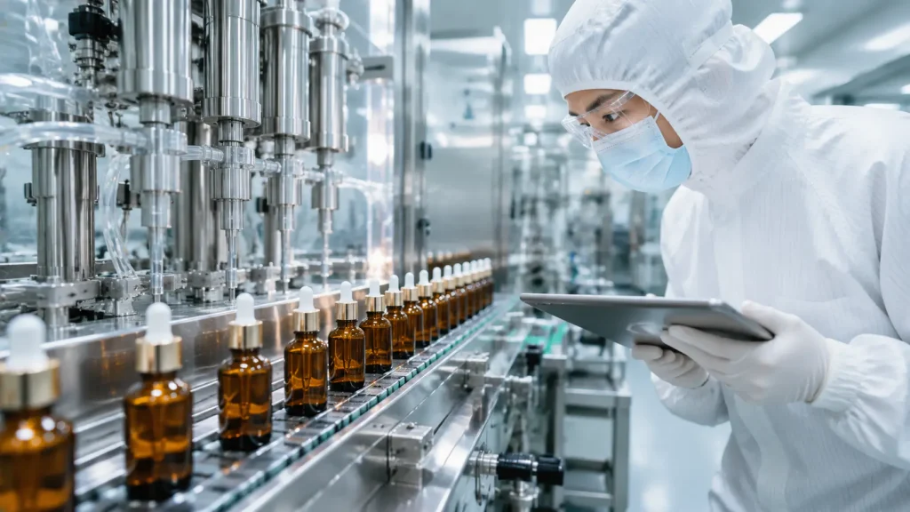
What Runs Here and What Runs Outside
- In-house — compounding, filling, assembly, in-process checks, finished product inspection and the batch record behind them.
- External laboratories — efficacy testing and specialist analytical work, arranged by us and reported to you in the laboratory's own format.
- Packaging suppliers — component manufacture and most decoration, specified by us and inspected on receipt.
What FDA Registration Does and Does Not Mean
For the United States market, this is worth reading before you evaluate anyone's credentials. The U.S. Food and Drug Administration states that its cosmetic facility registration and product listing process is not an approval program, that registration does not mean the agency has approved the facility or its products, and that it does not issue certificates of registration. It also says plainly that registration must not be used to suggest official endorsement.
- Registration is a filing, not a verdict. It records that a facility exists and what it makes.
- Listing is per product. It records the products and their ingredients, and it is updated as the range changes.
- The obligation sits with the responsible person — in most cases the brand owner whose name appears on the label, not the factory.
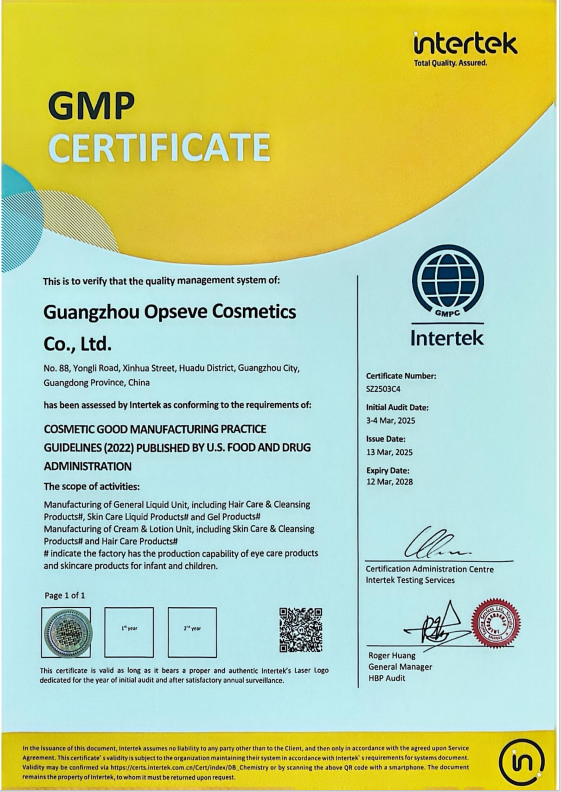
- Good manufacturing practice is a way of working, assessed against how a facility operates; regulatory compliance in your market is a separate question with its own paperwork.
- A registration number is not a substitute for the safety substantiation the responsible person has to hold, and it does nothing for the separate question of whether a given batch met its specification. Those are answered by records, not by a filing.
Ten Checks to Run on Any Cosmetic Manufacturing Quotation
Use this on us and on everyone else you are quoting. Each check is answerable in one line, and a supplier who cannot answer it in one line is telling you something.
— where does the clock start and stop? Ours: starts at formula approval, packaging confirmation and production preparation; ends at handover under the agreed Incoterm.
— a per-order minimum hides how many variants you must commit to. Ours: from 10,000 units per SKU, with 500–3,000 unit launches routed to Low MOQ Skincare Manufacturing.
— are they the supplier's or the factory's? Ours: components are sourced, so their minimums are the supplier's and we name them at quotation.
— who owns it at the end, and what happens if you move. Ours: agreed at quotation, per route, before development starts.
— how many before charges restart. Ours: stated on the quotation for your route.
— what percentage, and what event releases the balance. Ours: 30–50% deposit by T/T, balance before shipment.
— EXW and DDP are different products, not different words. Ours: EXW, FOB and CIF as standard, DDP for selected destinations.
— how many, and what reaches you from each. Ours: five, with the outputs listed in the table above.
— who files what. Ours: you file as the responsible person; we supply the technical file, ingredient information and quality documentation.
— what a late change costs in days and in money. Ours: quantified before the change is accepted, not after.
The checkpoints above are easier to judge on a real sample than on a page. Choose a formula direction, or send a reference sample, and the first sample is drawn in 3 working days and delivered internationally in 5–7.
Running the Program from Brief to Shipment
Who Is Responsible for What
- You own the brand, the artwork, the claims you make, the market you sell into, and the regulatory filings that go with it.
- We own the formula work on the route you choose, raw material sourcing and inspection, the batch, the in-process checks and the quality record behind them.
- We coordinate packaging components and external laboratory testing, and we name which supplier or laboratory did what.
- We share the schedule: our commitments are on the clock above, and so are the stages that only move when you approve them.
Formula Ownership and Confidentiality
Formula ownership differs by route, and it is settled on the quotation rather than left to be discovered later. Library formulas remain ours and may be supplied to others; formulas developed to your brief have their ownership agreed in writing before development starts. A Non-Disclosure Agreement can be signed to protect product concepts, formulation information and confidential business requirements before any file changes hands.
This is the end-to-end sequence with the decision you own at each stage, the action we take, the working days it consumes, and what waits if the decision arrives late. Stages you control are not padded with our estimates, because the honest answer is that they take as long as your approval takes.
| Stage | Your decision | Our action | Working days | What stalls if the decision is late |
|---|---|---|---|---|
| 1. Enquiry and scope | Category, format, target market, quantity per SKU | Confirm feasibility and return a written quotation | 1 | Nothing starts before scope is fixed |
| 2. Formula selection | Ready-made, brief-led or your own formula | Shortlist from the library or open a development file | 1–2 | Sample scheduling |
| 3. Sample production | Approve the sample brief | Produce first samples | 3 | Every stage below this one |
| 4. Sample delivery | Confirm the courier destination | Dispatch samples internationally | 5–7 | Your evaluation window |
| 5. Sample evaluation | Approve, or return with written change notes | Log feedback and revise | Set by you | The whole schedule — this is the most common stall |
| 6. Packaging confirmation | Component, decoration and artwork sign-off | Check fill-to-component compatibility and order components | Set by component lead times | Production booking |
| 7. Formula approval | Written approval of the final formula | Lock the formula and issue the production plan | 1 | Production booking |
| 8. Deposit and booking | Release the 30–50% deposit | Book the line and order raw materials | 1 | Your production slot |
| 9. Production preparation | — | Raw material inspection and formula evaluation before the line starts | Inside the production window | — |
| 10. Production and in-process checks | — | Compounding, filling, assembly and production monitoring | 10–15 from stages 6, 7 and 9 being complete | — |
| 11. Release checks | Request retained samples if you want them | Finished product inspection and release | Inside the production window | Release |
| 12. Balance and shipment | Settle the balance before shipment | Prepare export documentation and hand over per the Incoterm | 1–2 | Departure |
Read rows 6, 7, 9 and 10 together: the 10–15 working day production window opens only when packaging is confirmed, the formula is approved and production preparation is complete. Quoting it any other way would make it a promise we could not keep.
Working with a manufacturer on another continent carries real risks, and pretending otherwise would not help you evaluate us. Each row names a worry, its actual cause, the specific thing we do about it, and — deliberately — what you should still check for yourself. The last column exists because a supplier's own assurance is not verification.
| The worry | What actually causes it | What we do about it | What you should still verify |
|---|---|---|---|
| I cannot walk the floor before ordering | Distance, and a first order placed on documents alone | Reference-sample evaluation and formula analysis before commitment; samples of the actual formula in the actual component | That the production units match the sample you approved — ask for retained samples |
| Decisions lose a day to the time difference | Non-overlapping working hours | Quotations returned within one business day; written approvals at each gate so no decision depends on catching someone live | That approvals are captured in writing, not only in a call |
| Freight eats the manufacturing saving | Transit and clearance sit outside most quoted lead times | EXW, FOB and CIF quoted as standard, DDP for selected destinations, so the freight portion is visible before you commit | Your landed cost per unit, not the ex-works price |
| Regulatory responsibility is unclear | Filing duties differ by market and are often assumed rather than assigned | Product technical files, ingredient information and quality records prepared for your filing | Which entity is the responsible person for your market — usually you, not us |
| I could lose control of my formula | Ownership terms left unwritten until there is a dispute | An NDA before files are exchanged, and formula ownership agreed in writing at quotation for the route you pick | That the ownership clause is on the signed document, not in an email |
| My deposit is exposed | Money moves before goods exist | 30–50% deposit with the balance settled before shipment; letters of credit accepted on larger orders | The trade terms and the bank route on the quotation |
| Production drifts from the sample | Scale-up behaves differently from bench batches | Formula evaluation of the bulk before filling and finished product inspection before release | The batch against your approved sample, on arrival |
| Components arrive late and nobody warned me | Component suppliers set their own minimums and schedules | Packaging confirmation is a named stage on the clock, with component lead times stated before the deposit | The component lead time in writing, separately from the production lead time |
| Specifications get lost in translation | Verbal briefs and assumed defaults | Written quotation, written formula approval, written packaging sign-off — three documents, three gates | That your change notes came back restated correctly before work resumed |
| Customs holds the shipment on paperwork | Incomplete or mismatched export documentation | Export paperwork, technical files and ingredient information prepared with the shipment | Your own importer's document list for your port |
Manufacturing & Planning Tools
Cosmetic Contract Manufacturing FAQs
What does a cosmetic contract manufacturer do?
A cosmetic contract manufacturer makes finished cosmetic products for a brand that owns and sells them: formula, raw materials, compounding, filling, quality tests, batch shipping documentation. The brand keeps the label and the commercial risk.
What is the difference between contract manufacturing and private label?
Private label is one route inside contract manufacturing: an existing formula is filled into your packaging and branded as yours. Contract manufacturing is the wider arrangement, which also covers formulas developed to your brief and your own formula reproduced under contract. The practical difference is who owns the formula and whether anyone else can sell the same one.
Do I need FDA approval to sell cosmetics in the United States?
No — the U.S. Food and Drug Administration does not approve cosmetic products or cosmetic facilities before they go to market. What applies instead is facility registration and product listing, and the agency states that this is not an approval program and that no certificate of registration is issued. Registration also must not be presented as government endorsement, which is worth remembering when a supplier waves it as a credential.
How does good manufacturing practice differ from FDA registration?
Good manufacturing practice is how a facility operates: documented procedures, controlled materials, checks at defined points, records that let a batch be reconstructed. Registration is an administrative filing. One is a way of working, the other a database entry.
Who owns the formula in contract manufacturing?
It depends on the route, and it belongs on the quotation: a library formula stays with the manufacturer, while a formula developed to your brief can be yours by written agreement made before development starts.
What does stability testing actually measure?
It measures whether the formula still behaves the same way after time and temperature stress, in the container it will actually ship in. A published accelerated protocol, for example, treats a sample as stable when it survives one month at 50 °C with viscosity within 30%, pH within one point, and no coalescence above 3 on a 0–5 scale. The reason it sits outside the production window is that it cannot be shortened by adding capacity.
Are United States manufacturers better than overseas options?
Every manufacturing facility possesses strengths and deficiencies, and the ‘better’ option varies by what your project is critically missing. Facilities closer to home shorten shipping transit and simplify market filings; those abroad generally widen the formula and component range available at a given budget. Above all else, check whether the supplier will put quantity, schedule, ownership and payment terms in writing before you pay.
What is your minimum order quantity, and what if I need less?
From 10,000 units per SKU, with flexible evaluation for new launches and market-testing projects. That figure comes from custom formulation economics plus packaging component minimums that the component suppliers set, not us. If you need 500–3,000 units per SKU, Low MOQ Skincare Manufacturing is the route built for that, and moving up to this program later is straightforward.
How long does it take from first enquiry to shipment?
Production runs 10–15 working days, counted from formula approval, packaging confirmation and completed production preparation. Before that window opens you have a quotation in one business day, first samples in 3 working days, and 5–7 working days of courier time to receive them. The stages that vary most are your own sample evaluation and any component with a long lead time, which is why the program clock above separates our days from yours.
How do I protect my formulation when I share it?
Ask for the Non-Disclosure Agreement before you send anything, not after the first sample. It covers product concepts, formulation information and confidential business requirements. A single defining active can also be supplied as a client-nominated raw material.
Which documents travel with my order?
Export paperwork, product technical files, ingredient information and quality records travel with the shipment, plus stability test reports where testing was run. Name any market-specific document set at quotation.
Who buys the packaging components?
We source and coordinate them through packaging suppliers, and specify decoration on your behalf. That means component minimums and component lead times belong to those suppliers, and we state both before you pay a deposit. You can also nominate your own component supplier, in which case we take the compatibility check but not the schedule risk.
How does the payment schedule work?
Telegraphic transfer with a 30–50% deposit, and the balance settled before shipment. Letters of credit are accepted on larger orders. Trade terms are EXW, FOB or CIF as standard, with DDP available for selected destinations, and the term is named on the quotation rather than agreed later.