Get in touch with NEXO Beauty Labs Company
Private Label Cosmetics Manufacturing for Global Beauty Brands
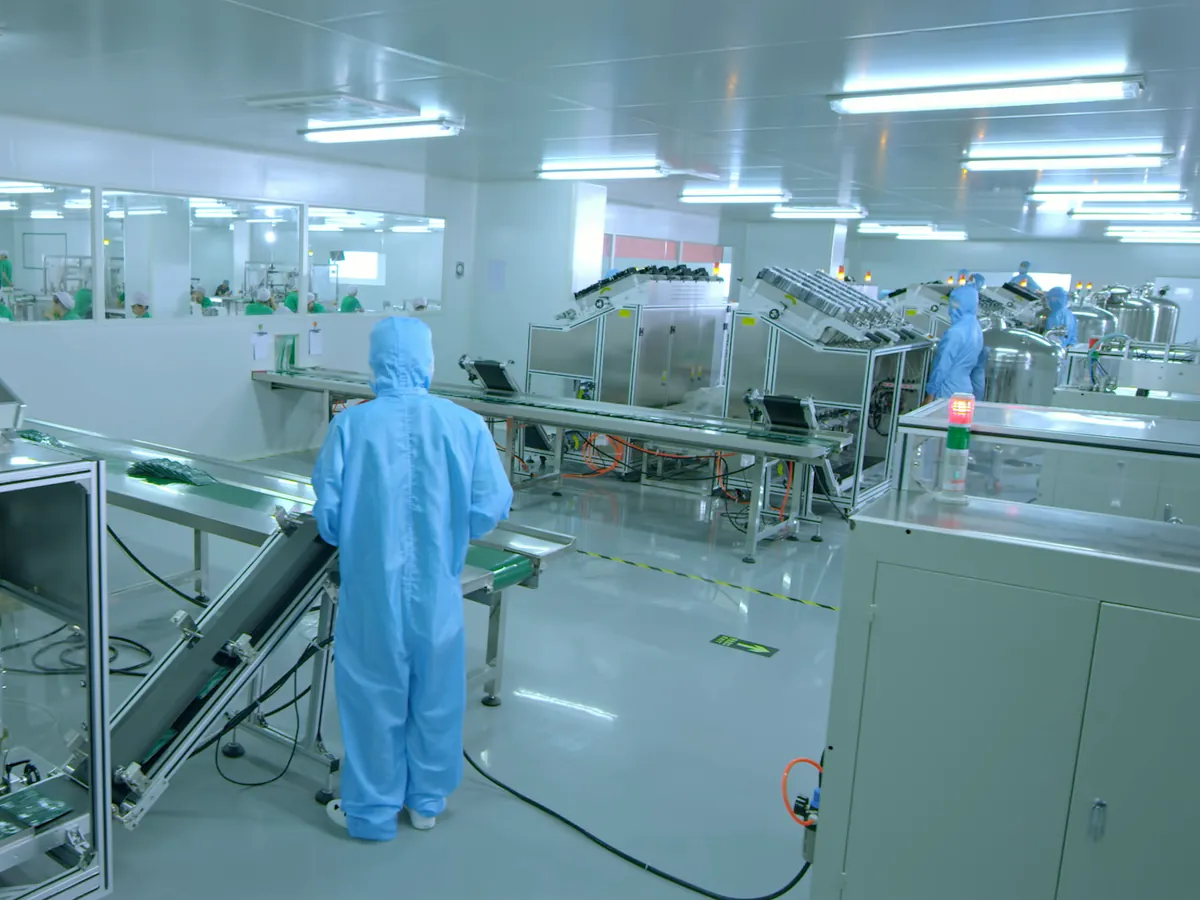
NEXO Beauty Labs develops and manufactures private label cosmetics across skincare, hair care, and body care. We connect product concepts, formulation direction, packaging inputs, and commercial production planning for beauty brands, e-commerce companies, distributors, and private-label partners.
A Development and Manufacturing Partner Built for Beauty Brands
NEXO Beauty Labs brings a manufacturing foundation dating back to 1999 and more than 25 years of cosmetic manufacturing expertise. That history supports a practical product-development conversation while the brief keeps current formula, packaging, market, and release decisions visible.
1999
Our manufacturing foundation dates back to 1999.
25+ years
We are built on more than 25 years of cosmetic manufacturing expertise.
Since 2020
Our international business team has supported global partners since 2020.
The manufacturing and formulation base behind that conversation
56
We run 56 cosmetic production lines.
36,000 m²
Our cosmetic manufacturing facility covers 36,000 square meters.
5,000+
We hold 5,000+ market-ready formula solutions across skincare, hair care, and body care.
65
Our formulation work is backed by 65 patent certificates.
| Planning fact | NEXO capability or working term |
|---|---|
| Manufacturing foundation | Established in 1999 |
| Cosmetic manufacturing expertise | More than 25 years |
| International business support | Dedicated team since 2020 |
| Formula solutions | 5,000+ market-ready options |
| Cosmetic production lines | 56 lines |
| Manufacturing facility | 36,000 square meters |
| Patent certificates | 65 certificates |
| Standard minimum order quantity | From 10,000 units, with flexible review for new launches and market testing |
| Initial sample preparation | 3 to 7 business days |
| International sample delivery | About 5 to 7 working days |
| Commercial production | 10 to 15 working days after formula and packaging confirmation |
| Quality inspection | 6 inspection stages |
- Brand positioning, target customer, and product category stay connected.
- Formula direction is reviewed beside packaging and planned cosmetic claims.
- A commercial production request generally comes from written project inputs, not just a brand name in a catalog.
- Cosmetic good manufacturing practice guidance in ISO 22716 is written around documented procedures and records, which is why the brief is recorded rather than assumed.
Private Label Product Development Routes
A private label route should reflect the decision you need to make first: validate a product direction, adapt a starting formula, build a custom formulation, or extend an existing product line. We organize the opening discussion around that priority, then confirm what is feasible for the category and market brief.
| Route to discuss | Best opening condition | Buyer inputs | Decision before quotation |
|---|---|---|---|
| Defined-base route | A reference product or product direction is already clear | Category, target consumer, positioning, packaging direction | Available formula scope, permitted changes, claims, evidence, quantity, and timing |
| Adapted-formula route | The brand needs controlled changes from a defined starting point | Target texture, sensory direction, ingredient preferences, comparison reference | Change scope, sample criteria, formula-use terms, packaging, and approval path |
| Custom-formulation route | The formula brief is central to product differentiation | Intended use, target attributes, claims, consumer, market, packaging | Development scope, ownership, evidence responsibilities, and production-release inputs |
| Line-extension route | An established brand system is moving into another category or SKU | Existing positioning, approved references, shared packaging rules, launch sequence | Cross-SKU consistency, category-specific requirements, and change control |
Hover to Flip
Route selection is a trade-off, not a quality ranking
- A defined starting point may reduce early ambiguity, but differentiation still depends on positioning, claims, packaging, and the permitted formula scope.
- A custom cosmetic brief gives the project team more decisions to control, while adding more formula, evidence, ownership, and approval questions.
- Formula ownership and transfer rights belong in the first commercial discussion, not at the end of development.
- No route removes the safety and claim-evidence duty: the U.S. FDA states that cosmetic products and ingredients generally are not subject to premarket approval, except color additives, and that marketers stay responsible for product safety.
Running a full OEM or ODM programme instead?
If the brief is a full manufacturing programme rather than a private label product line, our OEM cosmetic manufacturing page sets out those development routes, the cost and schedule drivers behind them, and how quality-control and market responsibilities are split.
Four cooperation models sit behind these routes
Private label
You select from our proven formulation library, and we customize ingredients, texture, packaging, and labeling for your brand.
Custom ODM
Our R&D team develops a new formulation from your concept, ingredient direction, or market requirement.
Reference sample
We study a market reference or existing formula, then develop and refine a version against your brief.
Contract manufacturing
You bring the formula, raw materials, or technical specification, and we handle bulk production, filling, and inspection.
We sign non-disclosure agreements covering product concepts, formulation information, and confidential commercial requirements, so an exclusive formula brief can be discussed before the route is fixed. Ownership and transfer terms still belong in writing rather than in the sample conversation.
Use the route comparison tool
Compare launch priority, differentiation, ownership, and current product position before you contact private label cosmetic manufacturers.
Skincare, Hair Care, and Body Care Product-Line Planning
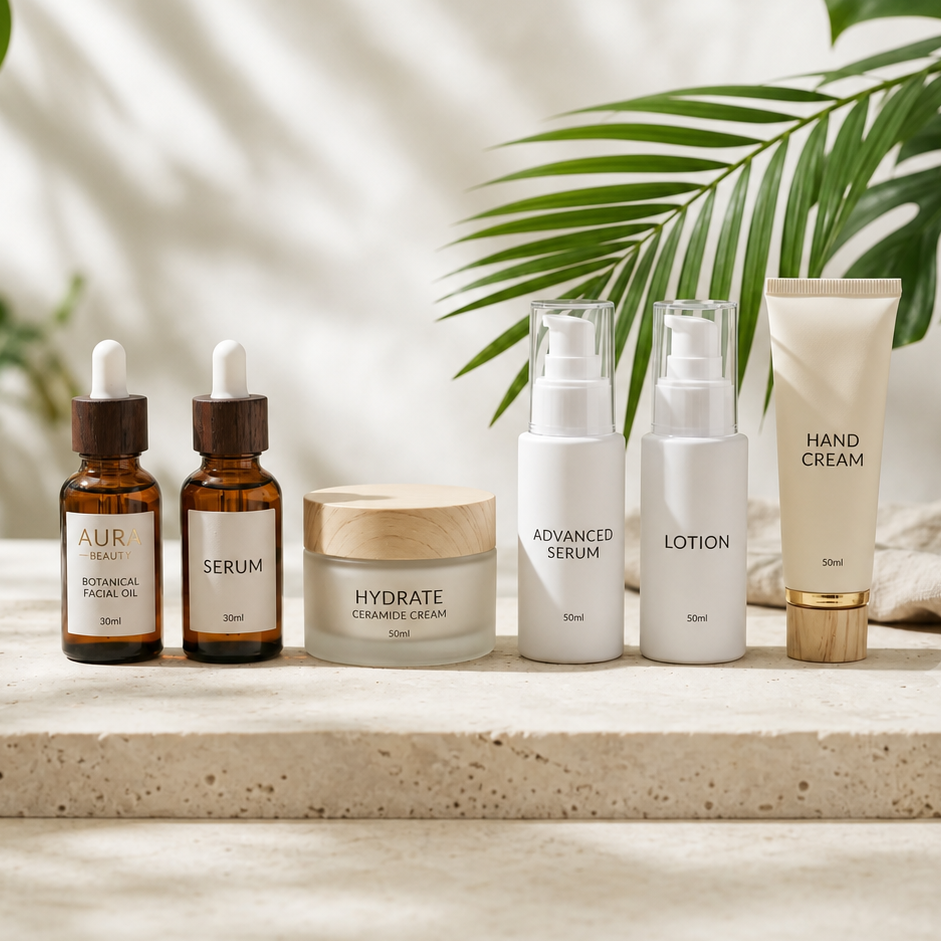
NEXO provides cosmetic OEM and ODM development and manufacturing for skincare, hair care, and body care. We use a shared brand brief to connect the categories without assuming that every formula, claim, package, or target market follows the same path.
Skin Care and Skincare
Define intended use, format, skin-feel direction, target customer, claims, primary packaging, and market before selecting the formulation route.
- Brand role in the routine
- Texture and sensory direction
- Skincare products that belong in the first line
Hair Care
Connect hair type, use occasion, format, fragrance direction, claims, packaging, and the product line sequence before sample decisions begin.
- Wash, condition, style, or treatment role
- Target user and usage pattern
- Cross-SKU fragrance and visual system
Body Care
Set the cleansing, moisturizing, treatment, or sensory objective beside pack format, claims, retail channel, and use environment.
- Routine position and format
- Consumer and channel fit
- Packaging and label hierarchy
One beauty brand system, category-specific decisions
A shared product line can repeat its tone, ingredient story, colour system, and packaging logic. Formula, product classification, evidence, and use conditions still need category-level review. Safety responsibility follows each finished product rather than the brand system, because the FDA places product safety on the marketer of the cosmetic placed on the market.
Formula, Packaging, Claims, and Target-Market Alignment
A formula is only one part of a market-ready cosmetic product. We bring the intended use, claims, target jurisdiction, responsible-party allocation, safety evidence, and final packaging direction into the product-development brief before scale decisions.
Product Brief Alignment Gate
| Alignment gate | Decision to record | Risk reduced |
|---|---|---|
| Product category | What the product is and how the buyer expects it to be used | Classification mismatch |
| Intended use | Where, how, and by whom the product will be used | Unclear product purpose |
| Planned claims | The exact consumer-facing promise under discussion | Cosmetic and drug-claim overreach |
| Formula direction | Defined base, adaptation, custom formulation, or line extension | Scope drift |
| Final packaging | Container, closure, dispensing, decoration, and label direction | Formula-package mismatch |
| Target market | The jurisdiction and sales channel planned for launch | Late market-input changes |
| Responsible party | Which label-named business carries the applicable market duties | Responsibility gap |
| Evidence ownership | Who supplies, reviews, retains, or commissions safety and claim support | Release ambiguity |
Why these decisions are separate
- Formula review does not replace finished-product safety evidence.
- Packaging compatibility does not prove an advertising claim.
- Internal project approval does not mean government premarket approval.
- In the United States, the label-named manufacturer, packer, or distributor may be the MoCRA responsible person, so the name on the label matters.
“A sample is a decision point, not a production release. The release discussion starts when the product, package, evidence, responsibilities, and written acceptance criteria point to the same commercial brief.”
Product Brief Specification & Commercial Terms
A compelling request for quotation clearly outlines what has already been decided and where manufacturer input is still needed. Here, we cover the key fields we use to bridge a beauty idea to an active project discussion. Private label cosmetics manufacturing does not reduce to one price across every formula and package.
Brief field
What to provide
Why it changes the project
Category
Skincare, hair care, or body care
Sets the correct product and use context
Intended use
How and where the cosmetic will be used
Anchors product classification and user expectations
Target customer
Audience, need state, routine, and price positioning
Guides formula, sensory, pack, and brand choices
Development route
Reference, adaptation, custom formulation, or line extension
Defines the first scope discussion
Formula direction
Format, texture, sensory target, and ingredient preferences
Turns a concept into reviewable attributes
Planned claims
Draft label and marketing statements
Connects intended use to the evidence plan
Packaging direction
Container, closure, dispensing, decoration, and label needs
Connects formula and final presentation
Target jurisdiction
Market and launch channel
Determines which responsibility questions must be answered
Evidence needs
Safety, packaging, claim, and record expectations
Prevents one evidence type from standing in for another
Commercial inputs
Quantity expectation and requested launch timing
Allows project-specific MOQ, price, and schedule discussion
Support request
Decisions the brand wants NEXO to help structure
Keeps the inquiry focused on unresolved work
Record evidence needs per product, not per brand. The FDA position on cosmetic premarket approval keeps safety substantiation with the marketer of the finished cosmetic, so the brief should name who supplies and retains each record.
Term
NEXO standard
What moves it
Minimum order quantity
Our standard MOQ starts from 10,000 units
New product launches, market-testing projects, and special development requirements can qualify for a flexible MOQ review
Sample preparation
We prepare initial samples in 3 to 7 business days
Formula complexity and whether the brief is a defined base, an adaptation, or a custom development
International sample delivery
Samples ship in approximately 5 to 7 working days
Destination market and courier arrangement
Commercial production
We complete commercial production in 10 to 15 working days after formula approval and packaging confirmation
Product type, packaging requirements, and order quantity
Driver
Decision behind it
Useful RFQ input
Development route
Defined starting point, adaptation, custom work, or line extension
Preferred route and reference product
Formula direction
Format, ingredient direction, sensory target, and change scope
Target attributes and acceptable alternatives
Packaging system
Container, closure, decoration, label, and secondary pack
Pack references, artwork status, and sourcing preference
Evidence scope
Safety, package, claim, and market-input responsibilities
Required records and responsibility owner
Order structure
SKU count, quantity by SKU, and launch sequence
Quantity expectation for each product
Brief readiness
Open claims, missing packaging direction, or unclear ownership can delay a useful scope decision.
Sample decisions
Revision criteria and the person authorized to approve changes affect the route from sample review to release.
Market and evidence path
Ingredient, target-jurisdiction, packaging, safety, and claim-support needs can add separate workstreams.
Communication updates and clear timelines begin with named decision owners. Ingredient origin transparency belongs beside the formula, claim, and sourcing brief; add the requested launch timing, then record which decisions belong to NEXO, the brand, a responsible person, or another qualified party.
Evaluating a Private Label Cosmetics Manufacturing Partner
A private label cosmetic manufacturer should help the buyer see which decisions are fixed, which are open, and who owns the next action. NEXO combines professional research and development capabilities, manufacturing systems, and global market insight to help brands move from a product concept toward a market-ready commercial brief.

Evaluation point
Evidence to request in the project
Decision it supports
Category fit
Confirmed scope for the intended skincare, hair care, or body care project
Whether the inquiry belongs with this cosmetics manufacturer
Route clarity
Written distinction among formula starting points and change scope
Whether the chosen route matches differentiation needs
Brief response
Clear questions about claims, packaging, target market, evidence, quantity, and timing
Whether the supplier understands the whole product
Sample acceptance
Named criteria, revision ownership, and production-release decision
Whether approval can be repeated and recorded
Responsibility allocation
Written ownership for the label, safety evidence, claim support, listings, and post-market duties
Whether a compliance gap is hidden between parties
Scaling conversation
SKU plan, quantity expectation, packaging status, requested timing, and change controls
Whether the product line can move into commercial planning
Settle responsible-party duties before label artwork is fixed. Under U.S. MoCRA, the manufacturer, packer, or distributor named on the label carries the listing and post-market obligations, so the evaluation should ask which business that will be.
NEXO partnership facts
Manufacturing foundation
Dating back to 1999
Cosmetic mfg experience
More than 25 years
International business support
A dedicated team since 2020
Quality Inputs and Commercial-Production Release
Quality planning should separate what the team likes about a sample from what the commercial product must meet. We structure the discussion around written product attributes, evidence inputs, packaging fit, change decisions, and the final production-release record.
The quality systems our production runs under
Certified systems
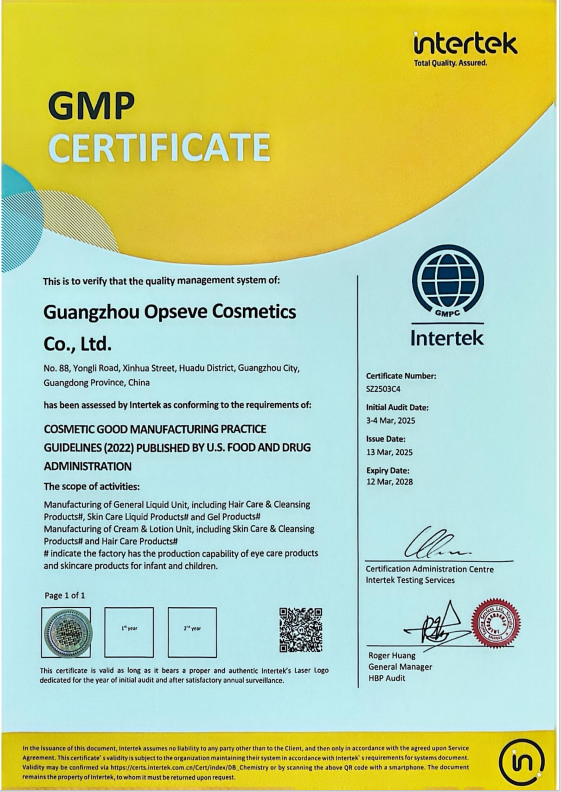
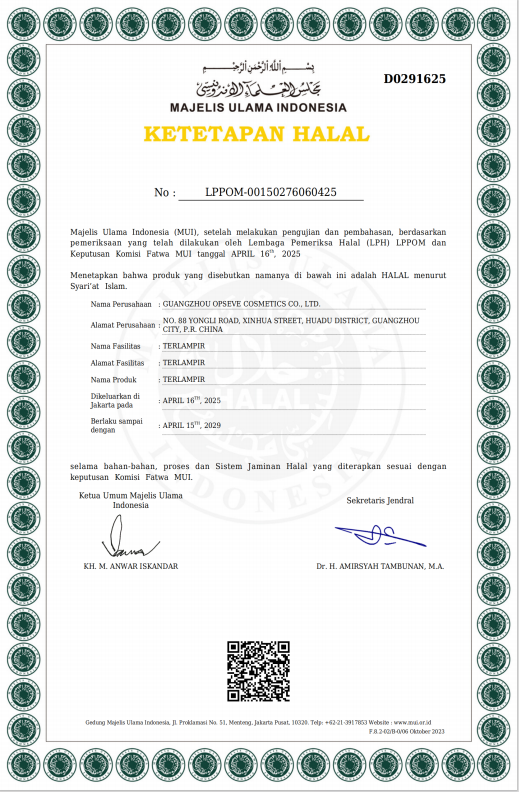
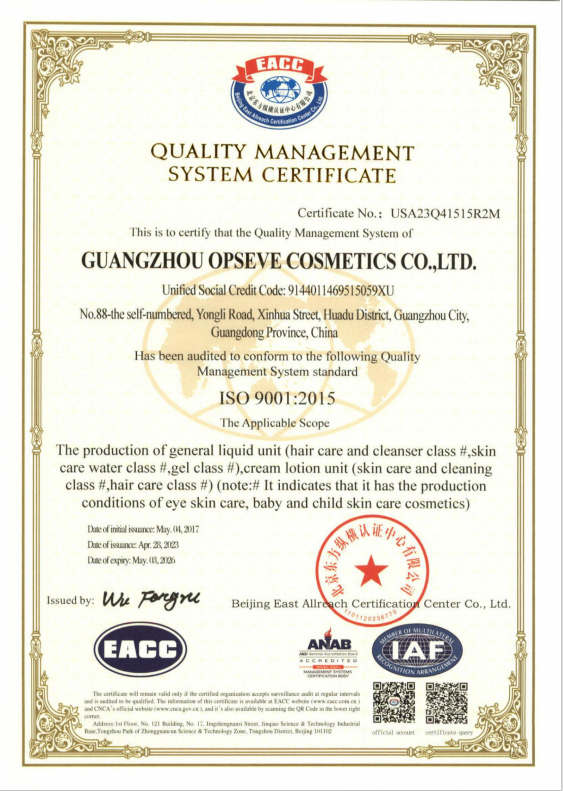
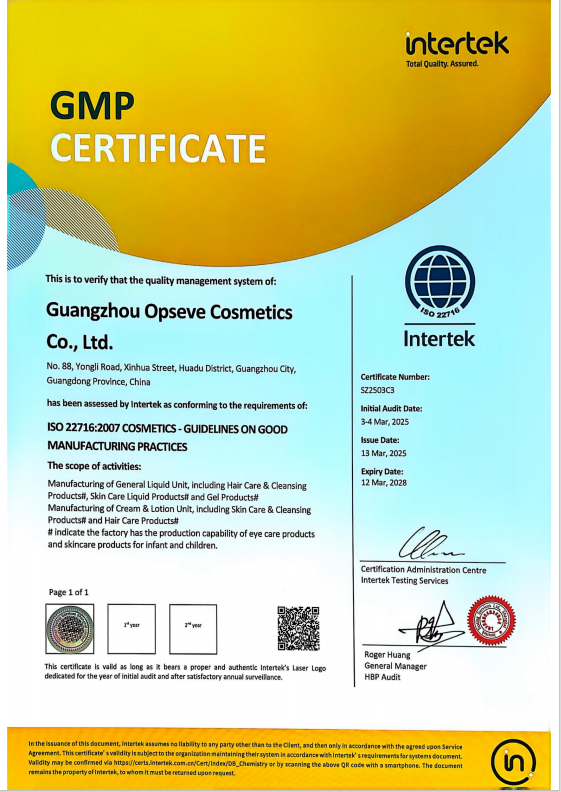
Our manufacturing facilities operate under ISO 9001, ISO 22716, and GMPC quality systems, with Halal certification available; documentation is issued against the project requirement.
Six inspection stages
Incoming material inspection, in-process control, bulk inspection, filling and packaging inspection, finished-product inspection, and batch review before release.
Testing we coordinate
Stability testing, packaging compatibility testing, sensory evaluation, and human efficacy testing support, arranged by product category and target market.
For export projects, we provide the supporting paperwork set: product technical files, ingredient information, and quality documentation, including United States and European Union documentation support. That paperwork supports a market submission; it does not replace the safety substantiation the marketer of the finished cosmetic has to hold.
Brief lock
Record category, intended use, target customer, formula direction, packaging, market, and claims.
Sample criteria
Define appearance, odor, sensory target, and project-selected formula attributes such as pH or viscosity where applicable.
Final-pack review
Connect the formula to the intended container, closure, dispensing, decoration, and label direction.
Evidence plan
Allocate safety evidence, package checks, claim support, records, and target-market responsibilities.
Change decision
State which sample attributes are locked, which need revision, and who approves the next version.
Production release
Confirm the accepted criteria, commercial inputs, and responsibility handoff in writing.
Evidence already available
Existing ingredient or similar-formula information may answer part of the safety question, while remaining gaps can require additional work.
Evidence still required
The product, intended use, claims, packaging, and target market determine what the team must add before release.
Manufacturing controls
ISO 22716 covers production, control, storage, and shipment aspects of cosmetic quality, and it does not extend to research or finished-goods distribution.
Acceptance ownership
The brand and manufacturing project need a named approver for revisions and the final release decision.
Private Label Cosmetics FAQ
What development route should a beauty brand choose?
Start with the decision that matters most: a defined product reference, controlled adaptation, custom formulation, or extension of an existing product line. Compare differentiation, ownership, packaging, evidence, and launch priorities before asking the cosmetic manufacturer to confirm feasibility.
What belongs in a private label cosmetics product brief?
Include category, intended use, target customer, formula direction, planned claims, packaging, target jurisdiction, responsible-party allocation, evidence needs, quantity expectation, and requested timing. Mark which items are fixed and which need a recommendation.
Can one partner support skincare, hair care, and body care?
NEXO’s confirmed OEM and ODM scope covers skincare, hair care, and body care. A shared brand system can connect the line, while each cosmetic category still needs its own use, formula, claims, packaging, evidence, and approval decisions.
When is custom formulation a better fit?
Custom formulation deserves an early discussion when the formula brief, differentiation target, or ownership terms are central to the brand. It also creates more product-development decisions, so the team should define the intended use, claims, pack, evidence, revision ownership, and release conditions.
How are minimum order quantities and MOQs confirmed?
Our standard MOQ starts from 10,000 units. New product launches, market-testing projects, and special development requirements can qualify for a flexible MOQ review, and the confirmed figure still follows the formula route, packaging system, SKU structure, and quantity by SKU. Share those fields for a written quotation instead of treating a low minimum from another supplier as a NEXO term.
How is the project lead time confirmed?
We prepare initial samples in 3 to 7 business days and ship them internationally in approximately 5 to 7 working days. After formula approval and packaging confirmation, we complete commercial production in 10 to 15 working days. The dates around those steps still follow brief readiness, ingredient and packaging availability, evidence scope, and shipping arrangement, so add the requested launch timing to the enquiry.
Does sample approval mean the cosmetic has government premarket approval?
No. Internal sample approval is a project decision, while the U.S. FDA states that cosmetic products and ingredients generally are not subject to premarket approval, except color additives; marketers remain responsible for product safety.
Who carries label, safety, listing, and post-market duties?
Responsibility depends on the jurisdiction and the party named on the label. Under U.S. MoCRA, the manufacturer, packer, or distributor whose name appears on the label is the responsible person, so allocation belongs in the brief and project records.
Can I request vegan, organic, clean beauty, or cruelty-free positioning?
Treat each term as a planned claim or sourcing criterion, not a default formula attribute. Share the exact standard, market, ingredient restrictions, and evidence expectation so the applicable formula and support path can be assessed.
What should buyers compare across private label cosmetic manufacturers?
Compare category fit, route clarity, formula and packaging coordination, sample acceptance, evidence ownership, responsible-party allocation, quotation inputs, and the path to commercial production. Pricing alone does not show whether those responsibilities are clear.
Does NEXO manufacture private label makeup?
This page covers the confirmed skincare, hair care, and body care scope. Send the intended makeup or color cosmetic category in the inquiry so NEXO can confirm whether it fits the current manufacturing offer.
What information is needed for a line quotation?
Send the product category, intended use, target customer, development route, formula direction, claims, target market, packaging direction, evidence needs, quantity expectation, requested timing, and any reference product. Our RFQ Brief Builder can turn open items into a short working list.