Get in touch with NEXO Beauty Labs Company
Cosmetic Manufacturing for Latin America
NEXO Beauty Labs is a private label and ODM cosmetic manufacturer and exporter, producing skincare, hair care and body care for beauty and personal care brands selling into Latin America — Brazil, Mexico, Colombia, Peru, Chile and Argentina. Our manufacturing foundation dates back to 1999, and since 2020 an international team has supported brands and distributors entering these markets. We manufacture and document; your local entity registers and imports.
- Quotes returned within 24 hours on business days
- First samples in 3 working days
- Standard MOQ from 10,000 units
- EXW, FOB, CIF and DDP
- A product concept
- A target formula
- An existing formula with its raw-material specifications
- A market reference sample
A formula route and a written quotation return from there.
Request a Tailored Quote or Samples
Product concepts and formulation information are treated as confidential, and we sign a Non-Disclosure Agreement on request.
Cosmetic manufacturing for Latin America is bought on six numbers, and all six are published here rather than held back for the enquiry. Each carries the condition it depends on.
Private Label Skincare, Hair Care and Body Care Production
Four product families run through our lines, and each covers the formats a beauty brand launches with rather than a single hero item. Filling and packaging run in-house.
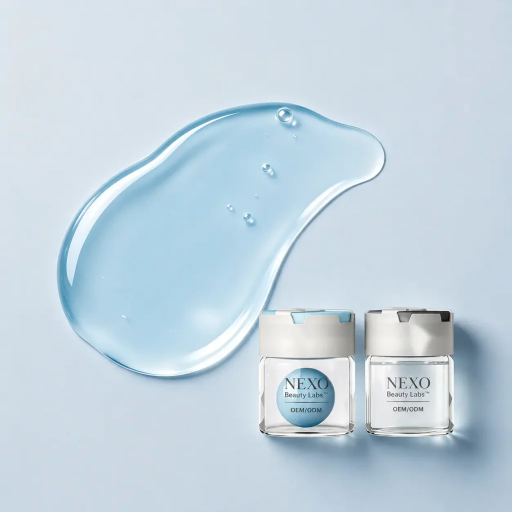
Skincare
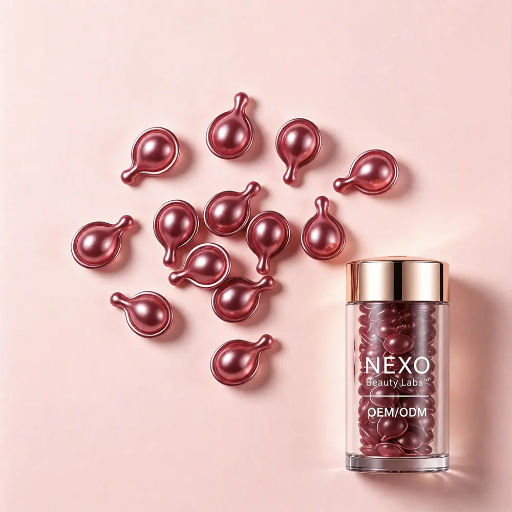
Facial cleansers, moisturisers and barrier repair creams, facial serums, single-dose capsule serums and sheet masks. Skin care products are the deepest of the four families, and where most Latin American skincare brands start a private label programme.
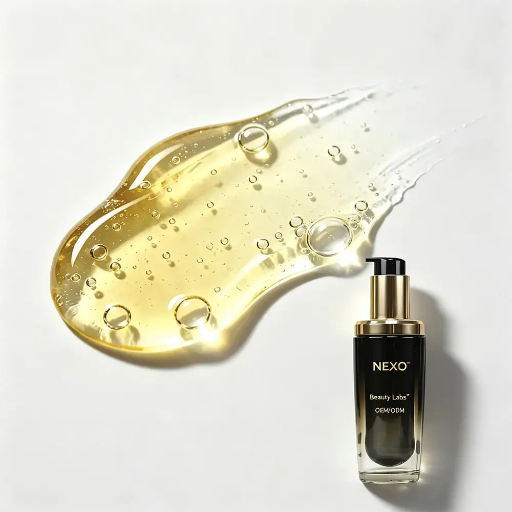
Hair and scalp care
Shampoos, conditioners and hair masks, leave-in hair serums and scalp treatment serums. A volume category across the region, filled on dedicated lines.
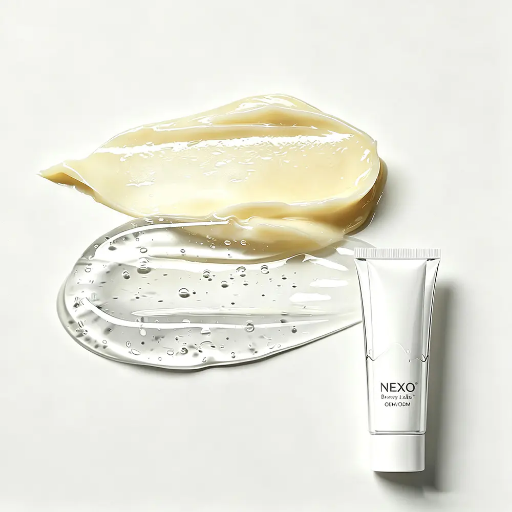
Body care
Body lotions, body washes and scrubs, hand and foot creams. These personal care products carry the largest fill volumes per unit and the tightest cost sensitivity.
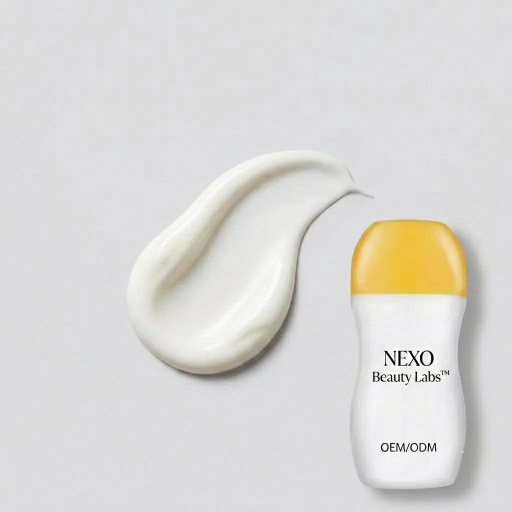
Sun care and specialised formats
Sun care and other specialised presentations sit apart because several Latin American regulators treat them as a higher-scrutiny category. Their route to market is set out below.
Formula Routes, Ingredients and Customization
Four routes lead into production, and the right one depends on what you already hold rather than on order size. Each ends in the same place: an approved formula, an approved sample, a production plan.
- You send
- A category and a positioning
- We return
- A shortlist from our market-ready formula library, with samples for evaluation
- Best for
- A launch-ready range without formulation development
- You send
- Target ingredients — a natural ingredient list, a named active or a texture — plus positioning anywhere from mass-market to high-end
- We return
- A tailored formulation from our in-house R&D team
- Best for
- Brands whose differentiation lives in the formula
- You send
- A market reference sample
- We return
- A formula matched to it, with texture and sensory optimisation
- Best for
- Replacing a supplier, or localising a product already selling elsewhere
- You send
- Your own formula with its raw-material or technical specifications
- We return
- Scale-up, stability confirmation and commercial production
- Best for
- Brands that own a formula and need capacity behind it
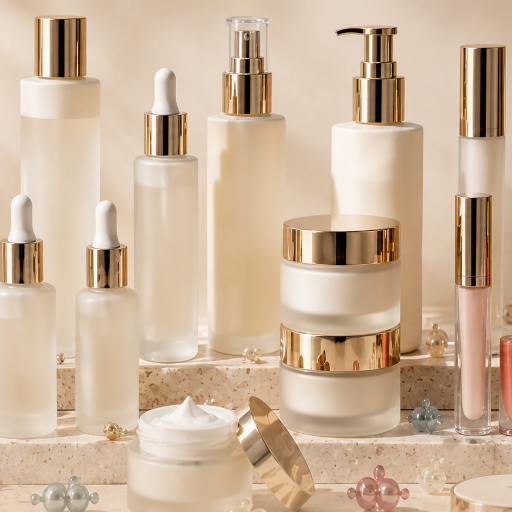
Formulation Technologies
- Plant-Based Capsule Freshness-Lock — single-dose capsules for precise dosage and heat resistance, used for serum capsules, facial oils and concentrated treatments.
- Active Ingredient Sustained-Release — gradual release of actives for anti-ageing, brightening and sensitive-skin formulas.
- Liposomal Encapsulation — encapsulated actives for active serums, barrier care and advanced treatment formulas.
Start With One Reference Product
Send a single market reference sample and receive a formula-route assessment in return. No order commitment is attached to that step.
Request a ConsultationPackaging, Spanish and Portuguese Labeling, and Documentation
Packaging components are sourced and coordinated through our packaging suppliers, while filling and packaging run in-house. That split matters to your schedule, because components rather than filling are the longest item in most launch plans.
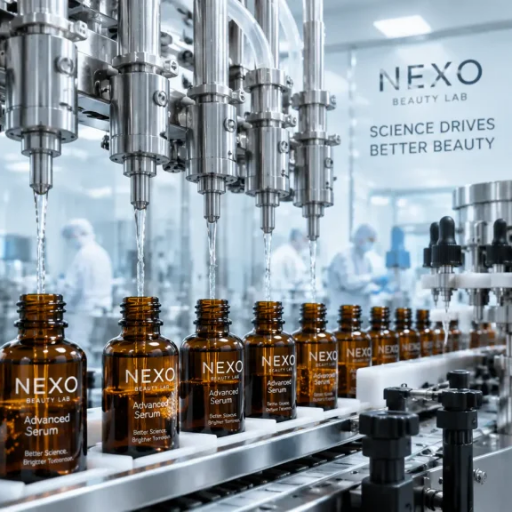
Components We Coordinate
- Primary packaging: bottles, jars, tubes, airless pumps, sachets, capsule presentations
- Secondary packaging: cartons, inserts and shipping cases
- Decoration: labels, silk-screen printing, hot stamping and shrink sleeves
- Artwork handling: your print-ready files placed on the confirmed component, proofed before the run
Component lead time is confirmed in the quotation before any production window is committed, so a launch date is never set against an unconfirmed component. The packaging supply chain, not the filling line, is what usually moves a launch date. Stock parts move fastest, custom moulds and bespoke decoration slowest.
Label Language and Artwork Responsibility
Latin American labelling is written in the market's own language — Portuguese for Brazil, Spanish elsewhere. Mexican labelling also prohibits medicinal claims, so wording that reads as dermatological treatment rather than cosmetic care belongs to a different product class. The text and its regulatory compliance belong to that country's registration or notification holder, and we print what the holder approves.
- We supply the ingredient information, in International Nomenclature of Cosmetic Ingredients form, that label and dossier are built from
- We place and proof the approved artwork on the confirmed component, once your local holder signs off the final text
Export papers, the product technical file, ingredient information and quality records are issued with the shipment — the four items a local holder assembles a submission from.
Finished-Product Specifications and Batch Release Criteria
Every batch is released against defined finished-product specifications, not a general impression of the run. The table is the standing set; product-specific limits are fixed with your formula at approval.
| Specification | What we hold |
|---|---|
| Quality control stages per batch | 6 stages, from incoming material inspection through to batch review and release |
| Finished-product release tests | 7 tests: appearance and odour, pH, viscosity, microbiological count, filling weight, packaging inspection, batch consistency |
| Batch records retained | 5 record types: batch identification, production records, quality inspection records, retained production samples, finished product release records |
| First samples | 3 working days after requirements are received |
| International sample delivery | 5–7 working days |
| Manufacturing window | 10–15 working days after formula approval, packaging confirmation and production preparation |
| Full small-batch cycle | 20–35 days after formula, artwork and packaging approvals |
| Standard minimum order quantity | From 10,000 units |
| Serum capsule capacity | Up to 6,000,000 capsules per day |
| Sun care capacity | Up to 200,000 units per day |
| Production lines | 56 lines across a 36,000 m² facility |
Minimum Order Quantity, Lead Times and Export Terms
Price follows the formula, the packaging specification, the order quantity and the paperwork a market requires. There is no fixed price list for private label work; your figure comes back in a written quotation.
Driver
Effect on cost
How to reduce it
Formula route
Custom development carries laboratory time a library formula does not
Customise a market-ready formula's sensory profile rather than its base
Packaging specification
Custom moulds and multi-process decoration raise unit cost and lead time
Take a stock component and differentiate on artwork
Order quantity
Setup, changeover and component minimums spread across the run
Consolidate sizes or shades into one production window
Number of target markets
Each market adds a label version and its own dossier
Launch one core market, then extend the same formula outward
Our standard minimum order quantity starts from 10,000 units. For new launches, market-test projects and special development we evaluate a flexible minimum against the project.
Brands shopping this category report suppliers quoting 5000-10000 unit minimums, and agents who want to charge a four-figure introduction fee plus a share of the order before a sample exists. You deal with the factory here, and the minimum above is ours to flex.
That places us with brands past their first exploratory run and buying against a real distribution plan. At a few hundred units a low-minimum filler is the more honest fit, and the block below says so.
Order stage
Lead time
What it covers
First samples
3 working days
From receipt of requirements to samples ready for evaluation
International sample delivery
5–7 working days
Courier transit of approved samples to your address
Manufacturing
10–15 working days
After formula approval, packaging confirmation and production preparation
Full small-batch cycle
20–35 days
The complete round with packaging component procurement, from formula, artwork and packaging approvals
The two production figures measure different things and are read together. Manufacturing is the 10–15 working day window once approvals are in hand; 20–35 days is the whole cycle, packaging component procurement included.
Payment and Export Terms
Payment
50% deposit on order confirmation, 50% balance before shipment, by T/T bank transfer
Incoterms
EXW, FOB, CIF and DDP
Documents
Export papers, product technical file, ingredient and quality records, issued with the shipment
Regulatory Documentation for ANVISA, COFEPRIS and Andean Market Entry
A Latin American launch has four roles in it, and a manufacturer occupies only one. Naming the other three is what tells you whether a quotation is worth acting on.
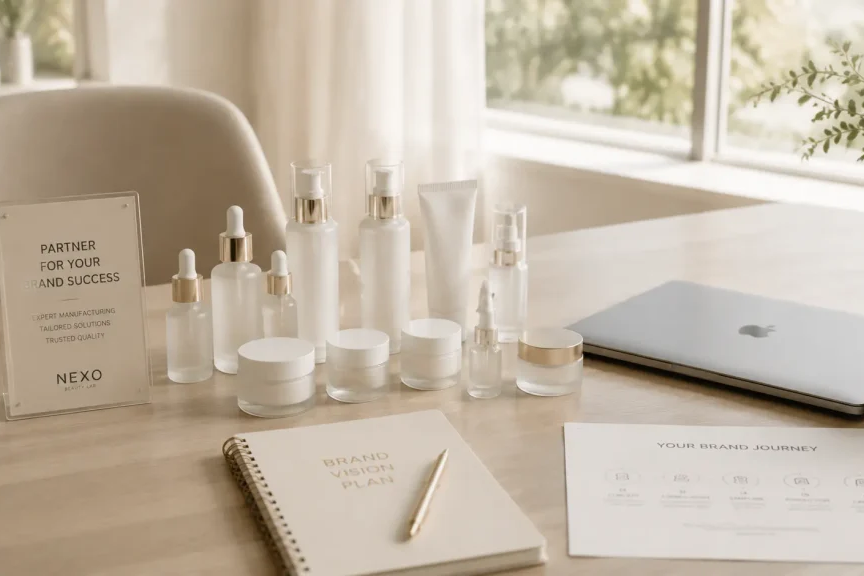
The Four Roles in a Latin American Launch
Manufacturer
Makes the product and issues the technical documentation behind it — our role.
Importer of record
A local entity clearing the goods in its own name. Mexico requires an active tax registration and entry on the register of importers.
Registration or notification holder
The party named on the filing. Brazil requires a Brazilian legal entity; Andean Decision 833 requires legal domicile in the member country.
Post-market responsible party
Answers to the regulator once the product is on shelf — a local role in every market below.
We do not hold your registration, and no manufacturer outside these markets legally can. We issue the documentation your holder builds the submission from, so the filing never waits on the factory.
Latin America Cosmetic Market Entry Matrix
| Market | Regulator | Registration or notification | Who must hold it | Label language | Minimum documentation |
|---|---|---|---|---|---|
| Brazil | ANVISA | Two routes by category under RDC 907/2024: notification for most cosmetics, pre-market approval for sun care, hair straightening and perming, insect repellents, antibacterial gels, and hair-fixing pomades added by RDC 814/2023 | A Brazilian legal entity holding a company operating authorisation and licence, obtained before any filing | Portuguese | Technical file, ingredient and quality records; the label carries the responsible company's authorisation number |
| Mexico | COFEPRIS | No product registration; the operation is declared through a notice of operation | An importer with an active tax registration, entered on the register of importers | Spanish | Ingredient and quality records; labelling to NOM-141-SSA1/SCFI-2012, medicinal claims prohibited |
| Colombia | INVIMA | Mandatory Sanitary Notification under Andean Decision 833, not a registration | A person or company with legal domicile in the member country of notification | Spanish, ingredient nomenclature excepted | Qualitative formula, ingredient nomenclature, finished-product specifications, artwork, lot-coding description |
| Peru | DIGEMID | The same Andean route; a notification granted in one member country can be recognised by the others | A person or company with legal domicile in the member country of notification | Spanish, ingredient nomenclature excepted | As Colombia; the notification runs seven years and is renewable |
| Ecuador and Bolivia | National competent authority under Decision 833 | The same Andean notification, open to recognition from one granted elsewhere in the subregion | A person or company with legal domicile in the member country of notification | Spanish, ingredient nomenclature excepted | As Colombia and Peru, under one harmonised Andean dossier |
| Chile | Instituto de Salud Pública | Sanitary registration per product, imported and domestic alike | The applicant filing online, whose legal standing the ISP verifies | Spanish | Product denomination, cosmetic purpose and formula; registration runs five years, renewable |
| Argentina | ANMAT | Risk-graded: Grade I through the electronic dossier system, Grade II as a separate admission | An establishment already registered in ANMAT's dossier system, before any product | Spanish | Establishment registration and product admission; a free-sale certificate files separately |
The filing risk sits with the local holder because a product can follow a ten-year Brazilian route, a seven-year Andean route, or a five-year Chilean registration; NEXO structures the manufacturing file around that market decision. The route can also differ by category inside one market, which is why sun care and a body lotion do not enter Brazil alike. A Brazilian notification granted in 2025 therefore runs to 2035, an Andean notification granted that same year expires in 2032, and a Chilean registration granted in 2026 expires in 2031.
Quality Control: Six Stages per Batch
- Incoming material inspection
- In-process quality control during manufacturing
- Bulk product inspection before filling
- Filling and packaging inspection
- Finished product inspection against agreed specifications
- Batch review and release, recorded against the batch identification
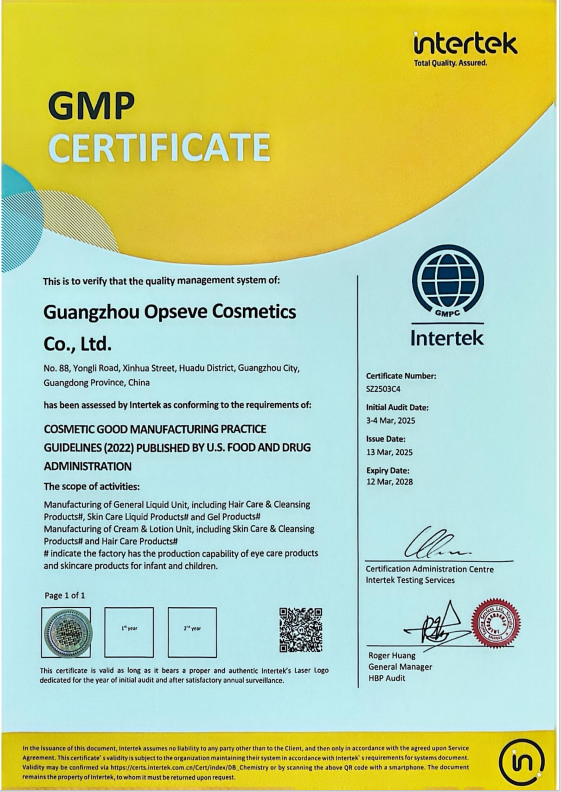
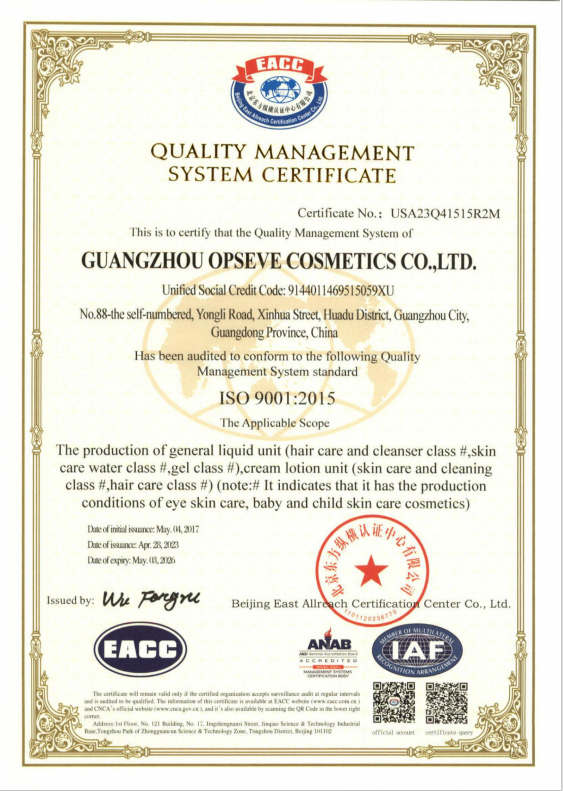
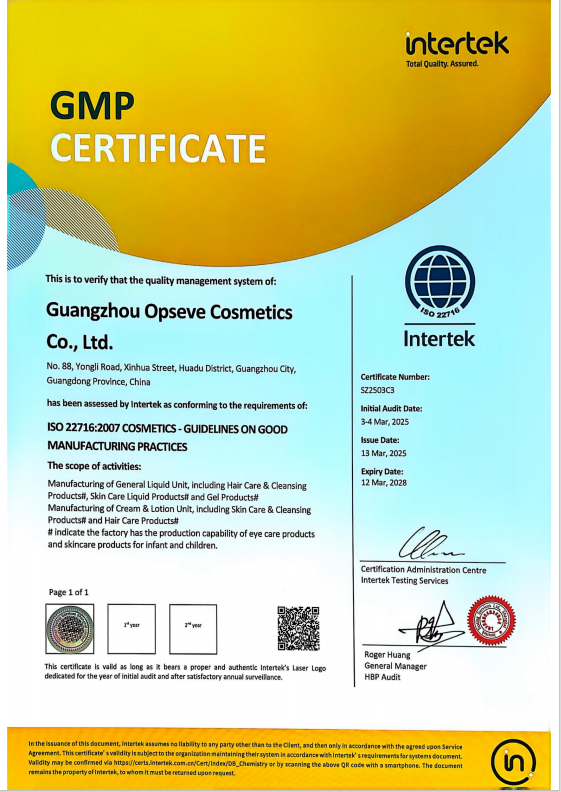
Manufacturing follows good manufacturing practice for cosmetics, and Mexico names NOM-259-SSA1-2022 as the cosmetic industry standard it recognises. Brazil takes a different view of how that practice is evidenced, and states it in its own words.
These markets open on a compliant local holder and a correct label, with the manufacturing evidence underneath.
"For cosmetics products in Brazil, however, GMP (Good Manufacturing Practices) certification is not required. Nevertheless, companies are expected to comply with appropriate quality and safety standards aligned with good manufacturing principles."
— ANVISA, Personal hygiene products, cosmetics and fragrances, regulation of products; page modified 6 April 2026. The regulator of the page's largest target market, stating what it does and does not require.
Qualification Evidence We Can Share
During supplier qualification we hand over a procedure index with samples, a completed batch record, the quality control test list with its acceptance criteria, a batch release record, a corrective action example and a traceability mock-trace. Client-identifying details are removed; parameters, methods and limits are not.
From Brief to Shipment in Six Steps
-
Send what you have a product concept, a target formula, an existing formula with its specifications, or a market reference sample. We sign a Non-Disclosure Agreement on request first.
-
Formula route and quotation we confirm which of the four routes fits, and a written quotation follows within 24 hours on business days.
-
Sample development first samples are produced in 3 working days after requirements are received, with international delivery in 5–7 working days.
-
Sample approval formula, texture and product samples are released for evaluation. Approval is a fixed step on every development route, not an option.
-
Production and release manufacturing runs 10–15 working days after formula approval, packaging confirmation and production preparation. Each batch is released only against its finished-product specifications; a batch that misses them is not released.
For the wider service scope, explore Global Cosmetic Manufacturing Support.
-
Shipment and papers goods ship on your chosen Incoterm with export papers, the product technical file, and ingredient and quality records.
What you send
What it settles
What still has to be decided
A product concept
Category, positioning and target market
Formula, texture and packaging — allow the longest window
A target formula
Technical direction
Raw-material availability and stability confirmation
An existing formula with specifications
Formula and acceptance criteria
Scale-up behaviour and component compatibility
A market reference sample
Texture, sensory profile and the benchmark to match
Ingredient strategy and claim positioning
Manufacturing Planning Tools
Frequently Asked Questions
What beauty product categories can you manufacture for Latin American brands?
Four families: skincare products, from cleansers and moisturisers to serums, capsule serums and masks; hair and scalp care, from shampoos to masks and leave-in serums; body care, from lotions and washes to scrubs and hand creams; and sun care with other specialised formats. All four are filled in-house across 56 production lines.
Can you develop a formula if my brand does not have one?
Yes. Custom ODM development builds a formula from your target ingredients, texture and positioning; reference sample development matches a formula to a product you already sell. If neither is needed, a market-ready formula can be customised on its sensory profile instead of its base.
Is your production capacity enough to support my order volume as the brand grows?
Capacity runs to 56 production lines in a 36,000 m² facility, with up to 6,000,000 serum capsules and up to 200,000 sun care units per day. A brand can scale several times over inside those numbers without changing supplier.
What quality standards does your cosmetic manufacturing operate under?
Manufacturing follows good manufacturing practice for cosmetics, and every batch passes six quality control stages and seven release tests before it ships. Mexico names NOM-259-SSA1-2022 as its cosmetic GMP standard; ANVISA states that a GMP certificate is not required for the cosmetics it registers, so what a buyer should inspect is the working system and its records.
What should a brand check before choosing a cosmetic manufacturer?
Ask which categories make up the bulk of the factory's business, who is authorised to release a batch, and what happens on paper when one fails. Ask for a redacted batch record and a corrective action example rather than a logo wall.
"Can it manufacture the same formula for another brand? Is exclusivity based on a product, formula, category, territory, or time period?" — joanmorais.com, manufacturer vetting questions on formula ownership and exclusivity
Settle that in writing before development starts, because exclusivity is a contract term rather than a property of the formula. One cosmetic chemist writing in the trade press argues it is more useful to ask which markets a manufacturer's customers sell into than who they are.
What is your minimum order quantity, and what if my first launch is smaller?
The standard minimum order quantity starts from 10,000 units. For new launches, market-test projects and special development requirements we evaluate a flexible minimum against the project, so a smaller first run is a conversation rather than an automatic no. At a few hundred units, a low-minimum local filler is the better fit and we will say so.
How long does it take from approved formula to goods ready for export?
Manufacturing runs 10–15 working days after formula approval, packaging confirmation and production preparation. The full small-batch cycle, with packaging component procurement inside it, runs 20–35 days from formula, artwork and packaging approvals. First samples come earlier: 3 working days, plus 5–7 for international delivery.
Which Incoterms do you ship on, and who handles import clearance?
We quote EXW, FOB, CIF and DDP. Clearance is performed by the importer of record, which has to be a local entity — Mexico requires an active tax registration and entry on the register of importers. DDP does not move that role offshore, so confirm your importer of record before fixing the Incoterm.
Which documents ship with the goods for ANVISA or COFEPRIS submission?
Export papers, the product technical file, ingredient information and quality records ship with every order. Your holder builds the submission from those four items — a Brazilian legal entity for ANVISA, an importer of record for the Mexican market, a locally domiciled holder for an Andean notification. We supply the manufacturing evidence; the filing is made locally, by law.