Get in touch with NEXO Beauty Labs Company
Contact Form 使用中
OPTIONAL DETAILS Company Information

Custom Cosmetic Formulation and R&D Services

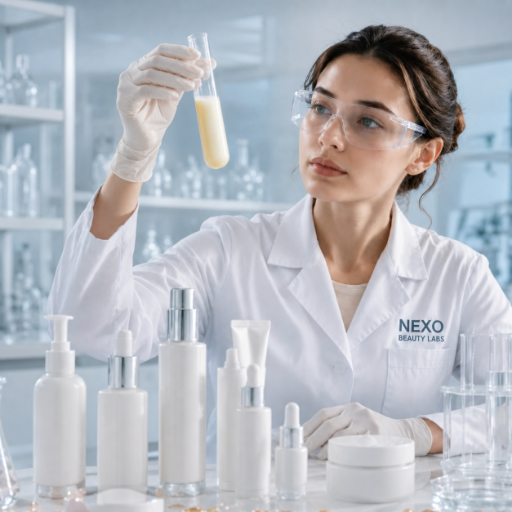
NEXO Beauty Labs runs custom cosmetic formulation and product development for skincare, hair care and body care brands that need a formula of their own rather than a catalogue product. Our in-house R&D team works from your target ingredients, texture brief and target market, then puts a laboratory sample in your hands to judge. Global beauty brands, e-commerce sellers, distributors and private label partners all start the same way.

Your brief, your reference product and your formula file stay confidential, and we sign a Non-Disclosure Agreement on request.

  • Quotations answered within 2 business days
  • First laboratory sample in 3 working days
  • Production in 10-15 working days after formula approval
  • Minimum order from 10,000 units per SKU

Select View:
Clean Beauty Manufacturing
Cosmetic Laboratory Services
Nexo Beauty Labs R&D

Cosmetic Formulation Services and Development Paths

Custom cosmetic formulation is one of three development routes, and the route you pick decides your timeline, your cost and who ends up holding the formula. Cosmetic formulation services at NEXO Beauty Labs cover all three from one in-house R&D team, so a project can move between them without changing supplier. You can start from a product concept, a target ingredient, a reference product, or an existing formula.

Your target ingredients, texture requirements and product positioning become a new formula customized from a blank bench. This route suits a brand with a defined claim and a target market it can describe in specifications. Development runs longest of the three and ends in a formula no catalogue holds.

Cosmetic Formulation Services

Product Categories We Formulate

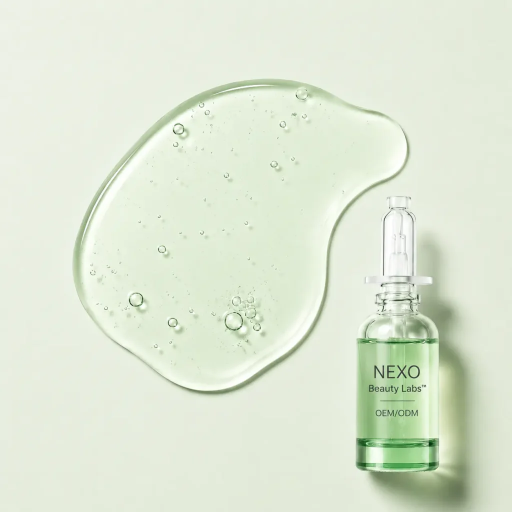
  • Facial serums, essences and ampoules, including single-dose capsule formats
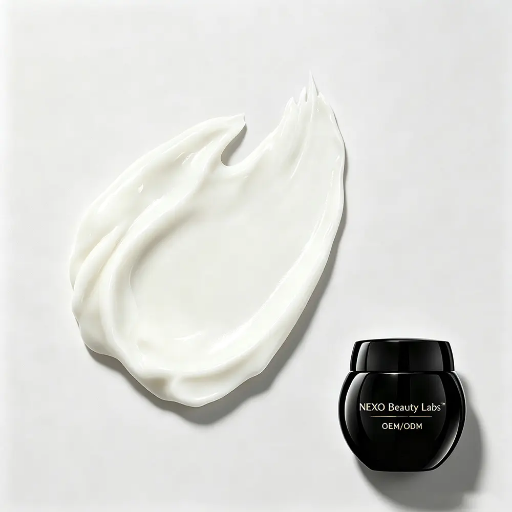
  • Creams, lotions and barrier-repair emulsions
  • Cleansers, toners and micellar formats
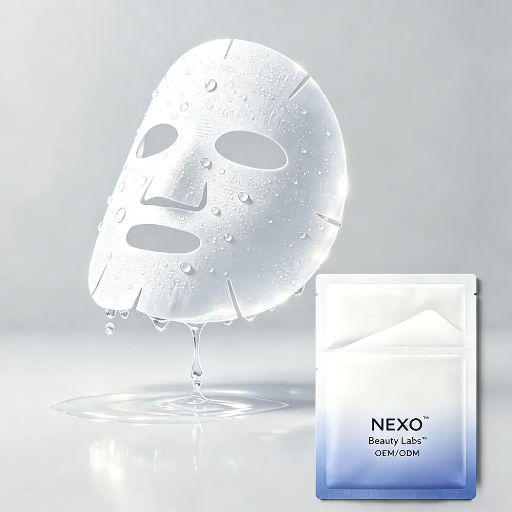
  • Masks in sheet, wash-off and sleeping formats
  • Hair care: shampoo, conditioner and scalp treatments
  • Body care: butters, scrubs, hand creams and body oils
  • Clean beauty reformulation and preservative-system rework

Formulation Technologies Behind Differentiated Products

Plant-Based Capsule Freshness-Lock

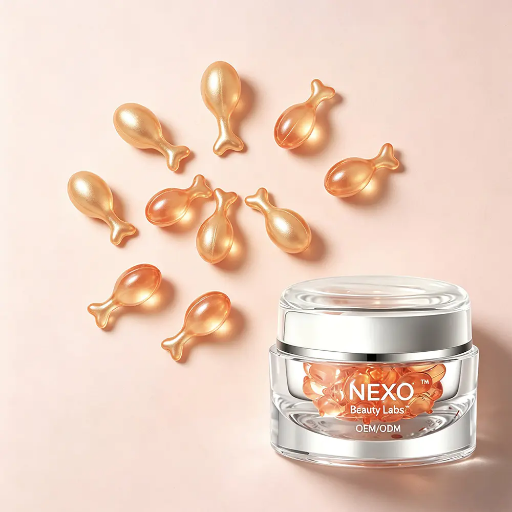
Plant-derived single-dose capsules seal each portion so the formula meets air only at the moment of use. Dosage is fixed and heat resistance is high. Serum capsules, facial oils and concentrated treatments use it most.

Active Ingredient Sustained-Release

Controlled release holds an active back and lets it out gradually, which makes a strong ingredient easier for skin to tolerate. Anti-ageing, brightening and sensitive-skin formulas are the usual homes for it.

Liposomal Encapsulation

Liposomal systems encapsulate an active for protection and delivery through the upper layers of the skin. They are ideal for active serums, barrier care and high-load treatment formulas.

Formulation innovation here rests on a team of expert chemists, a portfolio of 65 patent certificates and a formulation library of more than 5,000 documented resources. Send your concept through the formulation brief builder and the sample route comes back with it. Our cosmetic laboratory services cover bench work and sample evaluation, and custom skincare formulation covers the skincare-specific path in detail.

Explore Our Custom Formulation Services

Cosmetic Laboratory Services

Cosmetic Laboratory Services

Move from formulation bench work to sample evaluation, stability testing and packaging compatibility checks with one laboratory team.

Explore Services
Clean Beauty Manufacturing

Clean Beauty Manufacturing

Build clean beauty formulas around ingredient restrictions, preservation demands and the texture your market expects.

Explore Clean Beauty
Custom Skincare Formulation

Custom Skincare Formulation

Develop serums, creams, cleansers and barrier-care products around your target actives, sensory profile and market position.

Explore Skincare
Ceramide Cream Manufacturing

Ceramide Cream Manufacturing

Develop ceramide creams around the lipid system, barrier-care texture and stability window required for commercial production.

Explore Creams
Ingredients and Actives Sourcing

Ingredients, Actives and Raw Material Sourcing

Raw material selection starts from the claim you want to own and the regulation that governs your target market, not from whatever is cheapest that month. Each ingredient is sourced against supplier records, stability in the base you have chosen, and compatibility with the pack it will sit in. Cosmetic formulation companies differ most at this step, because a beautiful bench sample that cannot be sourced at volume is a dead end.

Actives are picked against your product concept and performance goals, then checked for efficacy inside the base rather than on paper. Retinol, peptide and vitamin C systems each carry their own stability limits. Those limits shape the base before a single claim gets written.

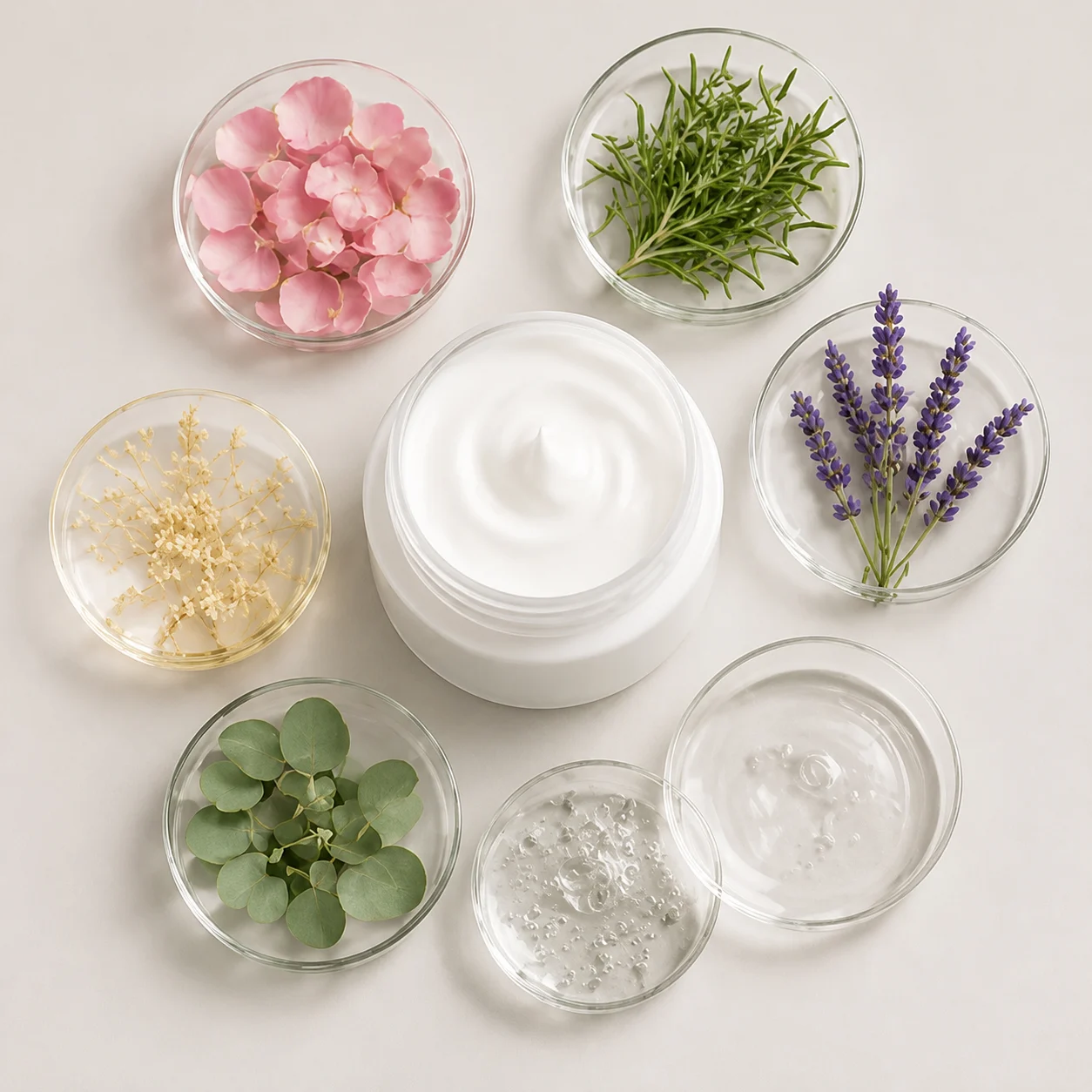
Functional botanical ingredients and plant extracts are matched to the skincare concept instead of being added for the label. Extract origin, standardisation and lot-to-lot consistency get confirmed with the raw material supplier first.

Texture development runs from lightweight hydrating gels through to rich barrier-care creams. Spreadability, absorption speed and after-feel are tuned on the bench, because a sensory failure kills repurchase faster than a weak active ever will.

Water, hydrosols, aloe, botanical infusions, proteins and clays all raise the preservation load a formula has to carry. A product described as natural is not self-preserving, and an airless pack is not a substitute for a working preservative system. Our clean beauty formulation route handles that trade-off directly.

What We Need Before Sourcing Starts

  • Target market, and the regulation that applies to the product there
  • Claim direction, and the active ingredients it depends on
  • A reference product or an existing formula, where one exists
  • Packaging format and material, since the primary pack decides compatibility testing
  • Volume expectation per SKU, which sets raw material lot sizes

Send your ingredient wish list with the brief and we will tell you which items are sourced as standard, which need a lead-time allowance, and which are restricted in your target market.

Request a Consultation

Textures, Formats and Packaging Integration

Format is not a decoration chosen at the end. It sets the viscosity window, the preservation load and the filling line before the formula is locked, so we agree it during development rather than after approval.

Serum and essence texture

Serum and essence

Formula Impact

Low viscosity, high active load, fast absorption

Packaging & Filling

Dropper bottles and airless pumps; 15 ml to 50 ml fills

Emulsion and cream texture

Emulsion and cream

Formula Impact

Barrier repair, richer after-feel, higher separation risk

Packaging & Filling

Jars, airless jars and tubes; 30 ml to 100 ml fills

Facial Mask

Mask

Formula Impact

Essence uptake, substrate interaction, wash-off behaviour

Packaging & Filling

Sachets, tubs and tubes; substrate choice changes essence volume

Cleanser and toner formulation

Cleanser and toner

Formula Impact

High water phase, foam behaviour, rinse feel

Packaging & Filling

Pumps and flip-top closure systems; 100 ml to 300 ml fills

Oil and balm texture

Oil and balm

Formula Impact

Anhydrous, no water phase, different microbiological profile

Packaging & Filling

Glass droppers and sticks; balms run as a hot fill

Single-dose capsule

Single-dose capsule

Formula Impact

Fixed dosage, no headspace, minimal preservative load

Packaging & Filling

Plant-based capsule strips filled on dedicated equipment

Bulk formula and packaging are quoted as separate lines unless you ask us to run packaging sourcing as part of the project. Nothing is filled into a pack that has not passed compatibility testing against the approved bulk.

Ceramide and Barrier-Care Formats

Barrier-care creams behave differently from the rest of this table, because the lipid system drives both the texture and the stability window. Our ceramide cream manufacturing page covers that category on its own terms.

Development Milestones and Specification Control

Every date on this page names what it starts from, because a formulation schedule measured from the wrong milestone is the quickest route to a missed launch. Development moves in stages inside our in-house laboratory, and each stage closes on an approval you sign. NEXO Beauty Labs holds the following against a confirmed brief.

Written quotation
Within 2 business days of a complete brief, reviewed by a formulation chemist
First laboratory sample
3 working days from a confirmed brief and agreed target ingredients
Sample dispatch
5-7 working days from sample approval, courier tracked
Production lead time
10-15 working days after formula approval
Minimum order quantity
From 10,000 units per SKU
Payment terms
50% deposit against the proforma invoice, balance per the quotation
Stability screening
High and low temperature cycling, freeze-thaw, centrifuge and packaging compatibility work, with accelerated screening run at 40 °C and inspected before formula approval
Specification released to you
Approved bulk formula specification, in-process inspection records, retained samples, batch records and export documentation

An accelerated study tells you a formula survived heat stress. It does not tell you the product is still intact in month twenty-four, and the drug stability guidance that the 40 °C and 75 % relative humidity condition comes from closes its own definition with the caveat that results from accelerated testing studies are not always predictive of physical changes. We set a shelf-life position against real-time data, not against an accelerated pass.

One published emulsion protocol scores a cream after a month at 50 °C on viscosity drift, pH movement and coalescence rating. That is a verdict on three measured properties and a useful screen. It is not a shelf-life certificate, and that is the honest reading of what such a test buys you.

Stack the four milestones against your own launch date and see where the slack actually sits. Each stage in the planner names the event it starts from, so a delayed brief or a late packaging decision shows up as movement rather than as a surprise.

Quotation Inputs, Minimum Order Quantities and Payment Terms

Price follows the formula, the actives, the format, the packaging scope and the volume per SKU. There is no fixed price list for custom work, and any number quoted before those five things are known is a guess dressed as a quotation.

Input Why it moves the number What to send
Target market Regulation, permitted actives and labelling all change with the market Country or region, and the channel you sell through
Brand positioning A premium claim changes the raw material grade before it changes anything else Price point and the shelf you are competing on
Texture expectation Viscosity and sensory targets decide the base and the equipment A reference product, or a texture you can describe
Ingredient preferences Restricted, premium or certified inputs carry their own lead times Must-have actives, and anything excluded
Performance goal Efficacy evidence and testing scope scale with the claim The claim you intend to print on the pack

Our standard minimum order quantity starts from 10,000 units per SKU. Setup, labour, equipment cleaning, batch records, testing and packaging preparation cost roughly the same whether a run is 500 units or 50,000. That is the reason a minimum exists at all, and hiding it until the third email is the trade-off nobody enjoys.

  • New launches, market tests and special development projects are evaluated case by case, and the volume can move.
  • Staged routes work: prove the formula through formula matching or a sampling round, then commit the production volume.
  • The lower-volume stock-base route covers products where the threshold sits below this page.
  • Ask about MOQs for custom formulas and for stock bases as two separate numbers, because they rarely match.
  • Rising minimum order quantities are one of the stated reasons brand owners leave a manufacturer, so we would rather show you the exits than bury the number. Check your own case against the volume feasibility grid before you write the brief.
Quotation Inputs and Minimum Order Quantities

How Your Quotation Is Produced

We return a written quotation within 2 business days, reviewed by a formulation chemist before it reaches you. If a manufacturer is slow to respond or vague about what a number covers, buyers read that as the first red flag, so our quotation states what sits inside the price and what does not.

Payment and Trade Terms

Standard terms are a 50% deposit against the proforma invoice with the balance set out in the quotation. We quote EXW, FOB and CIF as standard, and selected DDP destinations on request. Export documentation is prepared with the shipment rather than chased after it.

Batch and Order Volume Calculator

Enter your SKU count and the units you can commit per SKU. The planner shows where your programme lands against the 10,000-unit threshold and which of the three routes fits the volume you actually have.

What You Receive at Each Stage

Custom cosmetic formulations are bought on paperwork as much as on bench skill, and this is the list a brand owner can hold us to.

Feasibility

A written route recommendation naming the ingredient and regulatory constraints we can already see

Quotation

A written quotation within 2 business days covering bulk formula, packaging scope and testing scope

Bench development

The first laboratory sample plus the formula development history behind it

Sample evaluation

Dispatched samples in 5-7 working days, with retained samples held and identified on our side

Formula approval

The approved bulk formula specification and the stability, compatibility and microbiological test records

Production

Batch records, in-process inspection records and export papers with the shipment

A brand selling into the United States files its own facility registration and product listing under MoCRA, and the specification sheet and ingredient records above are what the responsible person draws on to complete that filing. NEXO Beauty Labs has been manufacturing cosmetics since 1999 and keeps the in-house R&D records that make this list checkable. Request a quote and the first two rows arrive inside a week.

From Brief to Commercial Production

You send a product concept, a target ingredient, a reference product or an existing formula, plus the target market. Feasibility comes back with the development route we would use and the constraints we can already see.
Within 2 business days of a complete brief, a formulation chemist reviews the scope and the quotation is issued against it.
The first laboratory sample is ready 3 working days after the brief is confirmed. Revisions run against your written feedback, not against a verbal impression.
Samples leave 5-7 working days from sample approval, courier tracked. Retained samples stay on our side under the same batch identification.
Stability, compatibility and microbiological work runs before approval, never after. The approved bulk formula specification becomes the acceptance document for production.
Manufacturing runs 10-15 working days after formula approval, with in-process inspection against that specification. If a batch misses it, we rework the batch against the same criteria rather than negotiate the criteria.
Batch records, test records and export documentation travel with the goods, and the retained sample stays on file for future comparison.

What Actually Slows a Formulation Project Down

Cause What it delays How to avoid it
Packaging chosen after the formula is locked Compatibility testing restarts, and the fill may need reworking Name the primary pack in the brief, even provisionally
A claim added mid-development Efficacy testing scope changes and the actives may have to move Write the claim into the brief before bench work starts
Feedback given as an impression Revision rounds multiply because nobody can measure the target Score samples on texture, absorption, scent and after-feel
Regulatory status confirmed late A restricted active forces a reformulation near the launch date Confirm the target market rules before the first sample

Testing, Records and Regulatory Compliance

A formulation is not approved because it looks nice on the shelf. It is approved because it passed a defined set of tests, and because the behind-the-scenes documentation can be pulled out two years later when prompted by a customs official or a retailer.

Laboratory Testing Before Formula Approval

  • Stability testing across the intended shelf-life window
  • High and low temperature cycling
  • Freeze-thaw cycling
  • Centrifuge screening for early separation
  • Packaging compatibility testing against your chosen primary pack
  • Microbiological testing and preservative challenge work

What Sits in Your Project File

  • Approved bulk formula specification with the parameters production is inspected against
  • Retained samples held with batch identification
  • Formula development history and the revision record behind it
  • Test records from stability, compatibility and microbiological work
  • Export papers and technical files for customs clearance

United States law requires cosmetic facility registration and product listing, and facility registration is renewed every 2 years. Registration is a filing duty. It is neither an approval nor a certification, and FDA does not approve or endorse a facility or its products through it.

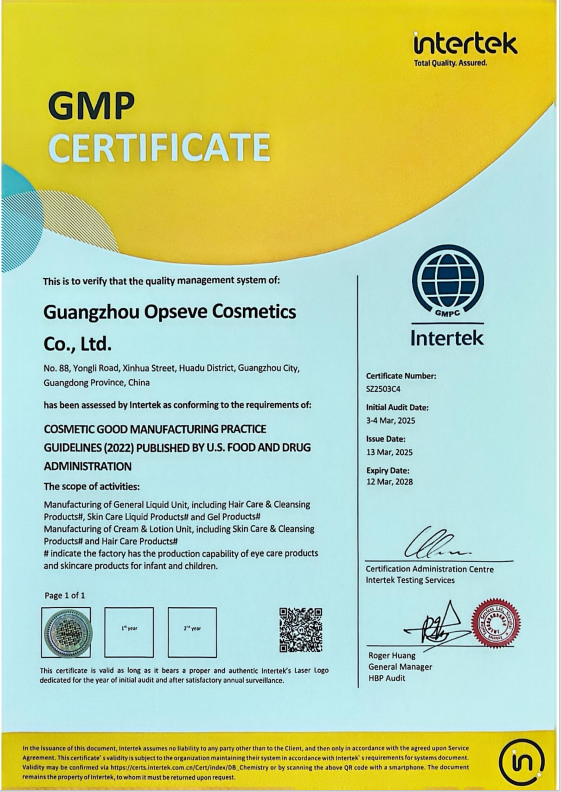
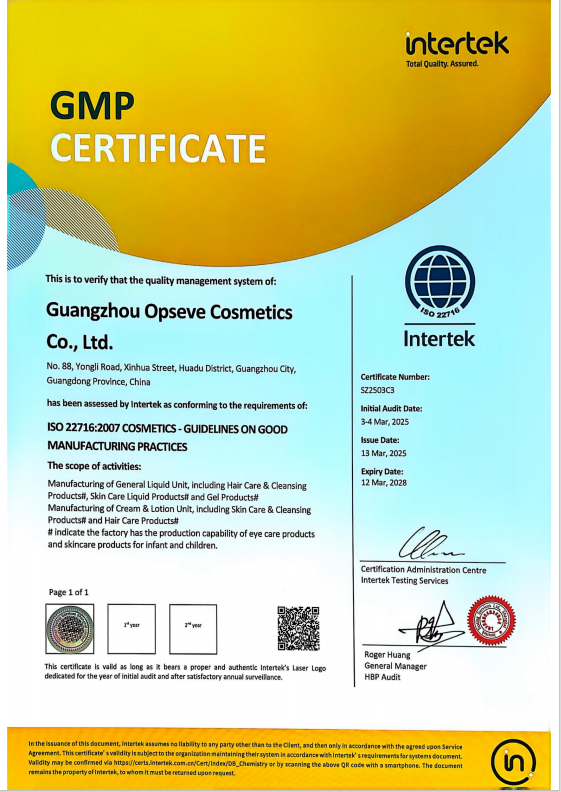
Contrary to what many supplier pages imply, the responsible person named on the label files the product listing, and that is normally the brand owner rather than the contract manufacturer. In the European Union, Regulation 1223/2009 places the same duty on a named responsible person and requires a product information file. ISO 22716 describes good manufacturing practice for the production, control, storage and shipment of cosmetic products, and our development records, retained samples and batch records follow that scope.

Do not assume that paying a development fee automatically transfers ownership of the formula. Ownership, licence scope and technology transfer belong in the development agreement, in writing, before bench work starts. A signed Non-Disclosure Agreement covers your brief, your reference product and the formula file from the first exchange onward.

When Custom Formulation Is Not the Right Route

Custom development is the wrong choice more often than a supplier page will admit. Knowing where it stops paying is worth more to a brand owner than another capability list.

Situation Why it works against you What to do instead
Steady demand well under 10,000 units per SKU with no scale plan Development cost and batch setup spread across too few units, so the cost per unit never falls far enough to fund the next run Start on a stock base through the lower-volume route, then move to a custom formula once volume supports it
A launch window of a few weeks Bench work, stability screening and packaging compatibility cannot be compressed into that window without dropping the checks that protect the launch, and a 24-month shelf-life position cannot be evidenced from an accelerated pass alone Take a proven base through formula matching, or run private label for wave one and keep custom work for wave two
Products regulated as drugs or devices in your target market Sunscreen in the United States, and personal lubricants as Class II devices, follow a different filing path, and treating them as ordinary cosmetics is the wrong call Flag the classification in the brief so the filing route and the testing set are priced from day one
Brands comparing private label skincare manufacturers usually land on this page first, and the honest answer is that the three columns solve three different problems. Our private label route covers the third one.

Custom Formulation Questions from Beauty Brands

Our standard minimum order quantity starts from 10,000 units per SKU, and the number exists because setup, labour, equipment cleaning, batch records, testing and packaging preparation cost roughly the same whether a run is 500 units or 50,000. Ask about MOQs for custom formulas and for stock bases as separate numbers, because the two rarely match and a supplier quoting one figure for both is usually quoting the stock base. New launches, market tests and special development projects are evaluated case by case, and NEXO Beauty Labs will say so in the quotation rather than after the deposit.
The first laboratory sample is ready 3 working days after the brief is confirmed, dispatched samples follow 5-7 working days from sample approval, and production runs 10-15 working days after formula approval. Every figure names its starting event on purpose. Total elapsed time depends on how many revision rounds your team needs and on how long stability work has to run.
No. Ordinary cosmetics sold in the United States carry no premarket approval step, with colour additives as the exception. Facility registration and product listing are filing duties, not approvals.
Yes. Send the active, the concentration you have in mind and the claim it supports, and we check it against stability, your target market's rules and the base.
Stability, high and low temperature cycling, freeze-thaw, centrifuge, packaging compatibility and microbiological testing all run in our in-house laboratory before formula approval, never after it. An accelerated study tells you a formula survived heat stress; it does not tell you the product is still intact in month eighteen on a warehouse shelf, which is why a shelf-life position is set against real-time work rather than against an accelerated pass. Ask any supplier which of the two a quoted shelf life rests on, because the answer separates a tested claim from a hopeful one.
Yes. Send the primary pack and compatibility testing runs against the approved bulk formula before anything is filled. If you would rather not manage it, packaging sourcing can be quoted as part of the project, and packaging stays a separate line from bulk either way.
Production runs in Guangzhou, China. Buyers evaluating a Guangzhou cosmetic manufacturer usually ask about trade terms before anything else, so here they are: EXW, FOB and CIF as standard, selected DDP on request, and shipping papers prepared with the goods. Samples are dispatched 5-7 working days from approval and travel by tracked courier.