Get in touch with NEXO Beauty Labs Company
Cosmetic Laboratory Services: A Guide to Tests and Reports

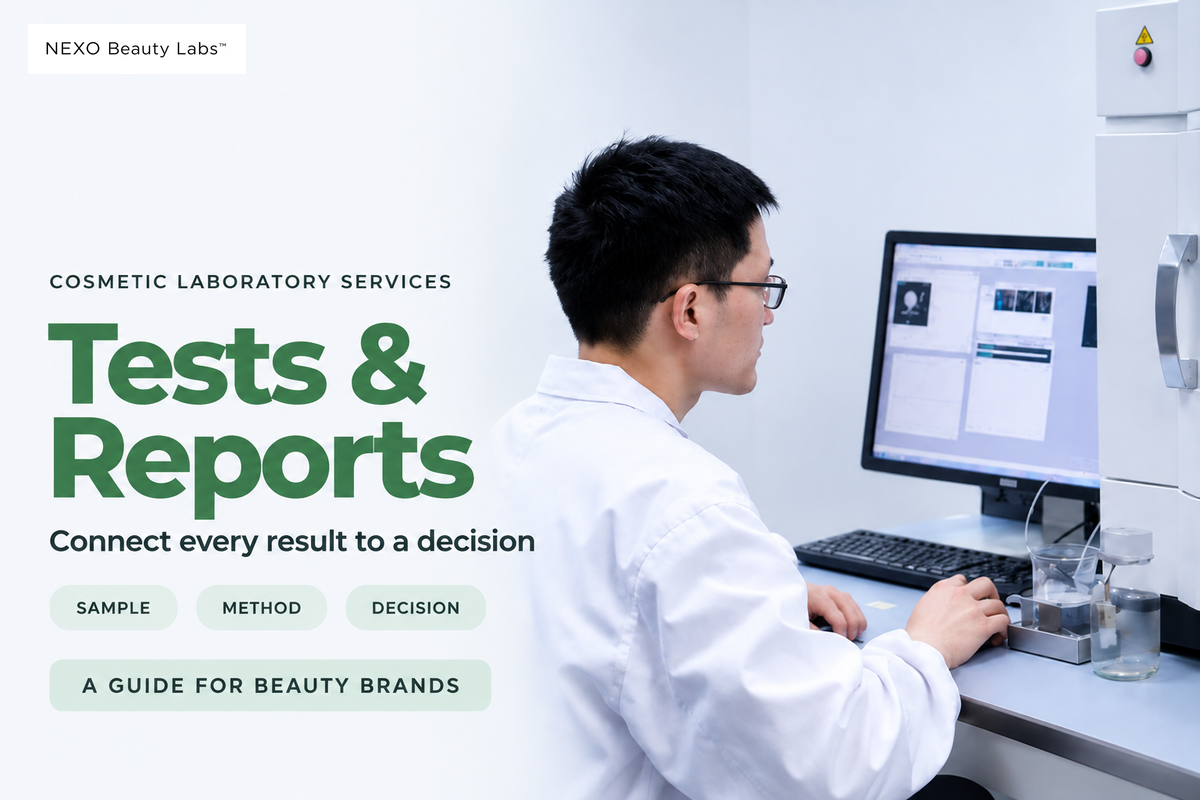
Cosmetic laboratory services cover formulation development, sample analysis, microbiological testing, stability studies and evidence for product claims. Each service addresses different queries. A useful laboratory report connects the sample that’s being tested to the method and the decision that the beauty brand needs to take.
This differentiation is important when a launch team has an almost finished looking sample, but has several unanswered questions: Will the formula be consistent? Does the preservation work? What does a skin study show? Who interprets the results? Align the tests to these questions and then evaluate the package sizes.
The 3 Questions Behind Every Useful Lab Result: What was tested? What question does the method answer? What decision can the result support? Keep these questions with the sample submission, quote and the final report.
What Do Cosmetic Laboratory Services Include?
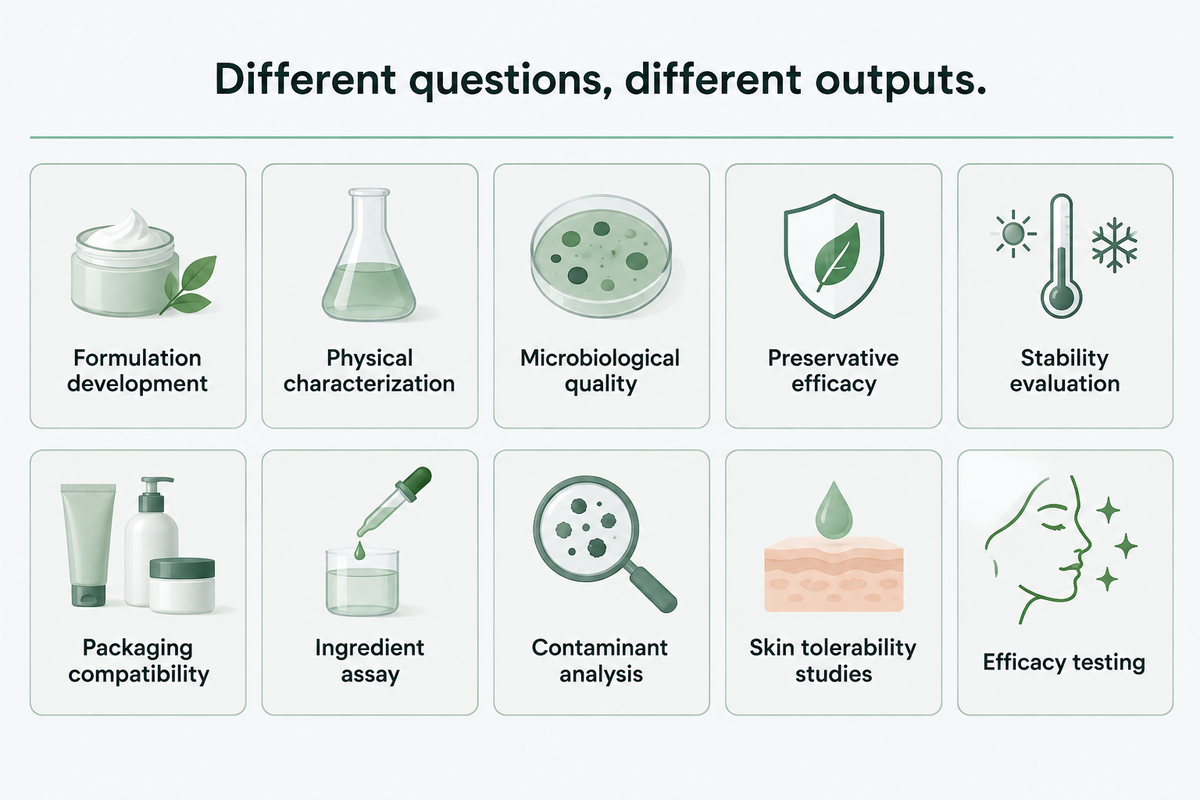
Cosmetic lab services include development work and testing work. Labs in formulation adjust the product; specialist cosmetic testing labs investigate claims and properties. The starting point should be the intended market, product and report, not the longest range of services.
During the development process, a cosmetic lab can therefore produce several kinds of records, each tied to the work performed. For example, a chemist can evaluate and change an emulsifier in a cream. An analytical testing laboratory can measure the specified ingredient in that cream. A safety assessor, considering the complete evidence and exposure, would evaluate the overall risk.
| Service | Question addressed | Typical output and boundary |
|---|---|---|
| Formulation development | How should the product be made and feel? | Prototype and formula revision; separate from independent testing. |
| Physical characterization | What are the sample’s measurable properties? | Selected pH, viscosity or appearance results with test conditions. |
| Microbiological quality | What contamination is detected in the submitted sample? | Counts or specified-organism findings under the named method. |
| Preservative efficacy | How does antimicrobial protection perform under the study? | Challenge-study results interpreted with product risk. |
| Stability evaluation | How does the product change over the agreed study? | Time-point observations against defined criteria. |
| Packaging compatibility | How do the formula and intended primary pack interact? | Findings for the tested material and dispensing system. |
| Ingredient assay | How much of a specified substance is measured? | Concentration result with method and reporting limits. |
| Contaminant analysis | Are the selected contaminants present at the measured levels? | Targeted results, such as a defined heavy metals panel. |
| Skin tolerability studies | What reactions occur under the agreed study conditions? | Protocol-specific irritation or sensitisation findings. |
| Efficacy testing | Does the product achieve the stated endpoint? | Instrumental, clinical or consumer findings for that endpoint. |
For skincare, hair care and body care development, NEXO’s manufacturing-connected cosmetic laboratory services link in-house formulation work with sample evaluation and production handoff. Independent accredited analysis, qualified safety assessment and claims studies require their own agreed scope. The formulation development guide explains the prototype and revision process in more detail.
US cosmetics have no fixed list of specific safety tests, as explained in the FDA product-testing overview. Responsibilities concerning safety of products still stand. A basic cleanser and a sunscreen therefore need their regulatory classification settled before anyone treats a standard cosmetic testing package as sufficient. Regulatory compliance requires the right assignments alongside the laboratory work; labs provide evidence for the agreed questions, while the responsible parties retain their market duties.
How to Read a Cosmetic Laboratory Report
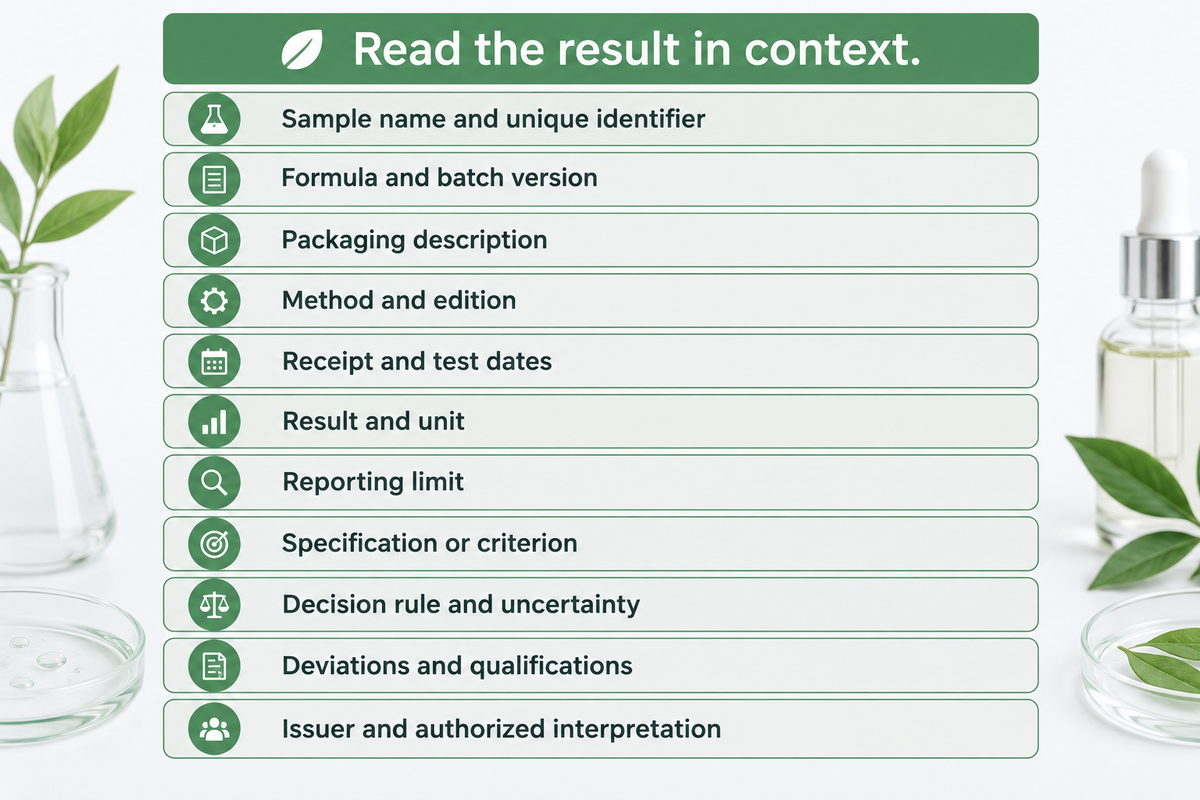
Read test reports by matching the sample identity, method, result and unit of measure, and acceptance criteria prior to evaluating whether a test was passed or failed. Next, determine what the laboratory states. This is either a measured result, a statement of conformity, or an expert assessment. The report should answer the question agreed upon when the work was commissioned.
Identity should come first. For example, in the hypothetical serum project, the sample record states formula A is in a 30 mL pump bottle. If the project changes to the dropper formula B, the evidence should be aligned to that formula and pack before the quality team compares findings or procurement commissions more work.
| Report field | Read it with | Decision it helps resolve |
|---|---|---|
| Sample name and unique identifier | Submission form and retained sample | Does this result concern the intended product? |
| Formula and batch version | Approved composition and change history | Has the tested material changed? |
| Packaging description | Contact material, closure and dispenser | Does the study cover the proposed retail pack? |
| Method and edition | Commissioned question and product matrix | Is the method suitable for this comparison? |
| Receipt and test dates | Sample condition and study schedule | Which stage of the product’s history was measured? |
| Result and unit | Reporting basis, such as CFU/g or mg/kg | Are like measurements being compared? |
| Reporting limit | The laboratory’s explanation of its notation | What does a below-limit result actually mean? |
| Specification or criterion | Applicable method, market and agreed requirement | Which requirement was assessed? |
| Decision rule and uncertainty | Any requested conformity statement | How was a borderline result classified, where relevant? |
| Deviations and qualifications | Sample preparation or method limitations | Does a limitation change the intended use of the result? |
| Issuer and authorized interpretation | Laboratory scope and assigned decision owner | Who explains the finding and approves the next action? |
A concentration in mg/kg and one expressed as a percentage need the same substance and reporting basis before conversion or comparison. Likewise, viscosity in mPa·s needs its measurement conditions; a number without the relevant temperature and instrument settings is a poor basis for comparing batches. A number without relevant conditions shouldn’t be the basis for comparison. Ask the laboratory to clarify notation rather than to consider “not detected” to be a true absence.
A statement of conformity requires an applicable decision rule and considers measurement uncertainty (MU) when necessary. Results and limits are distinct from that statement, as explained in the European Accreditation reporting interpretation. A green highlighted result may itself convey a conformity judgement. Ensure the required deliverable is agreed with the retailer prior to testing.
A Quality Control result may support a batch assessment under the agreed Quality System, and may leave the assessment of whether the Marketing claim holds, and/or the assessment of safety of the Finished Product open. These are to be determined on a case-by-case basis.
Microbiological Testing Versus Preservative Challenge Testing
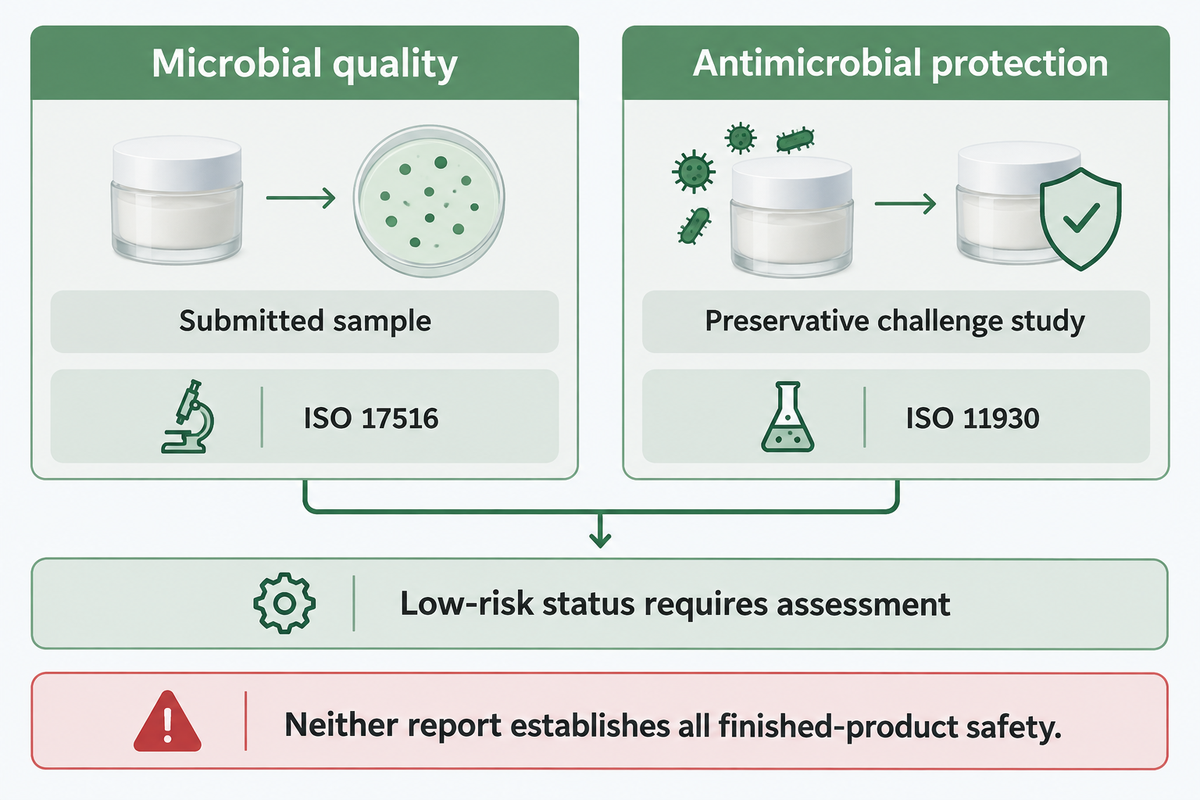
Microbiological testing assesses the microbial quality of the sample submitted. Preservative challenge tests assess antimicrobial protection. A clean initial sample and an effective preservation system are different findings. Product use, composition and packaging, along with risk assessment, may provide justification for a product to be qualified as low risk.
ISO 17516 addresses cosmetic microbiological quality. ISO 11930 addresses evaluation of antimicrobial protection through preservative efficacy, microbiological risk assessment or the relevant combination. Both provide qualifications for low risk products. “Water-free” or “natural cosmetics” on a label is not a substitute for that assessment.
What if a serum has a clean initial result?
A serum sample which satisfies the agreed microbial-quality criteria does pass that quality assessment through the method utilized. Preservation performance is assessed through a separate challenge study or risk assessment. Neither report by itself confirms all aspects of the finished product safety.
Recovery and neutralization affect result interpretation according to the microbiology specialists in their signed DGK technical article on water-in-oil formulas. A method appropriate for a water-miscible formula may not be appropriate for another product matrix. Prior to reformulation as a result of an unexpected test outcome, method suitability should be reviewed.
FDA researchers also found that sample size, wipe type and culture medium affected recovery in a controlled cosmetic-wipe experiment. That finding concerns the studied wipes; its practical lesson for report review is to keep sample preparation and method conditions attached to a count. It supplies no universal acceptance limit for other care products.
Microbial counts, preservative ingredient assays and challenge studies assess different things, so a cheaper alternative must address the required question. Preservatives and supplier ingredient data assist a cosmetics manufacturer to develop a product, but the final formulation must be supported by evidence to validate its actual preservation function.
Accurate cosmetics testing starts with an appropriate method and traceable sample. Testing for cosmetics and personal care products should preserve these conditions when a report passes between a brand, manufacturer and specialist; the product name alone doesn’t identify the tested version.
What Stability and Packaging Compatibility Studies Establish
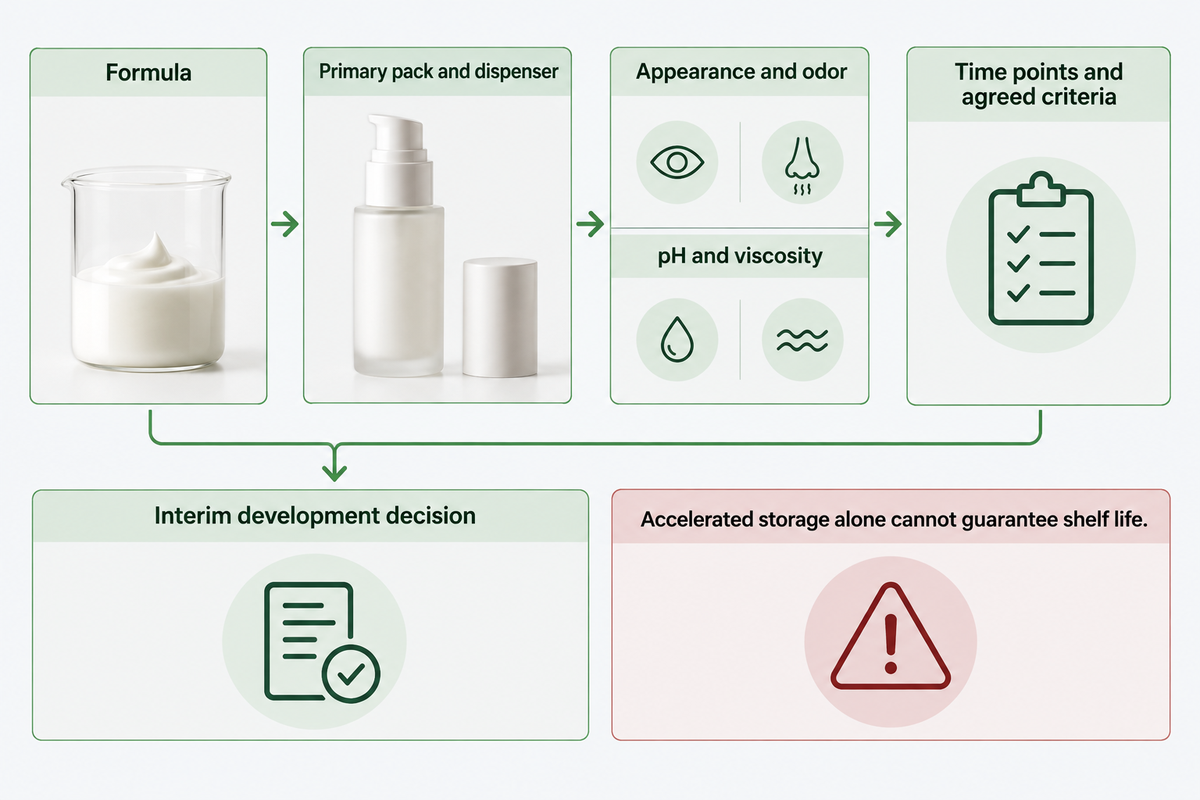
Stability studies describe how a cosmetic changes with respect to specified conditions, over an agreed period of time. Studies on packaging compatibility examine the proposed formula with its intended contact materials and delivery systems. Findings from these studies along with relevant evidence assist in interpreting the proposed product and its packaging and justifying its shelf-life.
“ISO/TR 18811:2018 does not aim to specify the conditions, parameters or criteria of stability testing.”
A lotion can look acceptable in a laboratory container while its intended pump leaks or dispenses inconsistently. Keep the primary package in the evaluation. Record the selected appearance, odor, pH, viscosity or other endpoints with their time points and agreed criteria; package observations should identify the contact material and dispenser that was tested.
Accelerated storage can aid development, but a set number of hot storage weeks can’t be converted to shelf life with certainty. A buyer seeking a reduction in study duration should define the development decision which an interim report can support and determine which work remains to be done. Our cosmetic stability testing guide covers these programme decisions.
Safety, Dermatological Testing and Cosmetic Product Claims
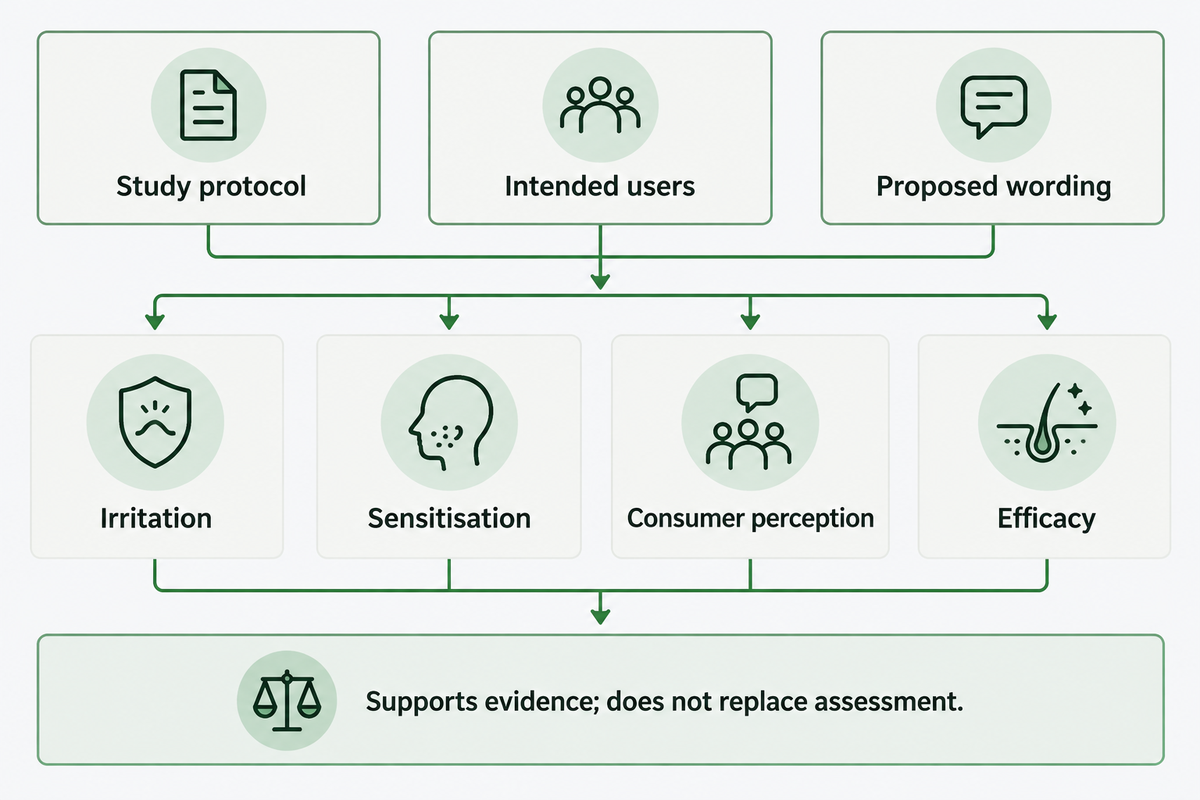
Dermatological testing supports the endpoint examined in a defined skin study. Irritation, sensitisation, consumer perception and efficacy are different endpoints. The study around the claim, scope and intended users should dictate the placement of the study in the overall safety assessment. A study label alone does not establish universal tolerability or market approval.
How do you get a product dermatologically tested?
Commission a qualified skin-study provider with the finished formula, intended use and proposed wording. Agree the protocol, participants, endpoints and report interpretation before recruitment. Dermatology oversight, irritation and sensitisation studies should be executed as required and aren’t interchangeable names.
According to MoCRA safety-substantiation requirements, the responsible person must ensure and retain records to demonstrate adequate safety substantiation. In the EU, the responsible person must ensure the required safety assessment and Cosmetic Product Safety Report before market placement. Part A contains safety information; Part B contains the qualified assessor’s evaluation. A laboratory report can provide evidence for the process, rather than replacing it.
The EU’s common criteria for cosmetic claims require adequate, verifiable support for the claim made. Ingredient data should not simply be promoted into a finished-product efficacy claim. For instance, an ingredient assay measures content; a moisturizing claim for a finished product requires evidence to support moisturization under the relevant use conditions.
Before paying for an added panel, let the brand and study provider settle the wording the findings are intended to support. “Dermatologically tested” does not mean allergy-free. Allergen analysis, skin tolerability and a claim about sensitive skin also require different interpretation. To meet regulatory requirements, the team must link proposed wording to the relevant assessment and supporting records.
Classification comes first when the wording changes intended use. FDA lists sunscreen moisturizers and antidandruff shampoos among products that can be both cosmetics and drugs. Such products must meet both frameworks; adding an efficacy study to an ordinary cosmetic plan does not settle that different regulatory route.
How Much Does Cosmetic Testing Cost, and How Long Does It Take?
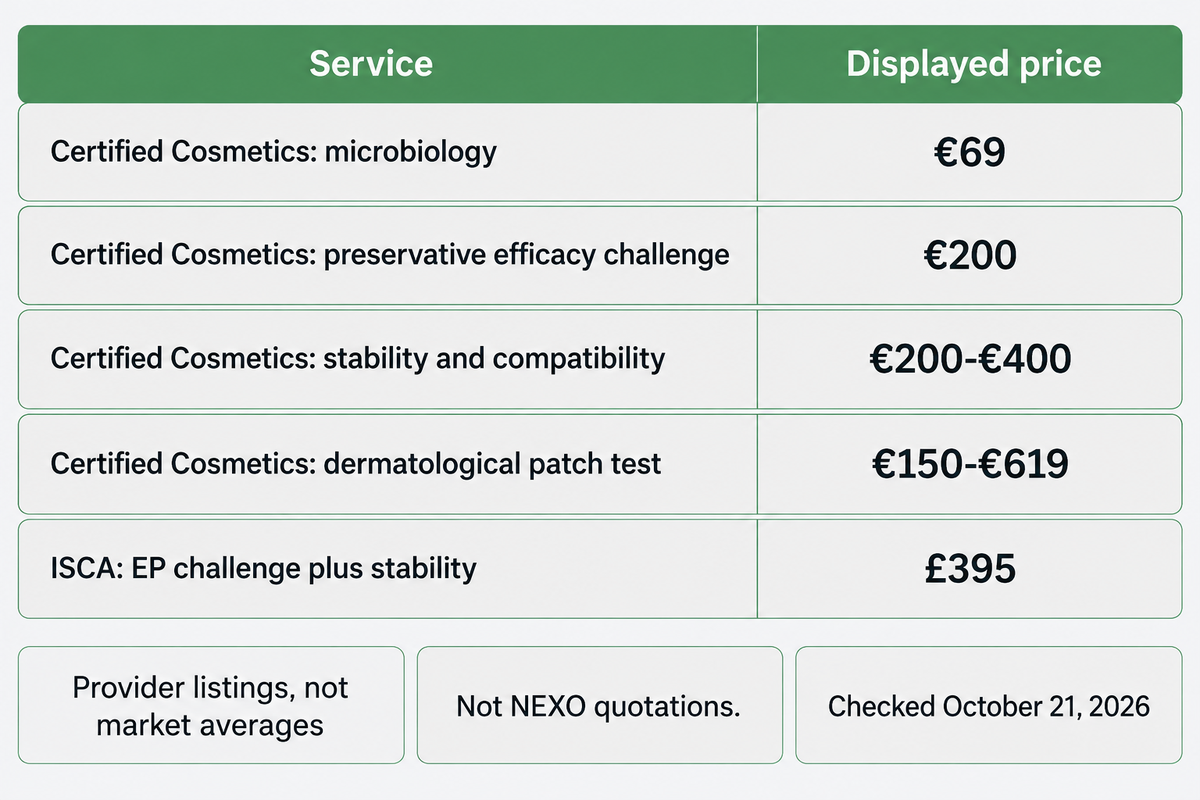
Certified Cosmetics lists a €69 microbiology test and a €200 challenge test; ISCA lists a £395 EP challenge plus stability programme, as checked in October 2026. They are provider listings in their displayed currencies, not market averages.
| Provider listing | Displayed fee | Scope to confirm in a quote |
|---|---|---|
| Certified Cosmetics: microbiology | €69 | Method, matrix, organisms and reporting inclusions. |
| Certified Cosmetics: preservative efficacy challenge | €200 | Selected protocol, suitability work and variants. |
| Certified Cosmetics: stability and compatibility | €200–€400 | Study option, conditions, checkpoints and pack coverage. |
| Certified Cosmetics: dermatological patch test | €150–€619 | Variant, protocol and exact claim-support deliverable. |
| ISCA: EP challenge plus stability | £395 | One listed programme on one sample; tax included and shipping calculated separately. |
Sources: Certified Cosmetics service catalogue and ISCA programme listing. Confirm currency, selected variant, taxes, shipping and current availability; none of these figures is a NEXO quotation. Prices stated herein aren’t NEXO quotations.
Innacos’ testing page lists 6–8 weeks in total for its challenge-testing service: 4 weeks of challenge testing plus 2–4 weeks of preparation and reporting. Another laboratory’s booking queue or suitability work may vary. A stability programme needs its own schedule and product-specific protocol; don’t borrow a challenge-test timeline for it.
For a private label product line, evaluate quotes based on an equal number of formulas, package variants and reports. Estimate sample production, freight, reformulation and follow-on testing costs in your project budget. Paying to validate a formula that’s about to change can cause unnecessary work.
Which Laboratory Should a Beauty Brand Use?
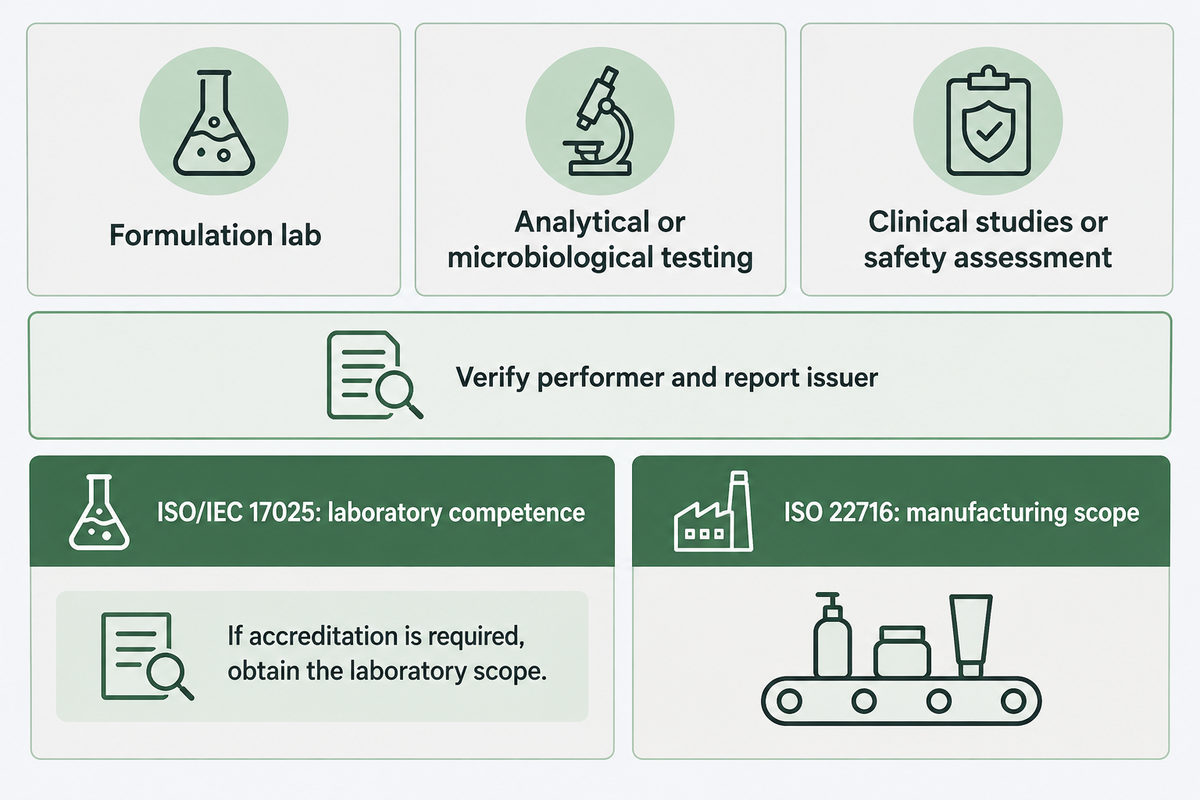
For product development, select a formulation lab, a testing laboratory for defined analytical or microbiological work and a qualified provider for clinical studies or safety assessment. Some organizations coordinate several scopes. Verify which entity performs each method, the location that issues the report and whether the covered work requires an accreditation.
Independent cosmetic laboratories and testing networks offer different combinations of analytical services, microbiology and claim support. Certified Laboratories publishes microbial and preservation-testing services; EMSL publishes cosmetic and personal care testing in selective analytical and microbiological methods. Their broad range of listed services is a starting point for a scope discussion, not proof that every site performs every test.
ISO/IEC 17025 addresses competence, impartiality and consistent laboratory operation. Cosmetic manufacturing GMP has another scope: ISO 22716 addresses production, control, storage and shipment and excludes R&D activities. A GMP-certified manufacturing operation and an accredited testing method describe different things. When the project requires accreditation, obtain the laboratory’s applicable scope.
A full-service cosmetic contract manufacturer may coordinate everything from formulation to packaging, but the testing agreement still needs a named performer and report owner. Prior to executing turnkey support for founders, determine which cosmetic regulatory activities, specialist studies and safety-assessment responsibilities are included. Turnkey manufacturing services should identify their included deliverables and work commissioned independently in the agreement.
In the cosmetics industry, practical know-how helps a team to recognize an unusual result that may require method review. For the buyer, true turnkey support still requires clear responsibility for each handoff. Describe how the product performs against the intended endpoint so the provider can propose relevant work.
NEXO’s custom formulation pathway serves brands developing formulas for manufacture. Our cosmetic contract manufacturing process links development with production. Assign independent testing and specialist assessment explicitly when the project calls for them.
Prepare Samples for Cosmetic Testing
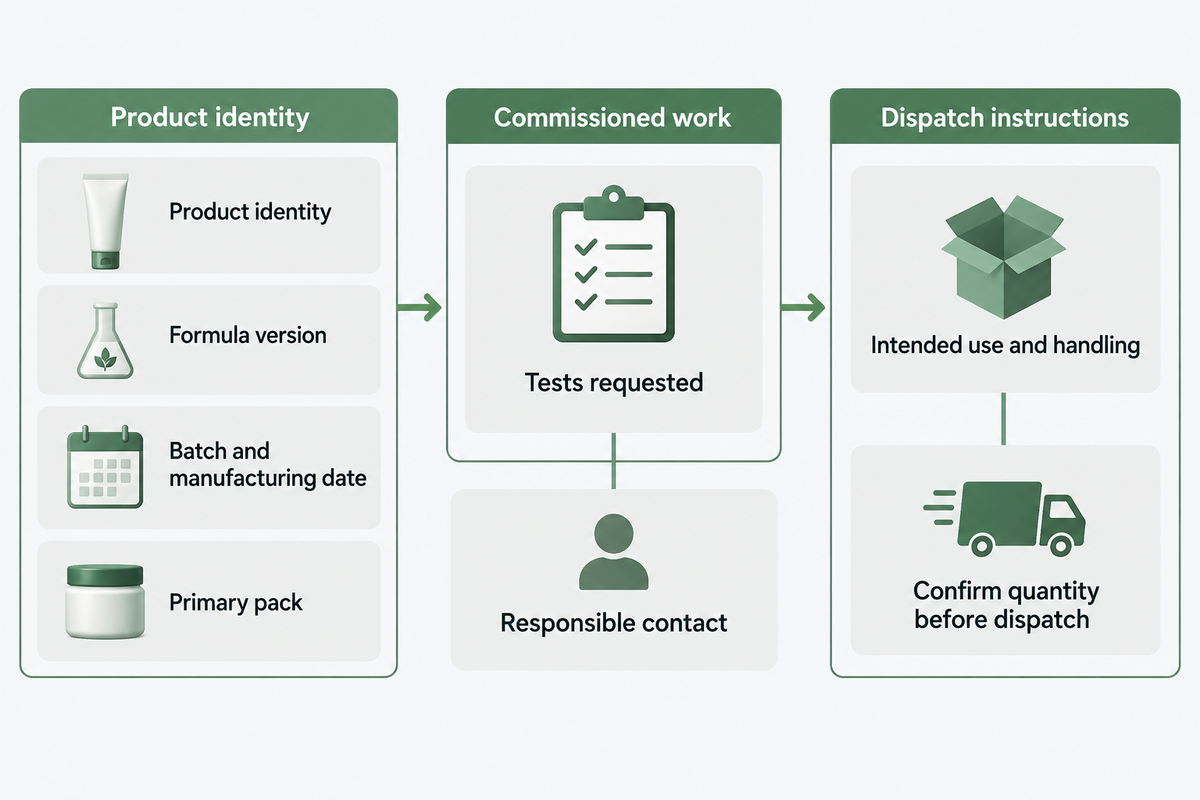
Prepare cosmetic samples as per the receiving laboratory’s instructions for the agreed method and programme. Label each sample with a unique identifier tied to its formula, batch and package version. Provide the intended use and relevant handling information for samples. Report scope will allow the laboratory to connect the material to the work commissioned.
Use the confirmed retail-pack quantity for the selected ISCA combined programme. Resolve the quantity discrepancy between the programme description and FAQ before dispatch.
Use a submission record containing product identity, formula version, batch, manufacturing date, primary pack, tests requested, and contact responsible for questions. Ingredient suppliers and material suppliers may provide information the laboratory or assessor needs, so resolve access to raw materials data early. Keep a matching record and retained sample per the project’s agreed arrangements.
For a new haircare or body care formula, finish planned changes before commissioning the final study scope. If a retailer has a preference for a specific testing route or report format, confirm acceptance before paying for testing that answers a different question. Where a conformity statement is requested, agree its applicable decision rule before dispatch.
What Changes After a Test Should Trigger Review?
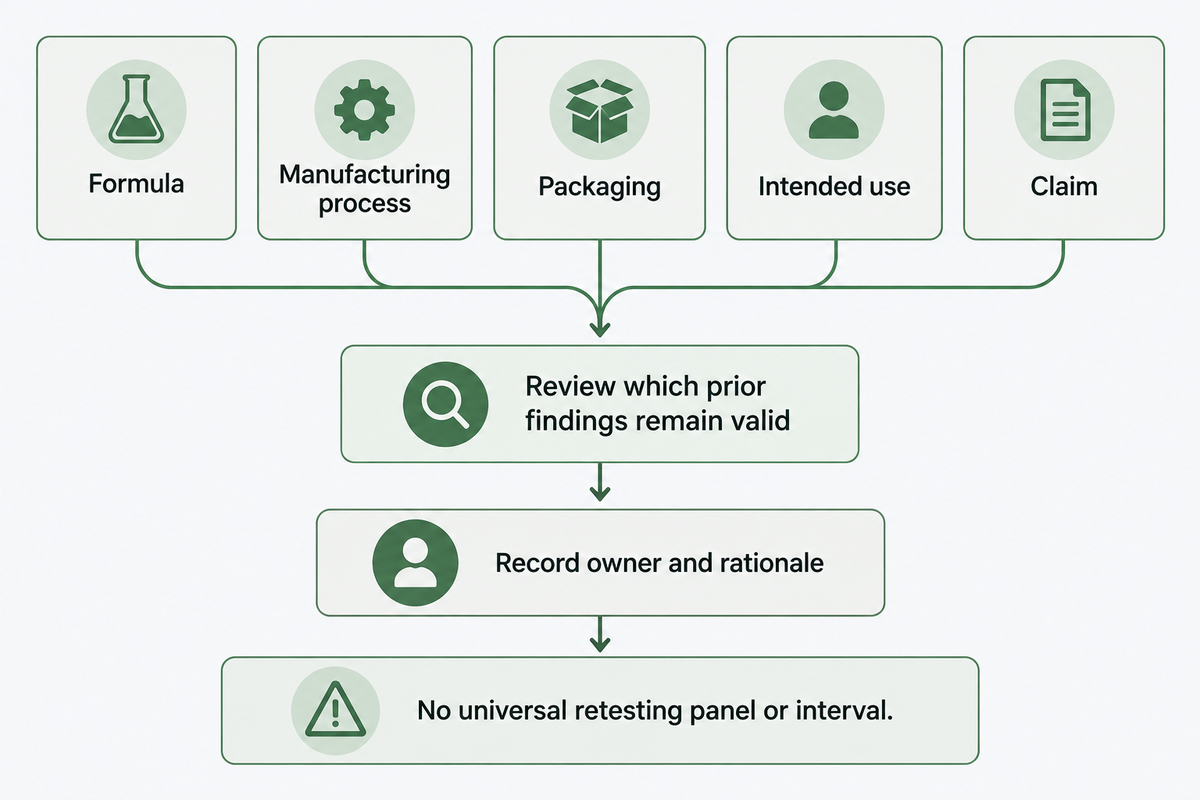
Evidence of the laboratory should be reviewed when the tested formula, manufacturing process, packaging, intended use or claim changes. The review should determine which of the prior findings are still valid and which questions are still open. A change doesn’t automatically mean that there’s a requirement for one universal retesting panel or interval. The product and the evidence available should define the next scope and action.
A fragrance substitution, preservative adjustment, new raw-material supplier or different closure can change the question an earlier report answered. Give the formulator, quality team and relevant specialist the change record. They can determine if an additional study is needed, or make changes to the product decision.
For US sales, a new therapeutic or sun-protection claim also requires classification review. For any market, record the decision owner and the rationale for retaining or replacing prior evidence.
Frequently Asked Questions
Cosmetic laboratory questions often pertain to the scope of service, interpretation of a report, sample size, and responsibility for the next action. Answers separate product development from independent testing and/or safety assessment. Use the finished formula, intended packaging, market and proposed claim as the common brief when comparing cosmetic testing services.
What are examples of cosmetic laboratory services?
Examples of services covered by safety and quality include formulation development, physical characterization, microbiological quality testing, preservative challenge studies, stability evaluation, packaging compatibility, ingredient assays and claim-support studies. These services result in different outputs for the decision. A development sample aids the brand to make product directional decisions, and tests for cosmetics describe findings for identified material under a defined method.
Does a cosmetic chemist do the same work as a testing lab?
A cosmetic chemist usually formulates or updates the formulation, while a testing lab assesses some characteristics or performance of samples submitted. An organization can perform both activities, but the project should establish the separate limits of both functions. Regarding private label cosmetics or a custom product, define who owns the formula record, who performs the commissioned method and who issues the report. Independent testing is a separate requirement when the client brief calls for it.
Does every cosmetic need the same tests?
No. Testing needs follow the product, intended use, available safety information, target market and claims. FDA does not prescribe one specific safety-test list for every cosmetic. The ISO microbiological scopes also preserve low-risk qualifications rather than imposing an identical programme on every formula. A qualified assessment should establish the applicable evidence plan; a checklist copied from a different product can miss the actual question or commission unnecessary work.
Is dermatologically tested the same as hypoallergenic?
No. What a dermatological test supports is determined by the study protocol and the findings. Just because a claim is stated on a label doesn’t mean that there’s no risk of a reaction. Agree the exact wording and evidence with the study provider and relevant claims specialist before treating a tolerability result as support for a broader claim.
Can a laboratory guarantee a product’s shelf life?
No. An accelerated-study completion date alone does not supply a universal shelf-life guarantee. A justified programme is needed to support shelf-life conclusions for the finished formula and package. Interpretation and justification should include supporting evidence. Agree the scope, endpoints and continuing study plan with the responsible technical specialists.
What should I send when asking for a laboratory quote?
Send the product format, formula status, intended use, market, proposed claims, packaging, and the decision the report must address. Specify samples and variants. Request the method, sample quantity, reporting inclusions, timing and any separately assigned specialist work so quotes can be compared on the same scope.
If your next step is formula development, bring the product brief and unresolved laboratory questions to NEXO Beauty Labs. Discuss the development scope so sample work, specialist testing and manufacturing handoff have clear owners.
References & Sources
- FDA: product testing of Cosmetics; MoCRA safety substantiation; cosmetic versus drug classification.
- ISO public scopes: ISO 11930, ISO 17516, ISO/TR 18811, ISO/IEC 17025 and ISO 22716.
- European Accreditation: reporting statements of conformity and applicable decision rules.
- European Commission: Regulation (EU) No 655/2013 on cosmetic claims and guidance on the Cosmetic Product Safety Report.
- Manrique-Otero, Nussbaum and Eigener, DGK: preservative-efficacy method limitations in water-in-oil formulas, Cosmetics & Toiletries, 2022.
Why beauty brands work with NEXO
About NEXO Beauty Labs Manufacturing Support
NEXO Beauty Labs supports skincare, body care, sun care, hair care, and private label brands with formulation, sampling, filling, quality control, and export-ready launch support.
Project Review Before RFQ
Before quotation, we help clarify product category, active direction, formula stage, package choice, compliance market, MOQ, sampling schedule, and required documents.
Request a Cosmetic QuoteCompany Profile // Data Sheet
CompanyNEXO Beauty Labs
Business TypeCosmetic OEM / ODM manufacturing partner
Main ProductsPrivate label skincare, facial serums, moisturizers, cleansers, sunscreen, body care, and hair care products
Manufacturing CapabilityFormula development, sample adjustment, package sourcing, filling, QA/QC, documentation, and export support
RFQ Data NeededProduct type, formula goal, package format, target market, MOQ, claims, timeline, and benchmark samples
Websitenexobeautylabs.com