Get in touch with NEXO Beauty Labs Company


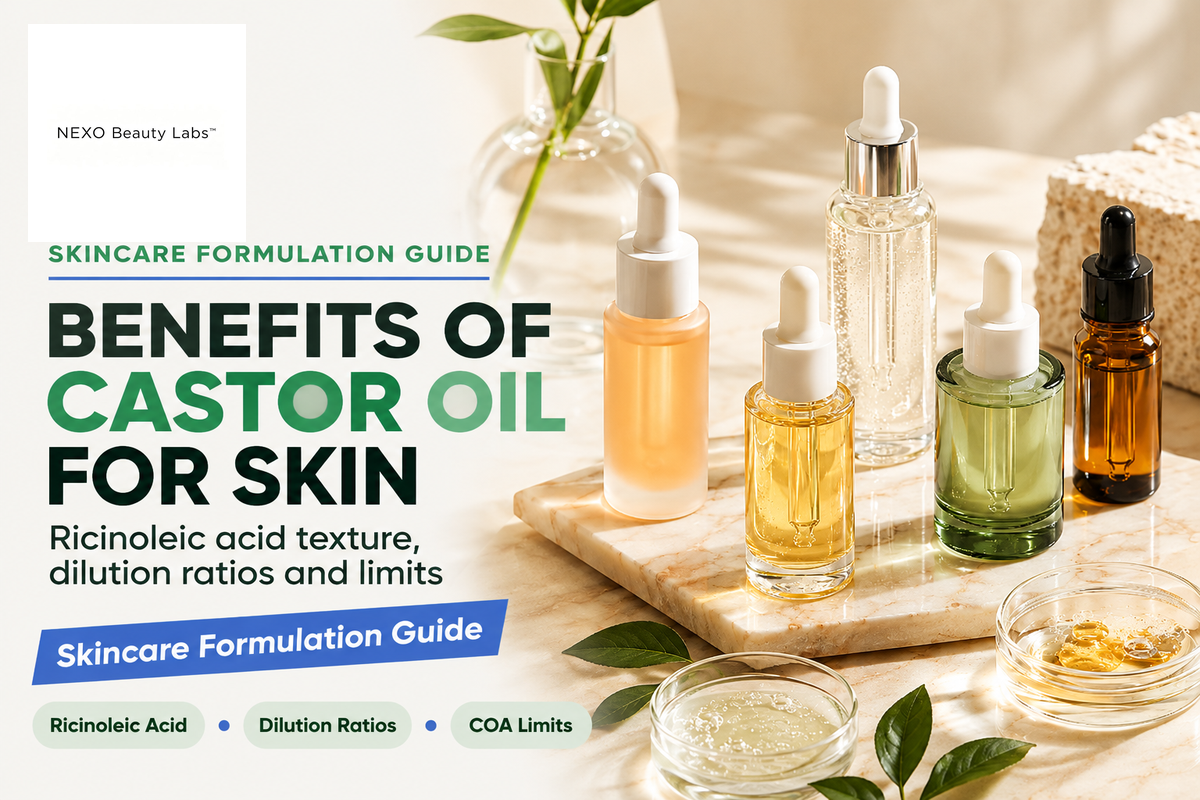
The primary source of benefits of castor oil for skin comes from its ricinoleic acid triglyceride structure. This fatty acid makes up approximately 90% of its lipid profile (and is not less than 90.0% in USP-NF grade oil). As a surface film, castor oil can temporarily reduce transepidermal water loss for several hours, and its effectiveness depends on the formula and dose, as well as the condition of the skin. Its viscosity of around 950 to 1,000 cP at 20°C makes carrier oil dilution or balancing with esters necessary for facial care.
Quick Summary: Key Formulation and Skincare Takeaways
- Cold-pressed oil pressed from castor seeds contains approximately 90% ricinoleic acid (not less than 90.0% in USP-NF grade). Its carbon-12 hydroxyl group forms a protective layer on the skin and keeps skin hydrated.
- There are positive clinical evaluations regarding moisturization and surface conditioning of the skin. There is no clinical data to support claims that castor oil cures acne, erases wrinkles, or causes deeper dermal-epidermal regeneration resulting in eyelash follicle regrowth.
- In home use, approx. 10% to 30% pure castor oil is added to a lighter oil (e.g. jojoba, squalane, etc.). Neat oil should not be applied to oily, acne-prone skin.
- Cosmetic chemists often use castor oil around 2% to 15% in emulsions and cleansing balms (or up to 35% in lip oils). Pairing it with light esters and HLB 14 emulsifiers limits stickiness.
What Are the Proven Benefits of Castor Oil for Skin?
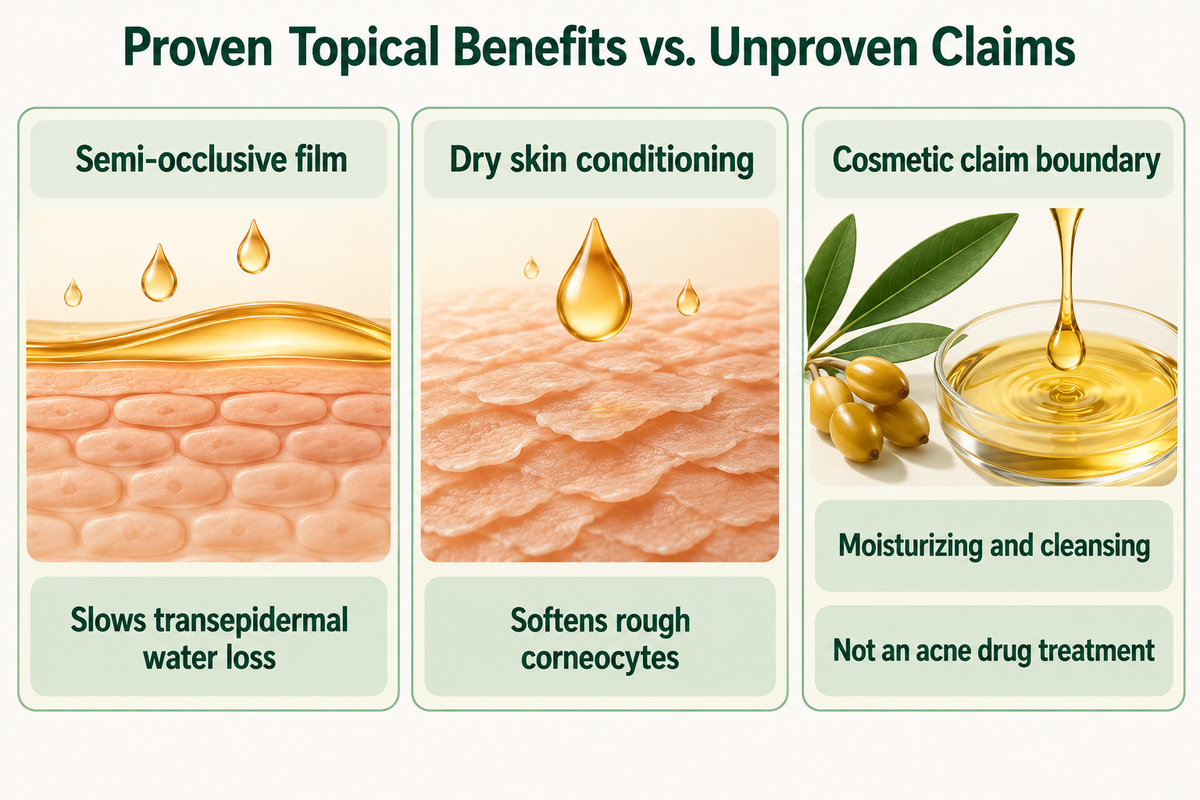
Castor oil benefits skin by forming a breathable, hydroxyl-rich lipid film that lessens water evaporation and softens rough corneocytes. Topical Ricinus communis seed oil reduces mechanical resistance and dynamic viscosity on treated skin, correlating with softer texture and improved surface elasticity, although controlled human trials for specific skin diseases remain limited. However, there are a limited number of controlled human clinical studies to validate the benefits of Ricinus communis seed oil on various skin conditions.
Semi-Occlusive Barrier Support and Transepidermal Water Loss Reduction
Castor oil reduces water evaporation and softens rough corneocytes by forming a breathable, hydroxyl-rich lipid film. These core castor oil benefits for skin start at the outer stratum corneum. All skin types continuously lose water. If the surfactants and/or environment are too harsh, lipids are removed from the skin, and transepidermal water loss increases. Unlike petrolatum, castor oil functions as a breathable semi-occlusive film.
As a surface film, castor oil can reduce transepidermal water loss for several hours, depending on the formula and dose. This effect is especially pronounced on dry and irritated skin. Applying 1 to 2 drops of the oil onto damp skin helps to lock existing water within upper layers of corneocytes. Recurrent topical application supports skin health and soothes dry skin, particularly during the winter.
Anti-Inflammatory and Soothing Action on Dry, Flaky Skin
The soothing and sealing effect comes from the fact that castor oil contains approximately 90% ricinoleic acid (published fatty acid composition data). This 18-carbon monounsaturated fatty acid has a functional secondary alcohol group. In NCBI StatPearls on castor oil, preclinical pharmacology reports that ricinoleic acid lessens localized surface irritation. Castor oil helps calm the localized irritation and roughness from windburn and other forms of environmental skin damage.
The appearance of dry skin improves because this smoothing effect can easily even out minor surface irregularities. The end result still depends on the formula and condition of skin barrier. About 2%-15% of the oil hydrates the skin and, when mixed with barrier creams, indirectly strengthens barrier function by slowing the evaporation of humectants. Thus, long-term skin health and smoother texture are promoted.
Antimicrobial Surface Balance vs. True Acne Treatment Myths
Social media posts often claim that castor oil cures bacterial breakouts. Laboratory tests show that ricinoleic acid derivatives exhibit mild surface antimicrobial activity in vitro. Under U.S. Food and Drug Administration (FDA) cosmetic-versus-drug claim boundaries, moisturizing and cleansing belong to cosmetics. Treating or preventing acne is an over-the-counter drug claim.
Rinse-off cleansers formulated with castor oil can help keep skin surface clean. Undiluted oil left on blemishes does not replace OTC acne actives and can physically trap sebum. Brands and consumers should assess these castor oil skin benefits and the rest of the benefits for the skin based on realistic cosmetic skin care conditioning as opposed to disease treatment.
Formulator Verdict (The Clinical vs. Cosmetic Boundary): Potentially, topical castor oil is effective in reducing transepidermal water loss and increasing the softness of rough, dry, keratinized plaques. Its thicker feel, in comparison to argan and almond oils, may contribute to an increased level of surface hydration in the skin. However, it should never be marketed to treat clinical conditions such as cystic acne, deep dermal rhytids, or infectious skin conditions.
How Ricinoleic Acid Drives Castor Oil Texture, Viscosity, and Barrier Occlusion
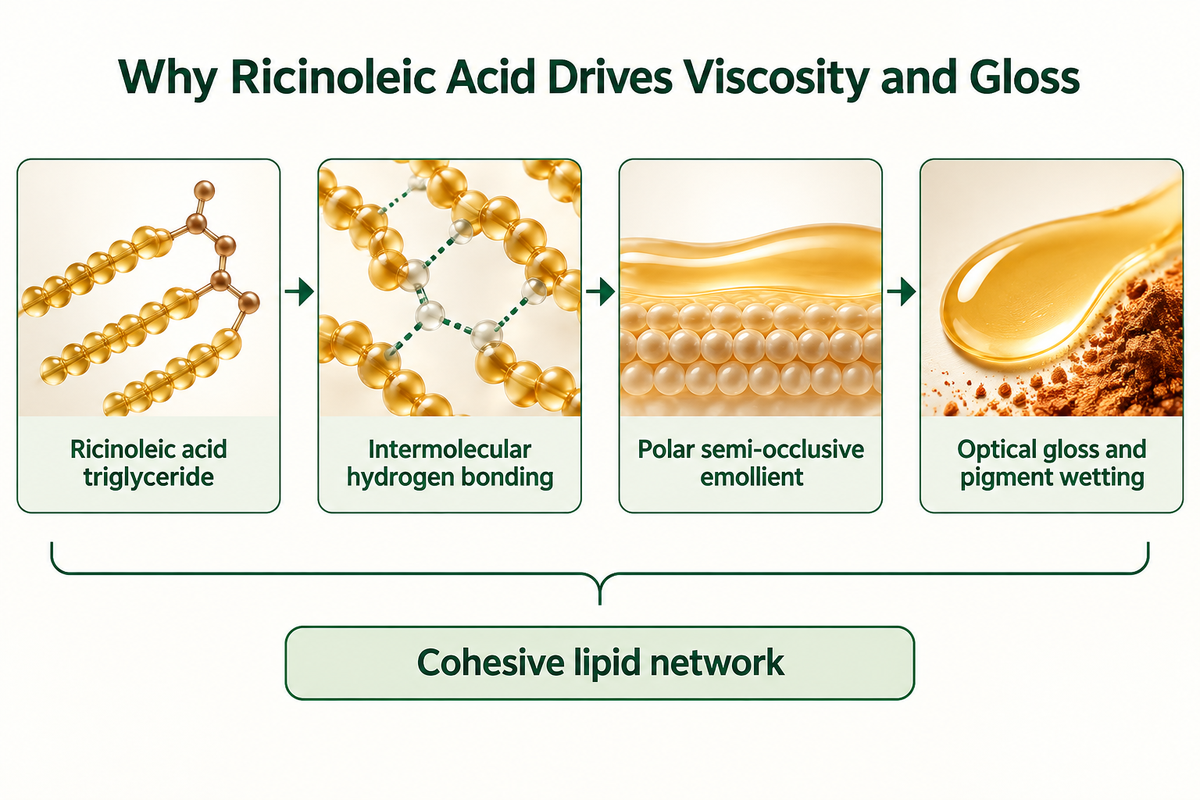
Unlike non-polar plant oils, castor oil contains approximately 90% ricinoleic acid (C18:1-OH), whose carbon-12 hydroxyl group drives intermolecular hydrogen bonding. This structure produces a dynamic viscosity of approximately 950 to 1,000 cP at 20°C, a hydroxyl value of 160 to 168 mg KOH/g, and a starting HLB around 14.
The Carbon-12 Hydroxyl Group: Why Castor Oil Is Uniquely Polar and Sticky
Compared to almond and argan oils, Castor oil feels thicker because of hydroxylated triglycerides, which augment intermolecular hydrogen bonds and cohesive forces. Less-polar seed oils like olive and sunflower feel more runny at room temperature due to weak dispersion forces.
The oil pressed from castor seeds is chemically distinct. According to the United States Pharmacopeia (USP-NF) Castor Oil Monograph, pharmacopeial castor oil consists of not less than 90.0% of the triglyceride of ricinoleic acid. It also contains roughly 4% linoleic, 3% oleic, 1% stearic, and less than 1% linolenic fatty acids. That hydroxyl group on the 12th carbon atom acts as both a hydrogen-bond donor and acceptor. Neighboring triglyceride molecules lock into a cohesive network, creating a thick oil with pronounced tack.
At 20°C, castor oil has an approximate viscosity of 950 to 1,000 cP and a USP hydroxyl value of 160 to 168 mg KOH/g. According to the American Oil Chemists’ Society (AOCS) emulsion guidance, an HLB value around 14 is commonly used as a starting point for oil-in-water emulsions containing castor oil. Standard vegetable oils require an HLB of 7 to 8. The actual emulsifier blend is dependent on the rest of the formula.
Is Castor Oil an Occlusive, Emollient, or Humectant?
Castor oil functions primarily as a polar semi-occlusive high viscosity emollient. True humectants such as glycerin or hyaluronic acid are soluble in water and attract water molecules to the surface of the skin. Because castor oil is hydrophobic and practically water insoluble, it functions more as an emollient and an occlusive agent.
Ricinoleate-rich triglycerides give castor oil polarity and stick-to-skin adhesion. The moisturizing effect of castor oil is due to its emollient and occlusive characteristics. Its rich oil softens and removes compacted skin cells and slows the loss of water by the skin.
Optical Gloss and Pigment Wetting in Lip and Balm Formulations
Another distinctive physical trait is its optical shine and affinity with pigments. Because cold-pressed castor oil retains the natural triglyceride properties of castor oil with polar hydroxyl groups, it very effectively wets iron oxides and titanium dioxide, and in the process creates a glossy surface film.
Castor oil provides gloss and pigment wetting, cushion and adhesion in lip products. The main liquid vehicle is dependent on the finished formula. In lip products, castor oil improves cushion and pigment dispersion. However, the overall formula and stability of the product really determine the wear time.
| Component Type / Property Class | Published Specification or Range | Reference Standard / Source | Functional Impact on Human Skin |
|---|---|---|---|
| Ricinoleic Acid (C18:1-OH) | Approximately 90% (commonly not less than 90.0% in USP-NF grade) | PMC5015816 / USP-NF Monograph | Forms hydrogen-bonded semi-occlusive film that slows water loss |
| Linoleic Acid (C18:2) | Around 4% of fatty acid profile | PMC5015816 / EN ISO 12966 FAME GC | Supports stratum corneum lipid barrier conditioning |
| Oleic Acid (C18:1) | Around 3% of fatty acid profile | PMC5015816 / EN ISO 12966 FAME GC | Softens rough corneocytes and adds emollient slip |
| Stearic Acid (C18:0) | Around 1% of fatty acid profile | PMC5015816 / EN ISO 12966 FAME GC | Contributes lipid film body at skin temperature (32°C) |
| Linolenic Acid (C18:3) | Less than 1% (commonly under 1%) | PMC5015816 / EN ISO 12966 FAME GC | Low polyunsaturated fraction helps limit rapid oxidation |
| Dynamic Viscosity at 20°C | Approximately 950 to 1,000 cP at 20°C | Research Literature Benchmark | Creates high surface drag and physical cushion on lips and skin |
| Hydroxyl Value | 160 to 168 mg KOH/g | USP29-NF24 / CIR Safety Assessment | Confirms C-12 hydroxyl density and polar wetting behavior |
| Starting HLB for O/W Emulsion | Around 14 (vs. 7 to 8 for standard vegetable oils) | AOCS Emulsion Balance Guide | Starting point for O/W emulsions; exact blend depends on formula |
Practical Facial and Body Uses: Overnight Slugging, Chapped Skin, and Lash Care
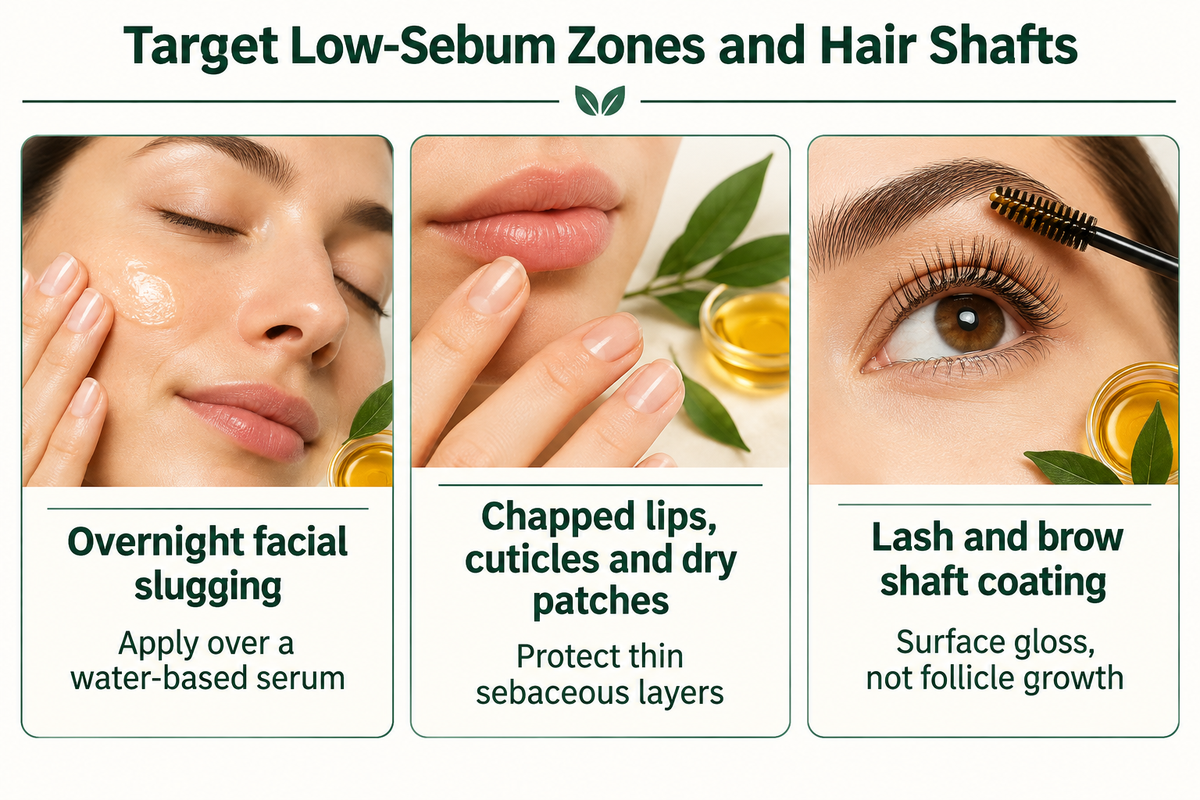
Pure or diluted castor oil works best in dry, low sebum areas of the body (chapped lips, dry skin patches, cuticles and eyebrows), and can be used for slugging in dry or mature skin types, as long-term occlusion can provide similar benefits. For slugging, use 1-2 diluted drops of castor oil in a lighter carrier oil, applied directly over a water-based serum.
Overnight Facial Slugging and Fine-Line Plumping vs. Collagen Myths
There has been a surge in search interest for applying castor oil for overnight facial wrinkle care. Applying castor oil on face zones before bed results in a soft, plumped appearance of the skin around the eyes and forehead. Rapid improvement in collagen synthesis is not the mechanism of action for this visible smoothing effect.
Temporarily plumping up the outer skin is due to the occlusive effect of the product, which helps to hold water in the upper stratum corneum of the skin. This also helps soften shallow dry lines. Helping improve skin elasticity gives a smoothing effect to the skin.
Chapped Lips, Cuticles, Dry Heels, and Body Dry Patches
The parts of the body with less sebaceous glands benefit the most from use of castor oil in balm or blended form. Lips have thin sebaceous layers of protection and a thinner barrier and lose moisture faster than cheek skin. A thin layer of cold pressed oil or a Castor-enriched lip balm helps protect lips from dryness and loss of moisture.
Users have also asked what the effect of rubbing castor oil on the feet is. Although published dermatological cases do not describe specific clinical outcomes or mention a time-frame for when calluses would disappear with the foot application of castor oil, in general, it is occlusive and emollient and helps to soften dry skin and reduces surface water loss.
Eyelash and Eyebrow Conditioning: Coating vs. Follicle Growth
Numerous tutorials recommend the use of castor oil to rejuvenate your skin and hair (lashes and brows) when they appear sparse. No evidence from clinical ophthalmology shows that conditioning of hair shafts results in growth of hair follicles. As per the Tear Film & Ocular Surface Society (TFOS) lifestyle report in PMC, there is no evidence to support that castor oil promotes eyelash elongation and new anagen follicle growth.
Rather, castor oil’s high viscosity coats each hair shaft. This lipid coating smoothes lifted cuticles, reduces breakage while removing makeup, and creates a glossy effect on lashes. Consumers should be careful with the skin around the eyes. The TFOS review states direct contact with the eye causes transient stinging and tear-film instability, as well as corneal epithelial irritation.
How Does Castor Oil Compare to Jojoba, Rosehip, Argan, and Squalane?
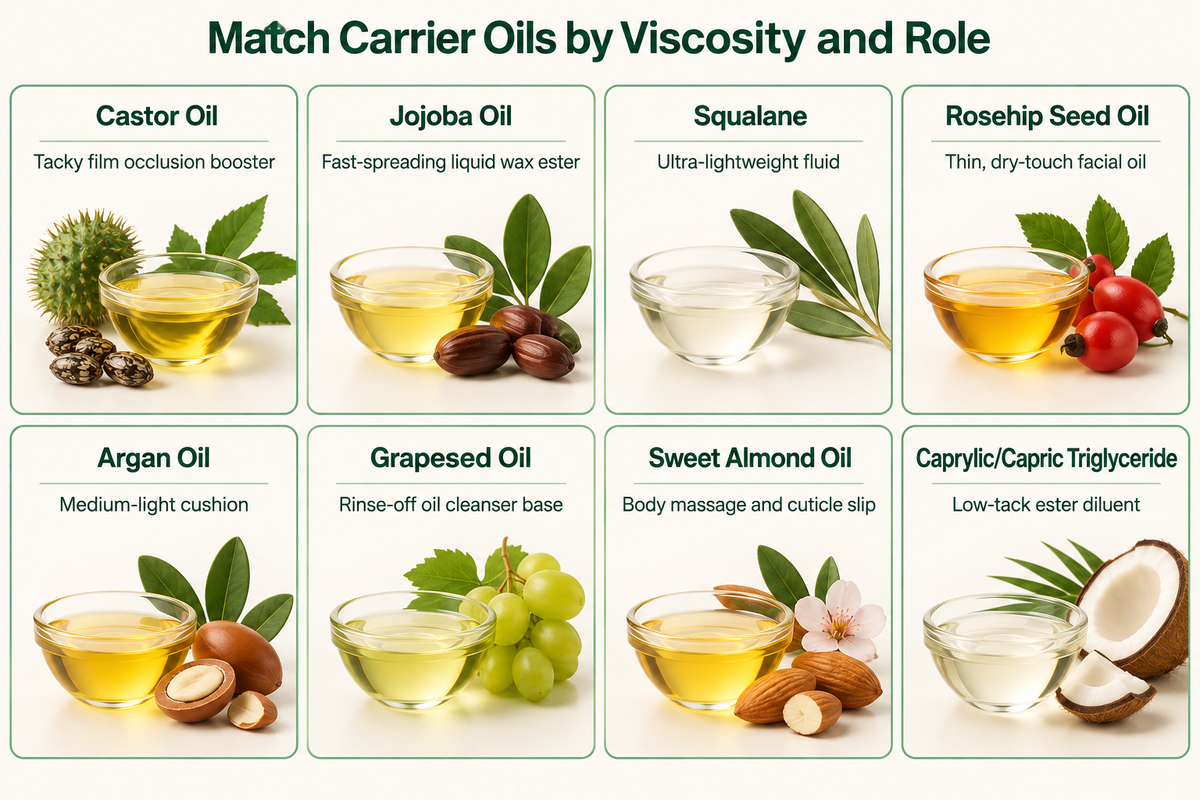
Castor oil has a dynamic viscosity of approximately 950 to 1,000 cP at 20°C and a starting HLB of 14, making it substantially thicker and more polar than jojoba oil, squalane, rosehip seed oil, or argan oil (which typically emulsify around HLB 7 to 8). Castor oil excels at barrier occlusion; however, other lighter carrier oils can spread better for full face use.
For heavy barrier occlusion, opt for castor oil, and for faster absorption, lighter oils, by balancing viscosity, saturation, and polarity against the target skin type. Consumers seeking castor oil for face hydration may reach for the oils at home only to find them tacky and difficult to spread. Cosmetic chemists balance slip by combining castor oil with lighter oil or emollient esters.
While published literature substantiates the fatty acid profile (~90% ricinoleic acid) of castor oil and its HLB-14 requirement, details on sensory absorption and oxidative shelf life across jojoba, rosehip, argan, and squalane blends depend on supplier’s lot to lot variability and the total formulation. Coconut oil can feel heavy to some facial skin, but a universal 4-out-of-5 comedogenic rating is not a clinically established classification.
Commercial multi-oil complexes can take cue from private label facial serums which combine around 2% to 15% cold-pressed castor oil with jojoba and squalane for barrier protection and comfortable, non-greasy slip.
| Oil Type & Lipid Class | Primary Chemical Structure | Relative Viscosity & Feel at 20°C–25°C | Pore Congestion Considerations | Starting HLB / Polarity | Best Skin Type & Dilution Role |
|---|---|---|---|---|---|
| Castor Oil (Hydroxylated Triglyceride) | Approximately 90% ricinoleic acid triglyceride with C-12 hydroxyl | Very high viscosity (~950 to 1,000 cP at 20°C); tacky film | Informal 1-out-of-5 index (not clinical); high physical occlusion when neat | High polarity; HLB around 14 | Dry patches, lips, or around 10% to 30% blend booster |
| Jojoba Oil (Liquid Wax Ester) | Long-chain monounsaturated liquid wax esters | Low viscosity; fast-spreading sebum-like slip | Well tolerated as a lightweight carrier diluent on facial skin | Mid-low polarity; HLB around 7 to 8 | Normal skin, combination, and acne-prone carrier dilution |
| Squalane (Saturated Branched Alkane) | Fully saturated C30 hydrocarbon chain | Ultra-lightweight fluid; rapid non-greasy absorption | Minimal follicular residue on reactive or blemish-prone skin | Non-polar hydrocarbon; HLB around 7 to 8 | Sensitive skin and lightweight overnight barrier serums |
| Rosehip Seed Oil (Polyunsaturated Triglyceride) | Linoleic and alpha-linolenic triglyceride blend | Thin, dry-touch facial oil; requires antioxidant protection | Lightweight feel suited to uneven or sun-stressed skin | Standard triglyceride; HLB around 7 to 8 | Mature or uneven skin tone requiring fast absorption |
| Argan Oil (Oleic-Linoleic Triglyceride) | Balanced oleic and linoleic triglyceride profile | Medium-light cushion; smoother glide than pure castor oil | Moderate emollient film suited to dry and mature facial skin | Standard triglyceride; HLB around 7 to 8 | Dry skin and mature skin needing mid-weight emollience |
| Grapeseed Oil (Linoleic-Rich Triglyceride) | High-linoleic polyunsaturated seed oil | Light, low-drag slip suitable for rinse-off blends | Used as the primary fluid base in rinse-off oil cleansers | Standard triglyceride; HLB around 7 to 8 | Oily skin and rinse-off oil cleansing blends (around 70% to 90%) |
| Sweet Almond Oil (Oleic-Rich Triglyceride) | Monounsaturated oleic triglyceride base | Medium emollient slip; softens cuticles and rough elbows | Richer body feel; preferred for body massage and cuticle care | Standard triglyceride; HLB around 7 to 8 | Body massage oil base and dry cuticle softening |
| Caprylic/Capric Triglyceride (MCT Ester) | Medium-chain saturated fatty acid ester | Very low viscosity; cuts stringiness of hydroxylated oils | Low-residue ester co-solvent in commercial emulsions | Polar ester diluent; pairs with HLB 14 systems | Low-tack ester diluent to reduce pure castor oil drag |
Blending Castor Oil by Skin Type and Oil Cleansing Methods
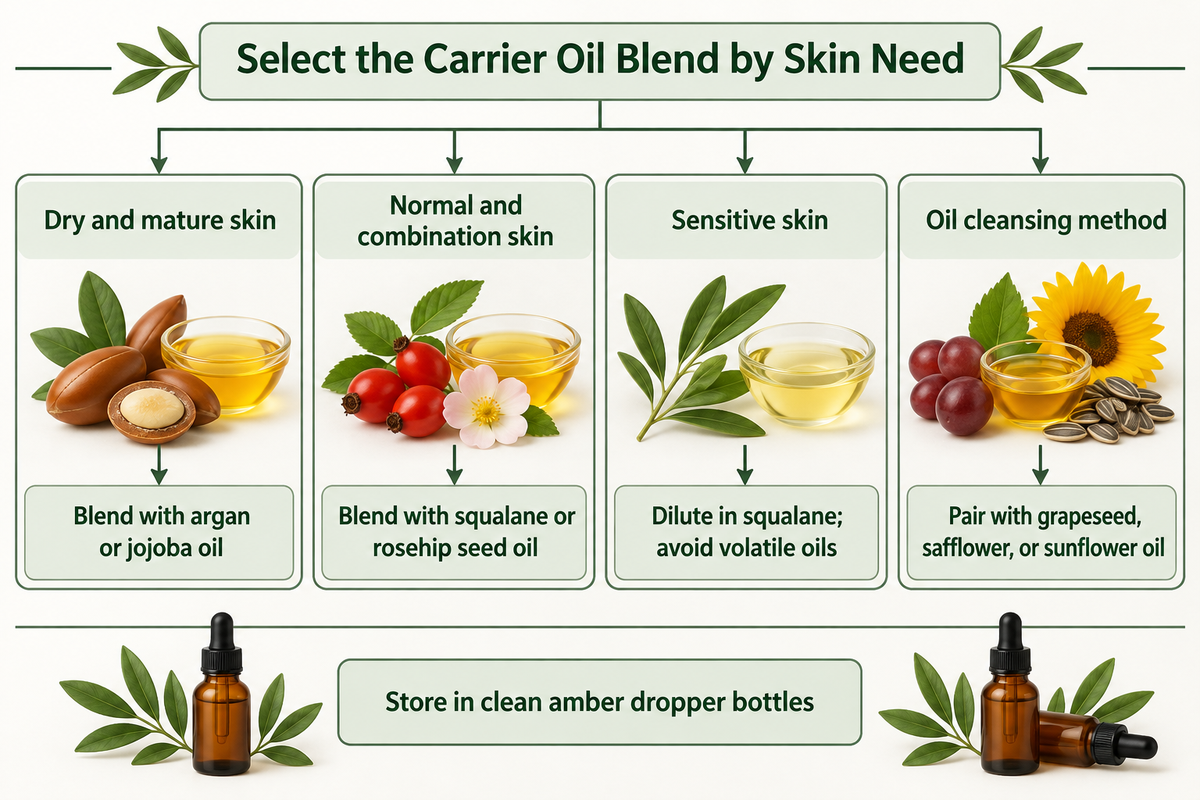
Because undiluted castor oil feels highly viscous and tacky, home users and estheticians commonly dilute it with a lighter carrier oil before facial application. Practical starting ratios range from around 10% castor oil (10:90 ratio) for sensitive or combination skin up to around 20% to 30% (20:80 or 30:70 ratio) in dry-skin blends or rinse-off oil cleansers.
Recommended Blending Proportions for Dry, Combination, and Mature Skin
To reduce surface drag and make castor oil safe for daily use, dilute it with a low-viscosity carrier oil. Blend by volume and store in clean amber dropper bottles. Apply 1-2 drops on damp skin after misting and/or toning:
- For dry skin and mature skin, a 20:80 blend (around 20% cold-pressed castor oil with roughly 80% argan or jojoba oil) softens flaky patches. It also reduces pillow transfer.
- For normal skin and combination skin, a 10:90 blend (around 10% castor oil with roughly 90% squalane or rosehip seed oil) supports healthy skin. It adds subtle glow without T-zone heaviness.
- For people with sensitive skin, using pure castor oil at around 10% in squalane reduces surface drag. Do not use volatile oils if your barrier is reactive.
The Oil Cleansing Method (OCM): Why Polar Castor Oil Lifts Sebum
For the oil cleansing method, castor oil represents the polar lipid phase. Ricinoleic acid contains a C-12 hydroxyl group and non-polar hydrocarbon chain which provides amphiphilic characteristics and helps solubilize surface sebum, sunscreen and makeup. Washing the face with castor oil alone, however, creates heavy drag and residue.
A balanced rinse-off oil cleanser commonly pairs around 10% to 30% castor oil with roughly 70% to 90% lighter carrier oils such as grapeseed, safflower, or sunflower oil. In commercial production, formulators incorporate polyglyceryl surfactants. Upon water contact, the cleanser blooms into a milky emulsion and rinses clean. You can review surfactant HLB pairing in our facial cleanser manufacturing guide.
Cold-Pressed Hexane-Free vs. Jamaican Black vs. Hydrogenated Castor Oil
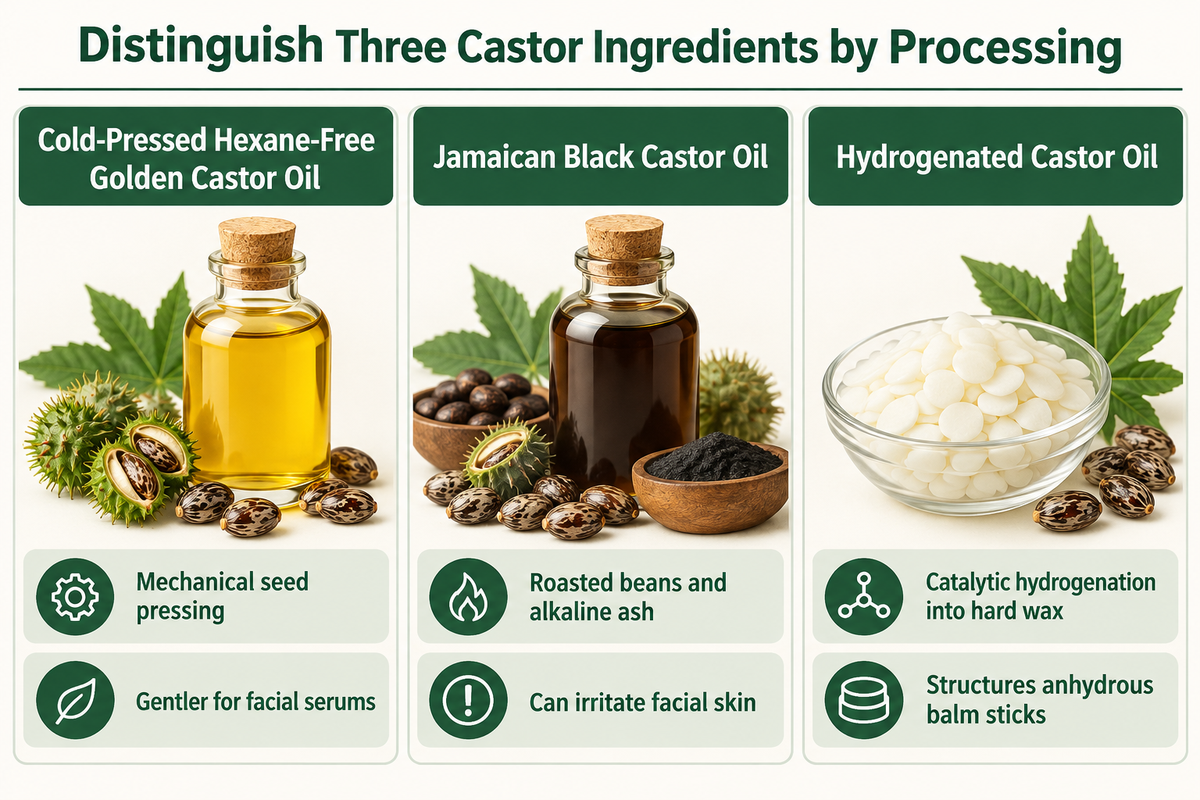
Cold-pressed, hexane-free golden castor oil meets pharmacopeial acid value limits (acid value ≤ 2.0 mg KOH/g) and is the preferred liquid grade for facial skincare. Jamaican black castor oil (JBCO) is made with roasted seeds and ash, so its residual ash content and measured alkalinity (often around pH 8 to 9 in aqueous dispersions) depend on processing and can irritate facial skin. Hydrogenated castor oil is a solid wax melting at 85°C to 88°C.
Cold-Pressed Hexane-Free Golden Castor Oil (Ricinus Communis Seed Oil)
When choosing castor oil good for facial serums, cold-pressed castor oil is denser and has a more pure extraction method compared to other methods. Cold pressed castor oil is pressed from the seeds of the castor plant without the use of petroleum hexane. Natural tocopherols and phytosterols are preserved. Peroxide value is usually less than 10 meq O2/kg. The resulting pale-yellow oil preserves natural tocopherols and phytosterols, with standard COA specifications capping acid value at ≤ 2.0 mg KOH/g and peroxide value at ≤ 5.0 to 10.0 meq O2/kg.
Lower-grade industrial oils may undergo hot-pressing and solvent extraction of the seed pomace. Thermal oxidation of oils increases skin sensitization. Choose castor oil that is “Cold-Pressed, Hexane-Free” on retail or ask for “Cold-Pressed, Hexane-Free” in bulk.
Jamaican Black Castor Oil (JBCO): Why Alkaline Roasting Suits Scalp Over Face
To make Jamaican black castor oil, castor beans are roasted, crushed, and boiled with water. Jamaican black castor oil’s residual ash content and measured alkalinity are dependent on the processing method and test dispersion.
Facial skin’s healthy state keeps its surface in an acidic state to regulate barrier enzymes and flora. Alkalizing the surface with repeated application of JBCO can irritate the facial skin and compromised skin conditions. Pale cold-pressed castor oil is gentler for facial use.
Hydrogenated Castor Oil (Castor Wax) and PEG-40 Hydrogenated Castor Oil
Not every castor derivative on an INCI label is a liquid oil form. Catalytic hydrogenation saturates the double bond of ricinoleic acid, converting liquid triglyceride into 12-hydroxystearic acid triglyceride (INCI: Hydrogenated Castor Oil). This hard, brittle wax melts at 85°C to 88°C and lacks free unsaturated ricinoleic acid. Formulators use it to structure anhydrous balm sticks or form gentle exfoliating beads.
Ethoxylating hydrogenated castor oil produces PEG-40 Hydrogenated Castor Oil, a non-ionic solubilizer. The Cosmetic Ingredient Review (CIR) Expert Panel safety assessment evaluated Ricinus Communis (Castor) Seed Oil and its hydrogenated derivatives across commercial formulations. The panel concluded that these ingredients are safe in current cosmetic practices when formulated to be non-irritating. It also noted that sensitization to ricinoleic acid can occur in predisposed patients.
Limitations, Comedogenicity, and Where You Should Not Put Castor Oil
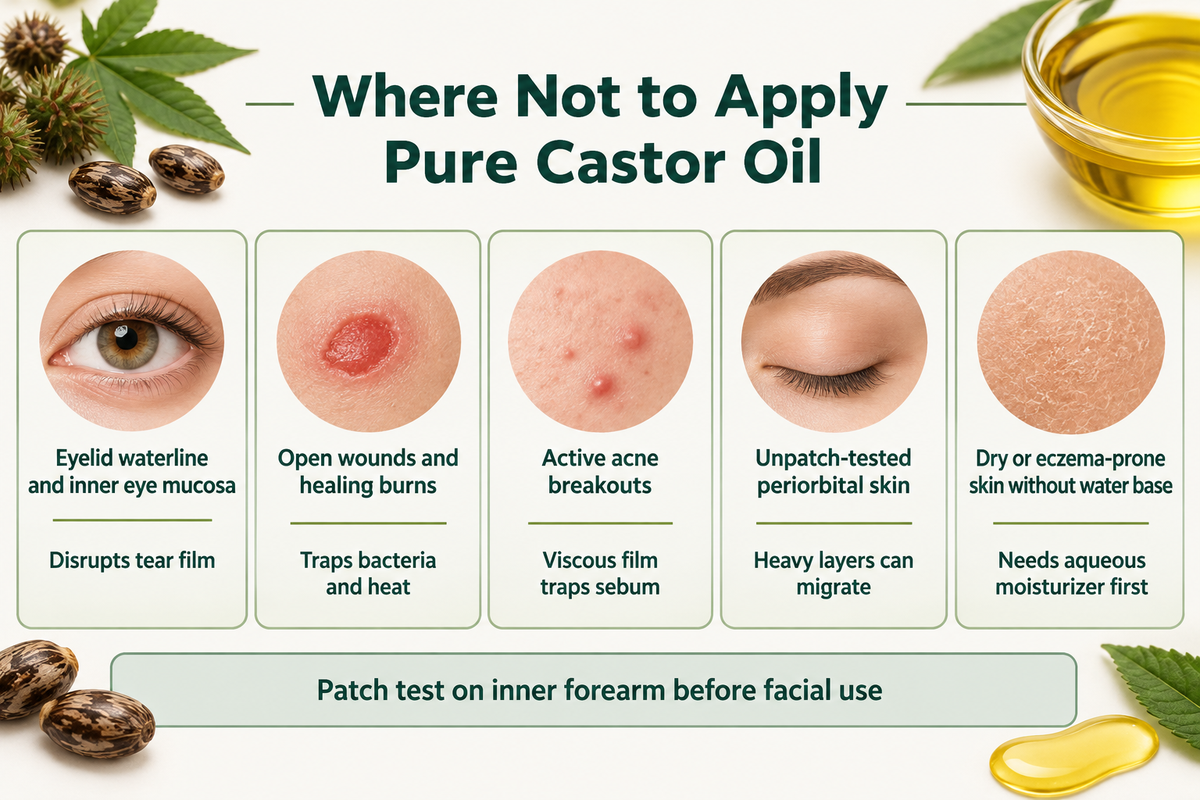
Castor oil is informally rated with a low comedogenic index (1 out of 5), but its viscosity of 950 to 1,000 cP at 20°C can physically clog pores and trap sebum and corneocytes. Never use castor oil on the mucous membranes around the eye, open wounds, fresh burns, or acne.
Does Castor Oil Clog Pores on Oily and Acne-Prone Skin?
While many consider Castor oil non-comedogenic, it can still cause breakouts in acne-prone skin. A true assessment separates reported comedogenic evidence from the residue and viscosity Castor oil leaves on the skin.
- Comedogenicity scores from rabbit-ear or patch testing (such as an informal 1-out-of-5 score) are not standardized clinical classifications and do not establish how castor oil behaves inside human sebaceous ducts.
- When neat castor oil is applied heavily (concentration above 30%) on sebum-rich (e.g. forehead, nose and chin) skin, its sticky film traps sweat, sebum and dead skin cells (Dermatology guidance on undiluted castor oil).
Hence, the effects of castor oil on acne-prone skin rely on dilution and removal. For example, diluting it in a lighter carrier oil (e.g. a 10:90 blend) or using an emulsifying cleanser to rinse it off would reduce the risk of clogging pores when compared to undiluted layers left on overnight in oily T-zones (see clinical dermatology perspective on acne-prone skin).
Contact Dermatitis, Ricin Safety (Why Oil Is Ricin-Free), and Patch Testing
There are two safety concerns regarding skincare: ricin and allergic contact dermatitis. Ricin is a water-soluble protein found in raw castor beans that have not been fully processed. It has been shown that during processing of castor bean oil, the protein is not expected to remain in the oil phase. Thus, cosmetic-grade castor oil is tested and released per validated testing. Heat and/or filtration controls are separate processing controls. Given that both the cosmetic and USP-grade castor oil meets its specifications, it is expected that the ricin is below detectable limits. Topical skincare oils remain for external use only.
Published dermatological evaluations (clinical review on castor oil contact sensitization) have reported allergic contact dermatitis and cheilitis from ricinoleic acid in sensitized individuals. Castor oil may also cause contact dermatitis and patch-test-positive delayed hypersensitivity. Because castor oil may provoke delayed hypersensitivity on reactive skin, perform a patch test with 1 to 2 drops of diluted oil on the inner forearm for 24 to 48 hours before facial use.
5 Areas Where You Should Not Put Castor Oil
Preventing mucosal irritation, barrier redness and follicular occlusion means that cosmetic castor oil should not be used in the inner eye mucosa and waterline, open wounds or burns, acne breakouts, periorbital skin and dry/ eczema-prone skin lacking an underlying water-based moisturizer.
- Eyelid waterline and inner eye mucosa: Cosmetic oils can clog meibomian glands and disrupt the tear film. Irritate corneal epithelium.
- Healing burns and wounds is made very difficult by heavy plant oils. These oils trap bacteria and heat on the wound surface. Hence, proper sterile wound care is important.
- Active acne breakouts: an undiluted viscous film traps sebum and dead skin cells, worsening follicular congestion and breakouts.
- Unpatch-tested eyelid and periorbital skin: Heavy occlusive layers can migrate into the eye or congest the delicate periorbital skin. Keep neat castor oil off the eyelids.
- Without an aqueous moisturizer, skin can be dry or eczema-prone. Applying neat castor oil without providing water-based hydration first can make compromised skin feel even more red and dry.
Pure Castor Oil vs. Finished Cosmetic Formulations: Overcoming Tackiness
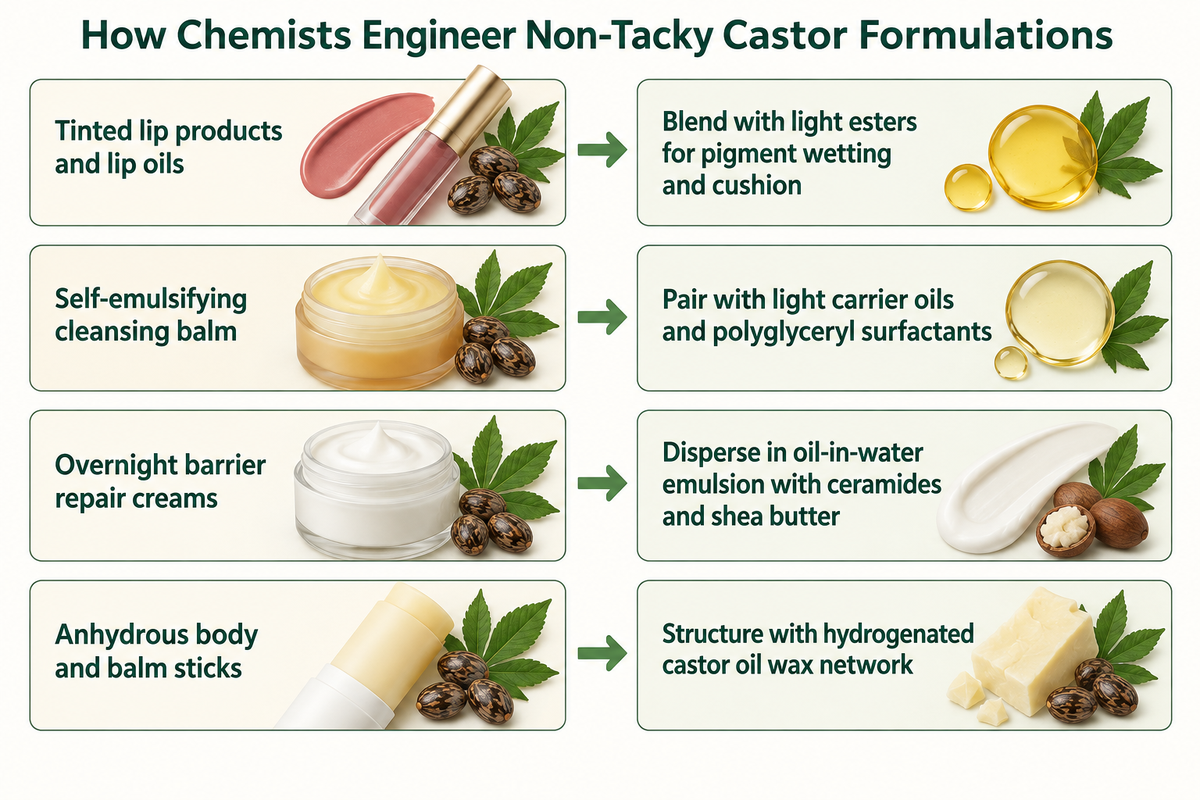
Undiluted pure castor oil leaves a sticky, slow-absorbing film on facial skin, but some of the barrier and gloss benefits can be captured in cosmetic products at 2% to 15% (up to 35% in lip products) in emulsions and balms. Chemists have reported use of low-viscosity dry esters and polyglyceryl surfactants, and HLB-14 emulsifier systems to achieve a silky finish.
Why Pure Bottled Oil Behaves Differently Than Engineered Emulsions and Balms
Using undiluted pure castor oil does not yield maximum results since castor oil, in its purest form, is highly viscous (approximately 950 to 1,000 cP at 20°C). It leaves a thick, slow-spreading film on the face. During the application process, the film can pull on the skin, particularly on the eyes and surrounding areas, and can transfer to pillow cases.
In professional custom cosmetic formulation, chemists consider castor oil a functional lipid modifier, as opposed to a standalone base. Dispersing 2-15% castor oil in either an oil-in-water emulsion or anhydrous ester network helps reduce intermolecular drag between ricinoleic chains, and helps maintain barrier protection.
Sensory Engineering: Pairing Castor Oil with Light Esters (Caprylic/Capric Triglyceride, Cetyl Ricinoleate)
To mitigate the drag of ricinoleic triglycerides, we must couple castor oil with rapidly spreading light esters (analysis of lip oil ester formulations). Low-viscosity emollients such as caprylic/capric triglyceride, coco-caprylate and isoamyl laurate, solvate the polar castor oil phase, and thus improve immediate slip across the epidermis.
When formulators want the rich cushion and optical shine of castor oil with less sticky drag, they also pair liquid castor oil with esterified derivatives. Common options include Cetyl Ricinoleate and Polyglyceryl-3 Ricinoleate (vegetable-sourced barrier ointment patent US8524211B1). These derivatives preserve moisture-binding benefits while melting smoothly at skin temperature (32°C). For barrier creams, pairing castor oil with ceramides and shea butter follows the multi-lamellar architecture detailed in our barrier repair cream manufacturing guide.
Typical Inclusion Levels in Lip Oils, Cleansing Balms, and Barrier Creams
In commercial private-label development, levels of castor oil are formulated to the product format and desired skin feel.
- Formulators blend cold-pressed castor oil (35%) with light esters for tinted lip products and lip oils. Anhydrous sticks are structured with hydrogenated castor wax (melting point 85°C-88°C) for pigment wetting and cushion.
- In a self-emulsifying cleansing balm, inclusion usually stands between 2% to 15% along with light carrier oils and polyglyceryl surfactants. This provides a fast water rinse-off.
- Around 2% to 15% castor oil is found in most overnight barrier repair creams. They make the emulsions stable using an emulsifier blend starting around HLB 14.
- In anhydrous body and balm sticks, castor oil is structured with hydrogenated castor oil wax (85°C to 88°C melting point). That wax network maintains stick integrity at 40°C warehouse temperatures.
Formulation Guideline: In leave-on facial emulsions, formulators may keep pure Ricinus Communis Seed Oil around 2% to 15% and pair it with low-viscosity esters such as caprylic/capric triglyceride to limit stringiness.
Raw Material Quality and COA Specifications for Skincare Brands
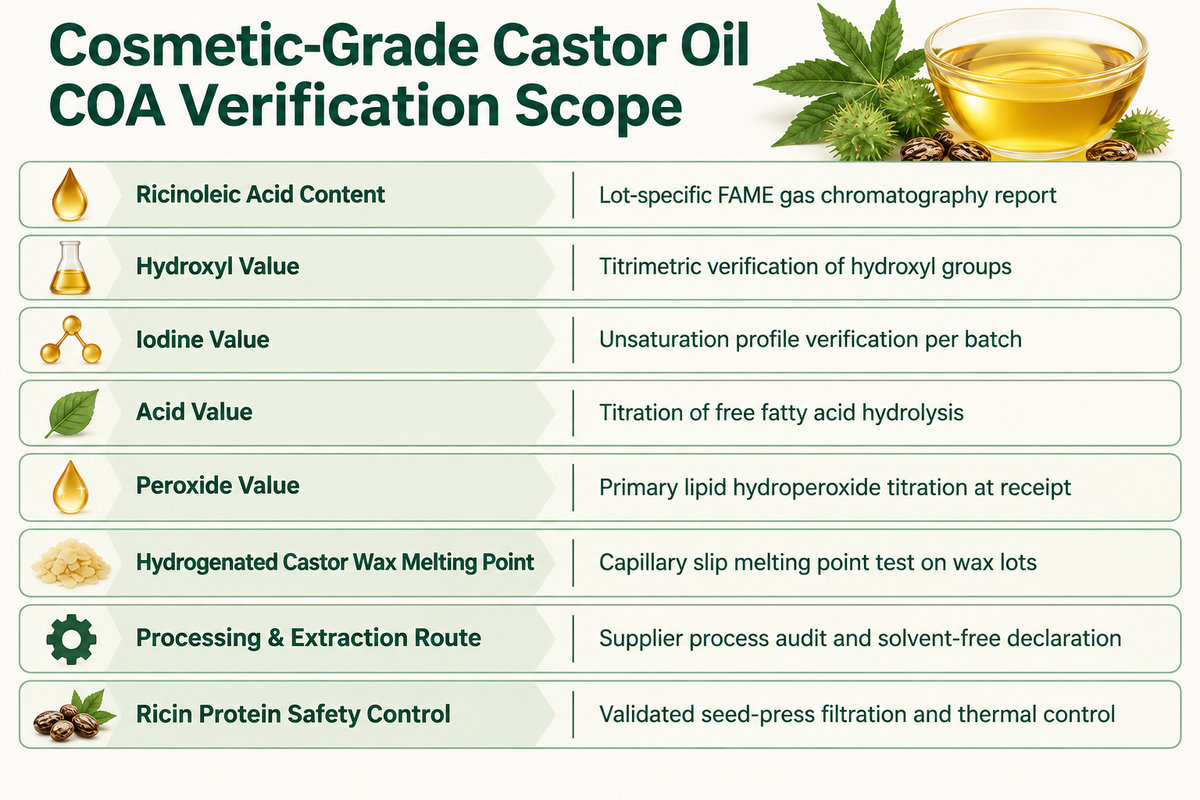
To reproduce those non-tacky finished cosmetic formulations consistently, bulk buyers must verify Certificate of Analysis (COA) benchmarks for Ricinus Communis Seed Oil. Required limits include ricinoleic acid commonly not less than 90.0% per USP-NF (or around 85% to 90% by FAME gas chromatography), hydroxyl value 160 to 168 mg KOH/g, acid value ≤ 2.0 mg KOH/g, iodine value 82 to 88 g I2/100g, peroxide value ≤ 5.0 meq O2/kg, and hexane-free pressing.
Protect product stability with the 8-Point Cosmetic-Grade Castor Oil COA Benchmark Matrix below using ricinoleic acid around 85% to 90% (commonly not less than 90.0% USP-NF), hydroxyl value 160 to 168 mg KOH/g, acid value ≤ 2.0 mg KOH/g, peroxide value ≤ 5.0 meq O2/kg, and hexane-free pressing. Laboratories can measure fatty-acid composition by gas chromatography after fatty acid methyl ester (FAME) derivatization under EN ISO 12966; the acceptance limit is set by the buyer’s specification.
Brands exporting finished cosmetic formulations to the European Union in 2026 and 2027 must also align raw material dossiers with European Commission Regulation (EC) No 1223/2009 updates. Commission Implementing Decision (EU) 2025/1175 updates the mandatory INCI glossary from July 30, 2026, and Commission Regulation (EU) 2026/909 takes effect on May 18, 2026. The expanded fragrance-allergen labeling transition under Regulation (EU) 2023/1545 applies from July 31, 2026 when listed allergens from essential oils exceed applicable thresholds (around 0.001% in leave-on and 0.01% in rinse-off products). Blending an essential oil into a serum alone does not trigger it (EU 2025–2026 cosmetic regulatory timeline). Incoming lots should also follow our cosmetic stability testing protocol.
| Parameter Category & Test Method | USP-NF / CIR Specification Limit | Incoming QC Verification Scope | What Out-of-Spec Values Indicate |
|---|---|---|---|
| Ricinoleic Acid Content (EN ISO 12966 FAME GC) | Commonly not less than 90.0% triglyceride (around 85% to 90% by FAME GC) | Lot-specific FAME gas chromatography report | Adulteration with cheaper soybean, rapeseed, or sunflower oil |
| Hydroxyl Value (USP29-NF24) | 160 to 168 mg KOH/g | Titrimetric verification of C-12 hydroxyl groups | Dilution with non-hydroxylated vegetable triglycerides |
| Iodine Value (Wijs Method) | 82 to 88 g I2/100g | Unsaturation profile verification per batch | Altered unsaturation profile or thermal polymerization |
| Acid Value (Free Fatty Acids) | <= 2.0 mg KOH/g | Titration of free fatty acid hydrolysis | Hydrolytic degradation from wet seeds or poor storage |
| Peroxide Value (Primary Oxidation) | <= 5.0 meq O2/kg (up to 10.0 meq O2/kg in general monographs) | Primary lipid hydroperoxide titration at receipt | Early lipid peroxidation associated with rancid odor and skin sting |
| Hydrogenated Castor Wax Melting Point | 85°C to 88°C (for Hydrogenated Castor Oil grade) | Capillary slip melting point test on wax lots | Incomplete catalytic hydrogenation of ricinoleic chains |
| Processing & Extraction Route | Cold-pressed, hexane-free mechanical pressing | Supplier process audit and solvent-free declaration | Solvent extraction residue or thermal roast ash contamination |
| Ricin Protein Safety Control | Free of detectable water-soluble ricin per specification | Validated seed-press filtration and thermal control | Incomplete separation of water-soluble seed cake proteins |
Frequently Asked Questions
What happens if I put castor oil on my face every night?
Castor oil can provide temporary barrier protection on skin and reduce transepidermal water loss for a few hours, and the effectiveness depends on the formulation, dose, and condition of the skin. On the other hand, leaving neat castor oil on the face will physically trap sebum and dead skin cells in pores, and may lead to the formation of closed comedones.
Where should you not put castor oil on your body or face?
Castor oil should not be applied to the eyes or the inner eyelid waterline. It should not be applied to open wounds, fresh burns, or acne breakouts. Ophthalmological evaluations warn that contact with the product disrupts the tear film and is irritating to the eye. Occlusion of the product over broken skin or active acne traps bacteria and sebum and irritates the skin.
What do dermatologists think of castor oil for wrinkles and anti-aging?
Dermatological reviews regard castor oil as a practical semi-occlusive emollient that temporarily smooths fine dry lines by reducing water loss and softening the outer stratum corneum. However, castor oil does not synthesize new dermal collagen, and it should not be used to replace clinically validated anti-aging treatments to eliminate deep structural wrinkles. Complete age-support routines require the addition of oil-soluble retinoids, peptides, and a daily broad-spectrum sunscreen.
Does castor oil fade hyperpigmentation or dark spots on the face?
No, pure castor oil does not fade hyperpigmentation or dark spots since it does not block tyrosinase or bleach melanin.
Can castor oil cause milia under the eyes or acne breakouts?
Yes, undiluted castor oil can exacerbate periorbital congestion and lead to acne breakouts in spite of an informal 1 out of 5 comedogenic rating. Because neat castor oil has a high viscosity of approximately 950 to 1,000 cP at 20°C, it can physically trap sebum and keratin when layered thickly over oil-rich T-zones or eyelid skin. Diluted blends or lightweight emulsions are preferred.
How should cold-pressed castor oil be stored to prevent rancidity?
Cold-pressed castor oil should be stored in tightly closed dark amber bottles between 15°C to 25°C and away from direct sunlight and moisture. Discard any rancid samples.
References & Sources
- National Library of Medicine (PMC) “Use of Castor Oil in Dermatology: A Narrative Review (PMC12978418).”
- NCBI Bookshelf. Castor Oil – StatPearls Clinical & Chemical Overview (NBK551626).
- National Library of Medicine (PMC) “Castor Oil: Properties, Uses, and Optimization of Processing Parameters (PMC5015816).”
- United States Pharmacopeia (USP-NF). Officinal Monograph on Castor Oil (Hydroxyl Value 160-168 mg KOH/g, Ricinoleic Acid Triglyceride NLT 90.0%).
- Cosmetic Ingredient Review (CIR) Expert Panel. Final Report on the Safety Assessment of Ricinus Communis (Castor) Seed Oil and Hydrogenated Derivatives.
- Tear Film & Ocular Surface Society (TFOS) / PMC. TFOS Lifestyle Report: Impact of Cosmetics on the Ocular Surface and Periocular Skin (PMC11246752).
- American Oil Chemists’ Society (AOCS). Emulsions: Making Oil and Water Mix – Required HLB Values of Vegetable Oils (Castor Oil HLB 14).
- National Library of Medicine (PMC). Fatty Acid Methyl Esters Gas Chromatography Analysis under EN ISO 12966 (PMC11901216).
- U.S. Food and Drug Administration (FDA). Is It a Cosmetic, a Drug, or Both? – Regulatory Claim Boundaries.
- European Commission & CosmeService. EU Cosmetics Legislation Regulation (EC) No 1223/2009 and EU Cosmetic Regulatory Updates 2025 and 2026.
- Cosmetics & Toiletries & USPTO. Formula Focus: Natural Tinted Lip Oil and US Patent US8524211B1.
- GoodRx & SAC Dermatology. Castor Oil for Skin: Benefits and Tips for Use and Is Castor Oil Good For Your Skin?