Get in touch with NEXO Beauty Labs Company


How Sunscreen Stick Manufacturing Turns a Formula into a Usable Solid

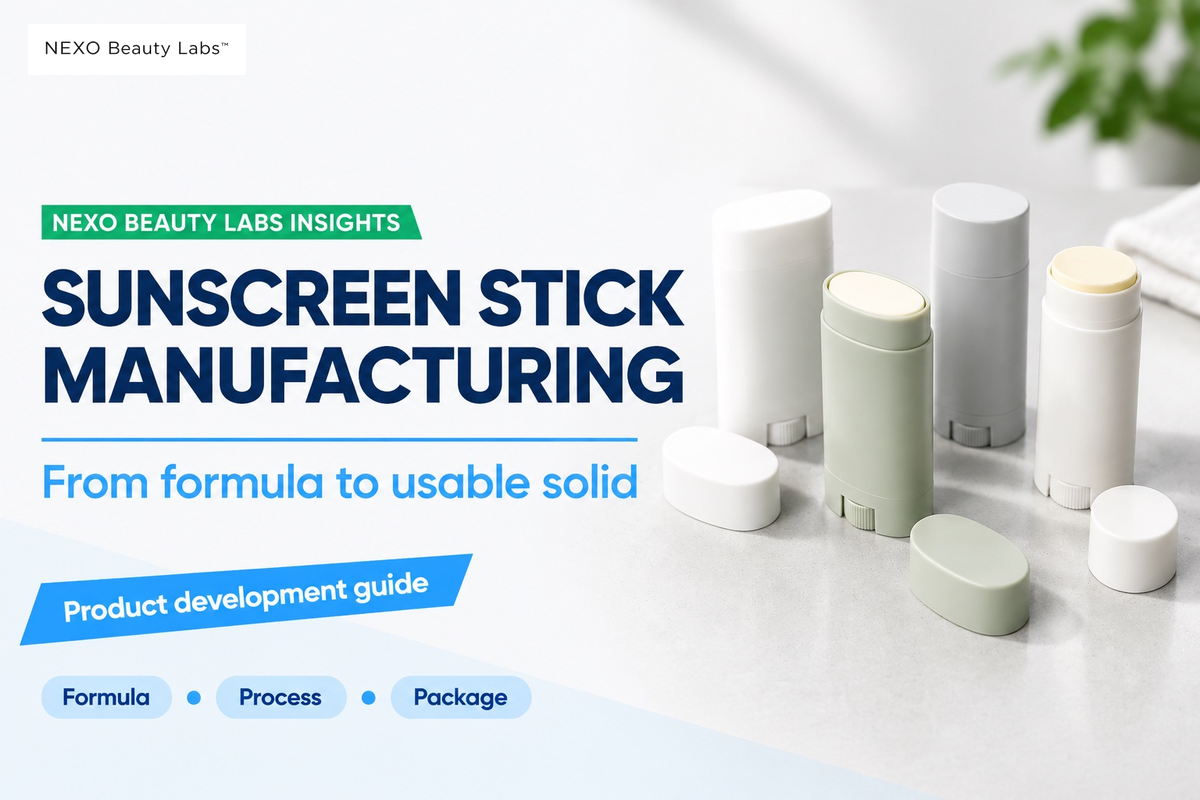
Sunscreen Stick Manufacturing involves combining an ultraviolet (UV) filter formulation with a solid structure, controlling the filling process, and packaging the product to deliver it to the skin. A sample must also be stable during storage and use. It must also be reliable enough to withstand the dispensing mechanism and not break up excessively during application.
Developments go further than transforming a liquid sunscreen into a solid. Selection of wax changes application. Cooling changes structure. Use of a different barrel changes how the bulk sets and how the user holds it. This guide follows such relationships through formulation, pilot production and finished product testing, and provides ways to identify a formula problem from a filling or packing problem.
What Changes When Sunscreen Becomes a Solid Stick?
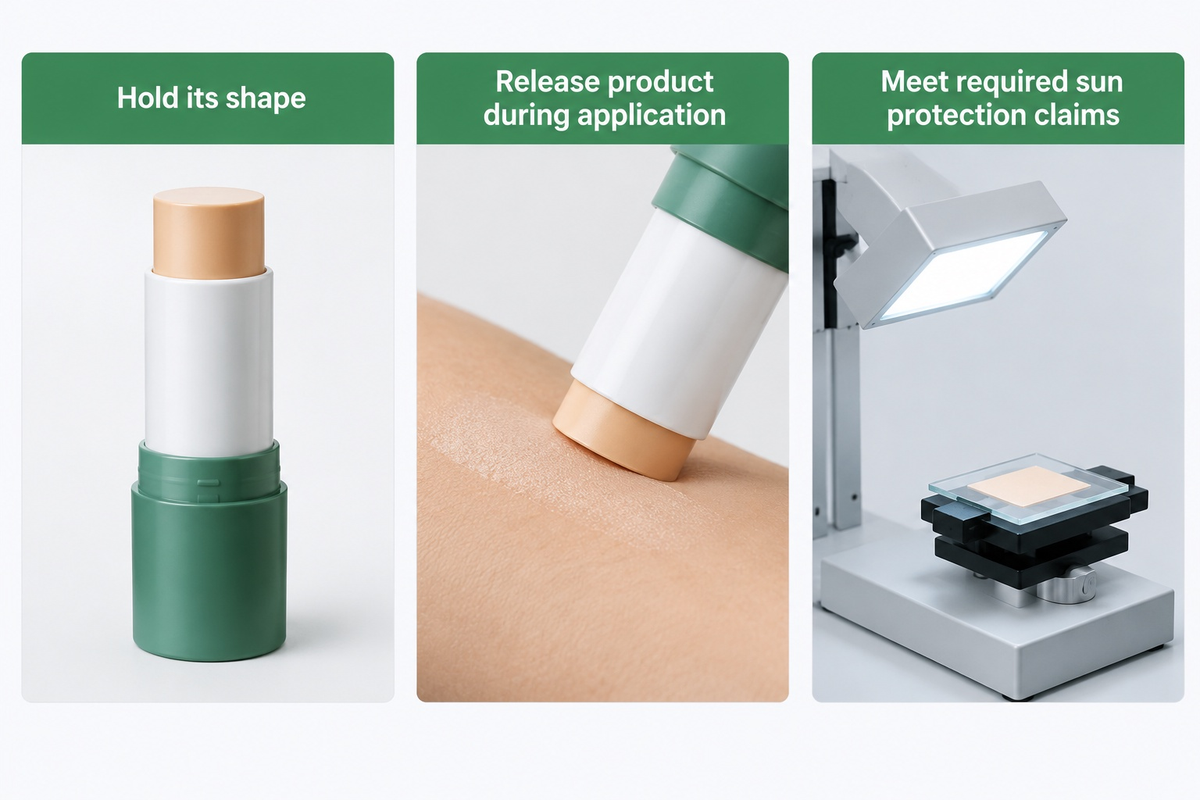
The structure for a sunscreen stick must hold its shape while the material is released during application. A lotion can flow through an opening; a stick must move as a solid and leave a film. These requirements connect the filter system, the wax network and the dispenser, and therefore converting a lotion into a stick requires both formulation and process development.
Many hot-poured sticks use an anhydrous oil-and-wax system. While anhydrous describes water content and solid describes physical form, the terms shouldn’t be used interchangeably. System, route and ingredients determine a compound’s true nature. For example, a system could be emulsified.
Separate the three examples at the start: a body must not give in to unwanted deformation when product is applied; the surface should release enough product to spread; and the applied film should meet the required sun protection claims. Resisting deformation is one issue; spreading the product evenly is another. Each should be assessed individually.
Our sunscreen formulation and launch guide addresses general filter selection and market routes. For the stick brief, include the application area, preference for visible residue, shape of the package and expected storage conditions. These factors will shape development prior to choosing a production quantity.
Balance UV Filters, Wax Structure and Skin Feel
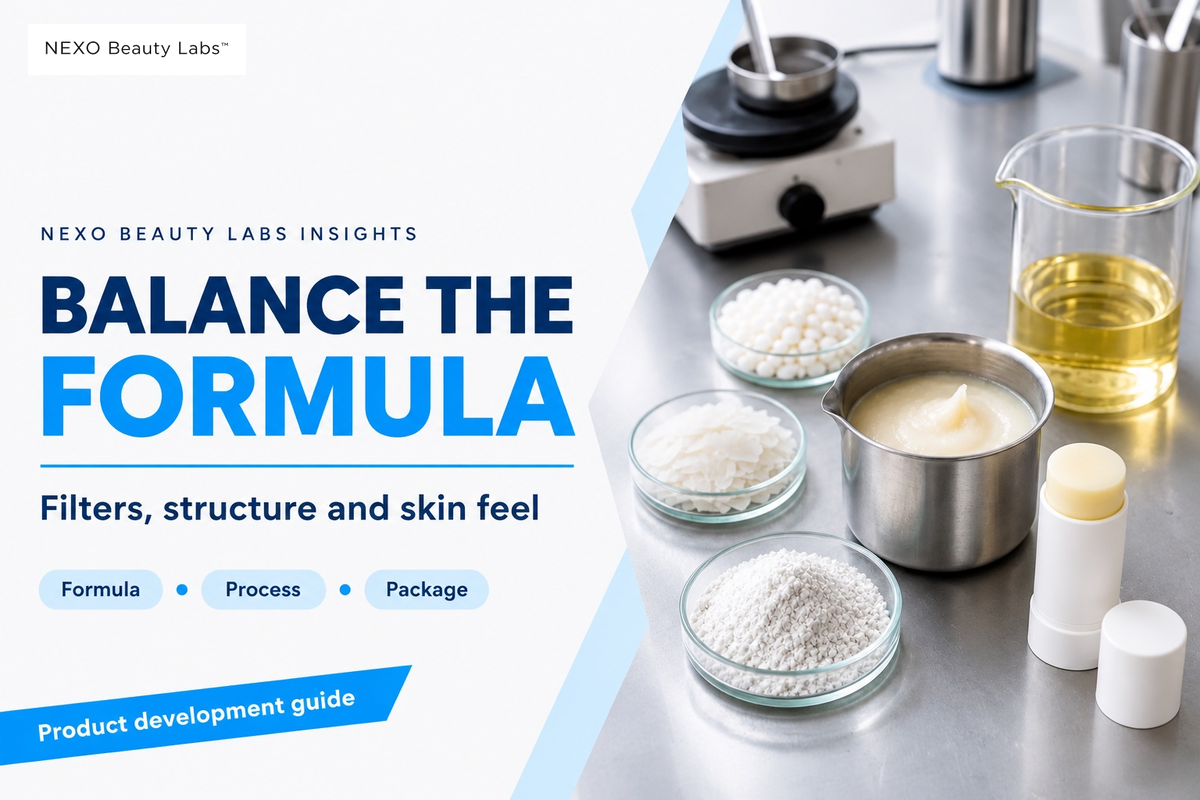
Formulating a workable sunscreen stick requires balancing filter distribution, oil compatibility and the structuring system. Increasing firmness can change drag and product transfer. Changing the oil can change filter solubility and structure. Looking at these functions together and not picking a wax percentage and considering the rest of the formulation as interchangeable additives is necessary.
| Ingredient category and function | Development question | Useful observation |
|---|---|---|
| Particulate mineral filters | How well is the selected grade dispersed? | Agglomerates, streaking and visible residue |
| Dissolved organic filters | Does the vehicle maintain the required dissolved state? | Crystals during storage or after application |
| Other particulate filters | Does the selected delivery form require dispersion? | Uniformity of the prepared bulk and applied film |
| High-melting structurants | What body and thermal response do they produce? | Deformation, fracture and application drag |
| Co-structurants | How do they change the network? | Texture and oil retention after conditioning |
| Liquid emollients | Are they compatible with filters and structure? | Spread, residue and surface oil release |
| Dispersing aids | Do they suit the actual particle surface and vehicle? | Dispersion consistency and wetting |
| Film-forming ingredients | How do they affect the finished film? | Tack, flexibility and the tested protection claim |
| Sensory powders | What does their addition change beyond finish? | Drag, friability and distribution |
Mineral stick or clear organic-filter stick: what changes?
The form of a filter dictates subsequent steps: for zinc oxide, for example, the next step is to disperse the particulate. Preparation follows each filter’s physical form: zinc oxide requires particulate dispersion, while an organic filter intended to dissolve needs a suitable vehicle and sustained solubility. Some organic filters are particulate, meaning classification of filters as organic or mineral doesn’t describe the mixing route. A clear bulk appearance is a separate target from a low-residue film on skin.
da Silva Souza and colleagues at Rowan University and INOLEX studied filter recrystallization in pre-dissolutions, sunscreen formulations, and simulated application. In their 2018 solubilizer study, they stated that the best initial solvent sometimes wasn’t the best at preventing recrystallization. When evaluating a dissolved-filter system, include the final mixture and application stage.
How much product does the stick actually transfer?
The stick sunscreens that were tested in the 2015 study of 52 participants had a geometric mean application thickness of 0.35 mg/cm². When evaluating product transfer, measure deposited mass alongside glide. The consulting firm Cardno ChemRisk employed Novick and her co-authors and funded the work. That product-specific finding makes application behavior a development question; it’s not a stick sunscreen conversion factor for SPF or a universal stick sunscreen dose.
A comparative payoff trial can hold the application surface, stroke length, contact force and sample temperature constant. Weighing before and after gives transferred mass. Record streaking and spreading separately, because equal mass can still form different films. Formulation revisions can then target the actual complaint through a custom formulation development process.
Control the Process from Bulk Preparation to Solidification
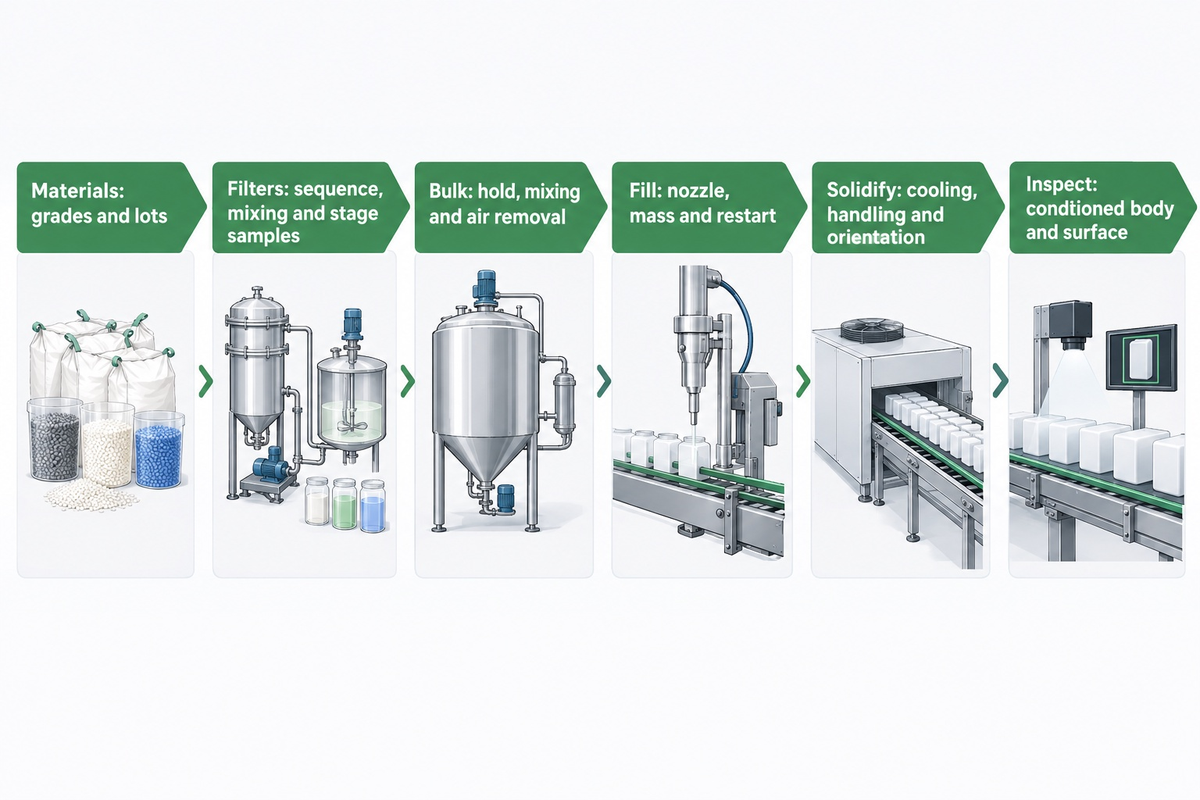
A controlled hot-fill process separates bulk preparation, holding, transfer, filling and cooling. Each stage can alter the material prior to the stick being inspected. Record the actual product temperature and elapsed time at those transitions, then compare the finished sticks after conditioning. A setpoint of a vessel can’t describe the thermal history of the filled product.
What temperature should a sunscreen stick be filled at?
Published model-stick pouring temperatures of 62–64°C illustrate how formulation changes the answer. Nicholas and Brooks of ingredient supplier New Phase Technologies reported those values for particular polyethylene/mineral-oil blends in their 2013 anhydrous-stick study. Similar reductions in pouring temperature produced different long-term stability outcomes. These are model-system results, rather than settings to copy into a sunscreen production batch.
The manufacturing window has to account for the actual structuring system, filter incorporation and packaging. Different measurements have to be considered throughout the process including peak heating temperature, bulk temperature during a hold, nozzle temperature and temperature during solidification. A pump, hose or waiting period can change the material between the vessel and the component. These all affect the final product.
The 6-Stage Stick Solidification Check is used to compare pilot conditions and resulting sticks. Input the batch and package ID, your actual observations, and the permissive reason for each stage to advance to the next. This is a development worksheet describing the process below.
- Release the materials. Record ingredient grades, lot numbers, and types (i.e. pre-dispersions and components) for each. Dispersion and filter replacement can also affect the vehicle and the filter.
- Add the filters. Record the addition sequence, actual mixing conditions and any observations of dissolution or dispersion. Retain bulk samples tied to that stage.
- Achieve bulk readiness. Record conditions (i.e. temperature) and duration of the hold, mixing conditions, and air removal. If the hold is being terminated, compare the material at the start versus the end.
- Complete the final fill. Record the condition of the nozzle, mass dispensed, and component conditions. Identify the first acceptable fills following a line stop.
- Observe solidification. Record cooling conditions, time before handling and orientation. Compare the root and tip of solidified material.
- Inspect conditioned sticks. Compare body and surface integrity. Keep the results traced to their filling position.
The integrity of the root and tip of a low-wax lipstick can be indicative of variations in cooling conditions. Yamashita and colleagues at Shiseido described such artifacts in their 2021 molding study and attributed variations in lipstick structure and integrity to cooling conditions and mold design. The lipstick work provides a reason to inspect the root and tip separately; the sunscreen formula and barrel still need their own cooling evaluation.
If the buyer requests faster throughput, compare the residence time and handling point with the established pilot record. Cooling time needs to allow the internal body as well as the external top layer to set. The internal condition can still change even if the top layer is fully set. Product samples should be retained from the changed condition before accepting the increased production speed.
Evaluate the Formula and Package as One Product
Complete fill, closure, and barrier interactions affect the performance of the final drug product. Evaluate material compatibility alongside the elevator, cap and application surface. A formula that behaves well in the laboratory may not behave well in the intended finished dosage form (e.g. a twist-up pack). Therefore, the intended sales component should be included during development and stability testing.
For United States drug products, 21 CFR 211.94 addresses container interaction and protection against foreseeable deterioration or contamination. 21 CFR 211.166(a)(4) requires stability testing in the marketed container-closure system. These requirements put the actual package into the product evaluation, beyond its appearance in a component catalogue.
Briasco and colleagues’ 2017 sunscreen packaging study evaluated emulsions in plastic packaging against glass-bottle controls to assess the effect of packaging on the product. Relying on the component alone or product alone isn’t sufficient.
Example: the same pilot bulk sets smoothly in a control container but pulls away from the base in the intended barrel after cycling. Look at the contact area, cooling history and mechanism. If both containers show signs of oil bleeding, look at the formulation and/or the shared storage condition.
- Run the elevator through its intended travel and retraction, where designed.
- Examine the root for separation, voids, or cracking after conditioning.
- Inspect cap fit, leakage and material distortion after the agreed storage exposure.
- Repeat the application comparison, using conditioned product in the final package.
A package purchase based on dimensions alone can miss a thermal or material constraint. Component approval should identify the actual resin or material system, filling access, interface with the bulk and any change from the tested version.
Troubleshoot Sweating, Graininess and Breakage
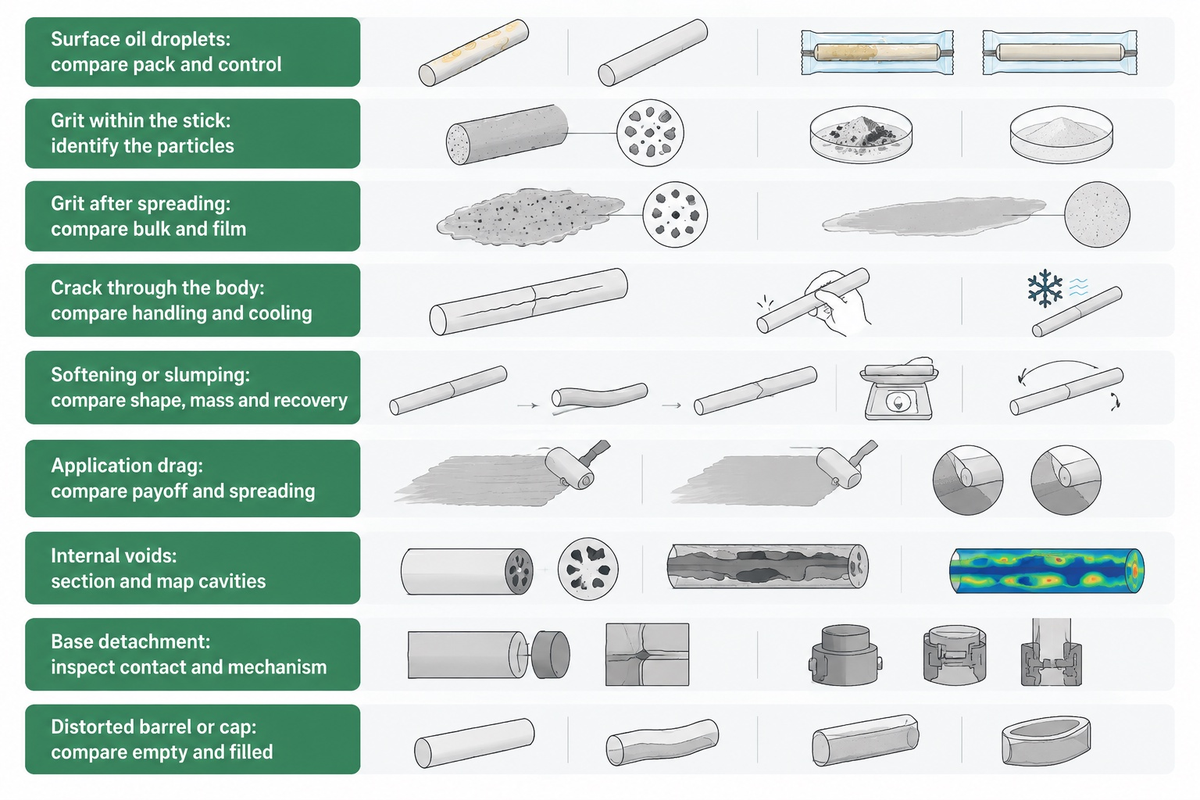
Failure modes such as sweating, grit and fracture describe different types of failure and should be treated as such. Pay attention to where the failure occurs, when it occurs and if it happens in a control container. Compare samples before and after conditioning. The following defect matrix pairs each symptom with competing explanations and a check that can help separate them.
| Observed symptom | Competing explanations to investigate | Comparison or check |
|---|---|---|
| Surface oil droplets | Oil/network incompatibility; thermal-history effect | Compare oil release and body shape in pack and control |
| Grit within the stick | Structurant crystals; undissolved or recrystallized filter | Microscopy and ingredient identification of the particles |
| Grit after spreading | Filter recrystallization; material already present in the bulk | Compare bulk particles with the deposited film over time |
| Crack through the body | Internal strain; fragile network; handling load | Inspect sections and compare handling/cooling conditions |
| Softening or slumping | Insufficient structure for the exposure; composition change | Compare shape, mass and recovery after conditioning |
| Excessive application drag | High structural resistance; powder load; surface geometry | Compare controlled payoff and spreading observations |
| Internal voids or root cavities | Entrained air; shrinkage during solidification | Section retained sticks and map cavity position |
| Detachment from the base | Interface failure; shrinkage; mechanism interaction | Inspect contact area and test mechanism travel |
| Distorted barrel or cap | Thermal exposure; material interaction; mechanical stress | Compare empty components and filled components |
Why does a sunscreen stick sweat or feel gritty?
Sweating and grit, for example, can coexist, but are different observations. Altering the wax content before identifying the difference can change drag without removing the original defect.
Seo and other researchers at LG Chemical studied wax matrices and the phenomenon of sweating in lipstick using microscopy. Their 1999 study related sweating to the level of compatibility between waxes/oils and to the molding condition.
Graininess can involve wax crystals, filter crystals or mineral agglomerates; compare raw-material identity with microscopy or suitable analytical work to distinguish them. Comparison of microscopic appearance to the starting raw material may suggest an identity. A smooth sample may warrant re-examination after storage or spreading, particularly if the filter relies on a dissolved state.
Example: a prototype remains firm but develops surface oil after warm storage. An increase in firmness may still be accompanied by oil release. If there’s a change in the level of wax/oil compatibility, it may affect both structure and payoff. Compare the original and revised samples under the same conditions before selecting the next trial.
Indicate whether each defect occurred before filling, immediately after setting, during conditioning, or during use. Determine the order in which the various components of the formula were added. Indicate the phase in which a stick detached or a crystal or particle formed. Indicate the phase in which a defect in the mechanism occurred.
Match Finished-Stick Testing to the Intended Claim
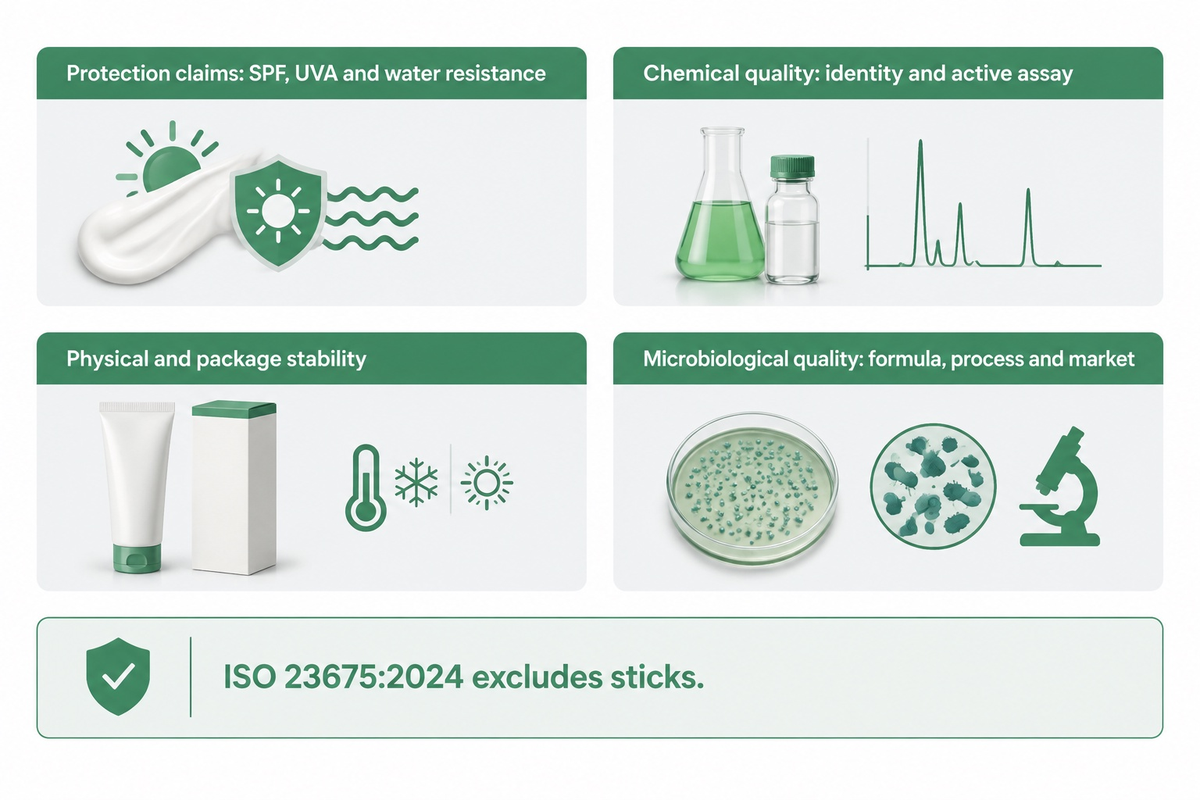
The tests performed on the finished stick product incorporate several assessment activities. Finished-stick testing has several separate jobs: measure protection, check active content, assess stability and control microbiological risk. The degree and kind of testing depend upon the product type and the target market.
Can a lotion’s SPF result be used for a stick?
No automatic transfer should be assumed. Redeveloping the vehicle and its application behavior changes the product being evaluated. The testing plan needs the proposed final formulation and the applicable claim route. FDA’s sunscreen effectiveness guidance separates SPF and broad-spectrum tests and describes water-resistance tests for labeled periods of 40 and 80 minutes.
Method choice also has a dosage-form boundary. ISO 23675:2024 covers static in-vitro SPF determination for its specified emulsion or alcoholic one-phase products; sticks fall outside that method’s application, and water resistance is a separate question. A laboratory proposal should identify a suitable stick method accepted for the intended market.
Build the laboratory work into distinct decisions:
- Protection claims: the intended SPF, UVA or broad-spectrum wording and any water-resistance claim.
- Chemical quality: identity, active assay and suitable stability-indicating measurements.
- Physical and package stability: oil release, crystals, deformation, mechanism and closure performance over the chosen program.
- Microbiological quality: a justified testing and contamination-control approach for the formula, process and legal route.
For Australian therapeutic sunscreens, TGA’s manufacturing guidance states bulk homogeneity and representative sampling are quality questions. It also mentions:
“Microbiological testing on the finished packed product should normally be conducted prior to release.”
Water-free formulations can alter the microbial risk. The assessment also considers the type of materials used, level of contamination, and how the product will be used. ISO 29621:2017 provides a low-risk assessment framework for cosmetics. Assess and apply the obligations of the actual sunscreen market separately; a cosmetic risk assessment is not a substitute for United States or Australian drug-product requirements.
Ensure a sample’s formula version, component version, and batch identifier are on all reports. Our “guide to laboratory testing services” explains how development teams can prepare for the work before making decisions about artwork and release.
Transfer the Bench Sample into a Repeatable Pilot
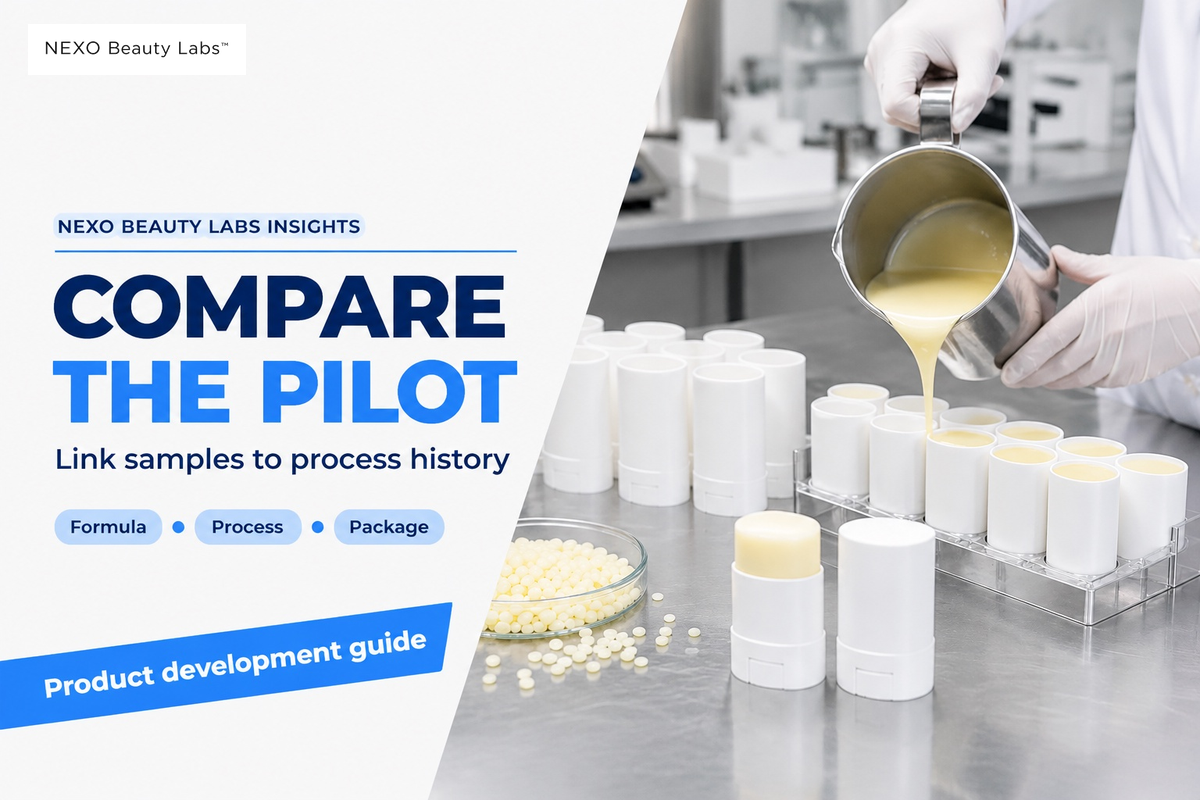
A pilot must reproduce the intended material condition through holding, transferring, filling and cooling. Increasing ingredient quantities does not preserve mixing or heat flow automatically. Compare the conditioned outcome of a bulk sample to the outcome of a filled stick throughout a production run, including restarts, and correlate it with the process record.
TGA’s sunscreen guidance permits chemical testing on bulk or packed product when studies demonstrate homogeneity during bulk storage and filling. Testing may need additional considerations for a suspension. For a stick containing particulate filters, a clear-looking top sample cannot describe every filling position.
A practical pilot comparison can identify the beginning, middle and end of a fill, as well as significant interruptions. The quality team determines sampling levels and acceptance criteria. Compare assay, if appropriate, deposited mass, physical structure and package function; indicate which test is associated with which sample position.
Example: Early fills apply smoothly, while sticks filled after a long hold show grit. Compare the retained bulk before and after the hold. Take into account the actual temperature history and the finished sections before you change the cooling tunnel. The first thing to look at is the change of the material’s history and the conditions of the subsequent filling and cooling.
Traceability must be transferred to routine, ongoing production. Link component and ingredient lots, formula revisions and the process record to the finished product batch identification. Retain the approved reference sample and the observations that distinguish an acceptable stick from a merely attractive one.
Understand Development Cost and Timeline Dependencies
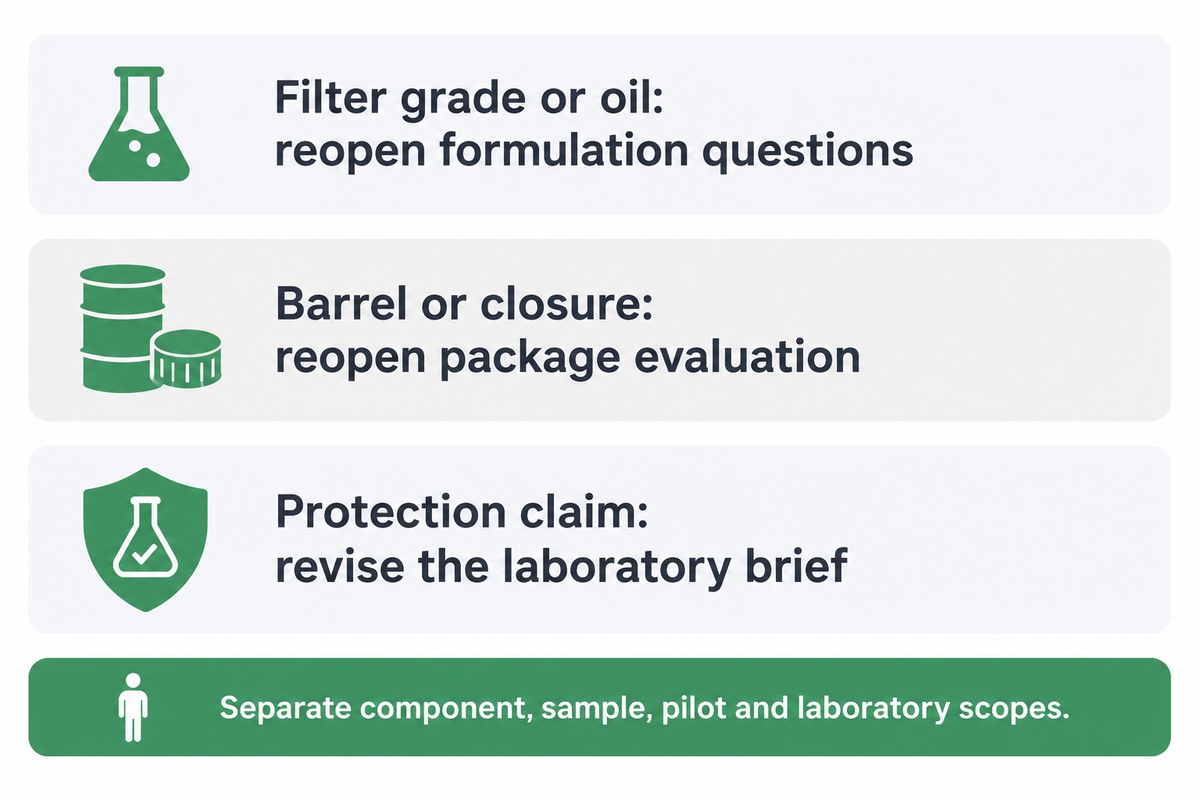
Developing a stick formula comes at a cost and can be extended by adding different components, conducting pilot runs and choosing the level of testing. Depending on the scope of the testing program, an unfinished package qualification or claim testing may hold up the release of a stick even if the filling run is short. Separate proposals for component purchasing, development samples, pilot runs and laboratory services should be requested.
Deciding to use a different filter grade or oil system reopens formulation questions. Deciding to evaluate a different barrel or closure changes the scope of the package evaluation. A higher protection claim or water-resistance claim changes the laboratory brief. Decisions shouldn’t be treated as closed, just because a delivery date has been set.
Separate the scope of component purchasing, development samples, pilot runs, and laboratory services in the proposals requested. Each revision to the proposal should indicate the work that will be repeated. This allows the scope of the two proposals to be aligned without establishing a single ‘market’ price or guaranteeing a fixed development duration.
Resolve the Sample Decisions Before Selecting a Manufacturing Route
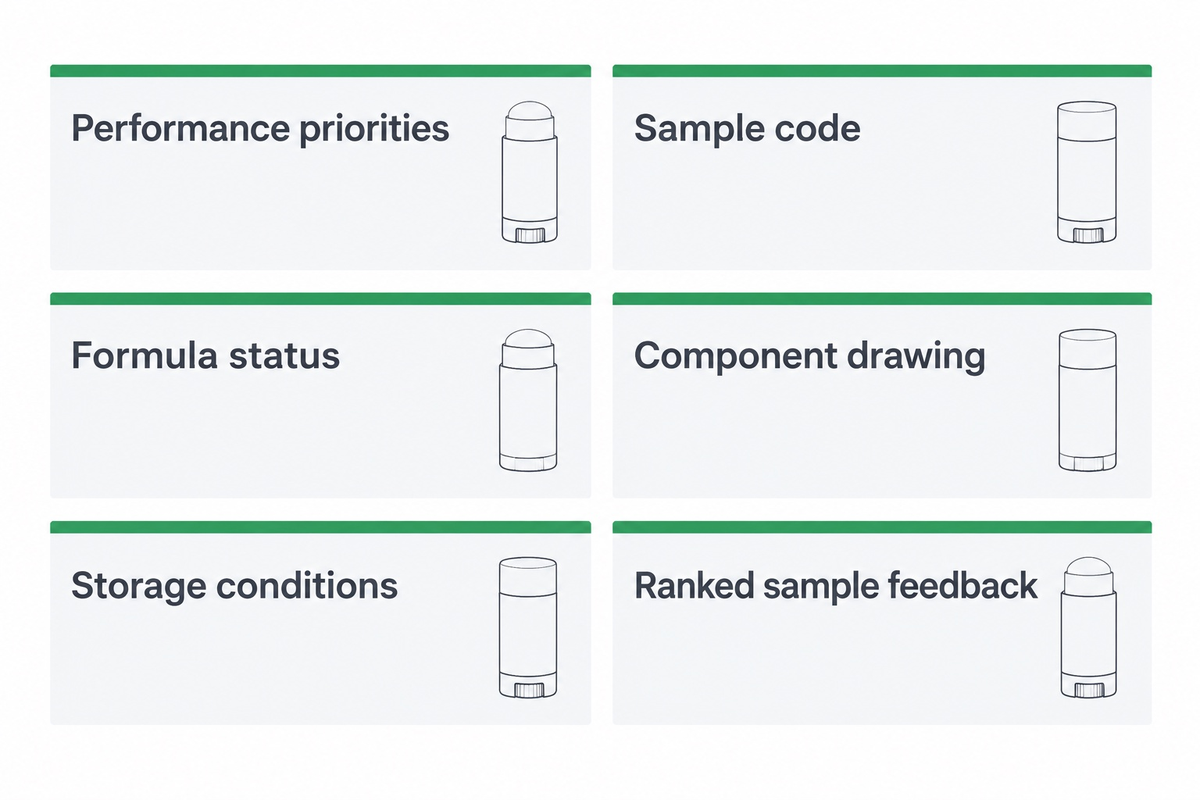
An effective manufacturing brief states what a stick must do, what decisions are still open, and the intended market and claims. Priority should be set for filter system, payoff, visible residue, body integrity and dispenser.
Update the sample code, status of formula, component drawing, intended storage conditions, and feedback ranked in order of importance. Include any testing you’re permitted to share. A specific request like “keep this finish, reduce first-pass drag and investigate root separation” gives the development team a clearer direction for the next trial compared to “improve the formula”.
NEXO Beauty Labs supports skincare, hair care and body care development and manufacturing, with a manufacturing foundation dating to 1999. Explore our sunscreen stick development and manufacturing solution for the commercial project route, or share your stick brief with our team.
Frequently Asked Questions
How does sunscreen stick manufacturing work?
A hot-poured stick is made by preparing the filter-containing bulk, incorporating the structuring system, filling the chosen component and controlling solidification. Development then checks the conditioned stick, package operation and product transfer. Protection claims, in addition to product release, require finished product testing and evaluation based on market requirements. Approved formulations and components should be retained when the process is transferred to a pilot.
Why can a sunscreen stick become grainy after cooling?
The grittiness of the bulk may be due to crystals or agglomerates of the structuring agent or filter that has left solution. Compare the grittiness in bulk and conditioned sticks and applied film. If there are other effects contributing to the grittiness, observe and sample the conditioned sticks and report to development. Keep the sample condition and observation time with the analytical result.
Can sunscreen stick SPF be calculated from zinc oxide content?
No. The percentage of zinc oxide is a measure of composition, while SPF is determined on the finished sunscreen by an applicable test. Particle grade, distribution, vehicle, and the deposited film are all in development. Protection testing and the assay remain separate parts of the program. The laboratory method must suit the stick format and the intended market.
Are all sunscreen sticks anhydrous?
No. The solid state of a stick doesn’t define its water content or formulation.
No. Many hot-poured products are oil-and-wax systems, but development should use the actual formula and process description when defining manufacturing and microbiological controls.
Does ISO 23675:2024 apply to sunscreen sticks?
No. This static in-vitro SPF method is intended for specified emulsion or alcoholic one-phase formulations and excludes sticks.
The test route for a stick should be adapted to its product form and the intended market. SPF, UVA or broad-spectrum, and water resistance claims are independent claim questions; combining them isn’t achieved by using recent methods of testing.
Does a water-free stick need a preservative?
Not always: for example, a water-free stick would require product-specific microbiological assessment to determine preservative needs; water content alone wouldn’t define preservative needs.
Materials, manufacturing controls, contamination, packaging and use all play a role. Follow the requirements for the product’s intended market.
What should be settled before ordering custom stick packaging?
Assess the product formula alongside the components, filling, closure, and mechanism of the product.
Consider cooling behavior, root attachment, conditioned function, and stability program. Retain the tested component identity so a later resin, geometry or mechanism substitution is assessed as a change rather than assumed to be equivalent.
References & Sources
- FDA: Labeling and Effectiveness Testing for Sunscreen Drug Products.
- ISO 23675:2024: In-vitro SPF determination; ISO 29621:2017: Microbiologically low-risk cosmetic products.
- 21 CFR 211.94: Drug product containers and closures; 21 CFR 211.166: Stability testing.
- Therapeutic Goods Administration: Manufacturing sunscreen and complying with good manufacturing practice.
- Novick et al., 2015: Factors that influence sunscreen application thickness; da Silva Souza et al., 2018: UV-filter solubilizers and recrystallization.
- Nicholas and Brooks, 2013: Hyperbranched polyalphaolefins in anhydrous sticks; Yamashita et al., 2021: Low-wax lipstick molding; Seo et al., 1999: Sweating in lipstick.
- Briasco et al., 2017: Stability of sunscreens in plastic packaging.
Why beauty brands work with NEXO
About NEXO Beauty Labs Manufacturing Support
NEXO Beauty Labs supports skincare, body care, sun care, hair care, and private label brands with formulation, sampling, filling, quality control, and export-ready launch support.
Project Review Before RFQ
Before quotation, we help clarify product category, active direction, formula stage, package choice, compliance market, MOQ, sampling schedule, and required documents.
Request a Cosmetic QuoteCompany Profile // Data Sheet
CompanyNEXO Beauty Labs
Business TypeCosmetic OEM / ODM manufacturing partner
Main ProductsPrivate label skincare, facial serums, moisturizers, cleansers, sunscreen, body care, and hair care products
Manufacturing CapabilityFormula development, sample adjustment, package sourcing, filling, QA/QC, documentation, and export support
RFQ Data NeededProduct type, formula goal, package format, target market, MOQ, claims, timeline, and benchmark samples
Websitenexobeautylabs.com