Get in touch with NEXO Beauty Labs Company


For cosmetic care, consider black cumin oil benefits in terms of skin feel and the finish of hair products. Choose it for the surface you want to care for.
Quick answer: Black cumin seed oil can be used in skin and hair cosmetics. Match the finished product to your face, hair lengths or scalp, test new skin-care products, and stop if a reaction develops. Natural oil can still cause contact dermatitis.
Black seed oil comes from Nigella sativa, also known as black cumin or black caraway. The black seed plant has a long history of use. Yet broad health benefits of black seed headlines can blur which effects actually concern a topical cosmetic. Here we focus on choosing and using skin and hair products, with the details that change a purchasing decision.
What Black Cumin Oil Can Do for Skin and Hair
Black cumin seed oil is an oily ingredient and shouldn’t be considered a complete skin care or hair care routine. The experience of using a finished product, such as a cream, hair oil or scalp lotion, varies with its other ingredients and directions for use. Therefore the benefits of black cumin oil are product specific and so is the intended use.
The black seeds of the Nigella plant produce a fixed oil and an essential oil. Nigella sativa fixed oil is a fatty material and is what’s generally referred to by a bottle of black seed oil. Seed essential oil has a different composition. Essential oil and black seed oil aren’t equivalent preparations. A concentrated black seed extract is another preparation. The 2017 review of external applications discusses thymoquinone in black seed oil and the volatile fraction.
A 2025 laboratory analysis found that black seed oil contains linoleic and oleic acids in the tested sample and examined antioxidant activity. Like other seed oils, the oil is rich in fatty material. Research on black seed oil includes laboratory work on the antioxidant effects of thymoquinone. The effect of thymoquinone in an experimental system is a different question from how a retail cream feels or performs. How a product feels on your skin, the full ingredient list, and how your skin responds are generally more significant when determining a purchase.
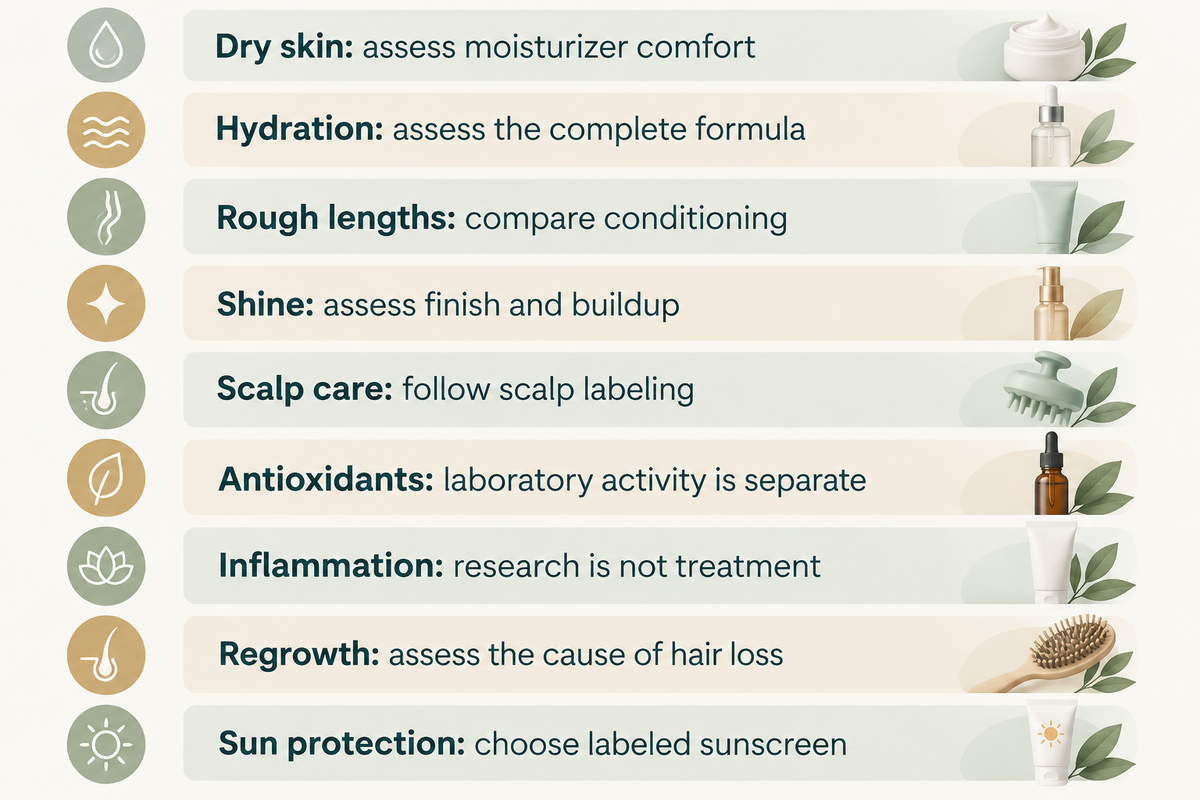
| Goal | Useful product direction | What to judge |
|---|---|---|
| Softer-feeling dry skin | A moisturizer that suits your face or body | Comfort and finish of the complete formula |
| More hydrated-feeling skin | A formulated cream or lotion | The whole moisturizer, including its water-binding ingredients |
| Less rough-feeling hair lengths | A conditioner or hair oil labeled for that use | Slip, combing and residue on the hair shaft |
| Shinier-looking ends | A suitable finishing product | Appearance without heavy buildup |
| A scalp-care routine | A product specifically labeled for the scalp | Directions, tolerance and the rest of the formula |
| Antioxidant activity | Formula development supported by appropriate testing | Laboratory activity separately from visible skin results |
| Anti-inflammatory effects | Keep ingredient research separate from treatment decisions | Product-specific cosmetic claims rather than disease promises |
| Hair regrowth | Assessment of the cause of hair loss | Follicle outcomes separately from softer hair |
| Sun protection | A labeled sunscreen | The sunscreen label, rather than a seed-oil claim |
This barrier separates research on the effects of Nigella sativa oil from the work of a moisturizer, conditioner or sunscreen. Oil of Nigella is marketed toward many benefits, but the proper comparison is between products marketed for similar functions. It can be a costly error to pay for a product with a strong ingredient story when the product isn’t suited for the intended use.
Black Cumin Oil Benefits for Skin
Consider black seed oil within the context of a moisturizing system and evaluate the finished product. The effects of black seed oil in a cream also reflect the other ingredients nearby. Dryness, a shiny finish and sensitivity are separate issues, so a thicker, more heavily textured product isn’t always better.
Is black seed oil good for my face?
It can be used in a facial product you’re already tolerating when you want a thicker product. Choose a product made for facial use and introduce it slowly to your routine. If your face already reacts to botanical products or you have an active rash, consult a dermatologist before using a new product on the area.
Let’s consider a person who’s already prone to dry cheeks but has shiny skin by lunch. Choosing a moisturizer that feels comfortable on your cheeks and using it according to the instructions is a better starting point than choosing the serum with the highest purity claim. This is more of a product selection example than a guarantee of a specific formula.
Some benefits of black seed oil have been studied in particular formulations. A 2022 trade report described a randomized, blinded, placebo-controlled split-face study in 22 adults over 28 days. A cream containing TriNutra’s standardized black seed oil has been shown in this report to have beneficial effects on selected skin measurements. These findings suggest that black seed ingredients deserve formulation-specific investigation, rather than a shared performance claim for every retail oil of black cumin.
Moisturizer texture and tolerance deserve more weight than an opaque “antioxidant effects” claim. A product containing black seed oil may enrich a moisturizing routine; the complete formulation is still pertinent. Studies on black seed constituents cover anti-inflammatory and antioxidant effects, and customers want an effective texture. NEXO’s ceramide cream formulation page offers another route of product development to discuss.
What to Expect on Hair and Scalp
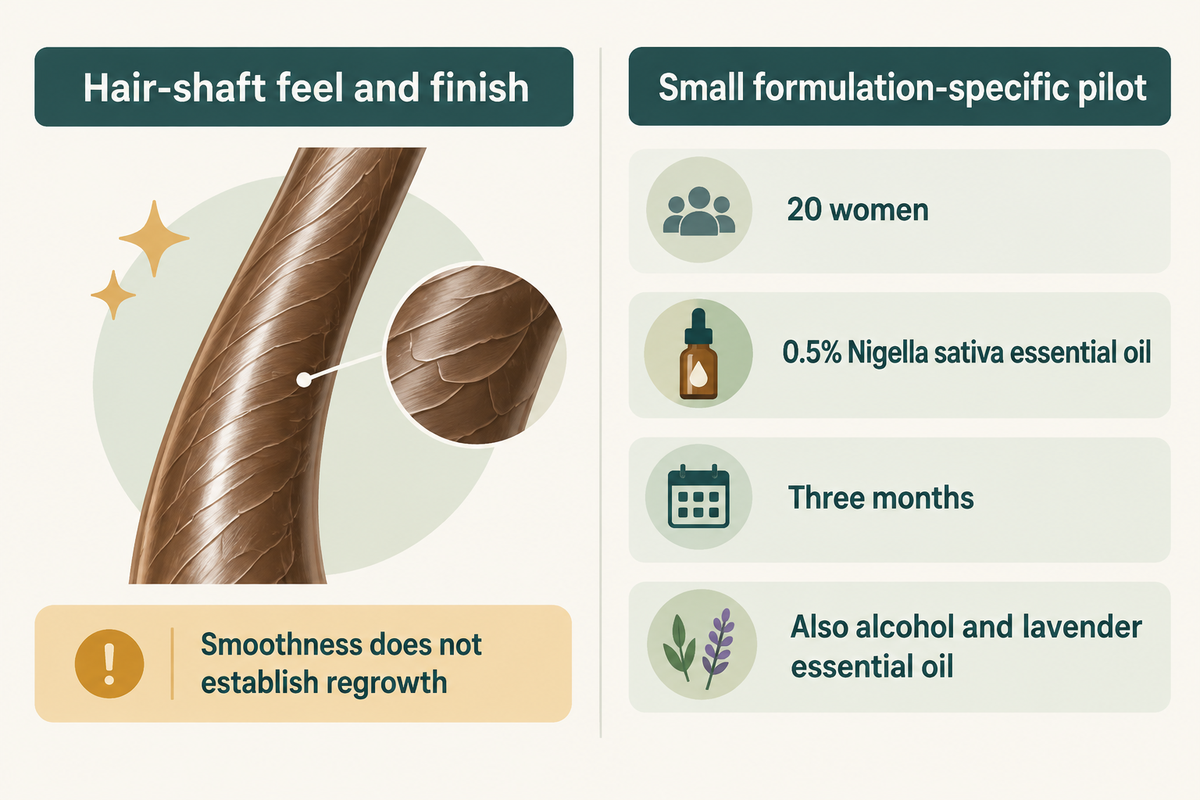
Given easier management and the finish you prefer, select an oil for hair. Scalp products should be selected independently. A smooth, shiny strand can look healthier without any change in follicle growth. A commonplace black cumin seed oil has no established universal result on regrowth; a tingling scalp should be addressed and not treated with a heavier dose.
The often-cited 2013 hair pilot study involved 20 women with a particular hair-shedding condition. The active group used a lotion containing 0.5% Nigella sativa essential oil for three months. Other constituents of the lotion included alcohol and lavender essential oil. When assessing effectiveness of black seed preparations, it is important to consider differences in product composition and study subjects.
Tangles and rough lengths call for conditioning. The American Academy of Dermatology’s leave-in conditioner guidance suggests applying product to the mid-lengths to the ends and using the smallest amount required to get the job done. Black seed oil is also used in some hair care products, but the ingredient doesn’t replace the rest of the conditioning formula.
How long does it take for black seed oil to work?
How hair feels during application can change. Ordinary black seed oil doesn’t set a timeline for regrowth. Easier combing and a slight sheen on the hair aren’t the same as regrowth. When using a skin care product, stop using the product if there’s redness, itching, irritation or discomfort.
Imagine having fine, greasy hair at the roots. Now imagine the ends of your hair are still catching on a comb. Which one do you think is a better solution? Using a light conditioner on the lengths, or using a heavy oil on the scalp? For a company developing this type of product, the conditioner development options keep the focus on use, instructions, and effects.
How to Use Black Seed Oil on Your Face and Hair
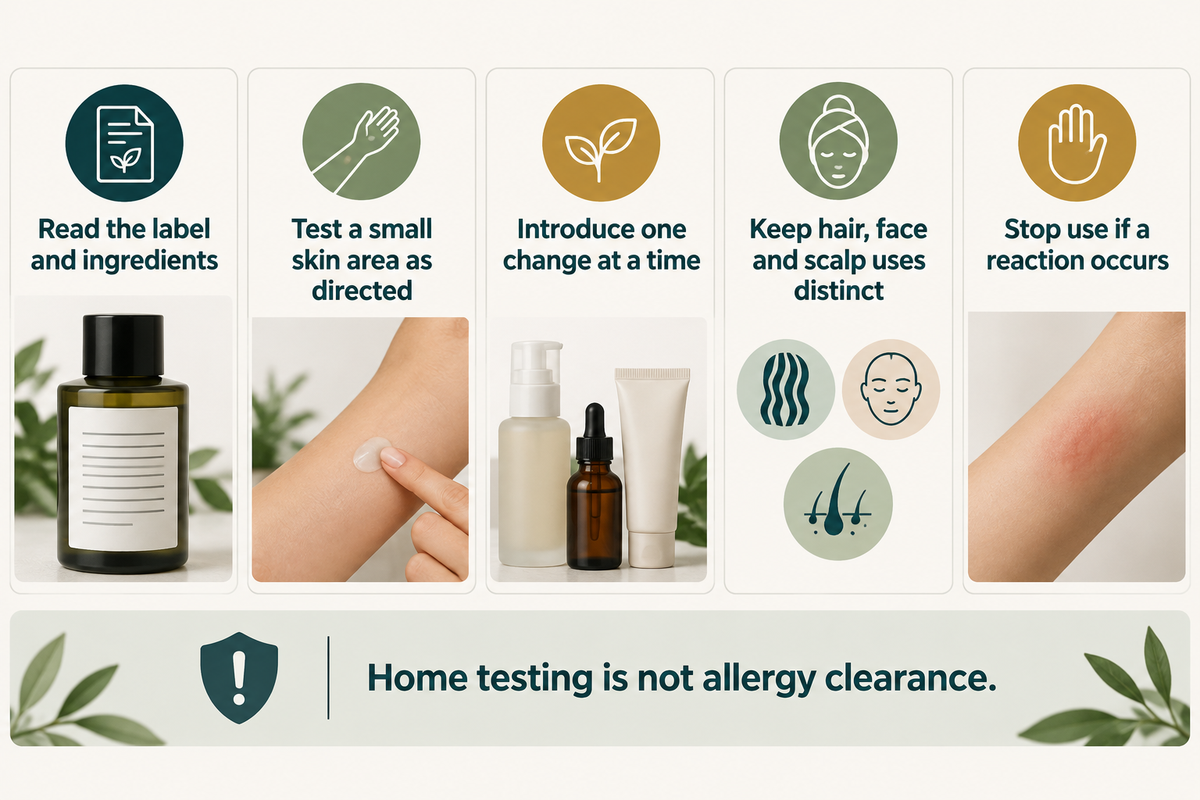
In guidance updated in 2021, the American Academy of Dermatology recommends testing a new skin-care product on a small area twice daily for seven to ten days. Use the contact time and amount appropriate to the product. After introducing the product in this way, follow the product’s directions for use on the face or hair and don’t use a borrowed dilution or “overnight” routine from another product.
“Apply the product to a test spot twice daily for seven to 10 days.”
- Before using any product on yourself, always read the label. Confirm the area the product is intended for, whether it will remain on the skin or be washed off, and what ingredients may cause an adverse reaction. “Natural” doesn’t eliminate the need for ingredient checks.
- Test new skin care products on small areas. The American Academy of Dermatology recommends the inner arm or elbow bend. Use the product as directed during the test and don’t use a wash-off product for an over-night treatment.
- Don’t make too many changes to your skin care routine at the same time. Make one change at a time and keep all other aspects of the routine the same. This way you’ll be more likely to notice any changes caused by the new product you introduced.
- A hair oil is not automatically a facial oil. The same is true for scalp and face products.
- If a product causes an adverse reaction, don’t use it. This includes continuing to use a product in the hope that your skin will “adjust” to it.
There’s no standard amount of topical black seed oil per day for cosmetic use. Use as directed and keep the area and leave-on/rinsed-off instruction in mind.
A home product test is an introductory measure, and not a definitive diagnosis or permanent allergy clearance. Diagnostic patch testing is done and interpreted by a health professional. Previous comfortable use of a product doesn’t ensure every subsequent use of the product is safe. Black seed oil has been used in many cosmetic formats; experience with one product format isn’t an indication of safety for the other product formats. A health professional may assess health conditions behind a persistent rash, instead of applying an additional product to the already rash-irritated area.
It’s important to keep the application of black seed oil in the product’s labeled purpose. Water changes a formula, and rinse-off and leave-in conditioners have a different chemistry. The academy particularly warns against substituting a diluted rinse-off conditioner for a leave-in conditioner. Topical application of black seed preparations also does not call for copying a clinical lotion at home.
Pure Oil or a Formulated Product?
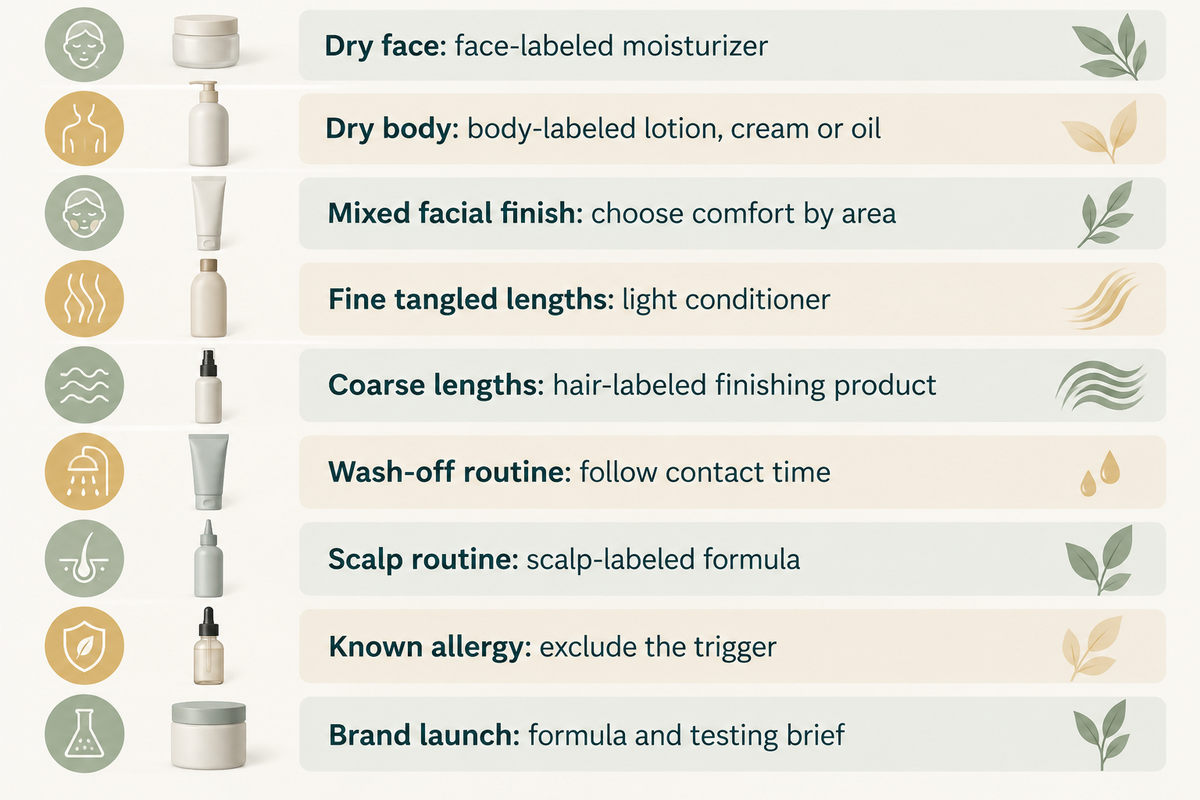
Select according to use: a moisturizer for face and body, a conditioner for detangling and a scalp product for a scalp routine. Pure oil allows for a simpler ingredient list, whereas a formula may result in a designed texture and instructions. A format isn’t automatically safer or more effective for every person.
The Skin-Hair Format Selector matches jobs and use patterns rather than ranking the efficacy of black seed preparations. A user’s sensitivity may be more relevant: A botanical ingredient or fragrance may outweigh the importance of whether the label says “pure.” The use of black seed oil should fit the surface to be treated and the surface to be finished.
| Your situation | Start by comparing | Tradeoff to resolve |
|---|---|---|
| Dry-feeling facial skin | Face-labeled moisturizers | Richness versus a comfortable daytime finish |
| Dry-feeling body skin | Body lotions, creams or body-labeled oils | Spreadability and residue on clothing |
| A shiny forehead with dry cheeks | A texture that works for the areas you treat | More oil is not always a more comfortable routine |
| Fine hair with tangled ends | Light conditioners for the lengths | Combing ease without heavy roots |
| Coarse lengths needing a finishing product | Hair-labeled oils or leave-ins | Enough slip without an unwanted coating |
| A wash-off hair routine | Rinse-off conditioners or masks | Follow the stated contact time rather than leaving them on |
| A scalp-care product | Scalp-labeled formulas | Scalp tolerance separately from hair-shaft feel |
| A known ingredient allergy | Full ingredient lists that exclude your trigger | Neither pure nor formulated overrides that allergy |
| A private-label product launch | A defined formula and testing brief | Ingredient identity, packaging and supported finished-product claims |
The aroma of the oil may determine whether a product is used. Public hair care discussions include people discontinuing a black seed-containing pomade because they didn’t like the smell. Other users said the product they used had a lighter feel. Likewise, a different product may have a different finish and texture. Black seed oil also can be found in masks, creams and finishing oils, so consider the actual product you’re using as opposed to assuming all black cumin oil benefits come with the same sensory experience.
Development in the area of scalp care requires a different brief from facial care. NEXO’s options for a scalp-care concept start that product discussion. Specify whether the product is leave-on and what cosmetic outcome it’s intended to achieve.
Side Effects and When to Stop
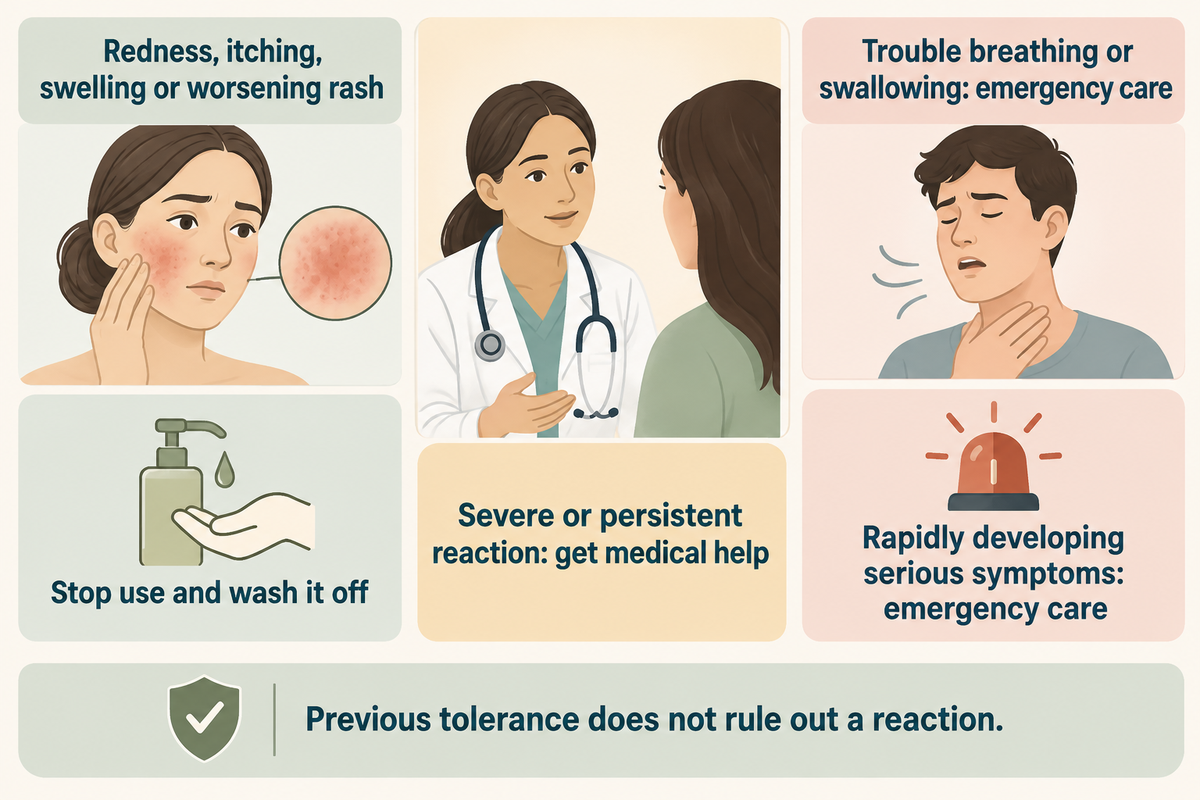
Stop using a black seed oil product if it causes redness, itching, swelling or a worsening rash, and wash it off. Get medical help for severe or persistent reactions. Potential side effects include contact dermatitis, and previous trouble-free use and a natural label shouldn’t be the reason for ignoring new symptoms. Avoid using black seed oil on a reacting area.
A 2018 case series in JAMA Dermatology discussed three cases of severe reactions and positive patch tests to their oils. Two had previously used the oil without a skin reaction. Clinical research shows that black seed oil can be associated with severe reactions. The selected cases do not give the frequency among all users.
Finished products can introduce additional triggers. The FDA’s cosmetic allergen guidance lists fragrances and preservatives among common allergen categories. Do not assume black seed oil is safe for you merely because it is natural. Avoid a diagnosed allergy trigger in both pure-oil blends and more complex formulas. The FDA also states that “hypoallergenic” has no federal standard or definition in the United States.
Someone with known fragrance sensitivity should consider the fragrance ingredients of a product, beyond simply liking or disliking its scent. The FDA discusses respiratory reactions to fragrances; that is not a reason to assign the same risk to black seed oil’s natural aroma. Trouble breathing or swallowing, or rapidly developing serious symptoms, require emergency medical attention.
Choosing a Black Cumin Oil Formula

Buyers of retail products must consider intended use, a complete ingredient list, instructions and storage information. A private label launch focuses on the finished product’s cosmetic purpose and testing plan. Ingredient sourcing and processing are valuable specifications, but they won’t substitute for performance and safety assessments of the product you sell.
A brand owner considering benefits of black cumin oil for a product range should educate the formulator on the audience and the experience the owner is looking to provide, before discussing the oil percentage. A light textured leave in conditioner and a thick body cream require different types of packaging and usage, and create different use and experience expectations. Quality staff need supporting information that corresponds to the actual formula, intended use and claims.
- Identity: Confirm whether the supplied ingredient is fixed seed oil, essential oil or a standardized extract, with a matching ingredient declaration.
- Use: Define face, body, hair lengths or scalp, and whether leave-on or rinse-off.
- Sensory Target: Define the acceptable level of aroma, spread and absorption, and any residue in the product.
- Formula and packaging: Review the appropriate work for stability, compatibility and safety for that combination.
- Claims: Specific wording should match the particular product result being supported, not another supplier’s study percentages. A specification should describe the finished product and how much black seed oil it contains, independent of the thymoquinone content of that oil.
In the U.S., under MoCRA, the responsible person must ensure adequate safety substantiation and maintain supporting records for cosmetic products. The law and FDA regulations do not require a particular test or test method for each cosmetic product or ingredient. Registration and safety records serve different functions from demonstrating an advertised cosmetic benefit.
Bring that brief to NEXO Beauty Labs to discuss your product development requirements. For the development of a hair care product, the hair care testing route selector helps direct the testing for the product concept. First, determine the surface, format and target cosmetic end, then decide on the ingredient and formula to accomplish that.
Frequently Asked Questions
Is black seed oil black cumin oil?
View Answer
Yes, these names commonly refer to oil from Nigella sativa seeds in cosmetic products. Check the botanical identity on the ingredient information because common names can be ambiguous. Fixed seed oil, essential oil and a concentrated extract are different preparations, even when their front labels use similar wording. Choose the preparation intended for the product and body area you plan to use.
How should I store black seed oil?
View Answer
Keep it closed and follow the supplier’s storage directions, away from unnecessary heat and light. Avoid introducing water or dirty fingers into the container. The FDA explains that cosmetic shelf life changes with ingredients, packaging, storage and use. A changed smell, color or texture is a reason to check the product rather than assuming every oil has the same shelf life.
Why choose cold-pressed black seed oil?
View Answer
Choose cold-pressed oil when that extraction method fits your ingredient preference or formulation brief. The processing description doesn’t identify the best facial texture, guarantee tolerance or set a universal performance level. For black seed oil benefits in a finished cosmetic, ingredient identity, handling, the rest of the formula and appropriate product testing remain more useful than the extraction term alone.
What does black cumin seed oil smell like?
View Answer
It has a distinctive botanical aroma that varies with the oil and finished formula. Try the actual product if scent strongly influences your routine.
Is black seed oil safe?
View Answer
It isn’t suitable for everyone. Topical black seed oil can cause contact dermatitis, and a formula may contain other ingredients you react to. Follow labeled use, check known allergens and introduce a new skin-care product cautiously. Stop after redness, itching or swelling rather than treating discomfort as a sign it’s working. For an active skin condition, persistent irritation or unexplained hair loss, a dermatologist can help identify the cause and an appropriate care plan.
References & Sources
- A Review on the Cosmeceutical and External Applications of Nigella sativa narrative review, 2017.
- Analytical determination of the lipid fraction of Nigella sativa fatty oil laboratory analysis, 2025.
- Evaluation of a Therapeutic Alternative for Telogen Effluvium: A Pilot Study small formulation-specific study, 2013.
- Severe acute contact dermatitis associated with Nigella sativa oil clinical case series, 2018.
- How to test skin care products American Academy of Dermatology.
- Allergens in Cosmetics U.S. Food and Drug Administration.
- Shelf Life and Expiration Dating of Cosmetics U.S. Food and Drug Administration.
- Leave-in conditioner tips American Academy of Dermatology; general conditioning guidance.
- Report on a standardized black seed ingredient in a cream Nutritional Outlook, 2022; supplier-linked study reporting.
- Cosmetics Safety Q&A: Hypoallergenic U.S. Food and Drug Administration.
- Modernization of Cosmetics Regulation Act U.S. Food and Drug Administration.