Get in touch with NEXO Beauty Labs Company

Private Label Shampoo Manufacturing turns a commercial cleansing brief into a shear-stable aqueous surfactant chassis, a torque-matched bottle and pump assembly, and a lot-traceable production batch at 25 °C. Leave-on skin care and private label skincare rely on continuous emulsions. On the other hand, professional shampoo, a rinse-off product, is an electrolyte-sensitive micellar fluid that must foam rapidly, deposit conditioning polymers during dilution, and maintain viscosity during winter transit. When planning a signature shampoo line or expanding a private label hair care brand, a beaker prototype may lose viscosity in an industrial kettle if process parameters weren’t locked during product development.
Selecting the right hair care manufacturing partner requires evaluating real manufacturing capabilities, involving water treatment, surfactant blending and packaging torque control, rather than simply browsing a catalog. Disciplined cosmetic manufacturing takes your shampoo vision from bench prototype to commercial hair care production, whether the line is premium hair care for salon use or everyday haircare essentials that provide clean hair for specific hair needs and every hair type.
Reliable shampoo production locks four technical controls before bulk compounding begins: surfactant micelle rheology at 25 °C under recorded viscometer settings, cationic polymer and fragrance solubilization, bottle and 0.5 to 4 cc pump compatibility, and US/EU regulatory dossiers. Treating bulk liquid formulation separately from primary packaging or microbiological preservation is a major trigger for commercial batch rejection across manufacturing projects.
Guide at a glance
- Connect purified water loop controls, surfactant hydration order, FDA cosmetic GMP controls, and vacuum deaeration into a single Master Batch Record.
- Match your surfactant base, classical salt-curve SLES/CAPB, sulfate-free isethionate/taurate, mild glucoside, or acrylate-suspended clarifying systems, using The 4-Chassis Surfactant Micelle Architecture.
- Validate antimicrobial protection under ISO 11930:2019, microbiological release limits under ISO 17516:2026, and 40 °C stability protocols using The 6-Symptom Shampoo Batch Failure Diagnostic.
- Calculate launch cash commitments per saleable 250 mL unit, and track US OTC anti-dandruff monograph rules (21 CFR Part 358 Subpart H), MoCRA biennial facility renewals, and EU 0.01% rinse-off allergen rules.
Engineering comparisons in this guide cover adult cosmetic rinse-off liquid shampoos. Medicated anti-dandruff or seborrheic dermatitis treatments are regulated as OTC drugs in the United States, while solid shampoo bars, dry aerosol sprays, and tear-free baby cleansers follow separate processing and toxicological testing pathways.
How Private Label Shampoo Manufacturing Moves From Water Loop to Batch Release
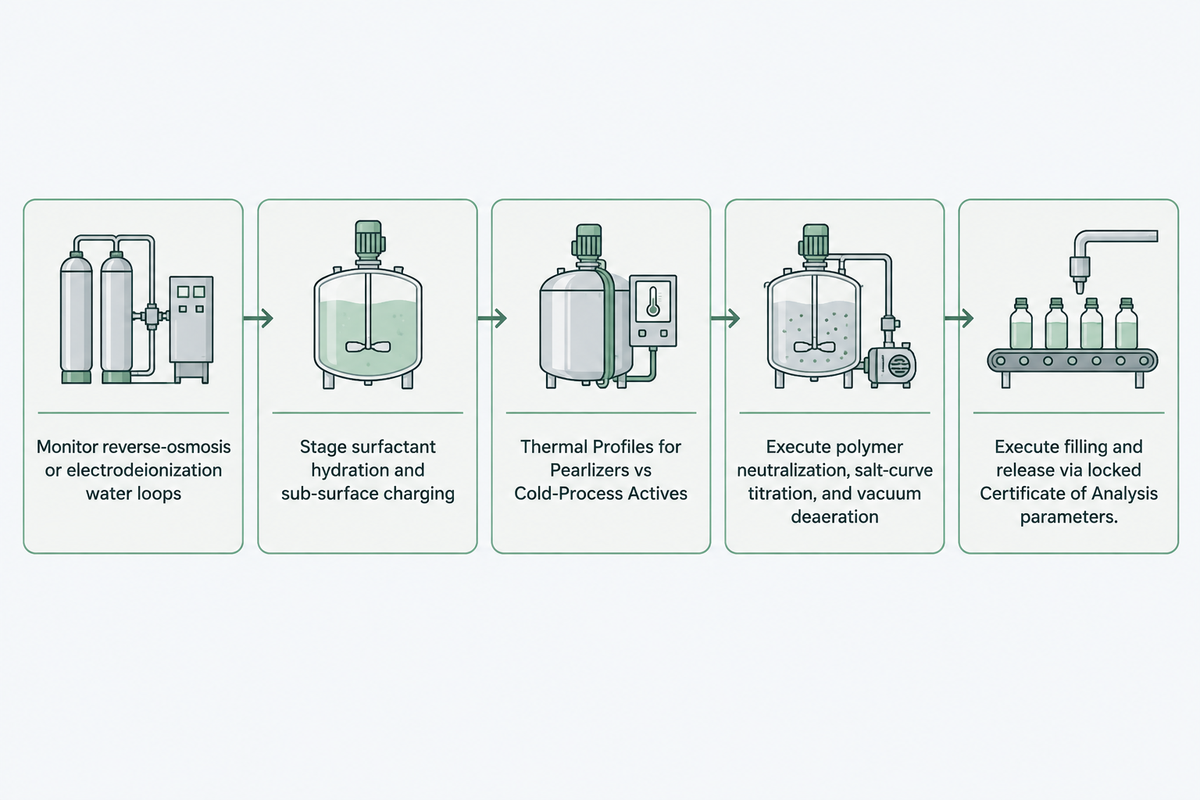
Industrial shampoo production connects purified water generation, sequential surfactant hydration, thermal pearlizer crystallization, vacuum deaeration, and automated piston bottle filling under a revision-controlled Master Batch Record. Purified water accounts for 70% to 85% of liquid shampoo products, so changes in water conductivity or calcium ions immediately affect foam volume across a scalable hair care formulation and production line. In contrast to anhydrous hair oils or emulsified skincare products thickened primarily through wax and lipid networks, aqueous haircare products require an exact electrolyte balance from the first purified kettle charge during compounding, so private label shampoo products with higher formula complexity need stricter in-process batch release checks.
FDA Good Manufacturing Practice inspection guidelines cover raw-material qualification, purified water quality, sanitary piping installed so drip or condensate cannot contaminate bulk product, and documented laboratory release. Parallel international guidance under ISO 22716:2007 establishes good manufacturing practices for the production, control, storage, and shipment of cosmetic products.
- Monitor reverse-osmosis or electrodeionization water loops: verify conductivity of purified water and its microbiological status before charging the main jacketed kettle. Dissolve chelating agents first so that trace hard-water cations do not bind anionic surfactants or destabilize preservatives.
- Stage surfactant hydration and sub-surface charging: meter primary anionic or amino-acid surfactants below the liquid surface under controlled anchor agitation. If mechanical air is entrained, it causes an apparent viscosity increase and drift in piston-filler weight.
- Thermal Profiles for Pearlizers vs Cold-Process Actives: When using glycol distearate for an opaque pearlescent finish, heat the batch above its melting window and cool it off at a controlled rate in order to obtain a uniform distribution of platelet crystals. Introduce heat-sensitive botanicals, vitamins, and fragrance oils only after the batch cools below 40 °C.
- Execute polymer neutralization, salt-curve titration, and vacuum deaeration: for alkali-swellable acrylate systems, disperse the polymer first and neutralize to pH 5.5 to swell the micro-gel network; for salt-curve systems, adjust pH into the pH 4.5 to 5.5 window before titrating electrolyte. Remove entrained air via a kettle vacuum prior to sampling.
- Execute filling and release via locked Certificate of Analysis parameters: transfer deaerated bulk to 250 mL piston or servo-pump fillers with inline checkweighers and cap-torque monitors. Verify appearance, odor, specific gravity, pH against the release window (e.g. pH 4.8-5.2), microbial counts, and Brookfield viscosity, with viscometer model, spindle, rpm, and temperature (25 °C) recorded on the batch record.
When a beauty brand changes fragrance oil loading from 0.3% to 0.8% or swaps a preservative system, the manufacturing partner must treat this as a formal revision trigger requiring pilot verification.
White Label Stock Bases vs Custom OEM and ODM Shampoo Development
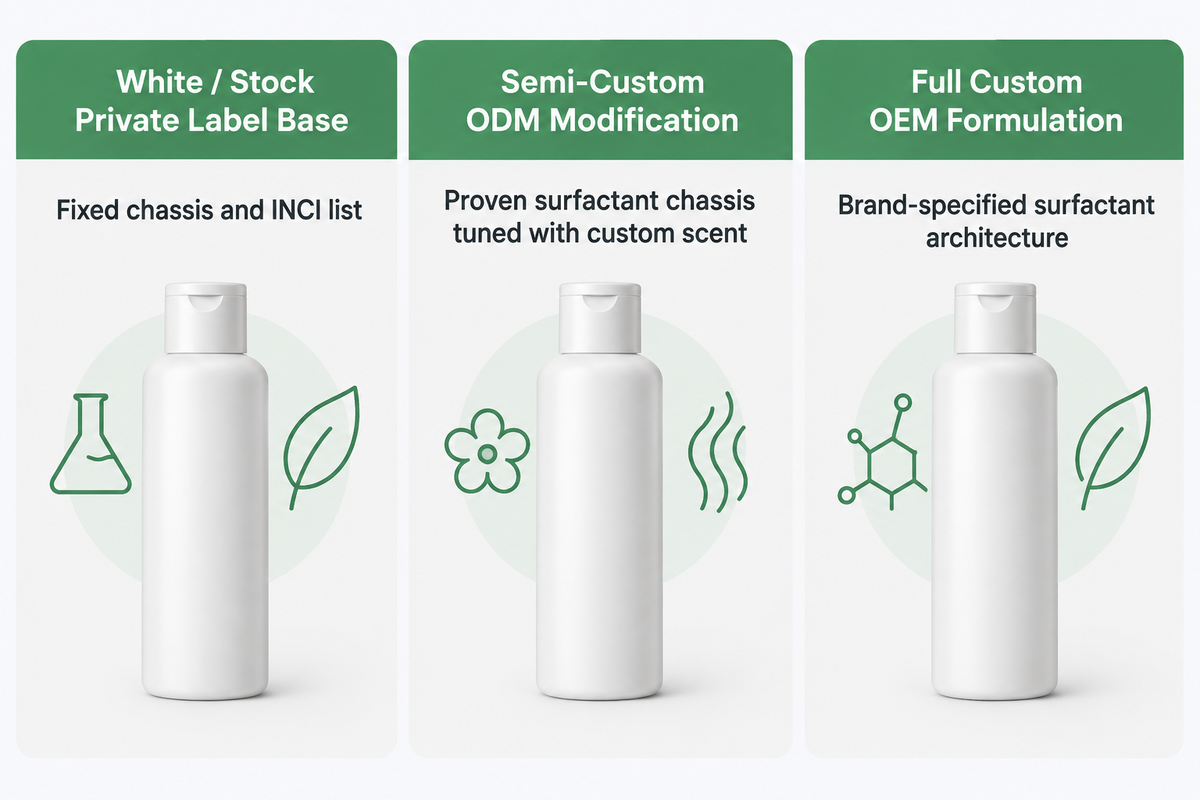
Choosing between a pre-vetted stock shampoo base, a semi-custom ODM modification, or a custom OEM formulation determines your R&D timeline, stability re-testing obligations, and intellectual property (IP) rights. While discussing private label hair care manufacturers, emerging beauty brands typically believe that adding fragrance to an existing formula exempts them from lab testing. They also sometimes believe that a nominal bench fee transfers formula ownership. A seasoned private label manufacturer offering private label and custom hair care will clarify upfront how its stock personal care products differ from ground-up custom formulation, or from a manufacturer offering custom formulation for a matching conditioner.
Elsewhere in practice, liability for regulatory compliance and formula ownership are typically separate. As the FDA Small Businesses & Homemade Cosmetics Fact Sheet makes clear, firms placing cosmetics on the market are legally responsible for ensuring their products are safe and properly labeled. In addition, modifying a stock shampoo base with essential oils, scalp actives, or a new 250 mL bottle material alters micellar viscosity and headspace equilibrium, requiring targeted 40 °C stability and challenge verification before commercial filling.
What is the difference between private label, OEM and ODM hair care manufacturing?
Private label (or white label) hair care manufacturing uses a factory’s pre-formulated, stability-tested stock shampoo base with your brand’s label and packaging for fast market entry. Original Design Manufacturing (ODM) develops or adapts a shampoo using the factory’s R&D team and base chassis, retaining core formula IP unless a buyout is contracted. Original Equipment Manufacturing (OEM) produces a shampoo to the brand’s own proprietary formula specification and contracted IP ownership rules.
| Development Dimension | White / Stock Private Label Base | Semi-Custom ODM Modification | Full Custom OEM Formulation |
|---|---|---|---|
| Formulation Scope | Fixed chassis and INCI list; stock or pre-approved fragrance options only. | Proven surfactant chassis tuned with custom scent, hero extract, color, or 25 °C viscosity target. | Brand-specified surfactant architecture, custom active loading, and proprietary sensory profile. |
| Stability & PET Trigger | Historical bulk data available; package compatibility plus targeted 40 °C stability and challenge verification required if changing bottle/pump. | Mandatory viscosity salt-curve re-check at 25 °C, accelerated 40 °C stability, and ISO 11930 verification. | Full 40 °C thermal cycling, 4 °C cold hold, package compatibility, and ISO 11930 challenge testing. |
| Formula IP & Quantitative INCI | Owned by factory; qualitative INCI band disclosure provided for regulatory filing. | Base chassis owned by factory; custom variant exclusivity or buyout requires written clause. | Owned by or assigned to the brand when explicitly contracted before production starts. |
| Best Fit Use Case | Startups and emerging brands validating channel demand or salon backbar extensions. | Growing beauty brands seeking differentiated claims and scent without ground-up R&D delay. | Established hair care brands requiring proprietary surfactant bases or patented complexes. |
Illustrative supplier profiles demonstrate how these options are offered in practice. For instance, our private label shampoo manufacturing solutions span concept development, fragrance customization, and filling across both stock base and custom development routes.
Engineer the Surfactant Chassis and Viscosity Curve Together
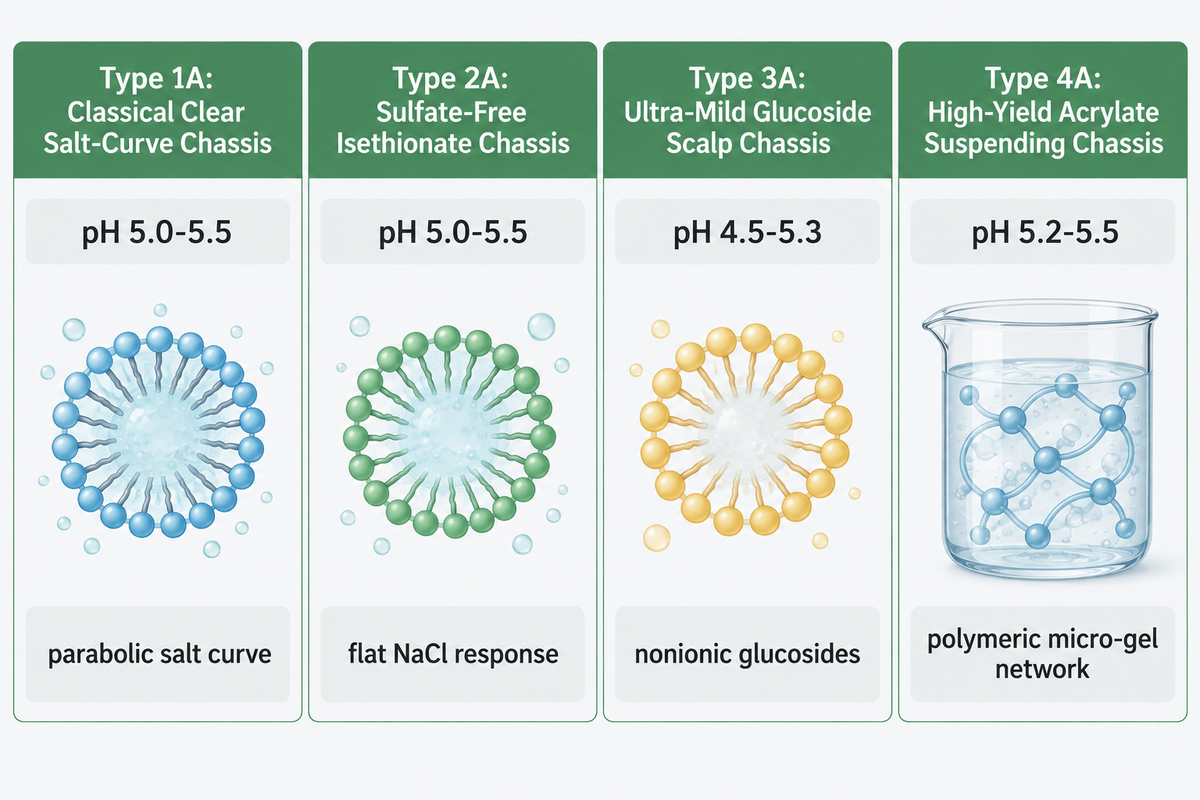
In shampoo formulation, cleansing power, flash foam density, scalp mildness, and bulk viscosity at 25 °C are governed by the geometry of surfactant micelles in water. For creams, increasing the concentration of wax would give a thicker body. In contrast, for this product type, most shampoos build body when micelles elongate into wormlike micelles and bind associative polymers.
As documented by the Centre for Industrial Rheology, adding salt to an anionic/amphoteric surfactant system initially increases viscosity as spherical micelles grow into entangled wormlike networks. Adding too much salt, however, causes micellar branching and viscosity decreases sharply. Conversely, Lubrizol’s technical analysis of sulfate-free formulating and UL Prospector’s clear sulfate-free formulation guide note that sulfate-free surfactants are difficult to thicken with salt alone because many don’t form standard wormlike micelles.
What are surfactants in shampoo, and what do they do?
Surfactants are amphiphilic molecules that are made up of a water loving head and a lipid loving tail and lower surface tension between liquids and solids. In shampoo formulations, anionic surfactants remove environmental dirt and sebum, and amphoteric co-surfactants boost creaminess and mildness of the foam, increase micellar viscosity, and reduce irritation. Cationic polymers condition and provide slip during rinsing.
To prevent stability surprises during scale-up, formulation chemists classify commercial cleansers into The 4-Chassis Surfactant Micelle Architecture below. Each chassis category requires its own thickening mechanism, such as electrolyte titration or water-absorbing polymeric thickeners, alongside its own target pH window and 4 °C cold-storage Krafft-point checks.
| Chassis Category & Type (The 4-Chassis Surfactant Micelle Architecture) | Primary & Co-Surfactant System | Primary Thickening Mechanism | Target pH & Salt-Curve Behaviour | Key Scale-Up Failure Risk |
|---|---|---|---|---|
| Type 1A: Classical Clear Salt-Curve Chassis | Sodium Laureth Sulfate (SLES) + amphoteric Cocamidopropyl Betaine (CAPB) | NaCl electrolyte titration driving sphere-to-wormlike micelle entanglement at 25 °C | pH 5.0–5.5; parabolic salt curve where CAPB residual NaCl shifts peak | Over-salting past the peak or 0.8% fragrance oils collapsing viscosity |
| Type 1B: Pearlized Salon Salt-Curve Chassis | SLES + CAPB + nonionic Cocamide MIPA + glycol distearate pearlizer | Wormlike micelle network plus crystallized stearic platelet structure | pH 5.0–5.5; sensitive to cooling gradient below 40 °C | Pearlizer recrystallization or loss of lustre during 40 °C storage |
| Type 2A: Sulfate-Free Isethionate Chassis | Sodium Lauroyl Methyl Isethionate (SLMI) or Sodium Cocoyl Isethionate (SCI) + CAPB | Associative PEG-120 methyl glucose dioleate or PEG-150 distearate | pH 5.0–5.5; flat NaCl response where excess salt causes hazing | Krafft-point cold precipitation during 4 °C winter hold (especially SCI) |
| Type 2B: Sulfate-Free Taurate & Sarcosinate Chassis | Sodium Methyl Cocoyl Taurate + Sodium Lauroyl Sarcosinate + CAPB | Hydrophobic acrylates copolymer or associative PEG ester blend | pH 4.8–5.3; moderate electrolyte viscosity increase when paired with betaine | Viscosity drop when fragrance solubilizers disrupt associative bridges |
| Type 2C: Sulfate-Free Amino-Acid Glutamate Chassis | Sodium Cocoyl Glutamate + Disodium Cocoyl Glutamate + amphoteric betaine | Polymeric rheology modifiers or associative polyurethane thickeners | pH 4.8–5.3; virtually flat salt curve requiring polymeric structuring | Water-thin runoff through 0.5 to 4 cc lotion pumps if yield stress is low |
| Type 3A: Ultra-Mild Glucoside Scalp Chassis | Decyl Glucoside + Coco-Glucoside + Sodium Cocoamphoacetate | Xanthan gum or hydroxypropyl methylcellulose (HPMC) hydrocolloid blend | pH 4.5–5.3; nonionic glucosides do not build wormlike micelles with NaCl | Stringy or pituitous pour texture if gum ratios are not shear-balanced |
| Type 3B: Botanical & Sensitive-Scalp APG Chassis | Lauryl Glucoside + Coco-Glucoside + Glyceryl Oleate lipid layer enhancer | Cross-linked polyacrylate or sclerotium/xanthan biopolymer network | pH 4.8–5.2; buffered for sodium benzoate and potassium sorbate efficacy | Upward pH drift above pH 5.3 reducing organic acid preservative activity |
| Type 4A: High-Yield Acrylate Suspending Chassis | Anionic/amphoteric surfactant blend + cross-linked acrylates copolymer | pH-neutralized polymeric micro-gel network providing low-shear yield stress | pH 5.2–5.5; excess electrolyte compresses polymer network yield value | Exfoliating beads or pearlizer platelets settling during 40 °C oven hold |
| Type 4B: Medicated OTC Antidandruff Suspending Chassis | Surfactant chassis carrying 21 CFR Part 358 Subpart H monograph actives | Structured suspending polymer network + controlled cooling crystallization | Monograph-compliant pH window and active assay stability at 25 °C and 40 °C | Active particle sedimentation or drug assay drift outside monograph limits |
Formulators who try to thicken glucoside or sarcosinate blends with table salt alone see little or no viscosity gain at 25 °C. Instead, they introduce associative PEG esters or structured polymers and map a multi-point salt curve across their active surfactant solids.
Formulate Cationic Conditioning Polymers, Scalp Actives and Fragrance Without Crash
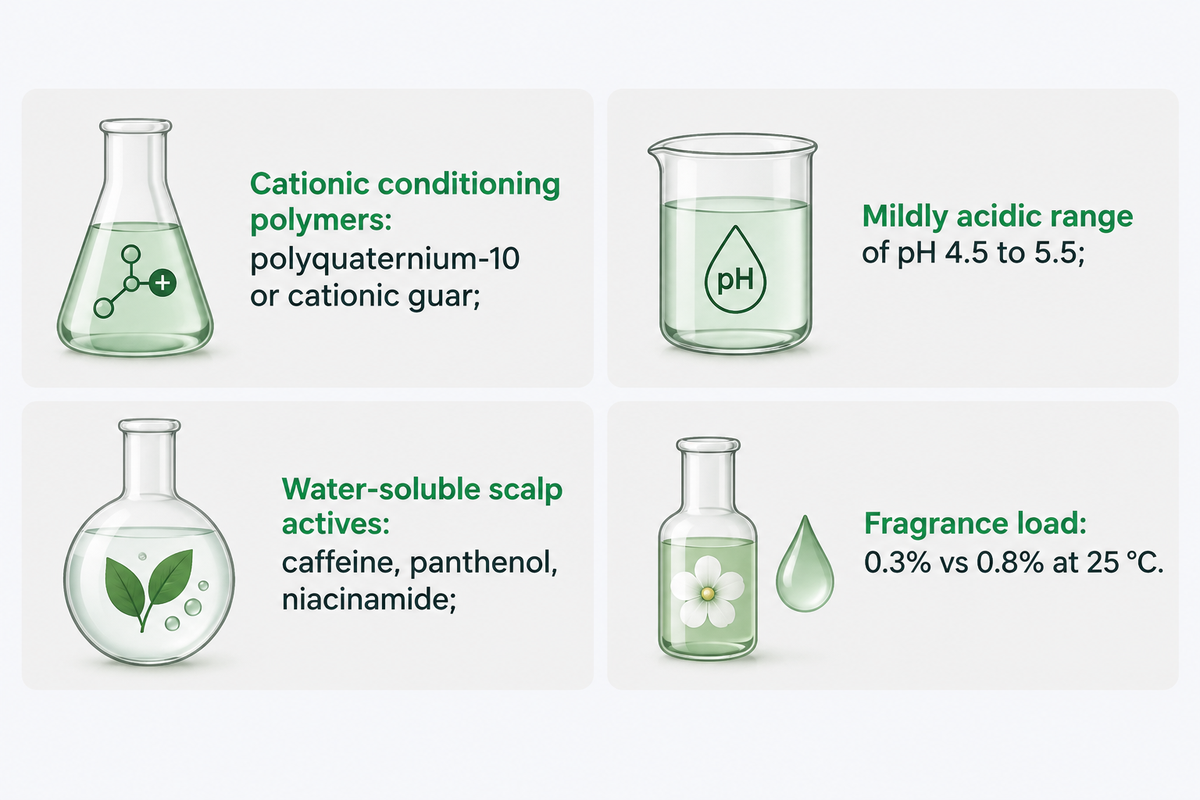
Across the modern hair care industry and broader personal care industry, cleansers are expected to wash cleanly without stripping the hair cuticle, detangle wet hair fibers, and deliver scalp care ingredients. Achieving wet combability with an anionic custom shampoo system relies on dilution-deposition coacervation. Cationic conditioning polymers, for example polyquaternium-10 or cationic guar, remain dissolved in surfactant micelles in the 250 mL bottle. When tap water dilution drops surfactant concentration below its critical micelle concentration, the coacervate precipitates onto negatively charged hair shafts.
Manipulating the pH of formula is important for fiber friction and the integrity of the cuticle. In a published, peer-reviewed dermatological analysis of 123 commercial shampoos, researchers noted that 38.21% of shampoos evaluated had a pH of 5.5 or less, and 61.78% had a pH of greater than 5.5. The same report suggests that a higher pH increases the negative net charge on the surface of the hair fiber, resulting in increased friction. Formulating color-safe and scalp-friendly shampoos in the mildly acidic range of pH 4.5 to 5.5 helps minimize cuticle swelling while supporting acid-mantle balance.
Rinse-off times help define the limits of contact time for brands that use organic ingredients or water-soluble scalp actives (e.g. caffeine, panthenol, niacinamide, botanical extracts, etc.) in their products. For instance, the caffeine in hair care products as a hair wash to deliver caffeine to the follicle via the rinse-off mechanism is documented in peer-reviewed literature on hair physiology. Other ingredient suppliers, like Seppic’s scalp-care formulation outlook, showcase barrier-respecting concepts on the microbiome and soothing ingredients. Brands seeking prolonged multi-hour follicular residence for concentrated peptides or botanical complexes often pair a rinse-off cleanser with leave-on scalp serum formulation and viscosity engineering as a complementary two-step regimen.
Fragrance oils and essential oils represent the single most common cause of unexpected viscosity loss in private label shampoo manufacturing. Terpenes (such as limonene and linalool), phenolic compounds, and solubilizers directly partition into the palisade layer of surfactant micelles, altering the packing parameter and shifting the entire salt curve leftward. A fragrance that thickens a base at 0.3% can collapse the same base to water-thin liquid at 0.8% at 25 °C. It is always best practice to run a dedicated salt-curve titration for a new fragrance variant rather than assume one universal sodium chloride percentage will work across an entire shampoo line.
Match Bottles, Lotion Pumps and Closures to Shampoo Rheology
Primary packaging for liquid hair care is a mechanical system for delivering fluids, not merely a graphic design canvas. According to HAPPI’s analysis of cosmetic rheology and the Cosmetics & Toiletries rheology roundtable, a single-point 25 °C Brookfield reading does not fully predict how a shear-thinning shampoo flows through a narrow dip tube.
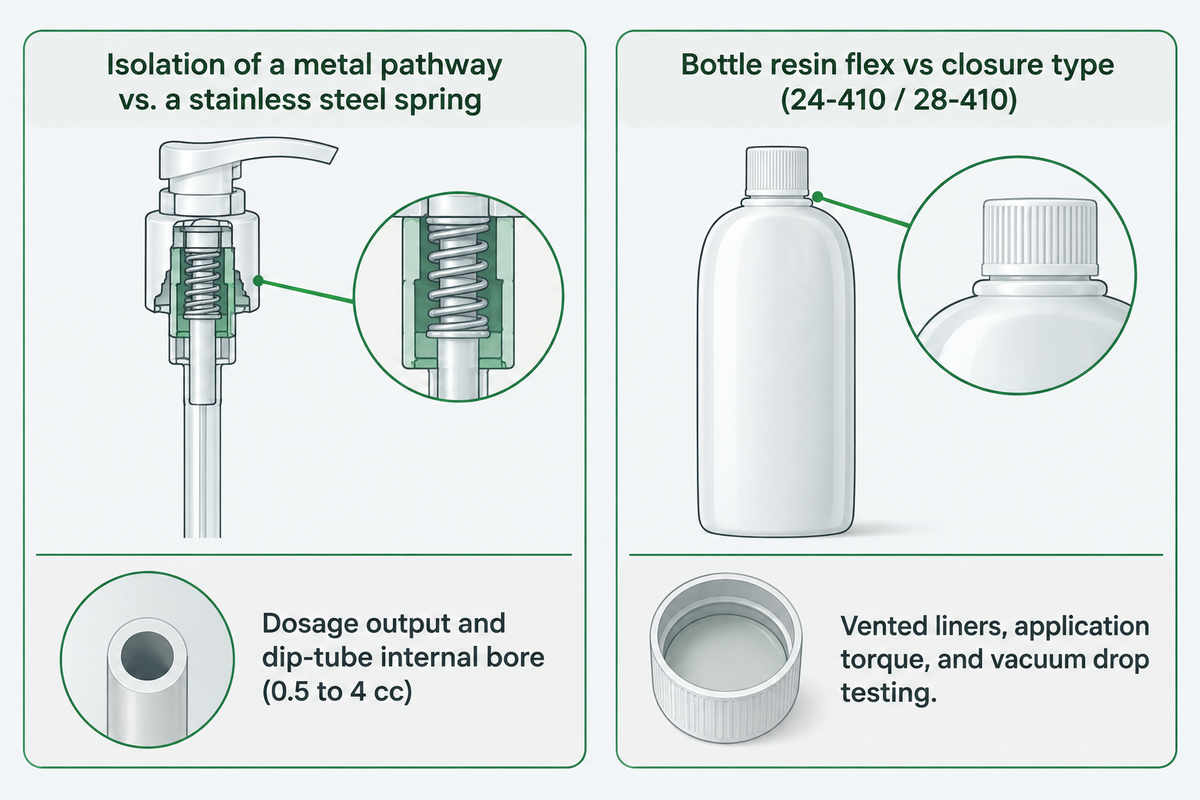
Component guides like O.Berk’s engineering breakdown of lotion pump internals detail how the actuator, closure, outer gasket, housing, piston, ball check valve, spring, and dip tube function during priming and dispensing. Specifying a lotion pump for a 250 mL salon shampoo bottle requires matching four mechanical variables to your fluid rheology:
- Metal-free pathway vs. stainless steel spring isolation: shampoos formulated at pH 4.5 to 5.3 with sodium chloride electrolyte and organic acid preservatives can corrode standard metal springs in the pump chamber. Either design a pathway without metal (where the return spring is outside the fluid pathway) or use a SUS 316 stainless steel spring.
- Dosage output and dip-tube internal bore: A combination of an actuator and dip-tube bore is needed for a shampoo of higher viscosity, or for pearlized shampoo. This pump actuator and dip-tube bore combination delivers a consistent stroke output (commonly 0.5 to 4 cc) without cavitation in cold bathrooms.
- Bottle resin flex vs closure type: rigid polyethylene terephthalate (PET) bottles (including clear post-consumer recycled PET grades) feature transparent 250 mL shampoos, but resist squeezing unless paired with a lotion pump. High-density polyethylene (HDPE) bottles and soft-touch squeeze tubes pair well with flip-top or 24-410 / 28-410 disc-top caps.
- Vented liners, application torque, and vacuum drop testing: expanded polyethylene (EPE) gasket liners, lock-down actuators, or lock-up actuators must pass vacuum leak and shipping vibration tests.
Preservative Efficacy, Stability Diagnostics and Microbiological Batch Release
Because shampoos contain 70% to 85% water, botanical extracts, and protein derivatives, and are stored in humid shower stalls where consumers repeatedly open caps with wet hands, strict quality and safety verification is mandatory before commercial filling. Under FDA microbiological safety guidance for cosmetics, cosmetics are not required to be sterile, but they must not contain harmful microorganisms. Manufacturers must follow rigorous manufacturing standards so preservatives remain effective across shelf life and consumer use.
Three international microbiology standards frame cosmetic preservation and microbiological quality testing. ISO 11930:2019 (with Amendment 1:2022) specifies the challenge test protocol for evaluating antimicrobial protection, while ISO 29621:2017 defines risk-assessment criteria for microbiologically low-risk products. In parallel, ISO 17516:2026 (replacing withdrawn ISO 17516:2014) assists in assessing the microbiological quality limits of finished cosmetic products. For physical stability, ISO/TR 18811:2018 clarifies that because cosmetic products and storage conditions vary widely, it is not possible to define a single universal stability test. Instead, factories tailor 40 °C thermal cycling, 4 °C cold holds, and centrifuge stress tests to the formula and container via third-party cosmetic stability and microbial challenge testing.
Can botanical extracts be used as preservatives in shampoo?
Standard culinary or cosmetic botanical extracts cannot replace validated broad-spectrum preservatives in aqueous shampoos. Unpreserved plant extracts introduce sugars and amino acids that feed bacteria, yeast, and mold while also carrying microbial spores into the batch. Any “natural-leaning” shampoo still requires an approved preservative system, such as sodium benzoate and potassium sorbate at pH below 5.3, phenoxyethanol with ethylhexylglycerin, or multifunctional antimicrobial diols, verified by an ISO 11930 Preservative Efficacy Test.
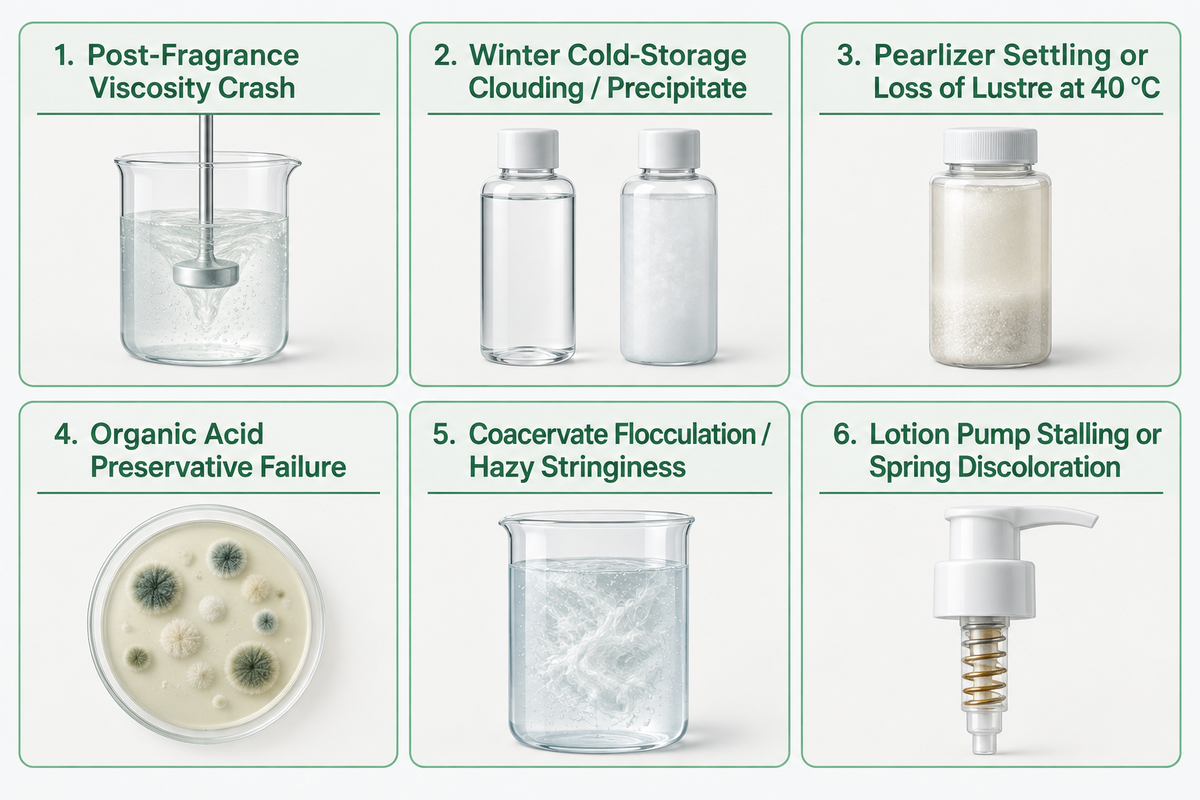
Use The 6-Symptom Shampoo Batch Failure Diagnostic below to identify, test, and correct the six most destructive physical and microbiological batch failure modes before approving scale-up.
| Failure Mode (The 6-Symptom Shampoo Batch Failure Diagnostic) | Physicochemical Root Cause | Bench / Pilot Detection Test | Corrective Formulation or Process Fix |
|---|---|---|---|
| 1. Post-Fragrance Viscosity Crash | Fragrance terpenes/solubilizers shift the micellar salt curve past peak into branched micelle collapse | Multi-point NaCl salt-curve titration at 25 °C performed after adding 0.3% to 0.8% fragrance load | Operate on the left shoulder of the salt curve, reduce nonionic solubilizer, or add associative PEG ester |
| 2. Winter Cold-Storage Clouding / Precipitate | Surfactant mixture drops below its Krafft temperature (common in SCI or high-stearate blends) | 4 °C refrigerator hold plus multi-cycle freeze-thaw (-10 °C to 25 °C) recovery check | Blend branched or amphoteric co-surfactants (CAPB/SLMI) and polyols to depress the Krafft point |
| 3. Pearlizer Settling or Loss of Lustre at 40 °C | Insufficient low-shear yield stress or improper glycol distearate cooling crystallization rate | Elevated-temperature 40–45 °C oven storage and centrifuge mechanical stress screening adapted to the formula and container under ISO/TR 18811:2018 | Add structured suspending polymer (acrylates copolymer/xanthan) and lock kettle cooling gradient below 40 °C |
| 4. Organic Acid Preservative Failure | Upward pH drift above 5.3 shifts benzoic and sorbic acid toward the ionized salt form, which has far weaker antimicrobial activity | pH drift tracking at 40 °C plus ISO 11930 microbial challenge test at upper pH 5.3 spec limit | Buffer batch to pH 4.8–5.2 with citric acid/sodium citrate or switch to pH-independent preservative |
| 5. Coacervate Flocculation / Hazy Stringiness | Incompatible charge density between high-MW cationic polymer and anionic surfactant ratio | Nephelometric turbidity check at 25 °C in clear 250 mL PET bottles plus dilution-deposition clarity screen | Pre-hydrate cationic guar/PQ-10 fully before surfactant addition and balance the amphoteric surfactant ratio |
| 6. Lotion Pump Stalling or Spring Discoloration | Dip-tube bore too narrow for fluid yield stress or acidic chloride attack on internal metal spring | In-package 40 °C compatibility hold with 0.5 to 4 cc actuator priming and spring inspection | Specify either a metal-free pathway lotion pump or a corrosion-resistant SUS 316 stainless steel spring with wider dip tube |
US and EU Regulatory Boundaries for Cosmetic vs Medicated Shampoos
Before printing bottle artwork or expanding a product line of shampoos and styling products, beauty brands must clearly differentiate between cosmetic cleansing claims and therapeutic drug claims. Under FDA guidance on whether a product is a cosmetic, a drug, or both, legal classification depends on intended use. A shampoo intended to cleanse and volumize hair is a cosmetic product. Conversely, a product claiming to treat or prevent dandruff, seborrheic dermatitis, psoriasis, or hair loss is regulated as a drug.
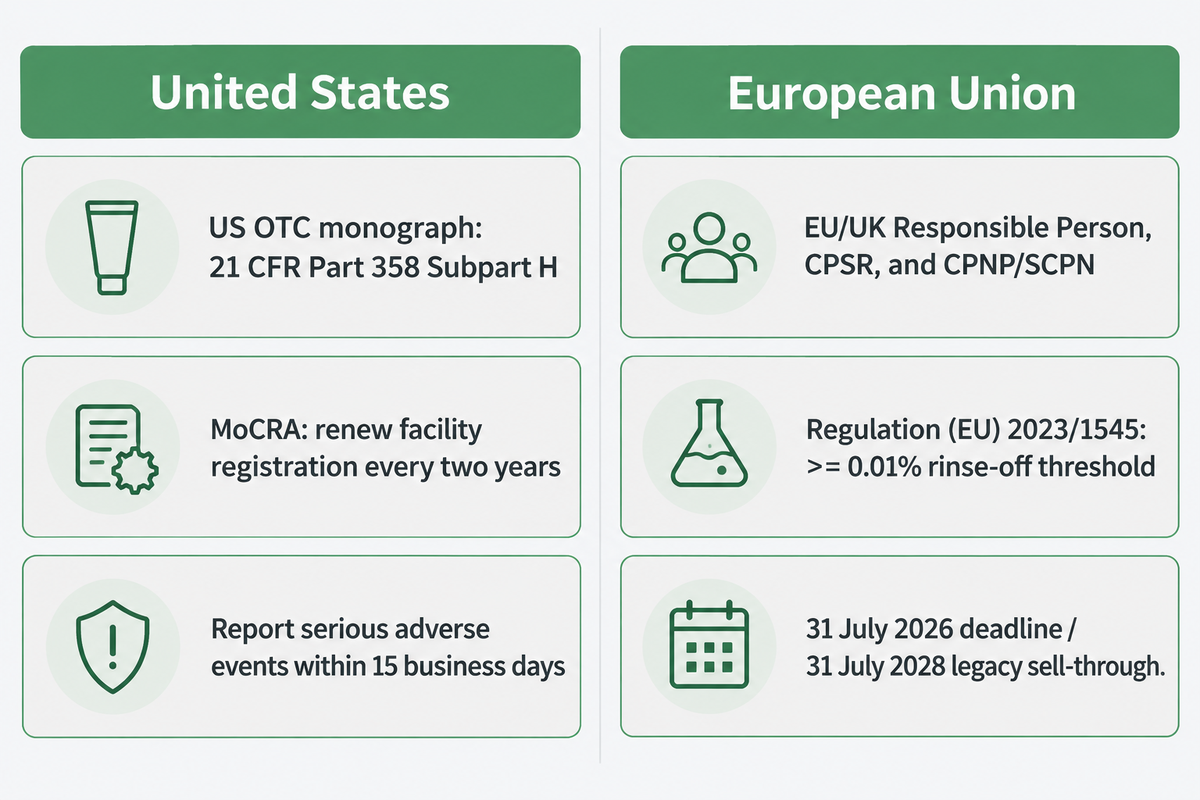
In the United States, over-the-counter medicated shampoos for controlling dandruff, seborrheic dermatitis, or psoriasis must comply with the FDA OTC monograph (originally codified at 21 CFR Part 358 Subpart H and now administered under the OTC monograph order framework). The OTC monograph restricts active ingredients to specific permitted compounds and concentrations, including pyrithione zinc, salicylic acid, selenium sulfide, sulfur, or coal tar. In addition, the finished medicated shampoo must be manufactured in an FDA-registered drug establishment and carry drug labeling (Drug Facts). Because NEXO Beauty Labs operates cosmetic GMP lines only and does not manufacture US OTC monograph drugs, shampoos produced on a cosmetic line must keep claims strictly at cosmetic tiers (such as “cleanses visible loose flakes” and “washes away excess scalp oil”), which you can screen on our US cosmetic vs. drug Claim Tier Checker.
For cosmetic shampoos sold in the United States, the Modernization of Cosmetics Regulation Act of 2022 (MoCRA) requires owners or operators of manufacturing facilities to register with FDA and renew facility registration every two years. Separately, MoCRA requires the Responsible Person (manufacturer, packer or distributor, whose name appears on the label) to submit cosmetic product listings, retain safety substantiation records, and provide domestic contact information on the label. The Responsible Person must also report serious adverse events to FDA within 15 business days under FDA’s serious adverse event reporting instructions.
For cosmetic shampoos distributed in the European Union and United Kingdom, the registration requirement is an EU/UK Responsible Person, a Cosmetic Product Safety Report (CPSR), and notification to the CPNP/SCPN. Based on Commission Regulation (EU) 2023/1545 and the European Commission Fragrance Allergen Labelling Rules, the individual fragrance allergens listed in Annex III must be disclosed on the INCI label if their level exceeds 0.01% in rinse-off products (compared to 0.001% in leave-on products). Because the 31 July 2026 transition deadline for placing newly compliant products on the EU market has already passed, any new shampoo lot entering the EU today must carry the expanded allergen declaration. Only legacy stock placed on the EU market before that date may continue to be sold through 31 July 2028 .
Model MOQ Layers, Saleable-Unit Landed Cost and Production Lead Times
Private label hair care manufacturing has no single industry-wide minimum order quantity (MOQ) or fixed unit price; the MOQ depends on the stock base vs. OEM custom chemistry, the minimum working volume of the factory’s compounding kettle (an illustrative 1,250 kg run across two kettle sub-lots yields 5,000 units at 250 mL, whereas NEXO Beauty Labs’ published standard order floor is 10,000 units per SKU with project-specific low-MOQ evaluation for market-testing launches, as detailed in our hair care product manufacturing guide), and the MOQ tiers of components provided by your bottle, pump, and decoration suppliers.
What affects the MOQ for private label hair care products?
Three constraints exist for minimum order quantities and total manufacturing cost. First, the geometry of the factory’s compounding kettle requires the batch volume to stay above the minimum level of the agitator. Second, specialty raw materials have supplier drum minimums. Third, custom color 250 mL bottles or silk-screen printing, and lotion pumps of 0.5 to 4 cc, require larger supplier run sizes than stock white or clear containers.
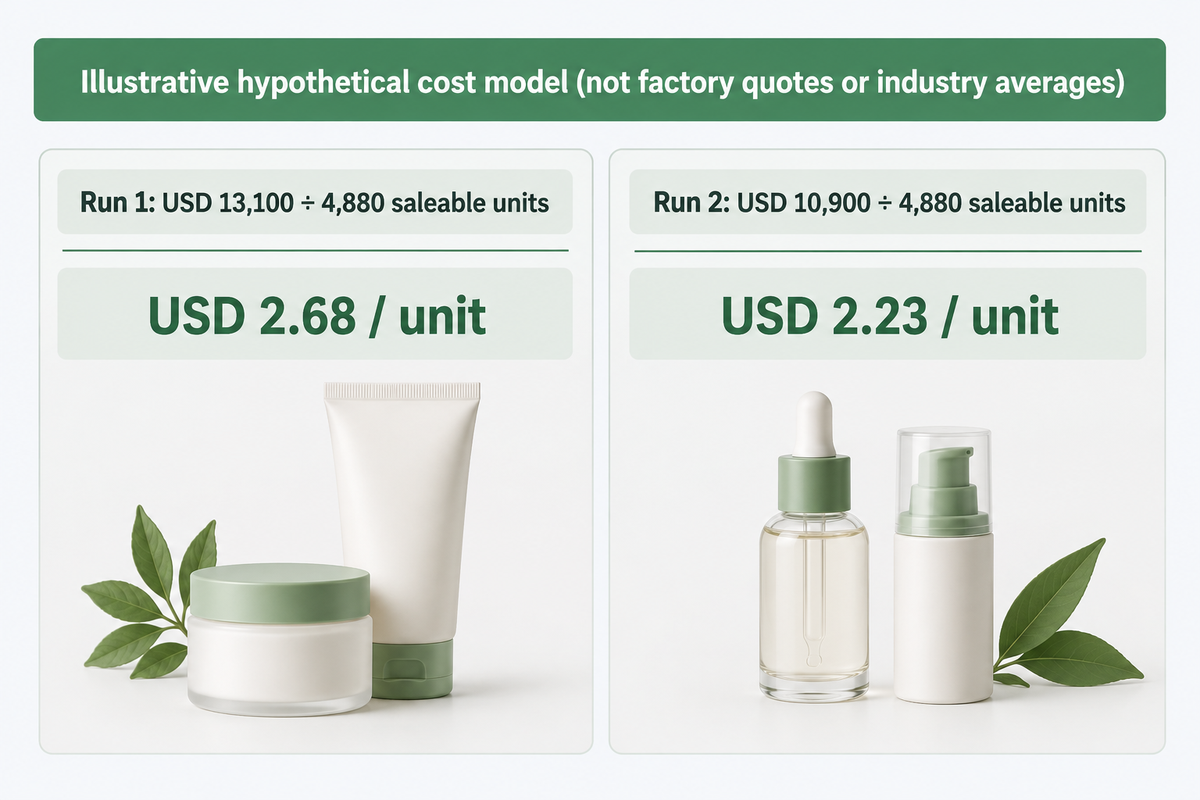
Expect the initial units produced to contain ‘margin surprises’ if gross theoretical kettle volumes are used to calculate economics. Always perform the calculation based on net saleable released units. Every commercial batch sets aside units for filling-line startup purge, in-process weight checks, microbiological release sampling, 40 °C stability chamber samples, and factory QC archive retains. The table below presents a hypothetical cost model (not factory quotes or industry averages) to show how one-time validation costs and non-billed QC retains affect Run 1 versus repeat-order unit economics.
| Model Category & Line Item (Illustrative 250 mL Shampoo SKU) | Run 1 (Initial Launch Batch) | Run 2 (Identical Repeat Batch) | Accounting & Engineering Notes |
|---|---|---|---|
| Gross Filled Units | 5,000 units | 5,000 units | Illustrative ~1,250 kg total bulk compounded across two kettle sub-lots and filled into 250 mL PET bottles |
| Less: QA Retains, Line Purge & Stability Samples | -120 units | -120 units | Covers batch retain archive, microbiological release plates checked against ISO 17516 limits, torque destructs, and line calibration |
| Net Saleable Released Units (Denominator) | 4,880 units | 4,880 units | True commercial inventory available for warehouse receipt and customer sale |
| Ex-Works Fill & Pack Spend (Assumed USD 1.85 / gross unit) | USD 9,250 | USD 9,250 | Illustrative bulk surfactant formula, 250 mL bottle, 0.5 to 4 cc lotion pump, label, and filling labor |
| One-Time Testing & Dossier Spend (ISO 11930, Stability, CPSR) | USD 2,200 | USD 0 | Amortized across Run 1 unless formula, fragrance, or primary bottle changes |
| Freight, Customs & Port Handling (Assumed) | USD 1,650 | USD 1,650 | Palletized ocean shipment; shampoo 70% to 85% water weight makes air freight cost-prohibitive |
| Total Batch Cash Outlay | USD 13,100 | USD 10,900 | Sum of variable production, one-time laboratory validation, and logistics |
| True Landed Cost per Saleable Unit | USD 2.68 / unit | USD 2.23 / unit | USD 13,100 ÷ 4,880 in Run 1; drops to USD 10,900 ÷ 4,880 on repeat orders |
On the calendar side, project managers run three tracks in parallel rather than end-to-end: (1) surfactant base and fragrance salt-curve approval at 25 °C, (2) 40 °C accelerated stability and ISO 11930 challenge testing, and (3) bottle/pump procurement plus EU/US artwork sign-off. Never authorize bulk compounding until both packaging compatibility and artwork allergen checks are locked.
Audit a Private Label Shampoo Manufacturer Before Sending Your RFQ
When evaluating global shampoo contract manufacturers, look past glossy showroom photos and audit the plant’s quality management system, water purification loop, and batch documentation. Whether it sells turnkey manufacturing services or end-to-end hair care solutions, a qualified private label shampoo manufacturer should open its laboratory records for inspection. Under ISO 22716:2007, cosmetic GMP guidelines cover production, quality control, storage, and shipment, while explicitly excluding research and development activities and distribution of finished products. That means a factory’s ISO 22716 certificate covers floor manufacturing and quality control, but you must separately audit their R&D stability protocols and export regulatory documentation.
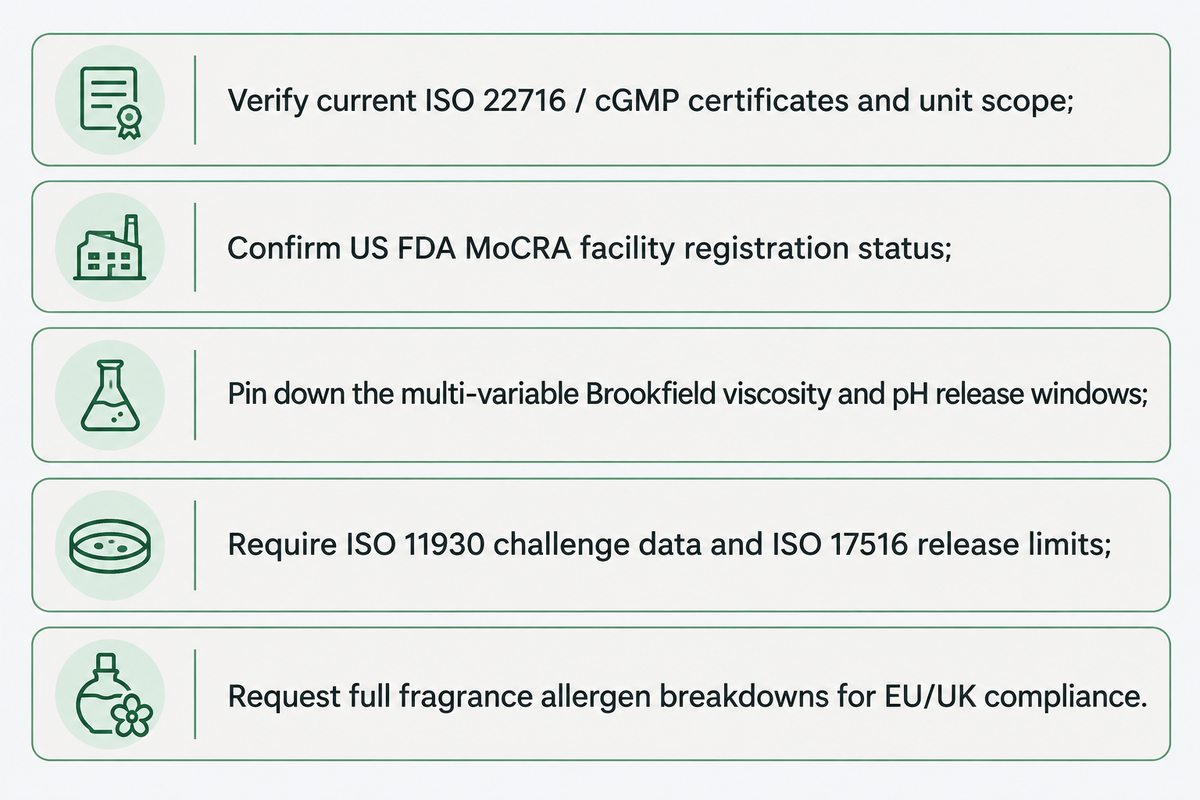
Prior to issuing a Request for Quotation (RFQ) or wire transferring a deposit, send the following 8-point Technical Pack and Factory Audit checklist:
- Verify current ISO 22716 / cGMP certificates and unit scope: confirm the certificate covers liquid cosmetic compounding and filling, check the third-party certifying body, and verify expiration dates.
- Confirm US FDA MoCRA facility registration status: under MoCRA, verify that the plant’s FDA facility registration is active on the biennial renewal cycle.
- Describe your surfactant chassis and barred ingredients: identify whether your brief is seeking a traditional SLES/CAPB salt-curve system, or a sulfate-free SLMI/SCI/taurate/APG base, and state any silicone-free, paraben-free, or vegan constraints.
- Pin down the multi-variable Brookfield viscosity and pH release windows: specify the sample and production COA to state the viscometer model, spindle, RPM, 25 °C, pH release window (e.g. pH 4.8-5.2), and specific gravity.
- Identify the primary bottle, neck finish, and lotion pump materials: state 250 mL bottle resin (PET, PCR or HDPE), neck finish (e.g. 24-410 or 28-410), Actuator output (0.5 to 4 cc), and a metal free pathway or SUS 316 stainless steel spring.
- Require ISO 11930 challenge data and ISO 17516 release limits: ensure every new scent or custom modification undergoes preservative efficacy testing and batch microbiological verification before shipment.
- Request full fragrance allergen breakdowns for EU/UK compliance: Demand IFRA certificates and quantitative Annex III allergen disclosures down to the 0.01% rinse off threshold pursuant to Regulation (EU) 2023/1545.
- Contract formula IP ownership, retain samples, and rework remedies: clarify in writing who owns the quantitative INCI formula, and specify how long sealed and unopened retain samples are archived. Specify rework remedies if a shipment fails 25 °C viscosity or cap-torque specs.
At NEXO Beauty Labs (built on our manufacturing foundation established in 1999 under Guangzhou Opseve Cosmetics Co., Ltd.), our international business team has supported global brands since 2020. Our 36,000 sq m facility operates 56 production lines under Intertek-certified ISO 22716:2007 (SZ2503C3) and Intertek cosmetic GMPC certification (SZ2503C4, assessed against the US FDA Cosmetic Good Manufacturing Practice Guidelines), both held by Guangzhou Opseve Cosmetics Co., Ltd. for cosmetic Hair Care and Cleansing Products in its General Liquid and Cream & Lotion units (excluding OTC drug manufacturing). To compare scalable manufacturing solutions for bench prototypes and commercial production, explore our custom shampoo contract manufacturing programme for stock private label bases, sulfate-free ODM options, and OEM support.
Private Label Shampoo Manufacturing FAQ
Why can’t you thicken a sulfate-free shampoo simply by adding more salt?
Many sulfate-free shampoo surfactants like glucosides and isethionates lack the sodium chloride response to form long entangled wormlike micelles and are therefore thickened with associative PEG esters or polymeric rheology modifiers.
What is the ideal pH range for a commercial private label shampoo?
Most scalp-friendly and color-safe shampoos are formulated between pH 4.5 and 5.5 to match the natural acid mantle of the scalp and help minimize hair fiber swelling and cuticle friction. A peer-reviewed study of 123 commercial shampoos revealed that 61.78% of shampoos had a pH above 5.5, which increases negative electrical charge and frizz on damaged hair. For shampoos relying on sodium benzoate and potassium sorbate for preservation, it’s also important that the pH stays below 5.3.
What causes pearlized shampoo to separate or turn clear during summer storage?
Glycol distearate pearlizers settle when the shampoo lacks sufficient low-shear yield stress from a suspending polymer, or turn clear if warehouse temperatures exceed the ester melting window and re-cool without controlled agitation.
Does claiming anti-dandruff benefits make a shampoo an OTC drug in the United States?
Yes. Under FDA rules (21 CFR Part 358 Subpart H), claiming to treat, control or prevent dandruff or seborrheic dermatitis classifies the shampoo as an OTC drug requiring an approved monograph active and Drug Facts labeling.
Who owns the custom shampoo formula when a brand works with a contract manufacturer?
Generally speaking, a contract manufacturer retains ownership of a base chassis and any custom modifications, unless your manufacturing development agreement specifically assigns IP and full quantitative INCI percentages upon milestone payment. Several factories charge a low lab customization fee to cover chemist bench hours. Otherwise, they require a separate buyout fee or a cumulative volume threshold before releasing compounding instructions and quantitative manufacturing records to a third party filler.
What is the EU fragrance allergen threshold for rinse-off shampoos under Regulation (EU) 2023/1545?
For rinse-off cosmetics such as shampoos, Regulation (EU) 2023/1545 requires individual Annex III fragrance allergens to be declared on the package once they exceed 0.01% in the finished formula.
Why must a shampoo Certificate of Analysis specify viscometer spindle and speed?
Shampoos are non-Newtonian shear-thinning fluids whose apparent viscosity changes with shear rate and temperature. A COA specification stating only “4,000 to 6,000 mPa·s” is incomplete unless it records the viscometer instrument, spindle number, rotational speed, and 25 °C test temperature used during batch release. Quality Assurance should also record pH, specific gravity, appearance, odor, and microbiological release plates checked against ISO 17516:2026 limits alongside sealed retain samples for every released production batch.
References & Sources
- U.S. FDA GMP & Regulatory Guidance: Cosmetic GMP Checklist, MoCRA Overview, and Cosmetic vs. Drug Classification.
- U.S. FDA Safety & Reporting Guidance: Microbiological Safety, Small Businesses Fact Sheet, and Adverse Event Reporting.
- U.S. Electronic Code of Federal Regulations (eCFR): 21 CFR Part 358 Subpart H, OTC Dandruff, Seborrheic Dermatitis, and Psoriasis Drug Products.
- ISO GMP & Stability Standards: ISO 22716:2007 Cosmetics GMP and ISO/TR 18811:2018 Stability Testing Guidelines.
- ISO Microbiology Standards: ISO 11930:2019 Antimicrobial Protection, ISO 29621:2017 Low-Risk Products, and ISO 17516:2026 Microbiological Limits (superseding withdrawn ISO 17516:2014).
- European Union Cosmetic Regulations: European Commission Fragrance Allergens Guidance and Commission Regulation (EU) 2023/1545.
- Peer-Reviewed Literature & Prior-Art Patents: Shampoo pH Study (NIH PMC4158629), Caffeine in Hair Products (NIH PMC11720832), and Unilever/Conopco Sulfate-Free AOS Patent Application WO2019215201A1 (prior-art reference on alpha-olefin sulfonate and alkyl betaine/sultaine viscosity building where CAPB alone fails at low surfactant solids).
- Surfactant Rheology References: Centre for Industrial Rheology, Lubrizol Sulfate-Free Guide, UL Prospector Sulfate-Free Challenge, and Chemists Corner Thickening Agents.
- Dispensing & Formulation References: HAPPI Cosmetic Rheology, Cosmetics & Toiletries Rheology Roundtable, O.Berk Lotion Pump Guide, and Seppic Scalp Care Outlook.