Get in touch with NEXO Beauty Labs Company
Private Label Sunscreen
Private Label Sunscreen Manufacturing for Brands Launching in More Than One Market
Quotes returned within two business days
First sample in 3 working days
10,000 units minimum per product
Manufacturing window 10-15 working days
Private label sunscreen is the one skincare category where the same formula is a drug in one country and a cosmetic in the next. We manufacture sun care for brands in North America, Europe, Australia, Southeast Asia and the Middle East, and we tell you before you commit which of those routes this facility is the right answer for and which it is not.
Send a brief or a reference product. We sign a non-disclosure agreement covering product concepts, formulation information and confidential business requirements on request, before any formula detail changes hands.
Sunscreen Development Platforms and Production Scope
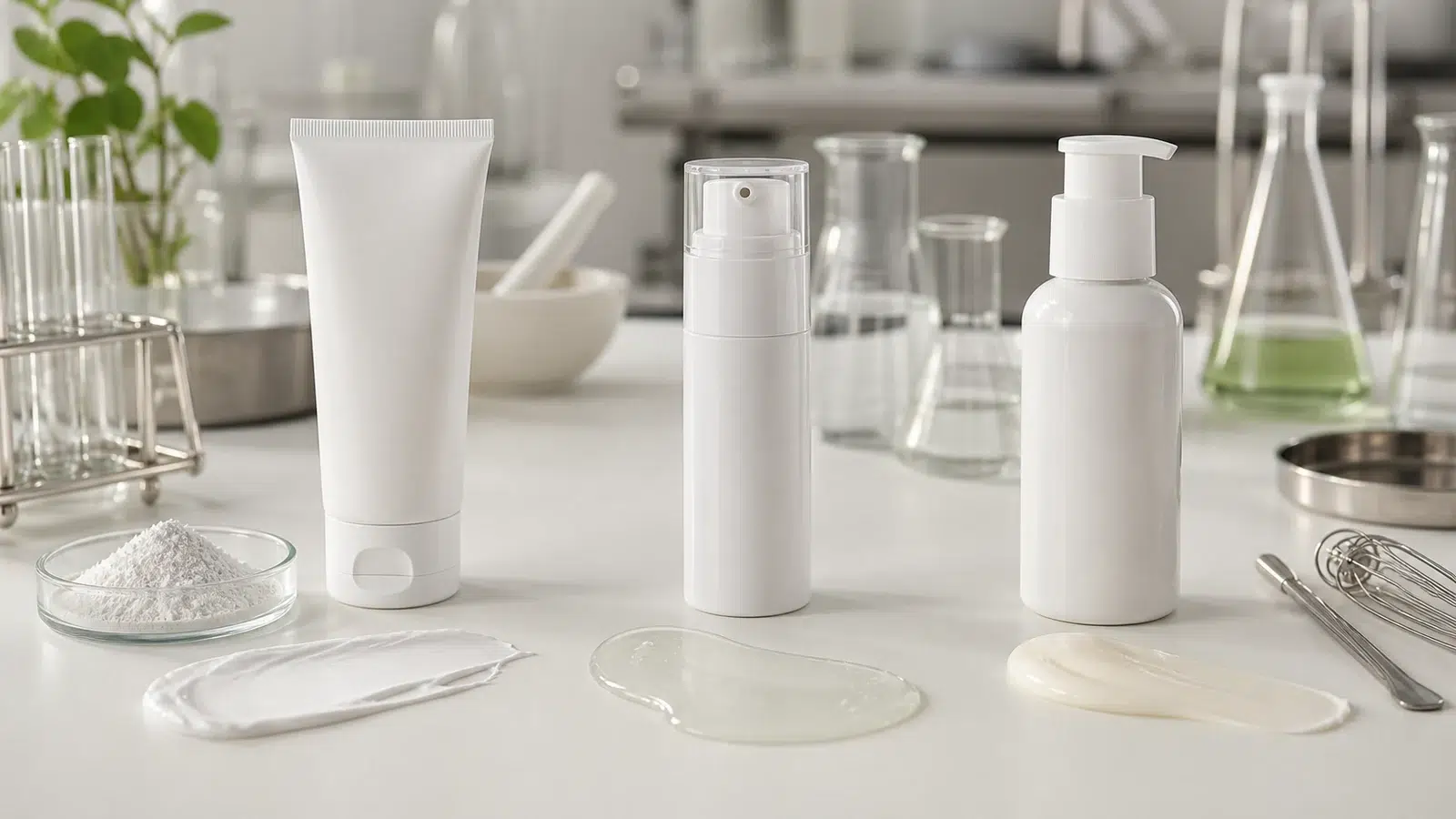
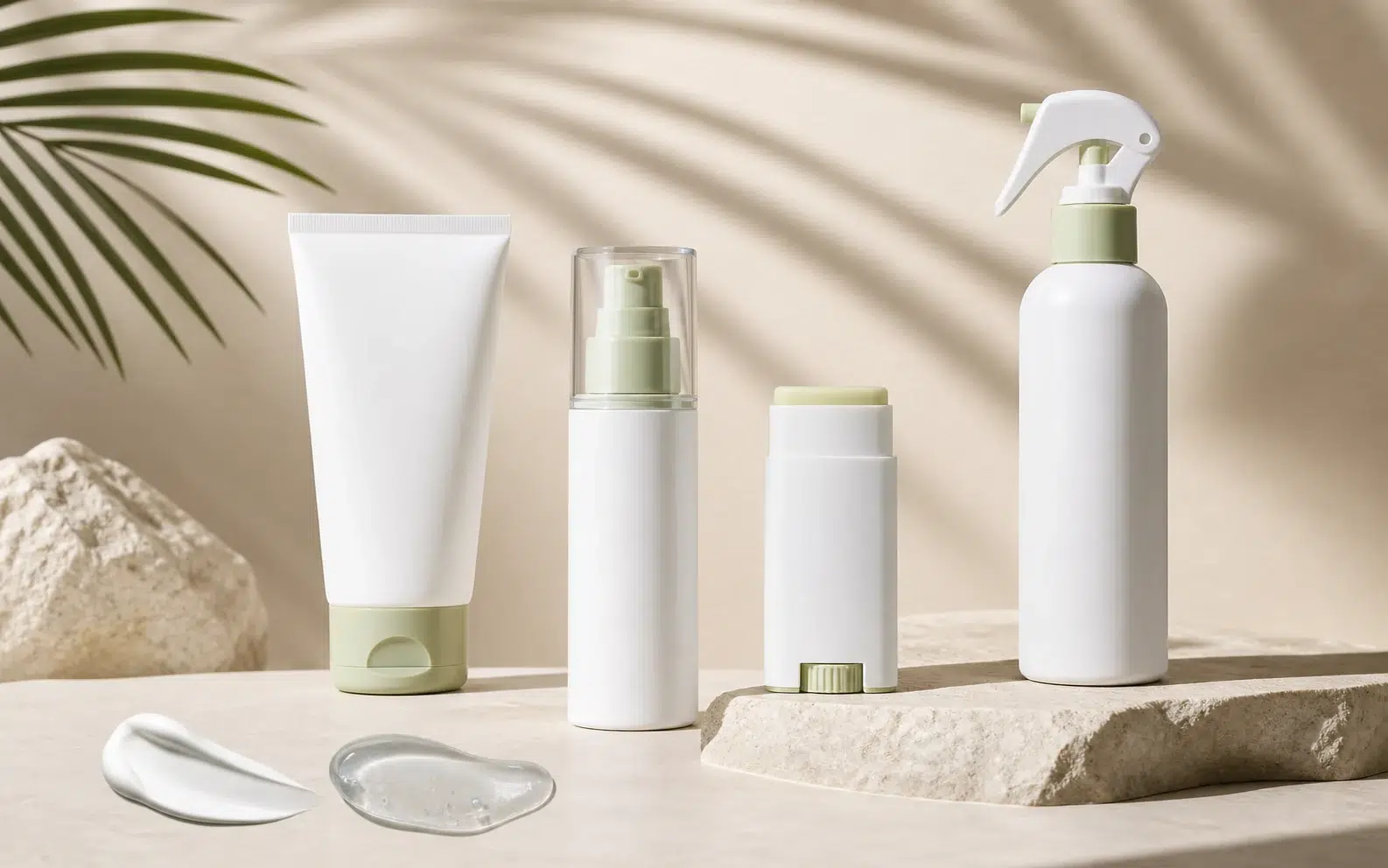
Sun care sits apart from the rest of skincare because the active system, the sensory result and the regulatory route are locked together. Change the filter system to fix a white cast and you have changed the testing you owe and, in some markets, the legal class of the product. Four development platforms keep that decision deliberate rather than discovered late.
Mineral
Zinc oxide and titanium dioxide systems for brands built around sensitive skin and daily wear. This is where white cast, spreadability and pigment load are traded against each other, and it is covered in its own depth on our mineral sunscreen manufacturing page.
Chemical
Organic filter systems for a lighter texture and easier everyday wear. Which filters are available is set by each market’s own permitted list, which in Europe is the annex to Regulation (EC) No 1223/2009. Changing that system resets the ISO 24444 and ISO 24443 testing rather than adjusting it, so the shortlist is fixed once the target market is known.
Hybrid
Mineral and chemical filters combined to hold broad-spectrum performance while keeping the finish light enough for facial use.
Skincare-infused
Sun protection carrying a treatment story: ceramide, ectoin, panthenol, hyaluronic acid, Centella asiatica, niacinamide and antioxidant systems.
Two development routes
Speed and service matter more than a unit price gap once a launch date is booked. Turnkey solutions shorten the clock; custom formulation buys you differentiation. Neither is the better answer in the abstract, and we will say which one your brief actually needs.
Production scope
Production runs inside a facility-wide cosmetic operation. The figures below highlight our dedicated footprint and specialized capacity for sun care specifically.
56
Production Lines
36,000
Square Meters (m²) Facility
200K
Sunscreen Units Per Day
Product Formats & Packaging Routes
We develop six sunscreen formats.
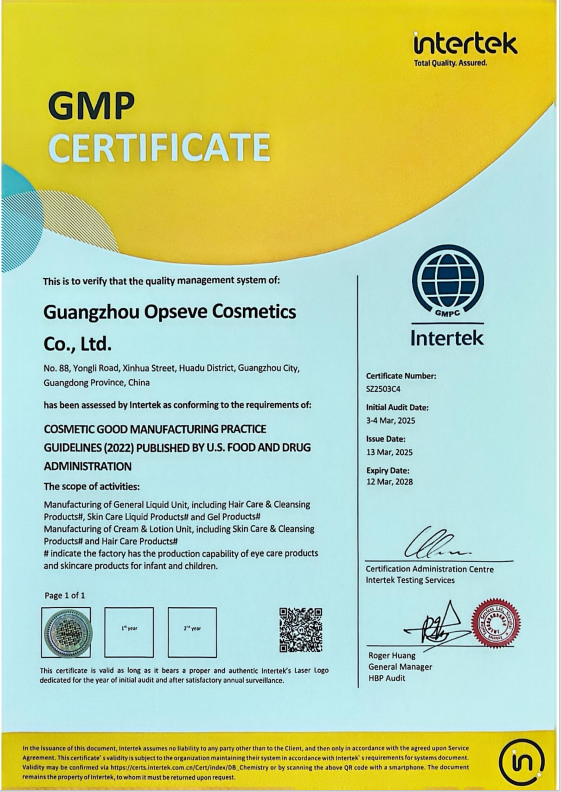
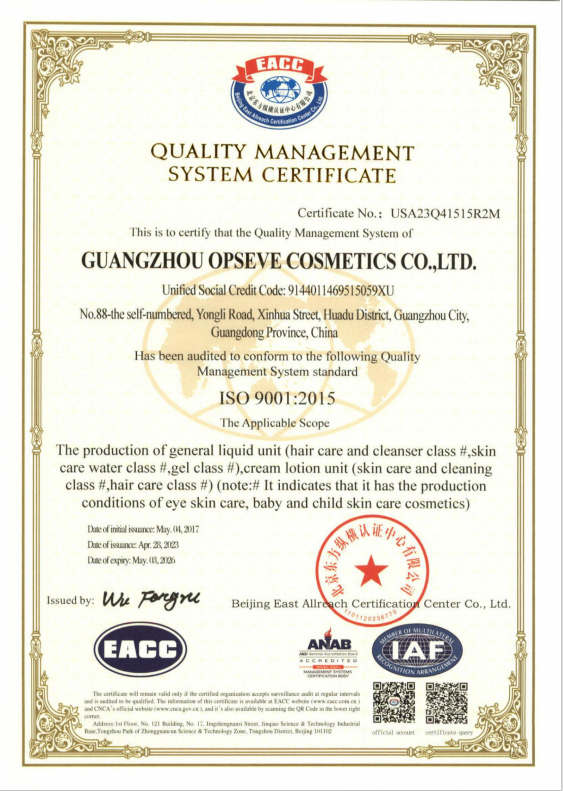
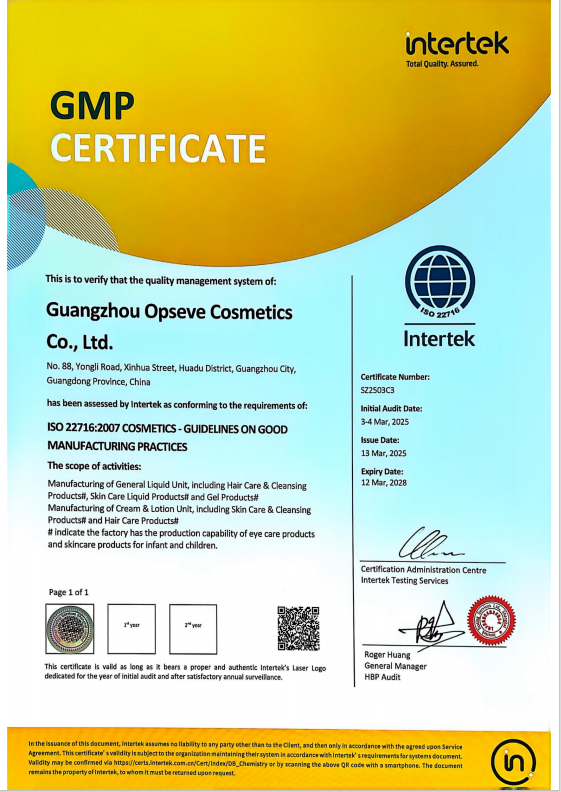
Our ISO 22716 and GMPC certificates name the general liquid unit and the cream and lotion unit, so creams, lotions, fluids and gels sit inside the registered scope of those certificates and sticks and sprays do not. We say which is which per format rather than showing a badge and letting you assume.
Packaging Routes Architecture
Sunscreen lotions, creams and gels share one filling route, while sticks need their own. Packaging components are selected, sourced and coordinated through our packaging partners, while bulk manufacture and filling run in our own facility.
Packaging is usually the longest single item in the programme clock, which is why the format and pack decision is taken in the first fortnight rather than after sampling.
Facial sunscreen cream
Daily facial wear, tinted or untinted
Yes — cream & lotion unit
Sunscreen essence
Lightweight facial layer for humid climates
Yes — general liquid unit
Lightweight body lotion
Everyday body protection
Yes — cream & lotion unit
Sunscreen gel
Fast-absorbing, low-residue wear
Yes — general liquid unit
Sunscreen stick
Face, lips, children, on-the-go reapplication
No — stick not named
Kids & cooling variants
Family ranges and hot-climate positioning
Follows the base format
Minimum Order, Quoting and the Two Clocks
Our standard starting minimum is 10,000 units per product. That figure sits in the middle of a three-tier market, not at the top of it: ready-made white-label rebranding starts lower, and large commodity fillers start far higher.
Which tier you belong in is decided by whether the formula is yours or ours.
Three minimum-order tiers
Ready-made rebrand
A finished stock product with your label on it. No formulation input.
Custom OEM and ODM
A platform adjusted to your brief, or a formula developed for you, produced under your brand. (Where we operate)
Large commodity filling
High-volume runs on standing lines.
Low minimum order quantities are what most first-time founders ask for, and for a first market test that instinct is right. Flexible evaluation is available for new product launches, market-testing projects and special development requirements, and it is decided per project rather than advertised as a blanket number.
Splitting a budget across several products? Our Minimum Order and Variant Planner shows how many products your total supports before the per-product minimum bites.
What actually moves the unit price
- Filter system and active load — mineral loading in particular
- Format and fill volume, and whether the pack is stock or custom-tooled
- Order quantity and the number of variants sharing one production setup
- Testing scope, which is driven by the destination market rather than by us
- Decoration and secondary packaging
Price follows those variables rather than a fixed list, which is why the quotation is written against your brief rather than published here.
Two clocks, kept apart on purpose
Brief and route selection. You send a written product brief, a reference product, an existing formula of your own, or a target ingredient direction.
Sampling. 3 working days to prepare the first sample, plus 5-7 working days international transit depending on destination.
Approval and packaging procurement. Formula sign-off, pack selection and component ordering. This is the step that most often sets the launch date.
Testing. SPF, UVA, stability and packaging compatibility with external accredited laboratories, on their schedule.
Manufacturing. 10-15 working days after formula approval, packaging confirmation and production preparation.
Batch release testing and disposition, then paperwork and shipment.
Steps 2 and 5 are ours to commit to. The programme clock of about 60 days is the honest end-to-end figure, and we quote both rather than the flattering one.
Working back from a launch date? Our Sunscreen Programme Timeline Planner tells you whether the 60-day programme clock still fits.
Payment and documents
Terms are a deposit before production starts, with the balance settled before shipment, by bank transfer; the split is confirmed in your quotation. Each shipment carries a certificate of analysis and safety data sheet, plus export paperwork, the product technical file, ingredient information and quality records.
Quality Control, Certificate Scope and the Sunscreen Market Route Matrix
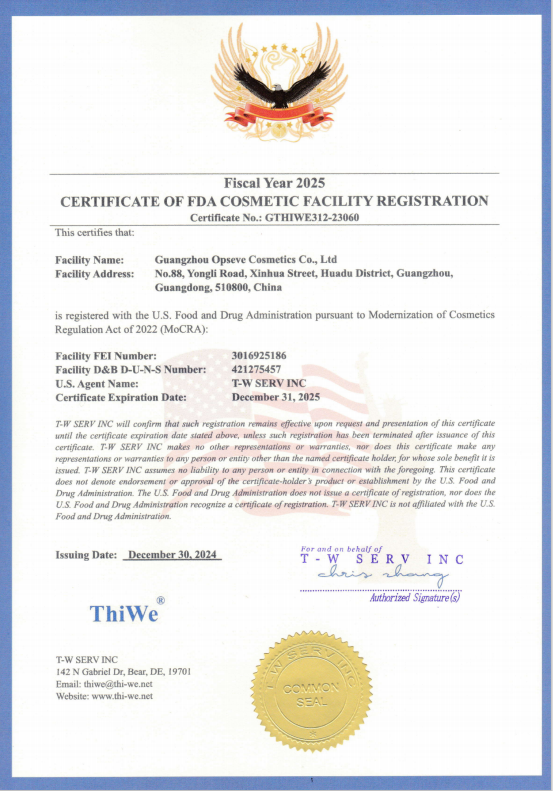
US buyers are told to look for an FDA-registered, cGMP-compliant facility. That instruction is correct, and it applies to sunscreen sold in the United States, where the product is an over-the-counter drug rather than a cosmetic. We hold cosmetic-side certificates, we publish their numbers and their registered scope, and we say plainly which markets that covers.
Certificates, with numbers you can check
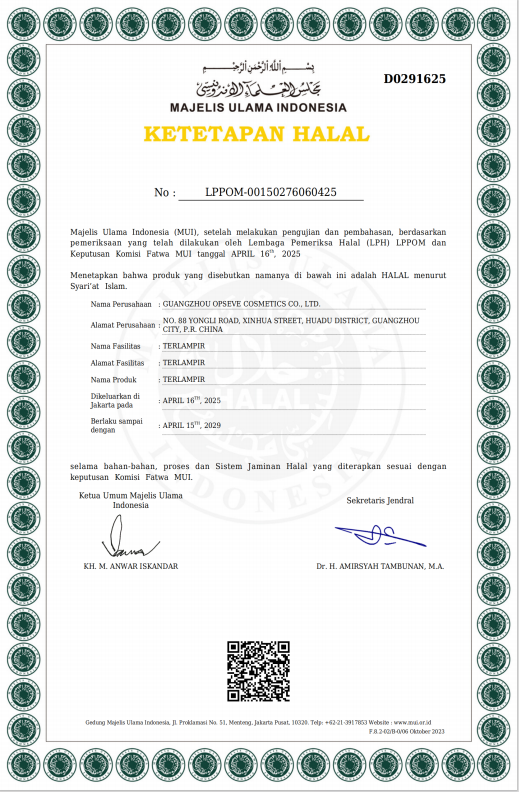
| Certificate | Body and number | Valid | Registered scope |
|---|---|---|---|
| ISO 22716:2007 cosmetics good manufacturing practices | Intertek, SZ2503C3 | 13 March 2025 to 12 March 2028 | General liquid unit and cream and lotion unit |
| Cosmetic good manufacturing practice to the US FDA cosmetic GMP guidelines (2022) | Intertek, SZ2503C4 | 13 March 2025 to 12 March 2028 | Identical scope to the above |
| Halal determination | Majelis Ulama Indonesia LPPOM, LPPOM-00150276060425 | 16 April 2025 to 15 April 2029 | Company-level determination; covered products are listed in an annex |
All three certificates are held by the manufacturing entity, Guangzhou Opseve Cosmetics Co., Ltd., at No. 88 Yongli Road, Xinhua Street, Huadu District, Guangzhou. NEXO Beauty Labs is the international OEM and ODM business brand of New Continent International Biotechnology (Guangzhou) Co., Ltd.
Shared white-label bases and what they carry with them
The common assumption is that a shared white-label base is the low-risk route, and every supplier page in this category encourages it. One episode in 2025 says otherwise.
What a GMP certificate does and does not evidence
In 2025 the Australian regulator investigated a single shared sunscreen base formulation. What it found is the reason this page talks about certificate scope at all.
- One base formulation sat underneath 21 listed products across 15 different companies.
- All 21 were cancelled from the register and 20 were recalled; the exception was an export-only listing never supplied in that market.
- The regulator’s review of those goods is complete and its compliance reports on them are published.
- Preliminary test results received by the base manufacturer indicated the base was unlikely to exceed SPF 21.
- Preliminary testing of specific goods made from that base returned an SPF as low as 4 against a labelled 50+.
- The regulator then inspected the base manufacturer against good manufacturing practice, and reported two things.
- Only non-serious deficiencies were found at the plant.
- No manufacturing issue was identified that would explain the low SPF results.
The one sentence a private label buyer should take from that
A GMP certificate evidences that manufacture is controlled and traceable. It does not evidence that the SPF number on the label is true. Those are two separate pieces of paper, and the second one is a test report on your finished formula, from a laboratory you are willing to name.
The Sunscreen Market Route Matrix
The Sunscreen Market Route Matrix is the table we work through with every brand before quoting, because the destination market decides the legal class of the product, the testing owed, and who carries which obligation. Route is not set by country alone: purpose, claims, SPF presentation and filter system all move a product between rows.
| Destination market | What decides the route | Product class there | Factory-side requirement | What the label owner arranges |
|---|---|---|---|---|
| United States | Any sunscreen with an SPF claim | Over-the-counter drug | The facility making the finished dosage form must be a registered drug establishment, foreign facilities included, with a named US agent and an annual FDA facility fee | Monograph conformity, Drug Facts labelling, drug listing under its own labeler code |
| European Union | Any sunscreen product | Cosmetic under Regulation (EC) No 1223/2009 | Manufacture to ISO 22716 practice; the manufacturing dossier behind the safety report | An EU Responsible Person, the safety report, portal notification, nanomaterial disclosure where applicable |
| United Kingdom | Any sunscreen product | Cosmetic, separate national regime post-Brexit | As EU | A UK Responsible Person and a separate UK notification |
| Australia — primary sunscreen | Principal purpose is UV protection | Therapeutic good; register entry required | Manufacture to the therapeutic-goods standard for the product | Sponsor listing, SPF substantiation to AS/NZS 2604, evidence held by the sponsor |
| Australia — secondary cosmetic sunscreen | SPF is secondary to another cosmetic purpose and the product meets the exclusion conditions | Excluded from therapeutic-goods regulation | Cosmetic manufacture | Confirming the exclusion conditions are actually met |
| Canada — drug route | Contains an active on the drug list | Non-prescription drug | Drug-side manufacture | Marketing authorisation with a Drug Identification Number |
| Canada — natural health product route | Actives fall on the natural health product list | Natural health product | Cosmetic-grade manufacture with the required controls | Marketing authorisation with a Natural Product Number |
| Japan | Claim set and actives | Cosmetic, with quasi-drug treatment for some claims | Cosmetic manufacture | Local importer of record and PA-grade UVA labelling |
| Indonesia, Thailand, Vietnam | Any sunscreen product | Cosmetic under the regional cosmetic framework | ISO 22716 practice and product dossiers | Local notification holder and country notification |
| Gulf states | Any sunscreen product | Cosmetic | ISO 22716 practice; halal paperwork where required | Local registration and Arabic labelling |
| India | Any sunscreen product | Cosmetic under the national cosmetics rules | Manufacture to the national standard with ISO-aligned SPF testing | Import registration and national labelling |
Read the matrix as a scoping tool, not as legal advice, and confirm the current position with your own regulatory adviser for the market you are entering. We do not act as your regulatory agent, hold your registrations, or file on your behalf in any of these markets.
Want the matrix narrowed to one market? Our Sunscreen Market Route Classifier returns the single row that applies to your destination, purpose and actives.
Six-stage quality control
Incoming material inspection on raw materials and packaging components before they are approved for production.
In-process control on the product and process parameters that matter for the formula.
Bulk product inspection before filling.
Filling and packaging inspection covering fill accuracy, sealing and pack condition.
Finished product inspection against the written release specification.
Batch review and release, with records retained for traceability.
Laboratory work supporting that chain covers stability, high and low temperature, freeze-thaw, centrifuge, packaging compatibility and microbiological evaluation. SPF, UVA and human efficacy testing is booked externally with accredited laboratories.
From Brief to Shipment
Five stages, and at each one we name what we are responsible for. A sunscreen programme goes wrong at handovers more often than at the bench, so the handovers are written down.
01
Discuss.
You share the target market, product concept and requirements. You get a written answer within two business days naming the routes that are open and the ones that are not. Getting that wrong is ours.
02
Develop.
Our formulation team selects a platform or develops a formula against your brief. If a filter system will not clear your destination market, we say so here rather than after sampling.
03
Sample.
First sample in 3 working days, then 5-7 working days in transit. You evaluate texture, application and finish.
04
Produce.
Formula approval, packaging confirmation and quality-controlled production. Fill accuracy, the batch records required under ISO 22716 and release testing are ours.
05
Deliver.
Final inspection, paperwork and shipment, with the certificate of analysis and technical file in the pack.
What to send with the first message
Target market or markets, because that sets the whole route
Format and SPF level you have in mind
A written product brief, a reference product, or an existing formula of your own
Quantity plan for the first order and the following six months
Any claim you already know you want to make on the label
1999
Since
Cosmetic manufacturing since 1999. The international business team behind NEXO Beauty Labs has traded since 2020.
36,000
m²
Manufacturing facility with 56 production lines across all cosmetic categories.
200k
Units / Day
Sunscreen filling capacity, stated for sun care specifically.
360M
RMB
Annual manufacturing value, again company-wide rather than sun care alone.
Formulation resources behind the platforms
High-quality sun care solutions come out of formulation depth rather than equipment alone. Formulation development is supported by Winskin Life Science Research Institute, with access to more than 5,000 developed formula resources and 65 granted Chinese patent certificates. Both counts are company-wide across skincare, hair care, body care and personal care rather than sunscreen-specific, and we would rather say so than let the number do work it has not earned.
Seeing it for yourself
- Factory and R&D visits by appointment.
- A remote walk through the production and quality areas if travel is not practical.
Is It A Match?
Where This Programme Is the Wrong Fit
Three situations where we are not the right answer, and what to do instead.
You need a US-market sunscreen made in a registered drug establishment
In the United States a sunscreen is an over-the-counter drug, and the facility making the finished dosage form has to be a registered drug establishment inspected against drug-side good manufacturing practice rather than the cosmetic ISO 22716 scope we hold. Ours is a cosmetic facility. Take that programme to a US-registered OTC drug manufacturer.
You want to test the market with a few hundred units
A custom programme is not always the right first move. Below our 10,000 units starting minimum the economics of a custom programme do not work. A ready-made stock product with your label on it is the honest route for a first market test.
You need a certificate line attached to a stick or a private label spray sunscreen
Those formats are not named units on our current certificates. We will develop and make them, and the evidence you receive will be batch records and test reports rather than a certificate reference.
You want the supplier to carry your registration
In every market on the route matrix, the marketing authorisation, the responsible person and the label sit with the brand owner or its appointed local representative. We supply the manufacturing side of the technical file, not the filing.
Advanced Planning Tools for Private Label Sunscreen
01
Explore Tool
Sunscreen Market Route Classifier
Destination market decides the legal class of your sunscreen, the testing owed, and who carries which obligation. Pick a market and a purpose to see the route before you commit to a formula.
02
Explore Tool
SPF Label Threshold Checker
A labelled SPF is a measured threshold, not a marketing choice. Enter the measured sun protection factor from your test report and the measured UVA protection factor to see what the European Union categories let you print.
03
Explore Tool
Minimum Order & Variant Planner
The question that sinks most first sun care ranges is not the total order size. It is how many variants that total is split across, because the minimum applies per product rather than per order. Put your plan in and see where it lands.
04
Explore Tool
Sunscreen Programme Timeline Planner
Two clocks run on a sun care programme and they are not the same length. The manufacturing window is 10 to 15 working days. The programme clock, concept to market-ready product, is about 60 days. Enter your launch date to see which clock you are actually against.
For the wider service scope, explore Sunscreen Manufacturing.
Formulation & Manufacturing
Frequently Asked Questions
Comprehensive answers to support your private label business decisions, covering FDA compliance, SPF testing, and custom formulation.
SPF Efficacy Tested
OEM / ODM Ready
Clean Beauty Formulas
Custom Formulation?
Our R&D team is ready to evaluate your brief.
Do I need FDA approval to sell private label sunscreen?
No individual product approval is required for a monograph-conforming sunscreen in a permitted dosage form. What is required is that the finished dosage form is made in a registered drug establishment, that the product conforms to the monograph, and that it carries compliant Drug Facts labelling. The labelling duty stays with whoever owns the label.
Are you a US-based sunscreen manufacturer?
No. As a private label sunscreen manufacturer we operate from Guangzhou, China, and we hold cosmetic-side certificates rather than a US drug establishment registration. For US sunscreen that is a real limit, and it is the first thing we tell a US buyer.
What is your minimum order quantity for private label sunscreen?
10,000 units per product as the standard starting minimum, with flexible evaluation for new product launches, market-testing projects and special development requirements.
How long does the sunscreen manufacturing process take?
The manufacturing window is 10-15 working days after formula approval, packaging confirmation and production preparation, and it includes finished-product testing and batch release. The end-to-end programme clock is about 60 days from concept to a market-ready product.
Do you provide SPF testing services?
We coordinate SPF, UVA and human efficacy testing with external accredited laboratories and manage the schedule around your launch date. The testing itself is done by the laboratory, and the report names it.
Which laboratory tests my SPF, and can I see the report?
You can, and you should ask every supplier the same question. In 2025 an Australian investigation found that many of the sunscreens failing independent retesting had been certified by one overseas laboratory, and the regulator recorded significant concerns about that laboratory’s reliability.
- Which laboratory ran the test, and under which method.
- Whether the report covers your finished formula or a shared base.
- Whether you can hold a copy of the report yourself.
What is the difference between mineral and chemical sunscreens?
Mineral systems use zinc oxide and titanium dioxide to scatter and absorb UV at the skin surface, while chemical systems use organic filters that absorb UV energy. Mineral suits sensitive-skin and clean-beauty positioning and carries the white-cast challenge; chemical is lighter and easier to wear daily. Hybrid systems combine both.
Can you manufacture reef-safe and mineral-only sunscreens?
Yes. Mineral-only formulations without oxybenzone or octinoxate are one of our four platforms, and organic sunscreen positioning is built the same way. Note that “reef safe” is a marketing position rather than a regulated term, so the claim wording has to be checked against the destination market before it goes on the label.
Can you develop a formula from a reference product I already sell?
Yes. Send the reference product with your brief and we will develop formulations tailored to its texture, finish and positioning. Filter availability in your destination market may force a different active system, and we flag that before sampling rather than after.
Can I use my own brand on the products?
Yes, that is the whole point of private labeling. Packaging components are selected, sourced and coordinated through our packaging partners, with bulk manufacture and filling in our own facility.
Do you sign a non-disclosure agreement?
Yes. We sign a non-disclosure agreement covering product concepts, formulation information and confidential business requirements on request, before formula detail is exchanged.
What certifications does your manufacturing facility hold?
ISO 22716:2007 and GMPC to the US FDA cosmetic GMP guidelines, both from Intertek and both valid to 12 March 2028, plus a halal determination from Majelis Ulama Indonesia LPPOM valid to 15 April 2029. The certificate numbers and registered scope are published in the quality section above.
What documentation ships with the order?
A certificate of analysis and safety data sheet per batch, plus export paperwork, the product technical file, ingredient information and quality records.
What are your payment terms?
A deposit before production starts, with the balance settled before shipment, by bank transfer. Your quotation states the split.
Why is SPF 50+ not simply a higher number than SPF 50?
Because a higher SPF number is not always a better specification, and “50+” is a measured threshold rather than a label choice. In the European Union a product must measure SPF 60 or above to carry it, and the Australian rule uses the same figure across a panel of at least ten subjects. Above that level the added protection is marginal: SPF 15 absorbs about 93 percent of UVB and SPF 30 about 97 percent.