Get in touch with NEXO Beauty Labs Company

XCX
OEM vs ODM vs Private Label Cosmetics: A Route Decision Framework
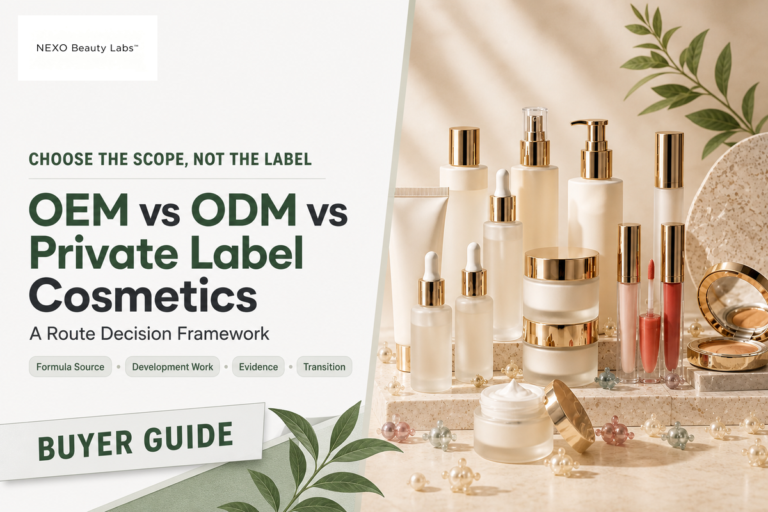
Updated September 2026 · Written by XCX · Ordinary cosmetics scope OEM vs ODM vs Private Label Cosmetics: A Route Decision Framework is a practical comparison of who supplies product design, who performs development work, and how the buyer’s brand…
MSDS vs COA in Cosmetics: Two Documents, Two Different Promises
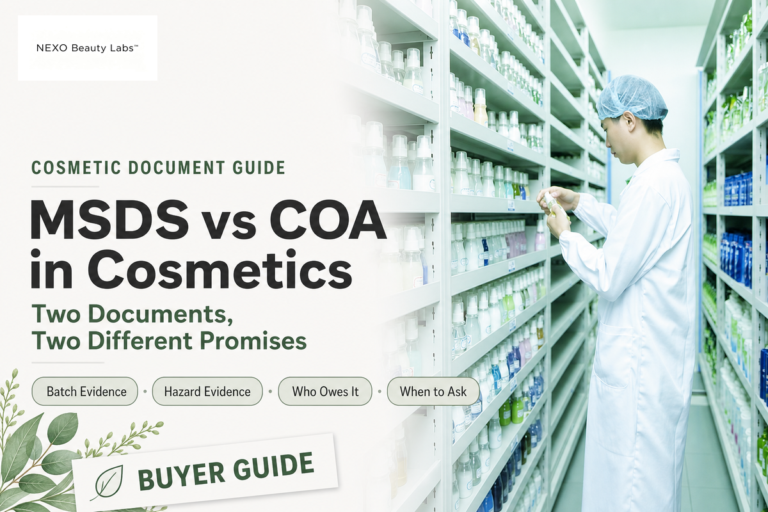
MSDS vs COA cosmetics is a document-sorting problem dressed up as a comparison. The questions usually start the same way. A supplier sends one document, a customer demands the other, and nobody involved says out loud which question each piece…
Cosmetic Manufacturing Quality Control: What to Verify Before You Commit a Formula
Updated September 2026 Cosmetic manufacturing quality control is the documented quality control system used to check materials, production conditions, finished products, packaging, and release evidence against written acceptance criteria. For a beauty brand, the practical test is not whether a…
Cosmetic Product Development: What You Are Actually Buying
Updated September 2026 Two suppliers quote the same cosmetic product development brief. One comes back at a number that looks generous and a schedule that looks short. The other is three times the price and two months longer. Neither quote…
Skincare Packaging Guide: Match Formula, Format, Channel, and Artwork
A skincare packaging guide is a decision framework for package selection. A useful skincare packaging guide should do more than compare attractive jars and bottles. The right commercial pack has to protect the represented cosmetic formula, dispense an intended amount,…
Skincare Claims Substantiation: A Brand Evidence Guide
Skincare claims substantiation is the documented connection between the exact claim consumers see, the finished product and context in which they see it, and evidence fit to support that claim before release. For teams across the cosmetics industry and the…
Cosmetic Labeling Requirements: A U.S. and EU Buyer Guide
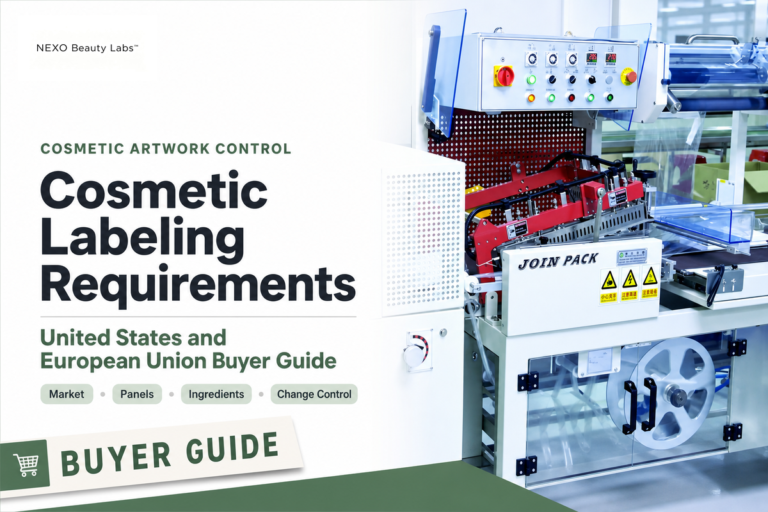
Cosmetic labeling requirements are not one global checklist. The fields, wording, placement, language, responsible party, warnings, and claims controls depend on the destination market, product category, intended use, formula, and package. Classification and market routing should therefore happen before graphic…
Skincare Product Development Process: From Brief to Launch
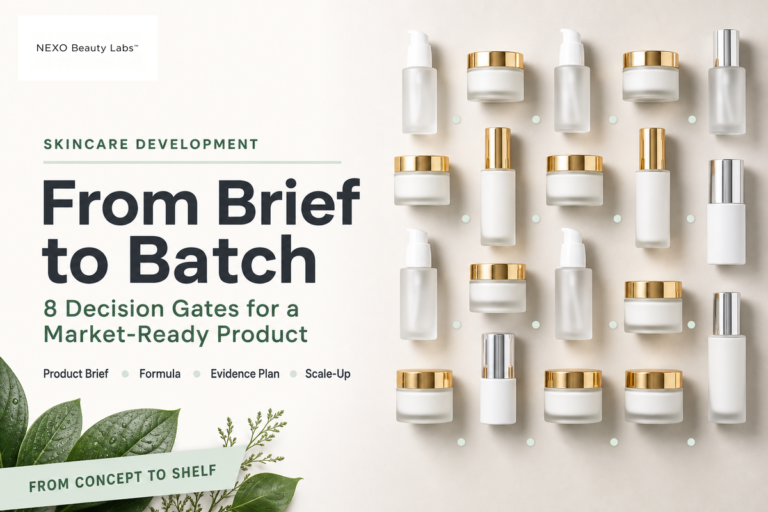
Updated August 2026 The skincare product development process is best managed as eight decision gates, not a fixed calendar of laboratory tasks. For conventional custom cosmetic formulation and R&D services, each gate closes only when the team can name the…
Cosmetic Packaging Compatibility Testing: A Formula-to-Pack Review Guide
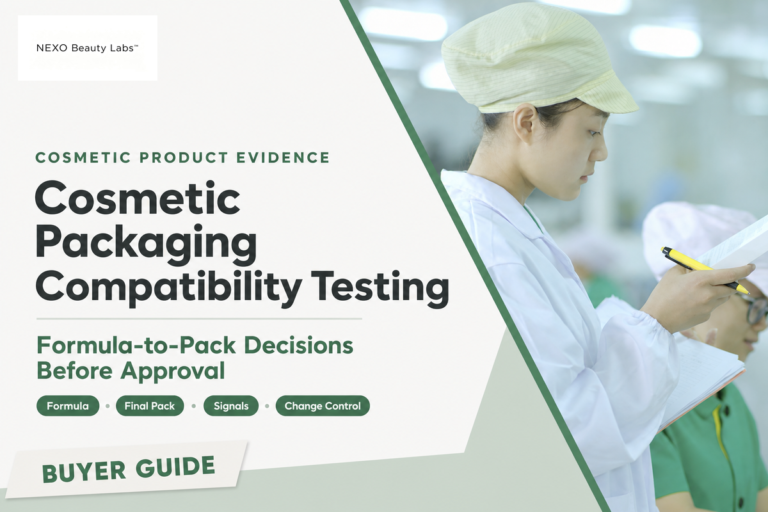
Cosmetic packaging compatibility testing is a product-specific evaluation of a represented formula in its intended commercial pack. It asks whether contact surfaces, barrier performance, closures, dispensing parts, decoration, storage, and use conditions remain acceptable for a stated decision. Supplier material…
Cosmetic Stability Testing: A 7-Decision Protocol Guide
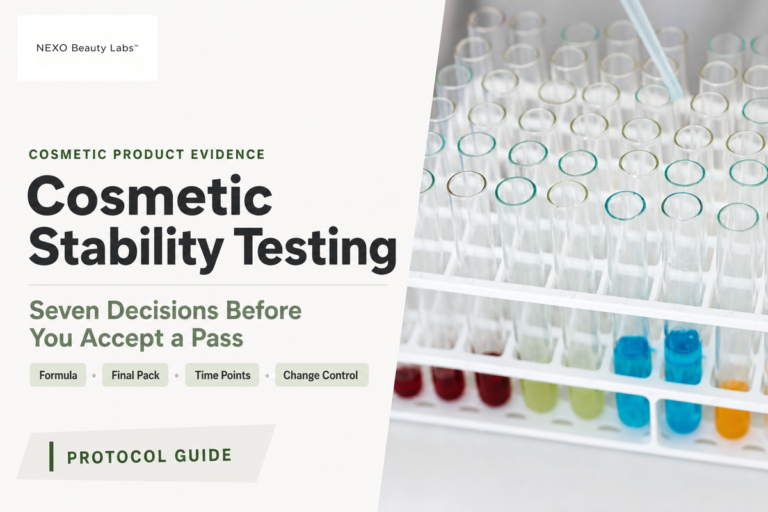
Cosmetic stability testing is a product-specific study of whether selected formula and package attributes remain within predefined specifications under named conditions and time points. The purpose of stability testing is to support a bounded decision, not to turn a few…