Get in touch with NEXO Beauty Labs Company

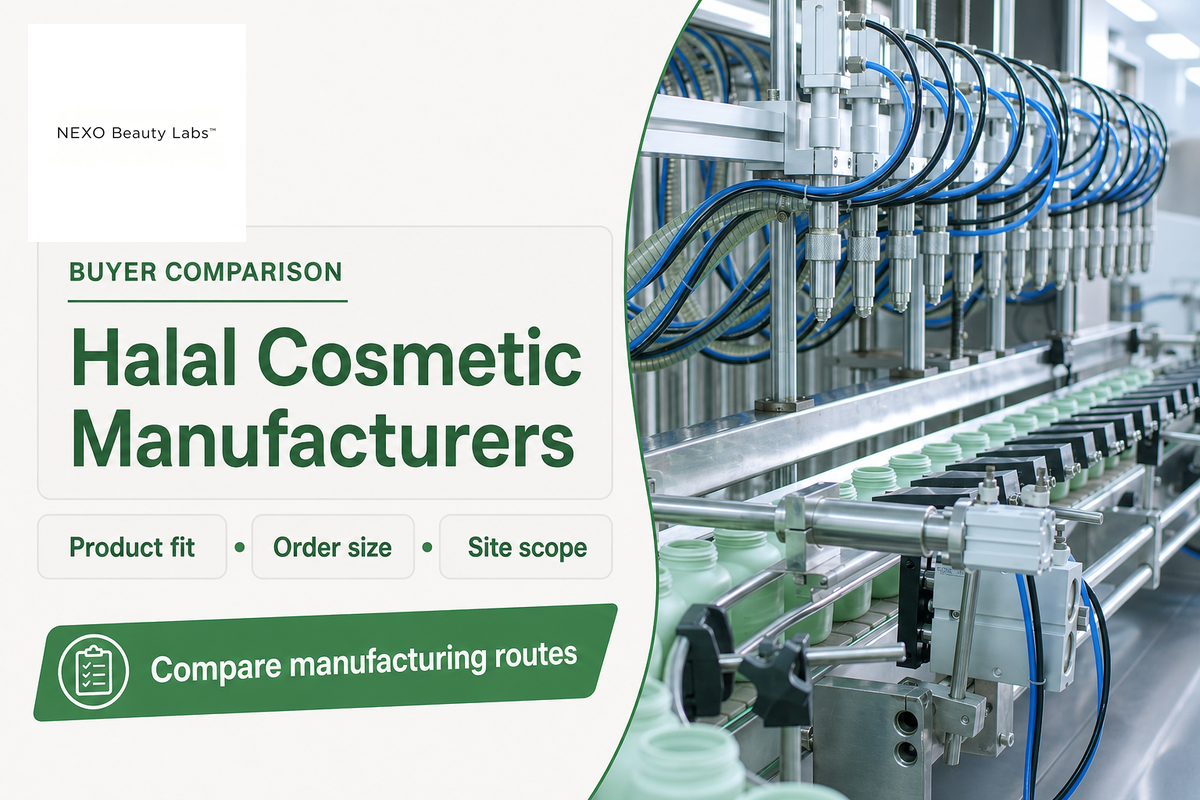
Halal cosmetic manufacturers worth comparing include NEXO Beauty Labs for established export projects, Xiran for smaller custom runs, and Sky Resources for Malaysian development programs. The best choice depends on your product category, order size and certification scope, even when top brands use the same supplier. This guide compares ten manufacturers, their published capabilities and the purchasing conditions that separate their offers.
By XCX · Updated October 2026
A factory that can fill your bottle is only part of the decision. You also need a workable formulation route, packaging that fits the production line, and clarity on included services. A minimum quoted for one formula may say little about a launch containing multiple fragrances or shades.
Quick Picks for Your Halal Beauty Brand
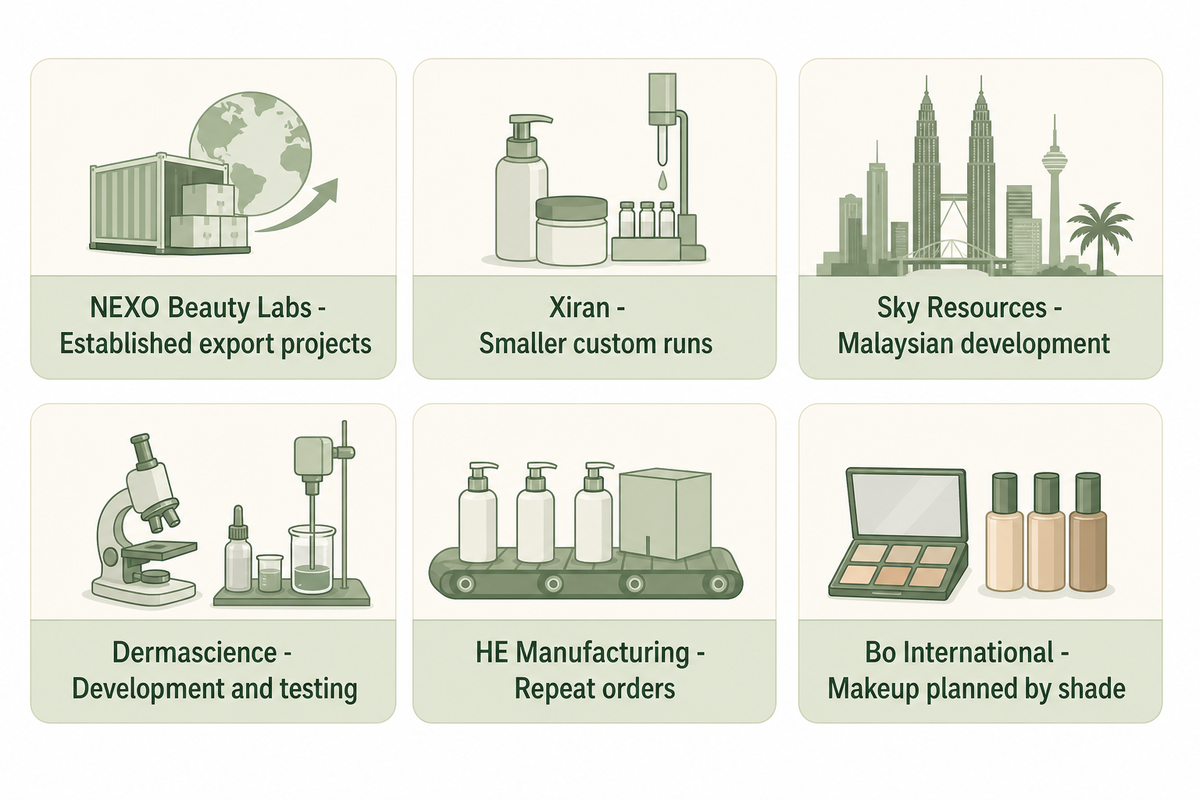
- NEXO Beauty Labs: best for established skincare, hair and body brands planning export projects around its published 10,000-unit standard minimum per SKU.
- Xiran: best for discussing customized formulas at a published 1,000-unit minimum, with halal certificate assistance included in its service offering.
- Sky Resources: best for comparing Malaysian OEM production with an ODM development route, particularly when formula ownership matters.
- Dermascience: best for skincare development briefs that need stability and packaging-compatibility work built into the project.
- HE Manufacturing: best for repeat-order personal care programs that can work with its published 5,000-unit floor.
- Bo International: best for an Indian makeup project with quantities planned by shade rather than by total launch volume.
Use these picks to choose a starting conversation. The full comparison includes COSMAX Indonesia, Cosmecca Korea, VNI Scientific and CL Cosmetic, with differences in production location, product scope and commercial terms. VNI and CL also have specific historical product records discussed in their profiles.
Disclosure: This guide is published by NEXO Beauty Labs. We list ourselves first because this is our website, not because we claim to be the market leader. The other 9 manufacturers are grouped by what they’re best for, in no particular order within each group.
How We Selected These Halal Cosmetic Manufacturers
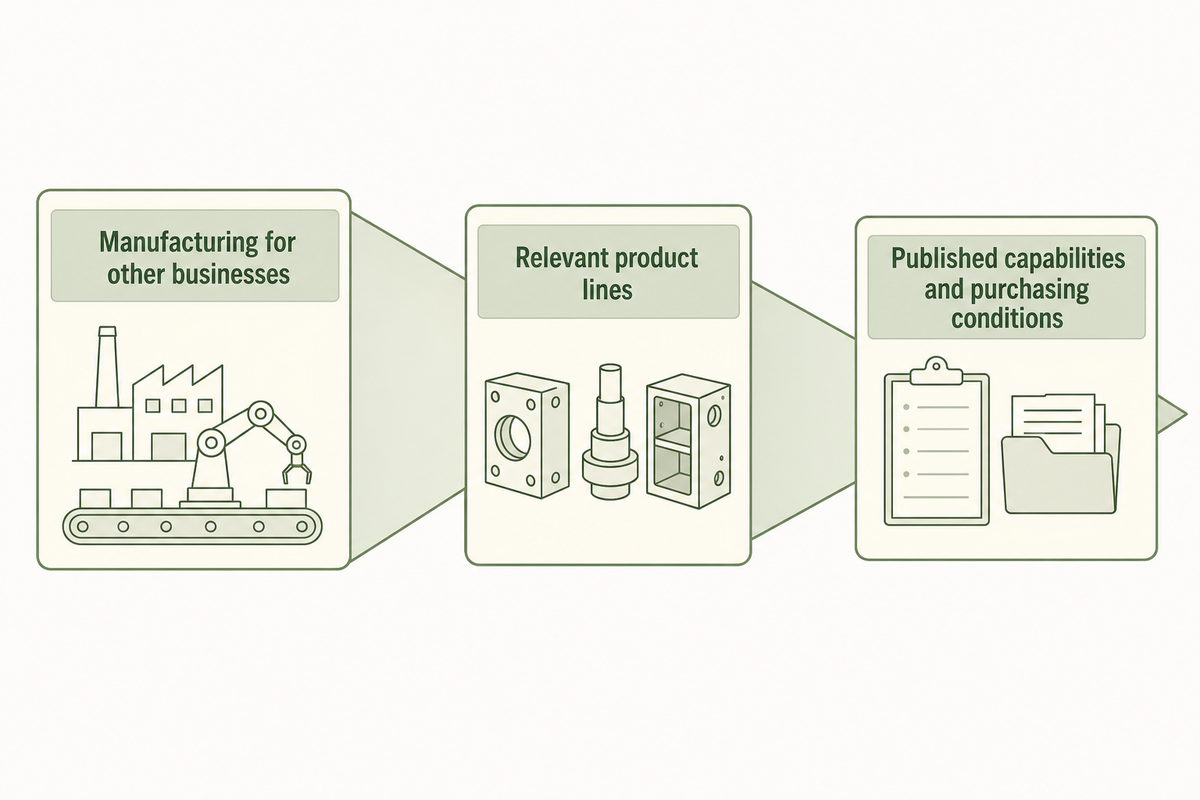
Company information was cross-validated against company websites, company reports and the public domain in October 2026. We looked for companies involved in manufacturing for other businesses (Contract Manufacturing), with distinct production activities, relevant product lines and a stated Halal Manufacturing/Certification support service. Trading Companies, Distributors, Sourcing platforms, Directories, Media, Used Equipment dealers were excluded.
We evaluated more than 15 candidates in the cosmetics industry before selecting these 10 for the report. Retail-only halal cosmetics brands were excluded since selling a finished product doesn’t mean that the company takes third-party manufacturing orders. The selected companies represent several Production countries and various Development models; the list isn’t a ranking based on revenue, factory size or consumer popularity.
Capabilities and Commercials stated are attributed to the companies that publish them. We distinguish a manufacturing operation’s history from the age of its international brand, and a product-specific minimum from a factory-wide rule. Published Certifications are described at the company or site level stated by the source.
The Malaysian government’s cancelled-notification dataset contains product-specific entries naming VNI and CL as manufacturers. Our comparison of the halal cosmetics industry describes available manufacturing routes and material purchasing context; it does not certify a supplier or promise the performance of a future order.
10-Manufacturer Halal Production Fit Matrix
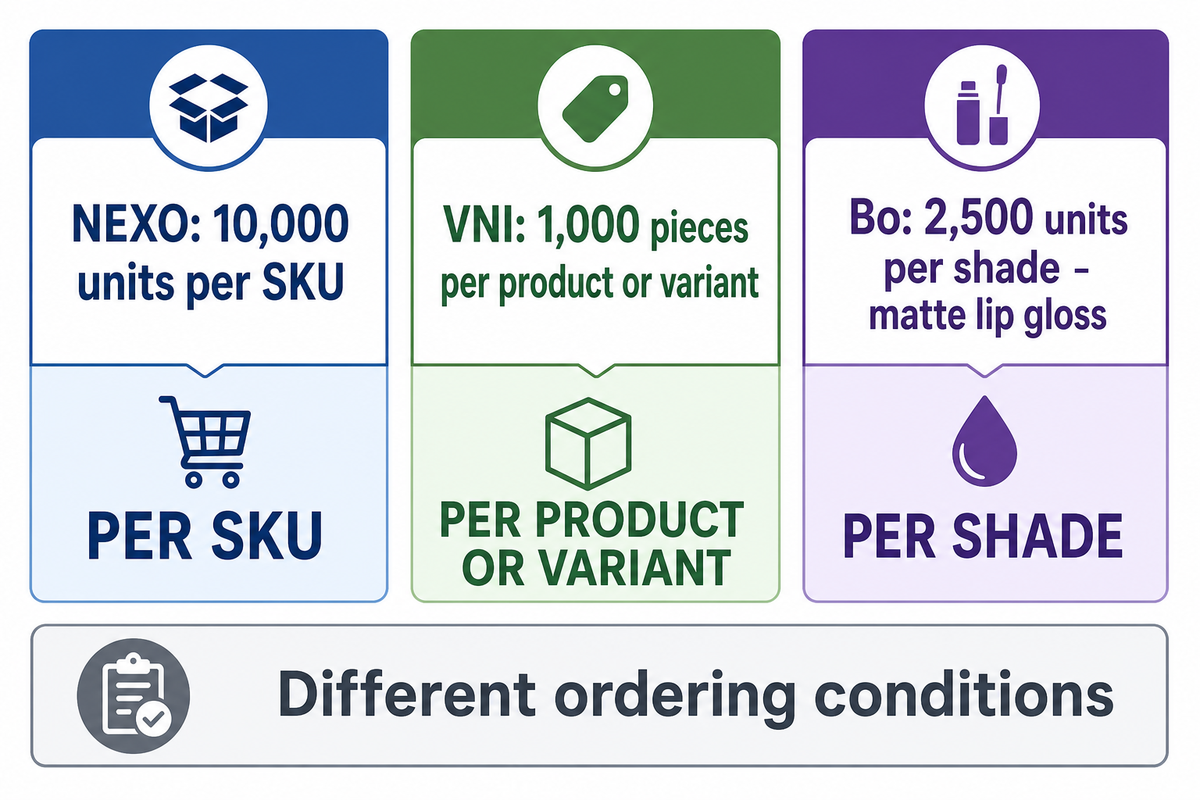
The 10-Manufacturer Halal Production Fit Matrix considers location, product scope and purchasing constraints, all in the same view. Read the order conditions alongside each company’s advantages. A lower-advertised minimum could apply to a more constrained configuration, while a larger production operation could be useful only after the brand attains a sufficient level of demand to support its batch size.
| No. | Company Name | Headquarters | Founded Year | Best For | Brief Introduction | Products and Manufacturing Services | Key Advantages | Potential Disadvantages | Official Website |
|---|---|---|---|---|---|---|---|---|---|
| 1 | NEXO Beauty Labs | Guangzhou, China | 1999 manufacturing foundation; international division 2020 | Established export-oriented beauty brands | International division of Xindalu International Biotechnology (Guangzhou) Co., Ltd. | Skincare, sun care, masks, hair and body products; formulation, OEM/ODM and private label | Published 36,000 m² facility, 56 production lines and a certificate scope ledger | Standard minimum of 10,000 units per SKU can exceed a small test launch | https://nexobeautylabs.com/ |
| 2 | Xiran | Guangzhou, China | 2013 | Smaller customized skincare projects | OEM/ODM/OBM research and manufacturing company | Skincare, masks, sunscreen, hair, body and baby care; formulation and packaging | Published 1,000-unit minimum and 7–10-day prototyping window | Halal certificate assistance adds a project stage; the offer is not a pre-certified catalogue | https://xiranskincare.com/ |
| 3 | Sky Resources | Bukit Mertajam, Penang, Malaysia | 1991 | Broad Malaysian OEM/ODM development | Contract manufacturer describing halal and GMP-certified operations | Skincare, hair care and personal care; design, formulation, packaging and production | Explains differences between customer-specified OEM and manufacturer-developed ODM work | ODM designs may remain manufacturer-owned and available to other brands | https://sky-resources.com/ |
| 4 | Dermascience | Kajang, Selangor, Malaysia | 2015 | Skincare concepts requiring development and testing | Manufacturer with a clinical skin-science focus | Facial, body, hair, sun, baby, aesthetic-care and color-cosmetics ranges | States formulation, stability and ingredient-risk checks; describes a Halal-certified plant | Stability and packaging-compatibility approval stages must fit the launch schedule | https://www.dermascience.com.my/ |
| 5 | VNI Scientific | Senawang, Seremban, Malaysia | Not publicly disclosed | Personal care programs planned by variant | OEM manufacturer offering formula consultation through packaging | Skincare, hair, body, baby care, toiletries and color cosmetics | Published minimum of 1,000 pieces per product or variant; VNIBioC nanoemulsion range | Each variant carries its own minimum; a product-specific cancelled notification appears in public records | https://vniscientific.com/ |
| 6 | HE Manufacturing | Rawang, Selangor, Malaysia | 2012 | Repeat-order personal care production | Italian-owned Malaysian OEM/ODM and contract manufacturer | Hair, skin, baby and home care, personal care and bar soap | Six production lines; published liquid capacity of 936,000 litres per month | 5,000-unit minimum; the stated 3–4-week production period starts after approvals | https://hemanufacturing.com/ |
| 7 | CL Cosmetic | Kajang, Selangor, Malaysia | 2002 | Multi-category non-aerosol product development | Private-label OEM/ODM manufacturer with in-house formulation work | Eight product lines, including skincare, body, hair, lip and base makeup | Website describes work for more than 300 brands and an 8–12-week concept-to-production route | No aerosol metal-can processing; a historical night-cream record appears in the cancelled-notification dataset | https://clcosmetic.com/ |
| 8 | COSMAX Indonesia | East Jakarta factory; South Jakarta office, Indonesia | 2012 factory acquisition; operations from 2013 | Indonesia-based development and production | Indonesian operation of the COSMAX Group | Cosmetics and health-product development through ODM, OEM and OBM models | Local production and R&I; website lists LPPOM MUI Halal, CPKB/GMP and ISO 22716 | An Indonesia-site brief needs separate scoping if production moves to another group plant | https://cosmax.co.id/ |
| 9 | Bo International | Gurugram, Haryana, India | 2013 | Indian private-label skincare and makeup | Contract producer offering formulas, packaging and design | Skin, hair, baby, bath and personal care, plus color cosmetics | Published 130,000 sq. ft. facility; product pages give useful configuration-level terms | Matte lip gloss requires 2,500 units per shade; its 45-day quote is product-specific | https://www.bointernational.net/ |
| 10 | Cosmecca Korea | Eumseong, North Chungcheong, South Korea | 1999 incorporation; separate founding date 2000 | Korean skincare, sun-care and makeup development | Research and manufacturing business describing its model as OGM | Cleansers, creams, sunscreen, foundation and lip makeup | 2025 report identifies Eumseong’s MUI HALAL certification and its validity period | The reported Eumseong certification is tied to that site, not every group production location | https://www.cosmecca-esg.com/ |
Measurements such as factory area, number of lines, and monthly liquid output don’t lend themselves to an informal league table. They are included only where a company publishes them and should not be converted into an informal league table. None of them indicates the available capacity to produce your formula, fill your container, for your targeted production month. A capacity commitment for that specific production window should be provided if growing demand leads you to increase an order. That should be addressed in the project quotation.
Chinese Cosmetic Manufacturing Partners for Private Label Projects
NEXO and Xiran offer two different starting points for a China-based development project. NEXO publishes a larger standard order floor and an export-focused service route. Xiran advertises a smaller minimum and prototype timing. Both describe customization, but their public halal wording and commercial conditions should remain distinct.
1. NEXO Beauty Labs: Best for Established Middle East Beauty Projects
Headquarters: Guangzhou, China · Founded: manufacturing foundation in 1999; international division established in 2020 · Type: international division of Xindalu International Biotechnology (Guangzhou) Co., Ltd., providing contract manufacturing.
Official website: https://nexobeautylabs.com/
Main products: skincare, sun care, masks, hair care and body care.
Capabilities: custom formulation, OEM/ODM and private label production; the website describes a 36,000 m² Guangzhou facility with 56 production lines.
Certifications / notable work: NEXO’s published certificate scope ledger lists Intertek ISO 22716:2007 certificate SZ2503C3 for specified liquid and gel production units, plus company-level MUI halal determination LPPOM-00150276060425.
The NEXO Beauty Labs manufacturing background separates the factory’s longer history from the international team’s launch, which helps buyers identify the operation behind the brand. Its development and export services fit established product programs that need formulation and manufacturing support in one project. The stated standard minimum is 10,000 units per SKU, so a small market test may require a different starting route. The certificate ledger distinguishes production-unit scope from the company-level halal determination rather than presenting them as interchangeable documents.
2. Xiran: Best for Customized Skincare at a Smaller Published Minimum
Headquarters: Guangzhou, China · Founded: 2013 · Type: OEM/ODM/OBM cosmetics research, manufacturing and private-label company.
Official website: https://xiranskincare.com/
Main products: skincare, haircare, bodycare, masks, sunscreen and baby care.
Capabilities: custom formulas and packaging, with a published 1,000-unit minimum and a 7–10-day prototyping window.
Certifications / notable work: Xiran’s About page lists GMPC and ISO 22716; its skincare service page offers help obtaining a Halal Certificate.
Xiran’s smaller published minimum gives a developing cosmetic brand a practical reason to include it in an initial supplier comparison. The prototype timing also provides a starting point for the sample discussion, although a prototype isn’t a finished commercial shipment. Its halal offer is certificate assistance, which means that work belongs in the development schedule rather than being treated as an existing certificate for every proposed item. A buyer choosing this route should therefore compare the complete project scope with a supplier offering an already established product program.
The useful distinction between these two companies is order fit, not a claim that one production country guarantees better quality or lower cost. A brand with confirmed distribution may be able to plan around NEXO’s standard batch size. Another brand may place more weight on Xiran’s published starting quantity. Packaging, formula changes and the number of variants still need to be part of the same quotation.
Malaysian Private Label Skincare and Personal Care Manufacturers
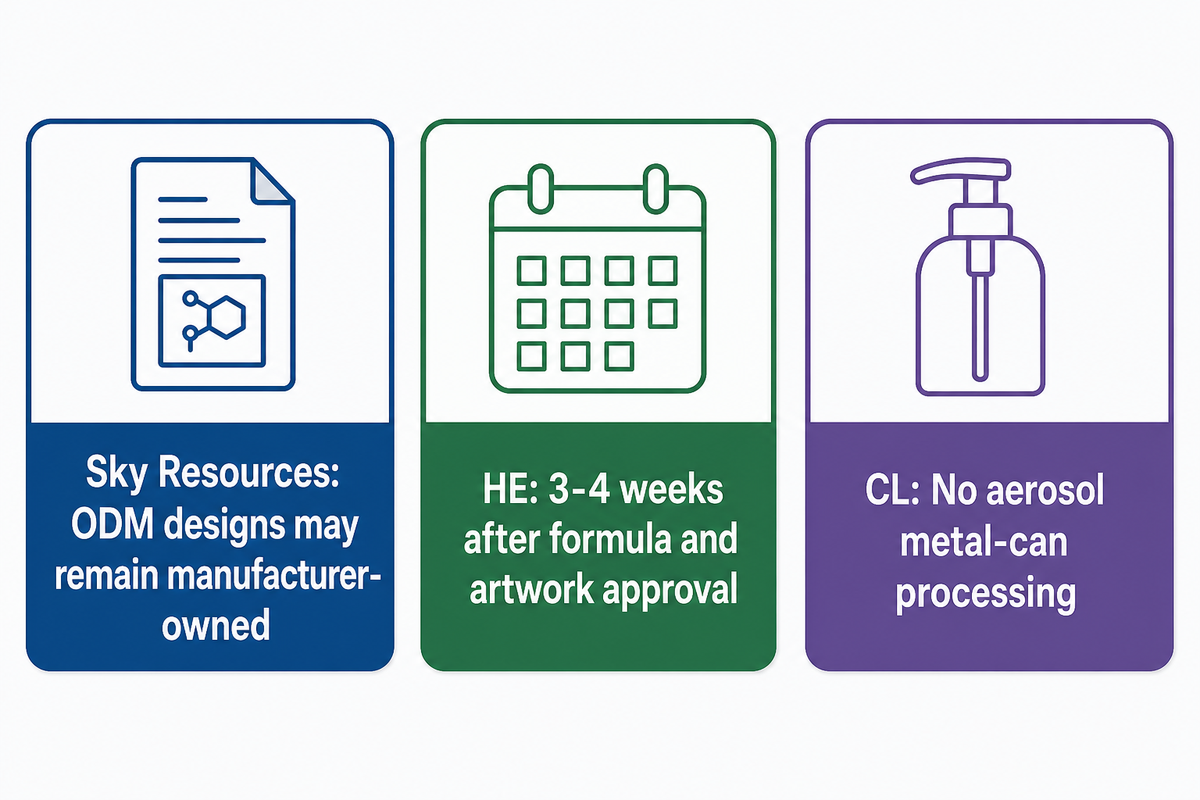
The Malaysian group covers broad development services, skincare-focused formulation and repeat-order personal care products. Sky Resources explains ownership differences between production models. Dermascience describes testing stages. VNI and HE publish minimums with different conditions, while CL identifies a specific packaging format it doesn’t process.
3. Sky Resources: Best for Broad Skincare and Personal Care Development
Headquarters: Bukit Mertajam, Penang, Malaysia · Founded: 1991 · Type: contract OEM/ODM and private-label cosmetics manufacturer.
Official website: https://sky-resources.com/
Main products: skincare, personal care, hair care and cosmetic products.
Capabilities: customer-specified OEM manufacturing and ODM design and development, including formulation, packaging, testing and production.
Certifications / notable work: according to its website, Sky operates as a Halal and GMP-certified manufacturer and lists ISO 9001:2015 among its manufacturing standards.
Sky’s explanation of production models is useful for brands deciding how much development work they want the factory to supply. Its OEM description places specifications with the client, while the ODM route includes manufacturer-developed designs. Sky also states that the manufacturer may retain IP rights to ODM designs and offer them to multiple brands. That makes the route a different purchasing proposition for a brand seeking an exclusive formula, even when the product category and packaging look suitable.
4. Dermascience: Best for Skincare Development with Testing Stages
Headquarters: Kajang, Selangor, Malaysia · Founded: 2015 · Type: skin-science-driven OEM and skincare manufacturer.
Official website: https://www.dermascience.com.my/
Main products: facial, body, hair, sun, baby, color-cosmetics and aesthetic-care ranges.
Capabilities: formulation work for briefs involving sensitive or barrier-damaged skin, with stated stability, ingredient-risk and safety checks.
Certifications / notable work: Dermascience describes its production plant as ISO 9001, GMP and Halal certified; its services include packaging-compatibility testing.
Dermascience gives a skincare manufacturer comparison a clear development focus, with its website discussing formulation mechanisms and skin concerns rather than only listing finished packaging. That focus can be useful when a brief requires a defined texture, ingredient approach and testing plan, without implying that the resulting product has proven therapeutic effects. Its published process places stability and packaging-compatibility work before production. A launch date that allows only filling time would therefore leave out part of this supplier’s stated development sequence.
5. VNI Scientific: Best for Personal Care with Published Variant Minimums
Headquarters: Senawang, Seremban, Negeri Sembilan, Malaysia · Founded: not publicly disclosed · Type: OEM manufacturer offering formulation, production and packaging.
Official website: https://vniscientific.com/
Main products: skincare, hair care, body and baby care, toiletries and color cosmetics.
Capabilities: formula consultation through finished packaging; a stated minimum of 1000 pieces per product or variant.
Certifications / notable work: VNI’s website lists ISO 22716/GMP and JAKIM Halal status; its NanoTrusted reference concerns nanoemulsions in the VNIBioC range.
VNI’s published variant-level minimum makes it easier to frame an initial personal-care enquiry than a general promise of flexible quantities. The same term limits a broad launch because each product or variant needs its own order allocation. Malaysia’s government cancelled-notification dataset names VNI as manufacturer of SKINMADE AZ & SALICYLIC ACID + LICORICE ROOT SERUM, notification NOT230202916K, with azelaic acid recorded as the detected substance. This is a record for that product, not a finding about every current VNI product or the status of its halal certification.
6. HE Manufacturing: Best for Repeat-Order Personal Care Programs
Headquarters: Rawang, Selangor, Malaysia · Founded: 2012 · Type: Italian-owned Malaysian OEM/ODM and private-label contract manufacturer.
Official website: https://hemanufacturing.com/
Main products: hair care, personal care, bar soap, skincare, baby care and home care.
Capabilities: six production lines and a stated liquid production capacity of 936,000 litres per month.
Certifications / notable work: the company lists JAKIM Halal, ISO 22716 cosmetics GMP and ISO 9001, and describes two adjacent plants on its Rawang site.
HE’s published capacity and category range make it relevant to brands building repeat-order programs rather than choosing a factory solely for a small first trial. Its website states a 5,000-unit minimum, which is a concrete starting point for the commercial discussion. The typical 3–4-week production period begins after formula and artwork approval, so it doesn’t include every step between the first enquiry and delivery. For a buyer coordinating several packaging designs, that approval condition is as important as the headline timing.
7. CL Cosmetic: Best for Multi-Category Non-Aerosol Development
Headquarters: Kajang, Selangor, Malaysia · Founded: 2002 · Type: private-label OEM/ODM manufacturer with in-house R&D.
Official website: https://clcosmetic.com/
Main products: eight lines covering skincare, body care, haircare, foundation/base makeup, lip, men’s, intimate and baby/sensitive care.
Capabilities: formulation through filling and packaging; the website describes work for more than 300 brands and typical concept-to-production projects of 8–12 weeks.
Certifications / notable work: CL lists GMP certification and JAKIM Halal verification for its operation.
CL’s broad range fits a multi-category brief, but its body mists use non-pressurized pump atomizers and it explicitly excludes aerosol metal cans. Malaysia’s government dataset names CL as manufacturer of ZMY Magnetic Aura NIGHT CREAM, notification NOT220605474K, with mercury recorded as the detected substance. The regulator lists that product in its 2024 cancelled-notification records. The record doesn’t establish responsibility for the substance, subsequent corrective action or the condition of every current CL product.
Published timelines within this group start at different points. HE quotes production after approvals; CL describes concept-to-production work. Dermascience lists development tests without assigning a single universal duration. Putting those descriptions into one “fastest manufacturer” ranking would hide the very work a brand needs to budget for.
Indonesian, Indian and Korean Manufacturers for Broader Product Ranges
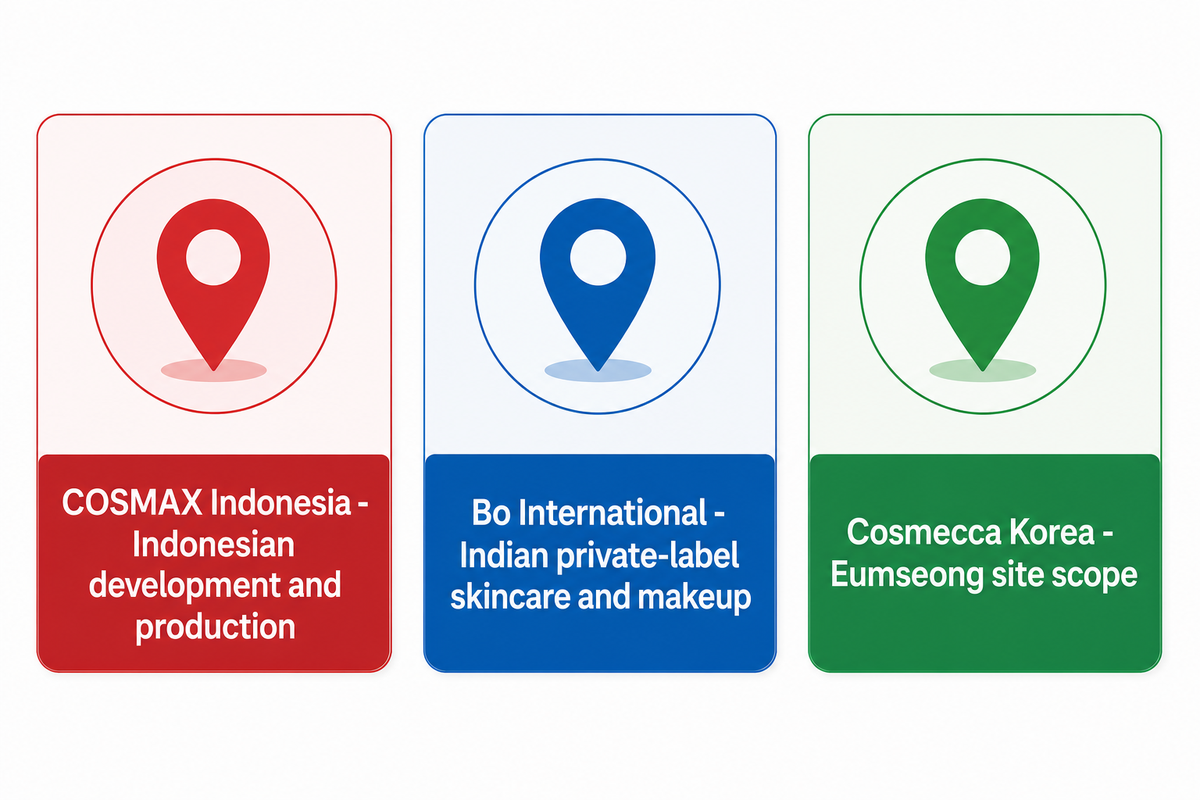
COSMAX Indonesia, Bo International and Cosmecca Korea add other manufacturing routes to the comparison. Their useful differences are specific: an Indonesian production operation, an Indian product page with shade-level commercial terms, and a Korean report identifying the site covered by a halal certificate.
8. COSMAX Indonesia: Best for Local Indonesian Cosmetic Development
Headquarters: Ciracas, East Jakarta factory, with a South Jakarta office · Founded: factory acquired in 2012; Indonesian operations began in 2013 · Type: COSMAX Group’s Indonesian ODM/OEM/OBM manufacturer.
Official website: https://cosmax.co.id/
Main products: cosmetics and health products developed for brands.
Capabilities: Indonesian production facilities and an R&I center supporting development and manufacturing.
Certifications / notable work: the Indonesian website lists LPPOM MUI Halal, CPKB/GMP and ISO 22716, and its history records the acquisition of the former L’Oréal factory in Ciracas.
COSMAX Indonesia offers a route for a brand that wants development and production located in Indonesia, with the local operation identified separately from the wider group. Its history gives buyers a clearer picture than assigning the parent’s founding year to the Indonesian factory. The service models include development-led work as well as production, so the project brief should specify the work the brand already owns. A program moved to another COSMAX plant would need a separately scoped site arrangement; the Indonesian operation’s published certification isn’t a group-wide production passport.
9. Bo International: Best for Indian Private Label Skincare and Makeup
Headquarters: Gurugram, Haryana, India · Founded: 2013 · Type: private label and contract cosmetics manufacturer.
Official website: https://www.bointernational.net/
Main products: skincare, hair care, personal care, baby care, bath/shower products and color cosmetics.
Capabilities: custom formulas, packaging and design; the About page describes a 130,000 sq. ft. Gurugram facility.
Certifications / notable work: its matte-lip-gloss page lists HALAL and GMP among company certifications and provides product-level ordering terms.
Bo’s product pages can help a buyer move from a broad skincare and makeup enquiry to a defined launch configuration. For matte lip gloss, the published minimum is 2500 units per shade and the stated lead time is 45 days for 2,500 units. Those terms make it especially relevant to a makeup brief with a limited, planned shade range. They also create a clear constraint: the quantity can’t be treated as one shared minimum across an unrestricted shade collection, nor should that product’s timing be applied to every item the factory sells.
10. Cosmecca Korea: Best for Korean Development with Eumseong Site Scope
Headquarters: Eumseong, North Chungcheong, South Korea · Founded: legal incorporation in 1999; the company separately records a 2000 founding date · Type: cosmetics research and manufacturing company describing its model as OGM.
Official website: https://www.cosmecca-esg.com/
Main products: basic skincare, functional/sun-care products, base makeup and color makeup.
Capabilities: formulation and manufacturing across cleansers, creams, sunscreen, foundation and lip makeup.
Certifications / notable work: its 2025 sustainability report lists MUI HALAL for Eumseong, with a stated period of 15 January 2025 to 14 January 2029, and ISO 22716:2007 for that site.
Cosmecca combines a broad development range with a report that names the production site attached to its halal certification. That makes Eumseong a specific starting point for a Korean manufacturing discussion rather than an assumption about every facility carrying the group name. The report is useful for locating the relevant operation, while the product brief still determines the development work and commercial terms. Its Eumseong certificate should remain associated with Eumseong when the purchasing team compares possible production locations.
For brands worldwide building an international shortlist, name the intended manufacturing site in the first enquiry. A sales office, research center and factory can have different addresses and responsibilities. The comparison becomes more useful when each response describes the same product brief and makes the proposed production location explicit.
How to Choose a Halal Cosmetic Manufacturer
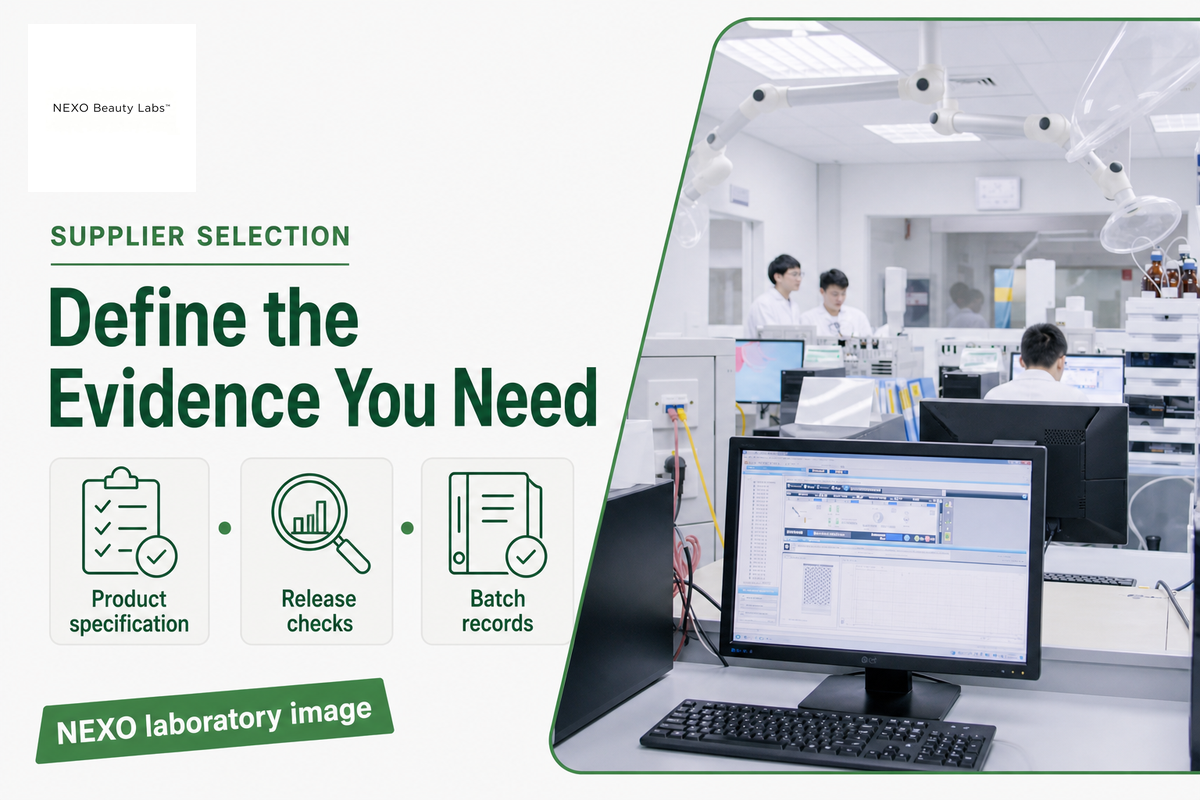
When choosing halal cosmetics, look at product fit and order structure and review documents and the approvals process connected to that particular project. A supplier’s category range may get it on the shortlist; its proposed formula, manufacturing site, and quote decide if it’s on the final list. The following make offers easier to compare.
Match the factory to your product and packaging format
For halal skincare products, put the product type first, then the marketing concept. An example of a product brief for a development of a rinse-off hair cleanser is different from a development brief for a leave-on serum and a pigmented lip product, even if all are for the same halal beauty brand. Describe the texture, pack size, dispensing format and intended use. A ‘beauty solutions’ request gives the manufacturer too much flexibility to quote a product which you may not have intended.
Packaging can eliminate an otherwise acceptable supplier from a short list. CL’s stated exclusion of aerosol metal cans is a concrete example: a pump body mist and a pressurized aerosol may occupy a similar retail category but require different manufacturing arrangements. A project team should decide the format of the product before comparing unit prices.
When detailing skincare and cosmetic development, describe the intended audience without making the brief an unsupported claim. “Suitable for all skin types” is certainly broader than a defined product concept. A supplier has to know which skin types and use conditions your team will study, as well as which claims on the finished product will require supporting work. Halal-certified skincare doesn’t imply skin tolerance or performance of the product.
What are the benefits of choosing an OEM/ODM manufacturer for my beauty brand?
An OEM/ODM manufacturer has the capacity for development and production that a beauty brand doesn’t have in-house. The level of benefit is dependent upon what’s defined in the agreement: some projects commence with a customer-owned formula, while others start with a manufacturer-developed design. A useful agreement identifies formula ownership, customization, testing and packaging responsibilities before the commercial batch is approved.
Sky’s published distinction is helpful here. A manufacturer-developed formula may shorten the development discussion, but it may also be available to other brands. Custom development can offer a different level of control, with more decisions to resolve before production. Neither of these models is automatically right for every launch.
Compare custom cosmetic formulation with the use of ready-made skincare formulas against your actual point of difference. If the brand’s value depends on a particular texture or ingredient system, the formula route matters. If the priority is testing distribution with an established product format, a simpler starting formula may fit the commercial plan. Our cosmetic contract manufacturing guide explains the production relationship in more detail.
How do I ensure my product formulations meet Halal standards?
Work with the intended certifier and manufacturer to define the exact formula, sourcing, and production process. Halal certification is concerned whether the defined product and process meet the applicable Islamic requirements; it isn’t established by a supplier’s logo alone. The review should link the product and the manufacturing site with the supporting documents to the scope being requested.
The Islamic Services of America health and beauty guidance states its review begins with the ingredients and evaluates the source and production method. This gives the purchasing team a practical starting point for obtaining halal certification: identify the proposed formula and the documentation its ingredients require. A trade name on a formulation sheet may not answer every sourcing question.
According to Islamic law, Halal means permissible. The applicable halal guidelines should be established with the intended certifier prior to finalizing the formula. The certifier assesses the adequacy and alignment of the proposed process to halal requirements. The standards of halal and the certifier’s process determine how a particular ingredient or manufacturing arrangement is assessed. Natural and organic ingredients, vegan positioning, and clean beauty language don’t replace that assessment. Nor should a brand assume that all ingredients in a broad chemical category receive the same decision regardless of the sourcing and use.
Check certificates for holder name, factory address, date ranges, products covered, and applicable appendices. Distinguish existing certification from halal certification services that help a project apply. A proposed range of halal-certified beauty products needs product-level scope, not simply a copied logo from the factory’s website. Determine if the chosen route of certification is appropriate to the destination market.
The importance of halal certification is partly the precision it brings to an otherwise broad label. Claims that a product is “truly halal” or that processes “follow halal” don’t describe the assessed formula and production site. Use the certifier’s actual terminology and covered scope in deciding whether a proposed product meets halal requirements.
Separate halal scope from cosmetic quality management
ISO 22716:2007 provides guidance on cosmetic good manufacturing practices for production, control, storage and shipment. It is not a halal certificate. A halal compliance discussion and a manufacturing-quality discussion therefore need their own documents, even when a company presents both credentials on the same page.
For quality review, ask how the proposed batch will be identified, what release checks apply and which records the brand receives. Connect those answers to the product specification and agreed packaging. A broad claim of high-quality production is less useful than a defined test result and an agreed acceptance criterion. NEXO’s quality management and product testing page provides background for that project conversation.
Public product records must also be reviewed. A historical, cancelled notification shouldn’t be ignored, but also shouldn’t be expanded beyond what the record supports. Ask the supplier for the relevant investigation and corrective-action documentation before making a purchasing decision affected by that record.
Compare minimums by SKU, variant and shade
Ask every supplier to express the minimum against your actual launch configuration. NEXO publishes a standard quantity per SKU; VNI states a minimum per product or variant; Bo’s matte lip gloss page quotes one per shade. Those are different ordering conditions, not interchangeable figures in a single lowest-price contest.
Keep formula quantity and packaging quantity separate in the quote. The bottle, pump, printed carton, and decoration can each change the commercial terms. If a brand chooses several pack designs for the same formula, the manufacturer should explain how those designs change purchasing and production. The headline minimum alone won’t tell us that.
A planned halal makeup collection also requires a decision on shade breadth. The intended scope for halal-certified makeup should identify the products being launched. More makeup products don’t automatically make a stronger first launch if stock is spread across combinations the business can’t sell. Use the same discipline for hair care products offered in several fragrances. The range plan should be realistic before the factory calculates the batch. A halal skincare brand should also use the same discipline for its first cleanser and cream.
Build the schedule around approvals, not just filling time
A sample window, a production lead time and a concept-to-shipment schedule describe different work. Xiran’s prototype timing doesn’t include every commercial step. HE’s stated production period begins after formula and artwork approval. Dermascience explicitly includes stability and packaging-compatibility stages. Comparing these as if they were the same promise would produce a misleading launch plan.
Request the order in writing to start with initial samples, and include requested changes, selection of packaging, tests, approval of artwork, production and dispatch. Designate a decision owner on your team for each approval. A factory can’t finalize an undecided label or an unresolved product specification, simply because of an approaching planned launch date.
Brands planning cosmetic manufacturing for Middle East brands should include their destination and distribution route from the start. The supplier needs that context before proposing the documentation and export work it can provide. A commercial plan for the halal skincare market should identify where the products will actually be sold. The destination matters more to this decision than a broad ambition to enter the global halal market. Certification, product registration and shipping are separate tasks; none should be assumed to be included merely because the factory accepts international orders.
Make every quotation describe the same finished product
Compare a defined formula in a defined pack at a defined quantity. In the beauty industry, the quote should say whether development, samples, testing, certification support, decoration, outer packaging and freight are included or separate. Otherwise, an apparently low unit price may only describe an earlier stage of the job than another supplier’s finished-product quotation.
In the halal cosmetics market, consumer positioning can vary as much as production requirements. A premium halal concept may emphasize a particular texture or pack, while a cosmetics wholesale program may prioritize repeatable supply and a limited range. Neither provides enough info to a factory to be useful. Translate the commercial idea into the physical product and service work being purchased.
The same applies to ethical beauty, sustainable beauty and inclusive beauty messages. If you want to make your brand promises true, you need to find out the evidence each one requires. A company can manufacture halal beauty products without every wider marketing statement being covered by the same certificate. Keep the claims which the team can substantiate and remove the rest.
Halal Cosmetics Brands and Manufacturing FAQ
Which are the best halal cosmetic manufacturers for a small brand?
Start with the published minimum for your exact product configuration.
Xiran publishes a 1,000-unit minimum, while VNI states 1,000 pieces per product or variant. A small brand should also compare formula development, packaging quantities and the number of variants it intends to launch. The lowest starting quantity is only useful if the supplier offers the product and certification-support route the project needs. VNI’s product-specific public record is discussed above and belongs in the supplier review.
Who is the largest halal cosmetic manufacturer in the world?
The reviewed sources do not establish a comparable worldwide ranking.
Companies disclose different measures, including facility area, production lines, liquid capacity and group-level business reach. Those measures can’t establish one largest halal manufacturer without a common definition and comparable data. A global halal manufacturing group may also operate several sites with different certificate scopes. For a purchasing decision, the proposed factory’s product fit and available production arrangement are more useful than an unsupported size ranking.
What is the difference between a halal cosmetic manufacturer and a supplier?
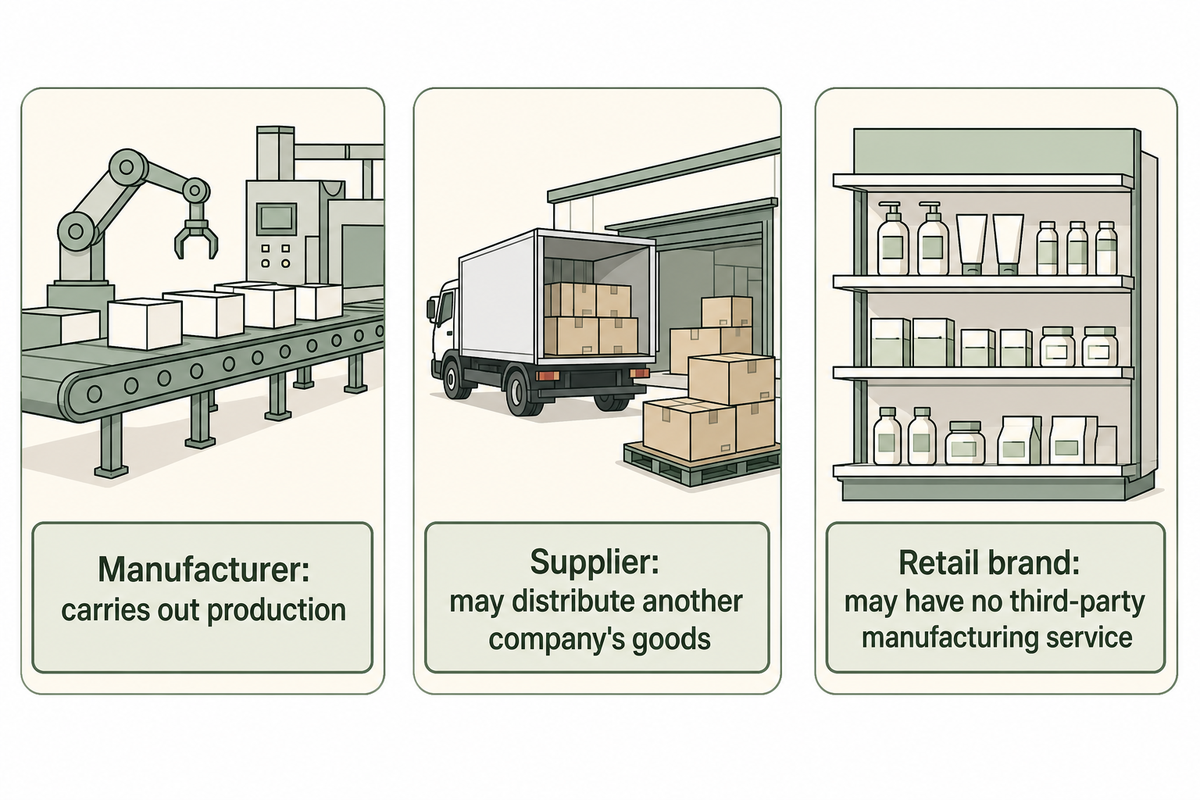
A manufacturer carries out production; a supplier may distribute another company’s goods.
The supplier label can cover a factory, trading company, distributor or sourcing business. Before treating a business as a production partner, establish which entity will make the product and which site will do the work. A retailer selling halal-certified beauty products may have no third-party manufacturing service at all. That’s why this guide focuses on companies with published contract production or development offerings rather than consumer brand popularity.
How much does private label halal cosmetics manufacturing cost?
A usable price for halal products needs a formula, quantity, pack and service scope.
There’s no supported universal price across the companies in this guide. A stock formula and a custom formula require different development work; packaging and shade choices can change the order structure. Testing, certification support, samples, decoration and freight may be quoted separately.
Send the same specification to the manufacturers you shortlist, then compare both the unit price and the work included. Ask what changes the price if you revise the formula, split the batch across variants or change the packaging. A quote for bulk product can’t be compared directly with a shelf-ready packed product. The useful budget is the cost of completing your actual launch configuration, including the agreed development steps, rather than a generic price attached to a product category.
Which cosmetic brand is halal?
Look at the specific product and its certification scope.
A brand name alone doesn’t establish the status of every item it sells. Check the named product and relevant certificate rather than assuming that one certified range covers the whole catalogue. Retail halal brands selling halal-certified products and third-party manufacturers serve different buying needs.
What does Halal certification mean for beauty products?
It records an assessment against the certifier’s applicable halal requirements.
The certification process connects a defined scope to ingredient and production requirements. It evaluates whether covered products meet halal standards within that scope. It doesn’t automatically prove every other marketing claim attached to the product. A product described as certified halal isn’t, on that basis alone, proven organic, suitable for every skin type or manufactured ethically in every possible sense. Those statements need their own evidence and should be considered separately when a brand develops its claims.
Define Your Beauty Project Before Requesting a Quote
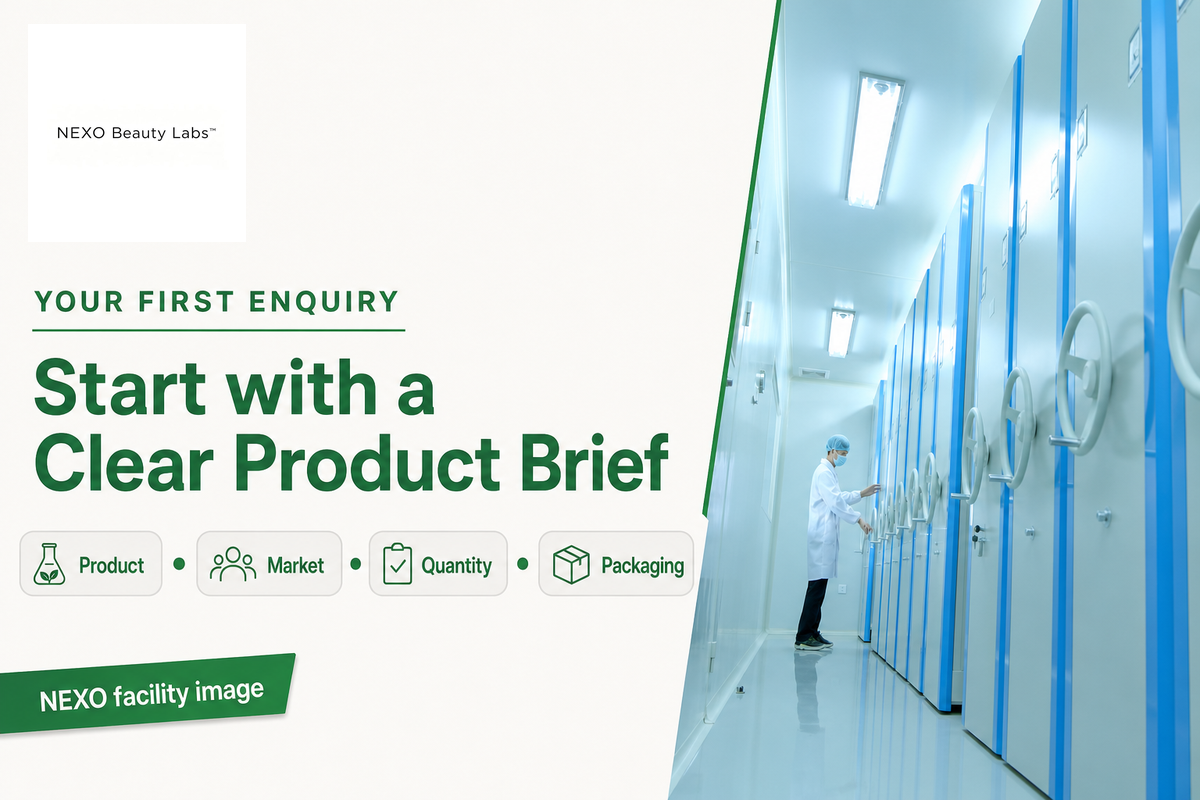
A good first enquiry would include the name of the product, destination market, targeted order quantity, formula route and preferred packaging. State the intended variants and the date when your business needs stock. If you have a benchmark sample or a formula, explain to the manufacturer what’s being asked and what’s already defined.
NEXO Beauty Labs supports skincare, hair care and body care development for brands that need formulation and scalable production. For a Middle East project, start with our Middle East cosmetic manufacturing services and share the product brief. We can then discuss the manufacturing scope and documents relevant to the proposed project.
Ready to discuss your product? Bring your product type, market, quantity and packaging idea to the first conversation.
Discuss Your Manufacturing ProjectReferences & Sources
Company websites and their About, service, product and certification pages informed the manufacturer profiles. Official website addresses appear in the table and each profile. The additional references below support the standards distinction, site-specific report and public product records.
- ISO: ISO 22716:2007, cosmetics good manufacturing practices
- Islamic Services of America: health and beauty certification review
- Cosmecca Korea: 2025 sustainability report, certification table
- Government of Malaysia: cancelled cosmetic product notifications
- Malaysia NPRA: cancellation of notified cosmetic products