Get in touch with NEXO Beauty Labs Company


To master how to make body butter that stays smooth and repeatable from a 100 g test jar to a 50 kg kettle, formulate every solid fat and liquid emollient by weight in grams. Anhydrous body butter is a water-free blend of plant butters, carrier oils and an antioxidant which is used to lock moisture to the skin. Melt the hard fats, hold them hot to clear crystal seeds, chill fast to opaque trace, stir in scent during cool-down, and whip or pour into dry jars.
Kitchen volume recipes fail because packed scoops vary wildly in mass. Weighing by weight percentage (w/w) locks your fat-to-oil ratio, allows you to dose fragrance within the prescribed ceiling limits by the International Fragrance Association (IFRA) for dermal safety, and eliminates variation in product firmness from batch to batch.
How to Make Body Butter by Weight: 5-Step Anhydrous Process
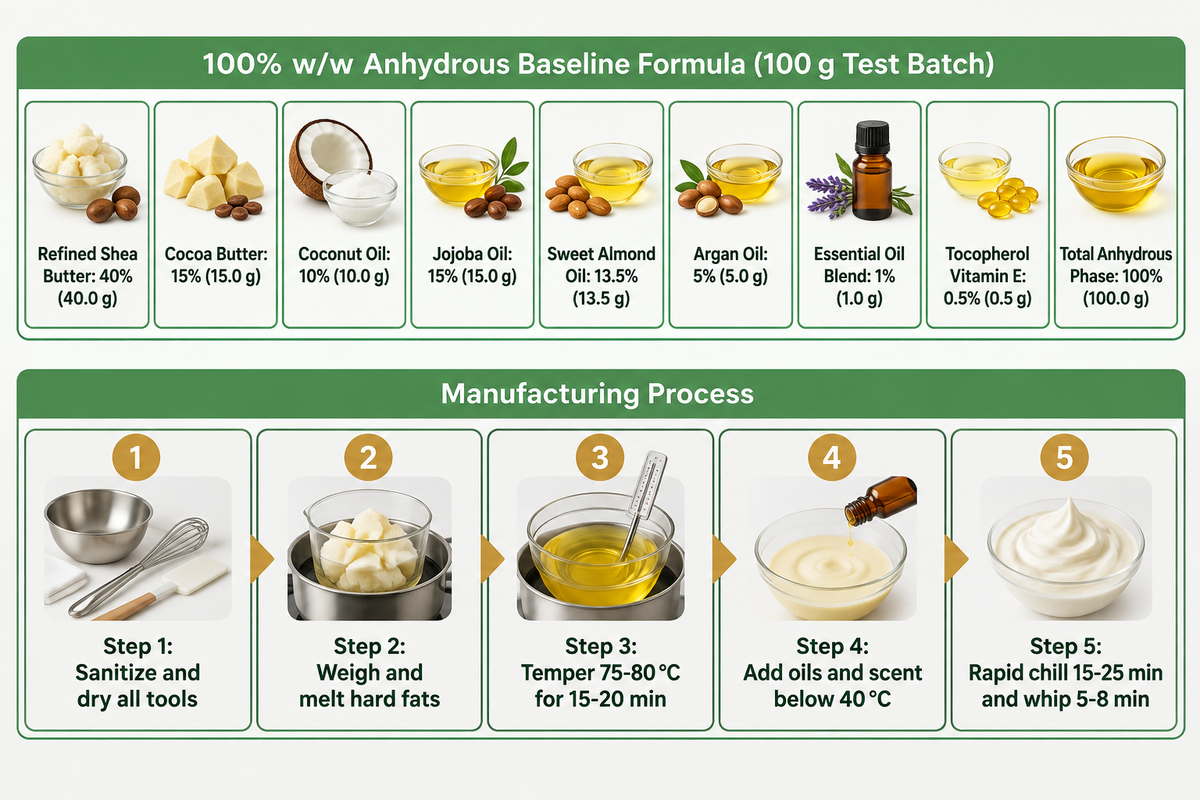
Build your anhydrous formula around 55–65% solid fats, 33–43% liquid oils, 0.5% tocopherol antioxidant, and up to 1% essential oil by total batch weight. Weigh every raw material on a digital scale accurate to 0.1 g so your fat ratio holds across batch sizes. Work through five dry steps: sanitize, melt and temper, add oils, chill fast, and whip.
In practice, a 0.1 g digital scale, a heat-proof bowl, a double boiler, a probe thermometer, and a hand mixer are the core equipment for the process. Percentages convert straight into grams on a 100 g test batch, so scaling needs only simple multiplication.
The table below adapts the 100% w/w anti-grain baseline from Cosmetic Science Lab’s formulation guide. Every raw material sums to exactly 100.0%.
Assumed inputs: Base batch size is 100 g, scaled 5x to 500 g pilot batch with zero transfer loss. Optional dry-touch arrowroot powder (3–5% w/w) is excluded from the base column; if added, deduct the exact same percentage from sweet almond oil.
| Ingredient (INCI) | Functional Role | % w/w | 100 g Test Batch | 500 g Pilot Batch |
|---|---|---|---|---|
| Refined Shea Butter (Butyrospermum parkii) | Primary body and creamy cushion | 40% | 40.0 g | 200.0 g |
| Cocoa Butter (Theobroma cacao) | Firmness and higher melting point | 15% | 15.0 g | 75.0 g |
| Coconut Oil (Cocos nucifera) | Fast skin-temperature melt slip | 10% | 10.0 g | 50.0 g |
| Jojoba Oil (Simmondsia chinensis) | Light, oxidation-resistant glide | 15% | 15.0 g | 75.0 g |
| Sweet Almond Oil (Prunus amygdalus dulcis) | Slip and spreadability (deduct 3–5% for starch) | 13.5% | 13.5 g | 67.5 g |
| Argan Oil (Argania spinosa) | Softer, less waxy after-feel | 5% | 5.0 g | 25.0 g |
| Essential Oil Blend (IFRA Cat. 5A verified) | Aroma (optional; swap for almond oil if unscented) | 1% | 1.0 g | 5.0 g |
| Tocopherol (Vitamin E Oil) | Lipid antioxidant (not a preservative) | 0.5% | 0.5 g | 2.5 g |
| Total Anhydrous Phase | Water-free lipid matrix | 100% | 100.0 g | 500.0 g |
On these inputs, scaling up the base 5x yields 500 g of net lipid mass. That mass figure scales batch weights reliably, though it does not predict jar fill count by fluid ounces because whipping incorporates air and lowers bulk density.
- Sanitize and dry all tools: Before each use, thoroughly clean bowls and beaters with rubbing alcohol and allow to air dry completely. Stray moisture droplets create micro-pockets where bacteria can multiply.
- Weigh and melt the butter phase: Weigh shea butter, cocoa butter, and coconut oil; place in a heat-proof bowl over a gentle double boiler. Stir to dissolve.
- Temper to erase crystal seeds: Hold the hard fats at 75-80 °C (167-176 °F) for 15-20 minutes. Keep water vapor out of the bowl and don’t let the fats smoke.
- Combine liquid oils and cool-down phase: Remove the bowl from heat. Add jojoba oil, sweet almond oil, argan oil, and vitamin E oil. Keep stirring as the mixture cools toward 40 °C (104 °F). Wait until the blend drops below 40 °C (104 °F), then add the essential oil and any sifted arrowroot starch.
- Rapid chill and whip: Chill the bowl in an ice bath or freezer (about 15–25 minutes for a 100–200 g bowl; the 500 g pilot batch takes longer) until edges turn opaque while the center stays soft. Beat with a hand mixer for 5–8 minutes until soft peaks hold, then jar and store below 25 °C (77 °F) as advised by Cosmetic Science Lab.
Unlike kitchen blogs that claim an exact measurement of half a cup shea butter plus ¼ cup of coconut oil, this structured diy body butter recipe operates with weight percentages. Every batch will have the same texture regardless of whether you made it at home or had it tested at a commercial lab.
How to make body butter with 3 ingredients?
Combine refined shea butter as your primary solid base with a lightweight liquid carrier oil and a standard tocopherol antioxidant dose. Keeping within the core balance, for instance 60% refined shea butter, 39.5% jojoba or sweet almond oil, and 0.5% vitamin E, keeps the formula scoopable without the use of additional hardeners.
Melt the shea butter, hold it at tempering temperature, stir in the liquid oil and vitamin E off heat, chill fast to opaque trace, and whip. Removing wax, starch, and scent lowers the risk of irritating reactive skin, although the finish feels richer than a starch-modified homemade body butter recipe.
Choosing Solid Botanical Butters: Shea Butter, Cocoa Butter, Mango, and Kokum
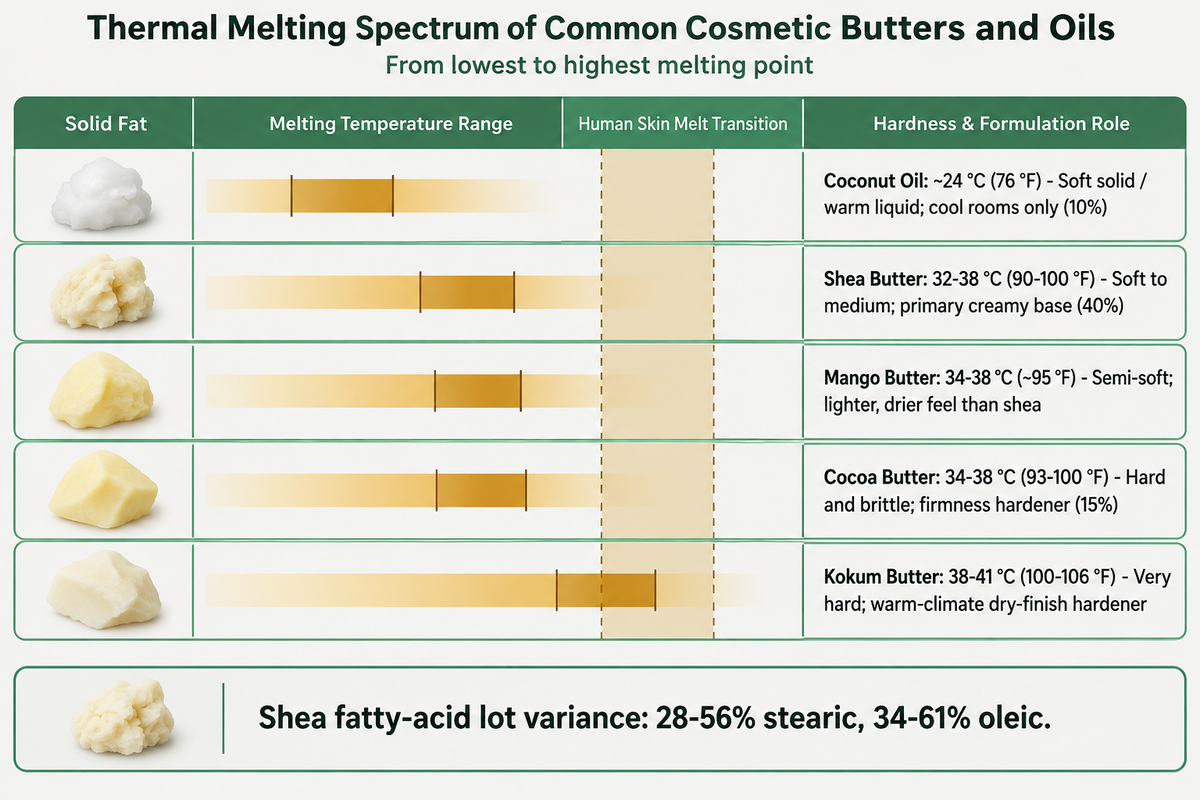
When dealing with warm climates, a soft creamy core made with mango butter or refined shea butter would work well with a structural butter like cocoa or kokum butter. Just check the melting ranges and fatty acid profiles before mixing.
Blindly grabbing raw shea butter or pure cocoa butter drives most beginner texture defects. Pure cocoa butter snaps brittle at room temperature, while unrefined shea butter brings a strong nutty odor that clashes with delicate scents.
Technical data compiled by Cosmetic Science Lab shows wide natural variation across shea nuts from seven African countries: stearic acid spans 28% to 56%, and oleic acid spans 34% to 61%. A Rutgers study cited in the same review found free fatty acid levels spanning 1.07% to 8.56%. Two lots labeled shea butter can therefore set very differently unless you control ratios and heat.
As Dr. SamiUllah, Ph.D. Chemistry at Formula Chemistry explains when diagnosing inconsistent batches:
“The problem is almost never the ingredients[;] it is the emollient ratio, the processing temperature, and the absence of a structured formulation approach.”
Raw-material pricing also shapes butter blends. West African Black pod disease, drought, and El Niño stress cut 2023/24 cocoa yields sharply, according to Huanda Cocoa. Bulk cocoa butter prices tracked by IMARC Group reached USD 9,835/MT in the United States and USD 8,541/MT in Germany in December 2025. By Q1 2026, Expert Market Research recorded U.S. pricing at USD 7,700/MT, Germany at USD 7,500/MT, and the Netherlands at USD 7,400/MT. Cote d’Ivoire origin prices rose 9.1% in Q1 2026 to USD 6,000/MT from USD 5,500/MT in Q4 2025. Balancing shea butter and cocoa butter with mango or kokum cushions both cost and melt stability.
| Botanical Butter (INCI) | Verified Melting Point | Hardness Grade | Odor & Refining Note | Role in Formula |
|---|---|---|---|---|
| Shea Butter (Butyrospermum parkii) | 32–38 °C (90–100 °F) | Soft to medium | Unrefined is smoky; refined is neutral white | Primary creamy base (40% in baseline); needs tempering |
| Mango Butter (Mangifera indica) | 34–38 °C (~95 °F) | Semi-soft | Mild to nearly odorless | Structuring emollient; lighter, drier feel than shea |
| Cocoa Butter (Theobroma cacao) | 34–38 °C (93–100 °F) | Hard and brittle | Strong chocolate scent; deodorized is neutral | Firmness hardener (15% in baseline); avoid overloading |
| Kokum Butter (Garcinia indica) | 38–41 °C (100–106 °F) | Very hard | Virtually odorless pale ivory | Warm-climate hardener; dry, non-greasy finish |
| Coconut Oil (Cocos nucifera) | Low melt (~24 °C / 76 °F) | Soft solid / warm liquid | Sweet coconut (virgin) or neutral (refined) | Optional slip booster (10% in baseline) for cool rooms only |
In Personal Care Magazine’s Technical Review, authors note that the yellow color and smoky odor in unrefined shea butter are stripped during refining to produce a neutral base. Compared to the raw grades, total unsaponifiable triterpene cinnamates decrease with refining. However, refined shea is easier to scent. Because shea butter is rich in stearic and oleic triglycerides, blending cocoa butter and shea at modest structural levels gives smooth spreadability without brittleness.
What is the best butter for making body butter?
Refined shea butter is the best primary base for whipped body butter because it aerates smoothly and cushions dry skin. Mango butter is the best alternative for a lighter base. Add kokum or cocoa butter (up to 15% in the base) for structure in warmer regions.
Relying on shea and cocoa butter alone rarely suits every climate. Shea melts quickly on skin. Kokum and cocoa butter help firm up the blend in the summer.
Carrier Oils and Dry-Touch Modifiers to Keep Homemade Body Butter Non-Greasy
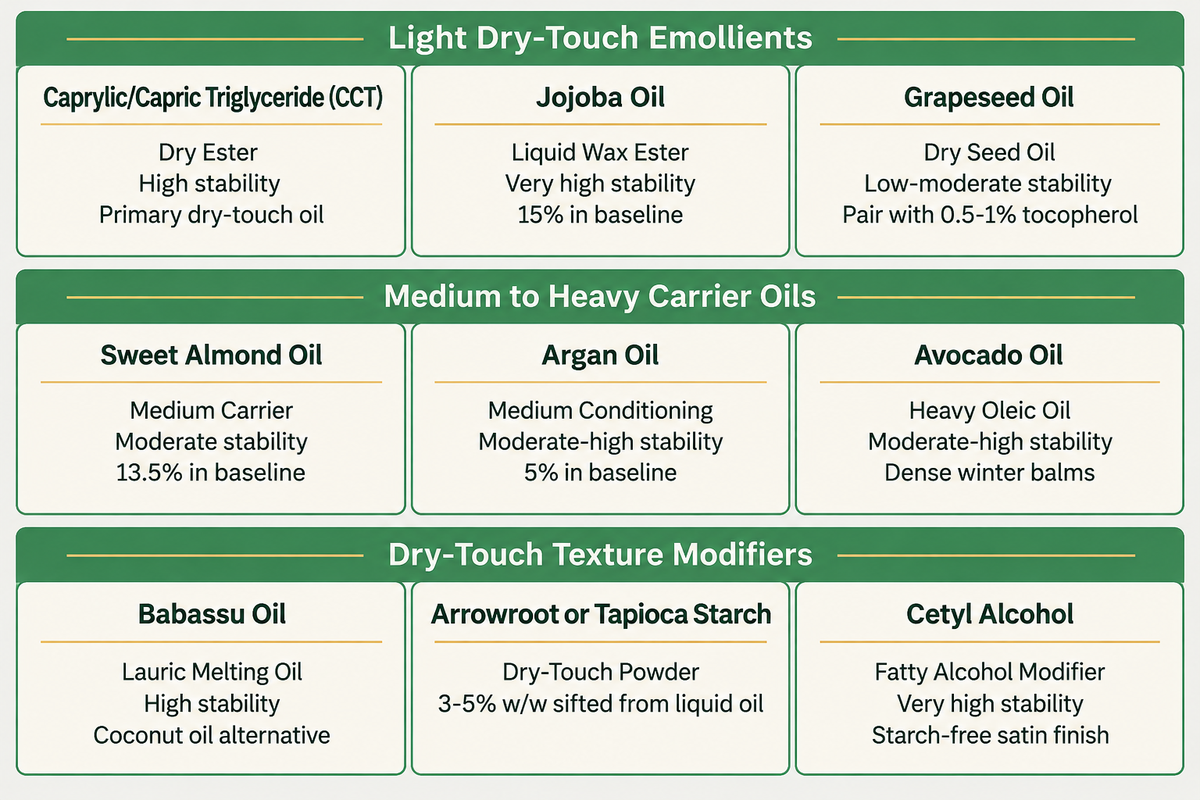
Build your liquid phase using fast spreading, oxidation resistant emollients, jojoba oil or caprylic/capric triglyceride, and fold in sifted arrowroot powder deducted from sweet almond oil to reduce surface sheen of the blend. That balanced pairing cuts greasy surface sheen without accelerating lipid rancidity across normal, dry, and sensitive skin types.
Greasy residue left on clothes and early stale odors trace back to picking the wrong liquid oil class. Many DIY guides mistake fast dry-touch spread for deeper skin absorption. In reality, dry touch feel is due to low surface viscosity and ester polarity.
Polyunsaturated seed oils like grapeseed oil have a light first touch, but their high linoleic content oxidizes quickly. As Personal Care Magazine highlights, low-viscosity polar branched-chain esters lighten shea’s skin feel cleanly. Compared to castor oil (check our texture profile of cosmetic-grade castor oil), which has a heavy, high-viscosity feel, esters have a light, dry touch, and feel better for use in body butters.
| Material | Cluster / Class | Sensory Finish | Oxidative Stability | Skin Type & Formulation Fit |
|---|---|---|---|---|
| Caprylic/Capric Triglyceride (CCT) | Dry Ester | Very light, non-greasy slip | High (saturated fraction) | All skin types; primary dry-touch liquid oil option |
| Jojoba Oil (including infused jojoba oil) | Liquid Wax Ester | Silky, balanced dry-down | Very high (wax ester) | Sensitive, oily, and normal skin (15% in baseline) |
| Grapeseed Oil | Dry Seed Oil | Light, low-sheen glide | Low–moderate (high linoleic) | Oily skin; always pair with 0.5–1% tocopherol |
| Sweet Almond Oil | Medium Carrier Oil | Soft cushion, mild sheen | Moderate | Normal to dry skin (13.5% in baseline; tree-nut note) |
| Argan Oil | Medium Conditioning Oil | Velvety, softer after-feel | Moderate–high | Dry skin; secondary conditioning oil (5% in baseline) |
| Avocado Oil | Heavy Oleic Oil | Rich, slow-absorbing film | Moderate–high | Very dry winter skin; best in dense evening balms |
| Babassu Oil | Lauric Melting Oil | Cooling quick melt | High (saturated) | Normal skin; fast-melting coconut oil alternative |
| Arrowroot or Tapioca Starch | Dry-Touch Powder | Matte, powdery slip | Inert (keep dry) | 3–5% w/w sifted; deduct directly from liquid oil |
| Cetyl Alcohol | Fatty Alcohol Modifier | Satin, waxy dry-down | Very high (saturated) | Melted into hot fat phase; starch-free dry-touch option |
Sieve arrowroot starch using a fine mesh, and slurry it in some almond oil before adding to your mixture. Cosmetic Science Lab suggests using 3-5% arrowroot powder to achieve a less greasy feel; using more than that increases the risk of chalky pilling on the skin. For a starch-free satin finish, melt a small amount of cetyl alcohol into the solid butter phase.
What is the best carrier oil for body butter?
For a non-greasy body butter, jojoba oil and caprylic/capric triglyceride are the best carrier oils. Grapeseed oil also feels light on oily skin, but it oxidizes faster and requires antioxidant protection.
For your choice of liquid oil, skin type and climate will guide your decision. Dry skin handles sweet almond oil or avocado oil comfortably, while sensitive skin and warmer, humid climates favor jojoba oil and caprylic/capric triglyceride.
Whipped Body Butter vs. Unwhipped Body Balm and Emulsified Body Lotion
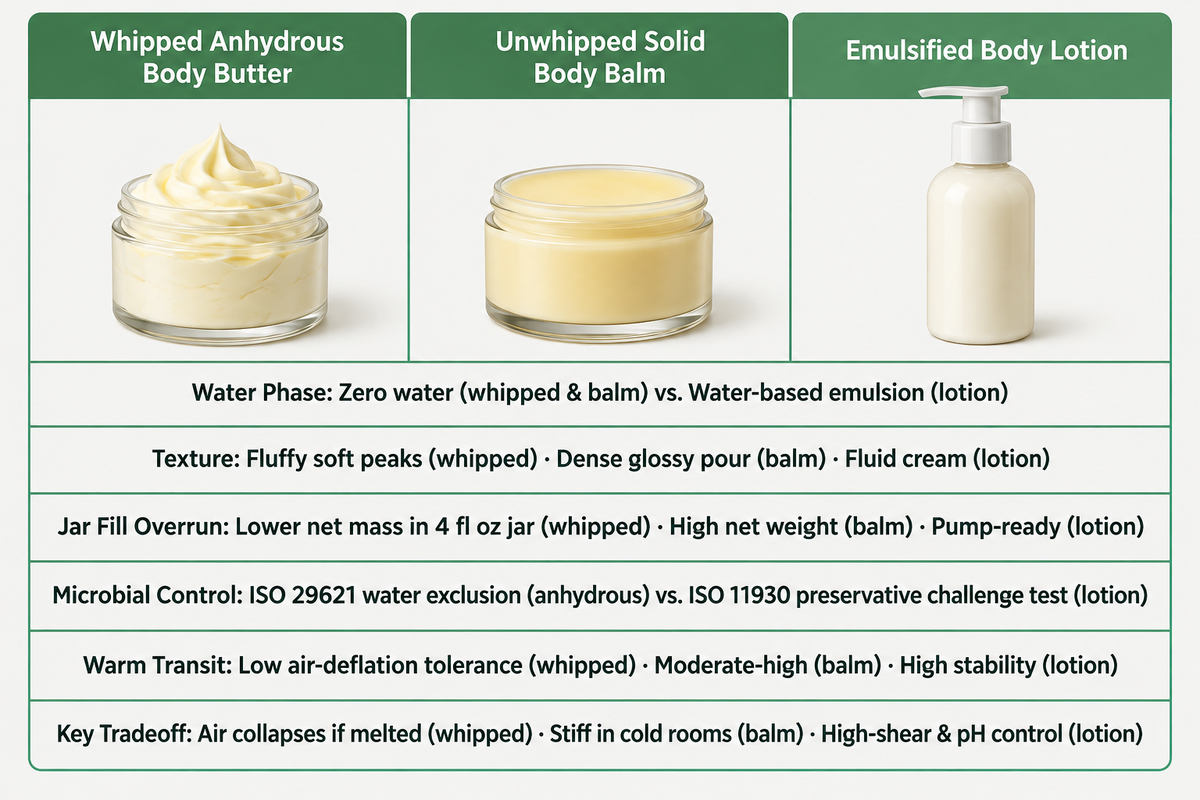
Pick whipped anhydrous body butter for airy scoopability in cool rooms, poured unwhipped body balm for hot-weather shipping, and emulsified body lotion when skin needs direct water hydration. Whipped butter needs net-weight labeling because trapped air lowers the filled mass, poured balm survives warm transit best, and the emulsified lotion needs a water phase that’s preserved.
Two assumptions generally trip up new formulators. First, anhydrous body butter contains no water, so it does not add water to skin; it seals in existing moisture, which is why it works best on slightly damp skin when scooped with clean, dry hands or a dry spatula. Second, whipping traps air bubbles, called overrun, so a 4 fl oz jar holds noticeably less net mass of whipped butter than an unwhipped pour of the same recipe.
Patent US20060147390A1 describes how stabilizing gas incorporated within a cosmetic lipid preparation relies on a continuous structured wax or crystal network. In practice, the lipid skeleton collapses during warm transit, allowing the air to escape. For light everyday water hydration, consider our private label body lotion planning guide, or review emulsions in our barrier repair cream formulation guide.
| Decision Criterion | Whipped Anhydrous Body Butter | Unwhipped Solid Body Balm | Emulsified Body Lotion |
|---|---|---|---|
| Water Phase Content | Zero water (strictly anhydrous) | Zero water (strictly anhydrous) | Water-based emulsion with emulsifier |
| Texture & Application | Fluffy, whipped cream peaks; melts fast | Dense glossy pour; warms slowly on skin | Fluid or creamy; spreads quickly with light finish |
| Jar Fill & Overrun Density | Lower net weight per jar volume due to air | High net weight per jar; zero deflation risk | Consistent density; fits pumps and squeeze tubes |
| Microbial Preservation | ISO 29621 risk assessment + water exclusion | ISO 29621 risk assessment + water exclusion | Broad-spectrum preservative system validated by ISO 11930 challenge testing |
| Warm-Weather Tolerance | Low; keep cool to prevent air deflation | Moderate–high (especially with kokum or wax) | High when emulsion passes thermal stability |
| Limitations | Deflates if melted in transit; cannot hold water-soluble actives | Feels heavier on skin; stiff to scoop in cold rooms | Requires high-shear homogenization, pH control, and challenge testing |
Whether you make lotion or body butter in small batches, your mixer will determine the final texture. You can use either a stand mixer or an electric hand mixer to aerate soft-chilled trace cleanly into light peaks. Stop beating when the trace holds soft peaks, as beating past this point will warm the fats and collapse the foam. For a softer body butter without whipping, raise the liquid oil fraction slightly and pour warm directly into jars.
Temperature Control and Rapid Cooling to Stop Grainy Shea Butter
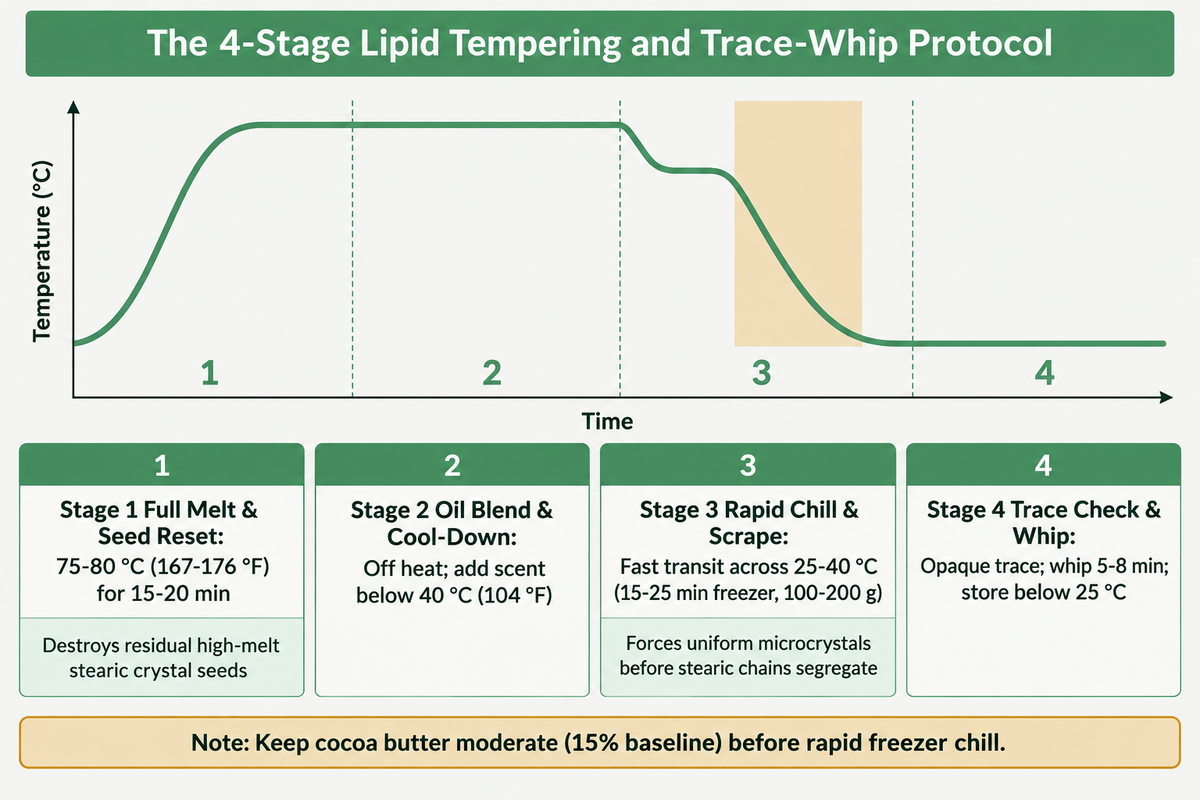
Hold melted shea butter at 75–80 °C (167–176 °F) for 15–20 minutes to erase high-melting stearic crystal seeds, then chill rapidly through the 25–40 °C zone before whipping. Graininess is a recrystallization defect rather than spoiled raw material.
Botanical fats solidify into several crystal forms with distinct melting points. Stearic-oleic triglycerides have been shown to separate during slow cooling in peer-reviewed analyses in the Journal of the American Oil Chemists’ Society (2025) and Compr. Rev. Food Sci. Food Saf. (2025). Think of hot butter cooling undisturbed like warm sugar syrup: high-melting stearic-rich triglycerides solidify first and grow into sandy beads in the liquid oleic oil.
Cooling curves must still be done for your specific lipid blend. A Raman mapping study indexed on PubMed (Mitsutake et al., 2019) compared structural changes before and after melting across natural lipids. Beeswax paired with copaiba oil stayed homogeneous and stable over 6 months, and shea stayed stable despite polymorphism, whereas cocoa butter mixtures showed wider heterogeneity and instability. Likewise, Formula Chemistry cautions that shock-chilling blends overloaded with cocoa butter can create coarse beta-polymorphic grit. Keep cocoa butter at a moderate level (such as 15% baseline) if doing a rapid freezer chill.
Follow The 4-Stage Lipid Tempering and Trace-Whip Protocol below for all runs with shea butter as the main lipid:
| Stage | Target Temperature & Duration | Operator Action | Physical Mechanism |
|---|---|---|---|
| Stage 1: Full Melt & Seed Reset | 75–80 °C (167–176 °F) for 15–20 min | Melt the shea butter and hard fats in a double boiler; stir gently without smoking | Destroys residual high-melt stearic nuclei that seed delayed grit |
| Stage 2: Oil Blend & Cool-Down | Off heat; add scent below 40 °C (104 °F) | Stir in liquid oils and tocopherol; wait below 40 °C before adding essential oils | Protects volatile aromatics and antioxidant potency from heat loss |
| Stage 3: Rapid Chill & Scrape | Fast transit across 25–40 °C (15–25 min freezer for 100–200 g) | Chill in ice bath or freezer; scrape setting bowl edges into center regularly | Forces uniform small microcrystals before stearic chains segregate |
| Stage 4: Trace Check & Whip / Pour | Opaque soft-solid trace; whip 5–8 min; store <25 °C | Beat until pale soft peaks hold (rest 10 min if too hard), then jar cool | Locks fine crystals and air cells below ambient softening temperatures |
Manufacturers modify the behavior of raw butters at the commercial scale. Trade press articles from SpecialChem and Cosmetic Science Lab describe interesterified shea grades that are designed to crystallize quicker and reduce fat bloom during shipping.
How to make body butter out of coconut oil?
Instead of using coconut oil as your base, blend coconut oil with a larger share of higher melting shea, mango or cocoa and/or kokum butter. As noted in Formula Chemistry, replacing shea directly with 40% coconut oil leaves a blend too fluid at room temperature.
Use coconut oil at 10% or less in cool rooms and discontinue in warm rooms or with ground shipping. Replacing virgin coconut oil with fractionated caprylic/capric triglyceride and more hard butter stops warm pooling.
Texture Troubleshooting and Summer Heat-Stability Adjustments
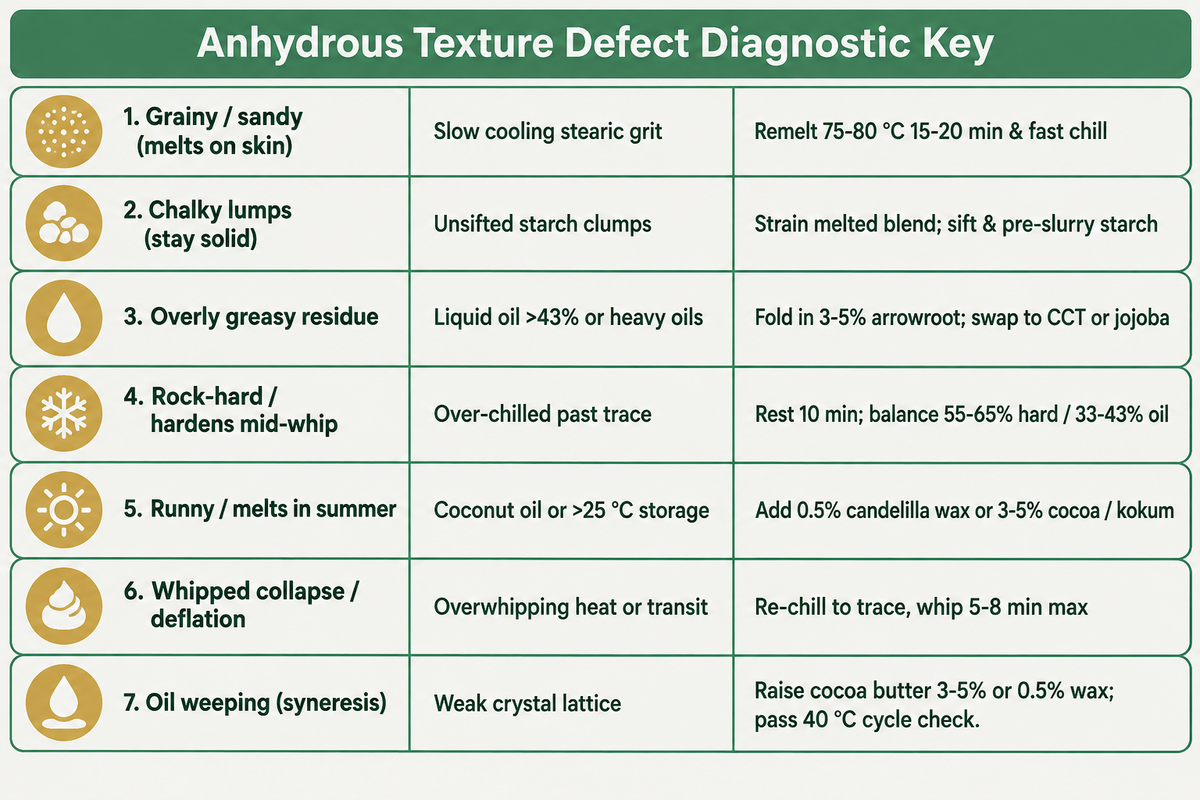
Almost every defective batch of body butter, i.e. grainy, greasy, rock-hard, runny, deflated or weeping oil, can be repaired by remelting, adjusting the fat ratio, and re-chilling. For excessively soft warm-weather blends, Formula Chemistry suggests raising candelilla wax in 0.5% increments or increasing cocoa butter by 3-5%, and retesting.
Diagnose lumps before melting anything. To test for fat crystal bloom, rub a pea-sized amount between your fingers. Fat crystals completely melt on skin warmth, whereas arrowroot starch clumps remain solid. Re-whipping grainy butter doesn’t get rid of fat bloom.
Resilience to warm climates is dependent on the strengthening of the lipid matrix. Patent US20190298626A1 discloses anhydrous lipid compositions structured with 1–20 wt% oil thickening agents for stable semi-solid consistency. Before commercial shipping, Cosmetic Science Lab recommends freeze-thaw and 40 °C heat-cycle tests to confirm grit does not return in transit.
The Anhydrous Texture Defect Diagnostic Key below can be used to determine symptoms and recover failed batches:
| Observed Defect | Physical Root Cause | Immediate Batch Salvage | Next-Batch Formula Adjustment |
|---|---|---|---|
| Grainy / sandy (melts on skin) | Slow cooling or transit heat cycling triggered stearic recrystallization | Remelt and hold at 75–80 °C for 15–20 min; chill fast and re-whip | Keep cocoa butter moderate; test interesterified shea grades |
| Chalky lumps (do not melt on skin) | Unsifted arrowroot or tapioca starch clumped in warm lipids | Pass melted blend through fine mesh strainer and re-chill | Sift and pre-slurry starch in oil, or switch to cetyl alcohol |
| Overly greasy residue | Excess heavy oleic oils or liquid phase above 43% | Remelt and fold in 3–5% sifted arrowroot powder | Swap heavy oils for jojoba or caprylic/capric triglyceride |
| Rock-hard / hardens mid-whip | Over-chilled past trace or excess hard butter and wax load | Rest at room temp 10 min to soften, or remelt with added liquid oil | Balance butters and oils at 55–65% hard fats to 33–43% liquid oils |
| Runny / melts in summer | High coconut oil or storage above 25 °C | Remelt and raise candelilla wax in 0.5% steps or add 3–5% cocoa butter | Remove coconut oil; add kokum butter or pour unwhipped balm |
| Whipped collapse / deflation | Overwhipping friction heat or warm transit melting air cells | Re-chill to opaque trace and whip gently for 5–8 min max | Lower air overrun; reinforce crystal lattice with wax or kokum |
| Oil weeping (syneresis) | Weak butter crystal matrix failing to trap liquid phase | Remelt, raise cocoa butter 3–5% or add 0.5% candelilla wax, re-chill | Verify compatible oils and butters and pass 40 °C cycle check |
Essential Oils, Scent Loading, and Dermal Safety Limits for Sensitive Skin
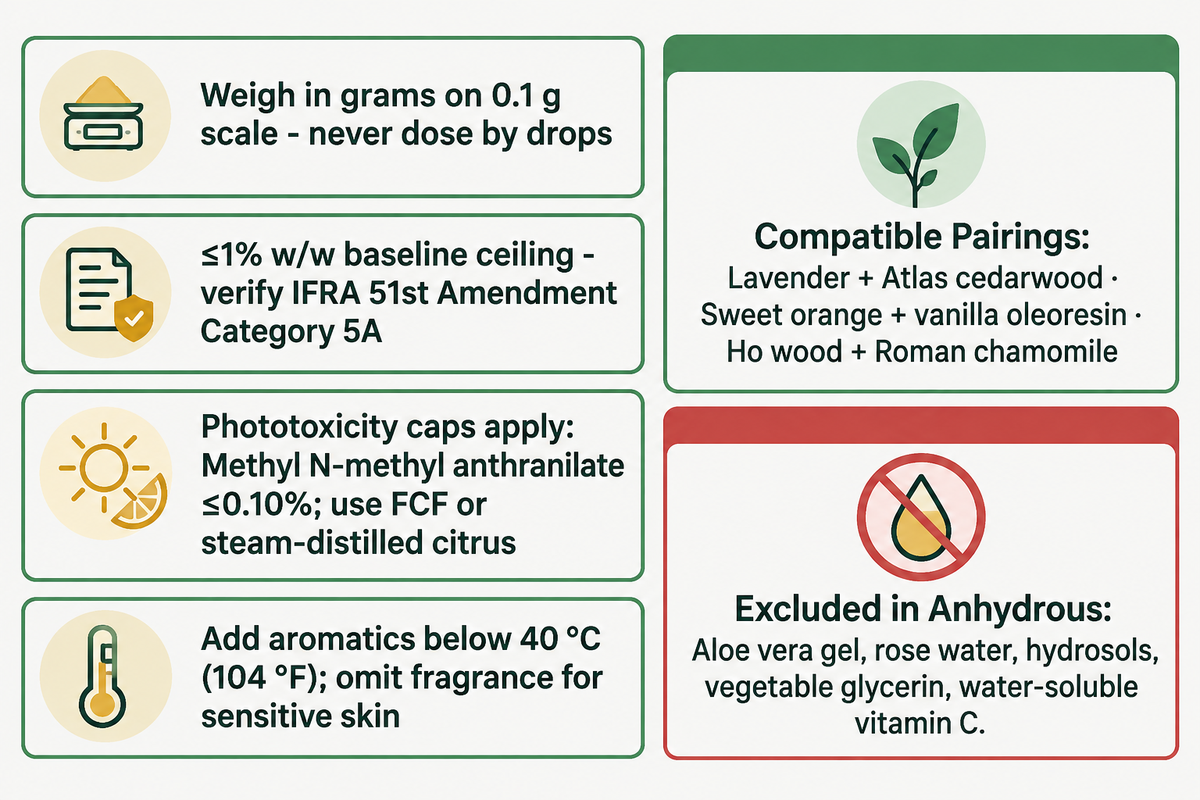
Weigh each essential oil in grams rather than measuring in drops. Start at or below 1% w/w total fragrance as used in the baseline formula, and confirm each individual aromatic against its IFRA 51st Amendment Category 5A certificate. Viscosity and the diameter of the opening of the dropper affect how the drops emerge, making drop recipes inaccurate.
There are numerous DIY blogs that instruct readers to add dozens of drops of essential oil to a bowl. That habit invites sensitization or UV phototoxicity when makers substitute spice or cold-pressed citrus oils. Under the IFRA 51st Amendment Guidance and the UL Solutions 51st Amendment notification, leave-on body creams, oils, and lotions applied by hand fall into Category 5A. Phototoxicity caps strictly apply in this class; for example, the 51st Amendment restricts Methyl N-methyl anthranilate to 0.10%.
For leave-on body products that contain bergamot, lime or bitter orange peel oil, use furocoumarin-free (FCF) or steam distilled grades to help eliminate phototoxicity concerns. For sensitive skin, formulate completely unscented or cut mild essential oils well below standard adult ceilings following allergen disclosures. For further information, please refer to our clean beauty manufacturing compliance guide.
Anhydrous formulas should contain only components compatible with the delivery system. Water-based ingredients such as aloe vera gel, rose water, and floral hydrosols introduce free water that separates out without an emulsifier and invites microbial growth. Water soluble humectants (vegetable glycerin, water soluble vitamin C, etc.) don’t dissolve in anhydrous components and will also separate out. They may also contribute to microbial growth.
What is the best smelling essential oil to use in body butter?
Lavender essential oil, steam-distilled sweet orange essential oil, and Atlas cedarwood are among the popular components in essential oils for fragrance in body butter, along with solvent-extracted vanilla oleoresin. Each blends smoothly with natural plant butter notes within verified IFRA Category 5A limits.
For general adult body formulas kept within the 1% baseline ceiling (verified per oil against its IFRA 51st Category 5A certificate), try these starting pairings with your favorite essential oils, or omit fragrance altogether for sensitive skin:
- Calm botanical profile: blend lavender essential oil with a light base of Atlas cedarwood.
- Bright non-phototoxic citrus: pair steam-distilled sweet orange essential oil with solvent-extracted vanilla oleoresin.
- Soft floral-woody note: combine ho wood oil with a trace of Roman chamomile.
Always add the essential oil during cool-down to prevent the more volatile top notes from evaporating. Weigh even tiny drops of essential oil on your 0.1 g scale to ensure reproducibility in your batch logs.
Antioxidants vs. Preservatives: Shelf Life and Water-Exclusion Rules
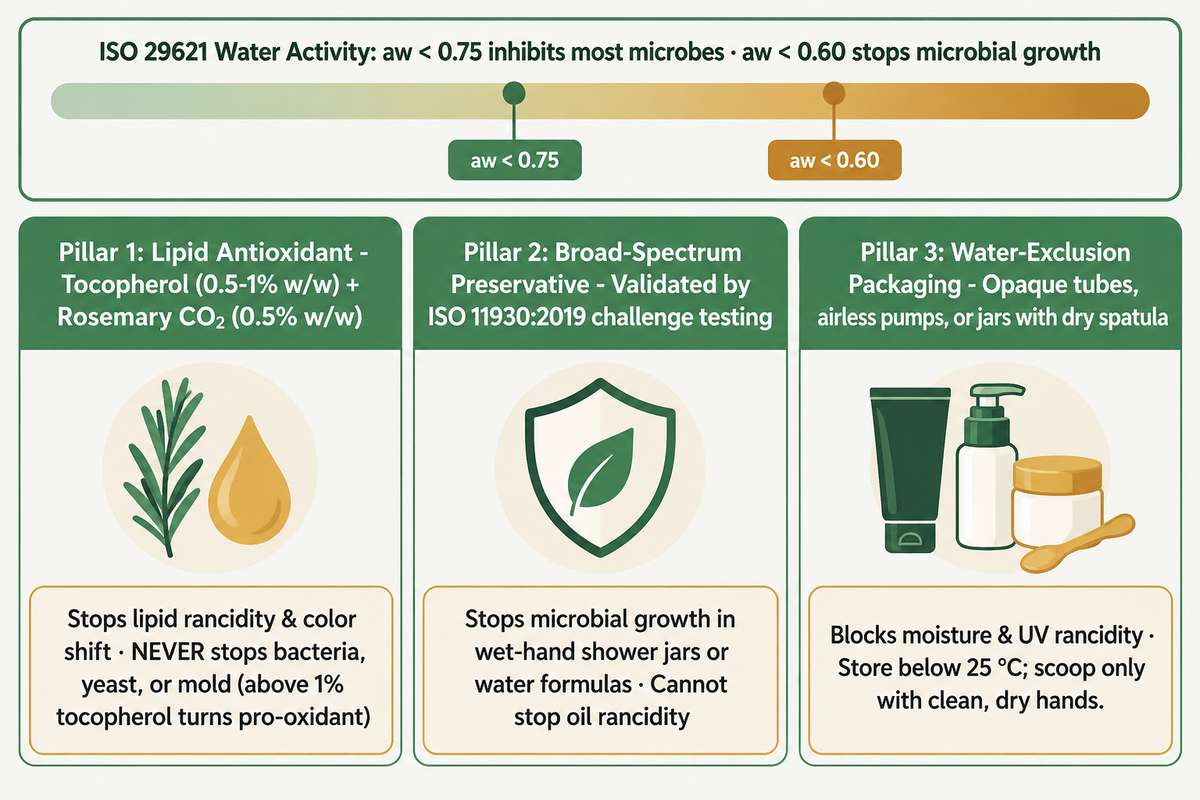
Tocopherol (vitamin E at 0.5–1% w/w) and rosemary CO₂ extract (0.5% w/w) are lipid antioxidants that slow rancidity; they are never antimicrobial preservatives. Strictly anhydrous body butter resists microbial growth only while water activity stays below 0.75 under ISO 29621 (below 0.60, microbial growth is virtually impossible) and wet hands stay out of the jar.
Treating vitamin E as a preservative is the biggest misconception about safety in homemade skincare. Formula Chemistry adds an important dosing boundary: tocopherol works as a chain-breaking antioxidant inside its standard range, whereas dosing above 1% can turn pro-oxidant and speed up rancidity. With regards to safety, pairing tocopherol and rosemary CO₂ extract provides additional protection through the carnosic acid.
Microbial risk follows water availability. According to Pentyl Labs’ ISO 29621 analysis and the ISO 29621:2017 preview, water activity below 0.75 inhibits most microorganisms, and below 0.60 stops microbial growth. Water-miscible products undergo challenge testing under ISO 11930:2019 (+Amd 2022), while anhydrous products still require documented formulation, GMP controls, packaging design, and intended-use review to qualify as low-risk.
While ISO 29621 allows strictly water-free formulas to qualify as low-risk, cosmetic chemist Perry Romanowski at Chemists Corner warns that open jars change real-world exposure:
“While it is true that microbes can’t grow in a completely anhydrous system, it’s not true that you don’t need to add a preservative to these formulas. They are touched by human hands.”
| Control Category | Verified Agents / Controls | What It Stops | What It Cannot Stop | When Applied |
|---|---|---|---|---|
| Lipid Antioxidant | Tocopherol (0.5–1% w/w) + Rosemary CO₂ Extract (0.5% w/w) | Lipid oxidation, rancid smell, color shift | Bacteria, yeast, or mold in water droplets | Every anhydrous body butter containing plant oils |
| Broad-Spectrum Preservative | Oil-compatible antimicrobials validated by challenge testing | Microbial growth if stray moisture enters jar | Oil rancidity or polymorphic fat graining | Wet-hand shower jars or any water-containing formula |
| Water-Exclusion Packaging | Opaque tubes, airless pumps, or jars with dry spatula | Moisture entry and UV-driven rancidity | Contamination introduced by wet production tools | Standard practice for ISO 29621 low-risk qualification |
Finished body butters stay freshest when made with oxidation-stable oils like jojoba, packed in opaque containers, and marked with a batch date. Instruct users to scoop only with clean, dry hands or a dry spatula.
Making Body Butter to Sell: Unit Economics, Packaging, and Compliance
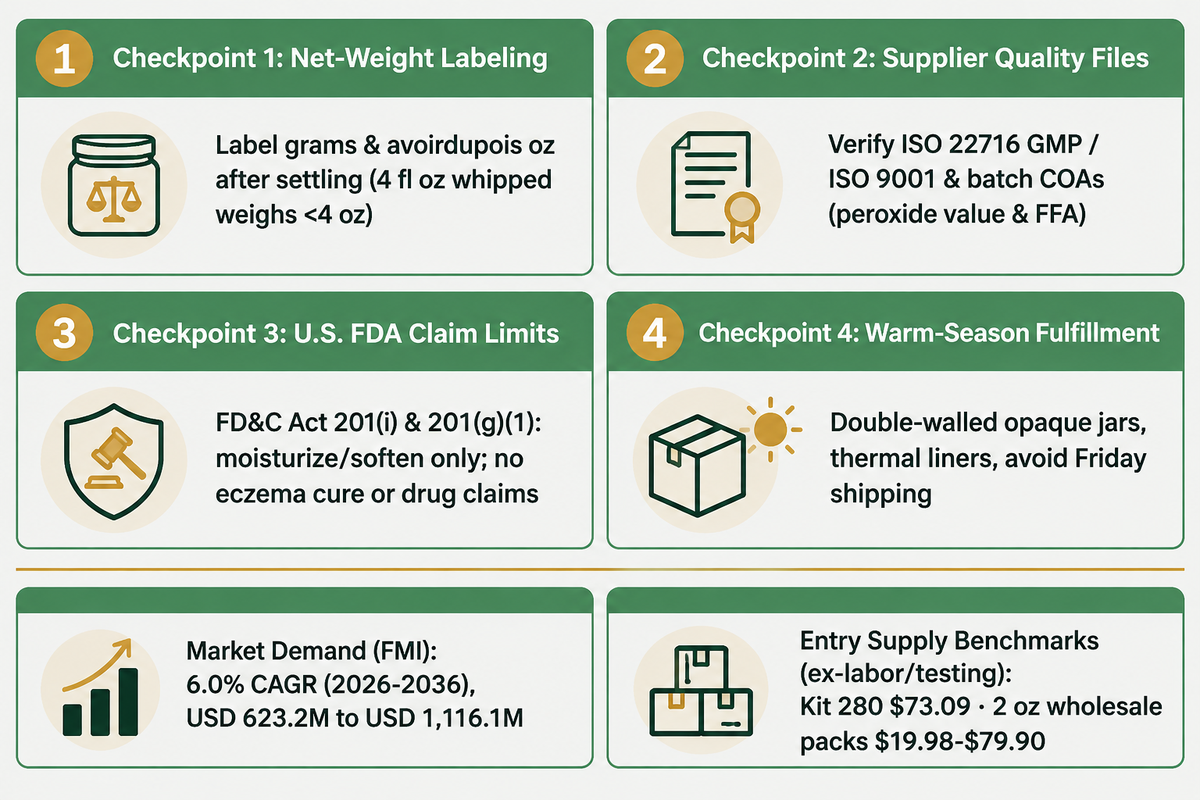
Budgeting the ingredients to make body butter for commercial sale goes beyond quoting raw butter. Retail-ready unit economics must budget for raw material COAs, stability testing, opaque dry-use jars, accurate net-weight labeling, insulated warm-weather shipping, and strict US FDA cosmetic claim compliance before setting shelf prices.
Published small-batch catalog figures show entry-level supply costs before labor, compliance testing, and freight. Wholesale Supplies Plus lists its Whipped Body Butter Kit 280 at $73.09, and Jersey Botanical lists unlabeled 2 oz wholesale sample packs with thermal wrap from $19.98 to $79.90 depending on pack count. Full per-jar commercial costs add refined butter grade, jar tooling, stability testing, and fulfillment overhead.
There are four major compliance checkpoints to keep jars off regulatory warning lists:
- Label solid and whipped body butters by exact net weight (in grams and avoirdupois ounces) after fill settling, since whipped air overrun makes a 4 fl oz jar weigh less than 4 oz.
- Verify that raw butter suppliers hold a current ISO 22716 cosmetic GMP certificate or a general ISO 9001 quality management certificate. Require batch-specific Certificates of Analysis listing peroxide value and free fatty acids, as outlined in our cosmetic GMP quality management and cosmetic manufacturing quality control guides.
- Adhere to U.S. FDA cosmetic claim boundaries under FD&C Act sections 201(i) and 201(g)(1). Moisturizing and softening skin appearance are cosmetic claims, whereas promising eczema cure, cell regeneration, pain relief, or sleep aid via aromatherapy reclassifies the product as an unapproved drug. The term “cosmeceuticals” is not defined under the statute. Please refer to legal copy rules in our Skincare Claims Substantiation guide.
- Maintain summer parcels with double-walled opaque jars and insulated thermal liners, and avoid shipping on Fridays, which leaves jars in hot carrier warehouses over the weekends.
Category demand supports disciplined formulation. Future Market Insights projects global body butter sales to rise at a 6.0% CAGR from USD 623.2 million in 2026 to USD 1,116.1 million by 2036. Consumer trend analysis from Twincraft Skincare (2026) reports that shoppers are shifting away from heavy, greasy jars toward fast-absorbing textures and unscented or natural fragrances.
Scaling from DIY Body Butter Batches to Contract Manufacturing
Move from kitchen batches to a body care contract manufacturer once order volume outgrows benchtop cooling control or retail accounts demand ISO 22716 batch records, thermal stability files, and repeatable net weights. Delivering a clear weight-percentage brief prevents expensive sampling rework.
Heat transfer physics shifts significantly on a larger scale, as explained by Cosmetic Science Lab. Scaling to a 5 kg batch keeps the same percentages (multiply by 50); however, the larger mass of lipid cools much more slowly and requires a jacketed cooling vessel or shallow trays. In commercial plants, scraped-surface cooling kettles, controlled aeration mixers, and low-shear piston fillers rapidly move batches through the 25–40 °C range while avoiding collapse of whipped air cells.
Don’t send a contract lab a recipe with measurements in kitchen cups or essential oil drops. Providing the eight points of the technical brief below will help the lab cost raw materials and easily determine minimum order quantities and stability times.
| Brief Item | Target Starting Spec / Input to Provide | Why the Factory Needs It |
|---|---|---|
| 1. Full % w/w Formula | 100% INCI list by weight (zero cup or drop units) | Enables accurate raw-material costing and kettle scaling |
| 2. Format & Overrun Target | Whipped butter vs. poured balm + target jar net weight (g) | Sets aeration speed, piston filler nozzle, and jar volume |
| 3. Melt & Thermal Stability | Pass 40 °C heat-cycle and freeze-thaw bloom checks | Guides interesterified shea, kokum, or candelilla wax tuning |
| 4. Incoming Butter COA Specs | Shea grade, max peroxide value, FFA limit, and fatty-acid profile | PV/FFA control oxidation while stearic specs manage firmness (28–56% variance) |
| 5. Dry-Touch Sensory Modifier | 3–5% arrowroot starch or starch-free cetyl alcohol / dry esters | Sets powder dispersion step vs. hot-phase melt order |
| 6. Fragrance & IFRA File | Unscented or ≤1% essential oil with IFRA 51st Cat. 5A certificate | Confirms dermal limits, allergen labels, and <40 °C addition |
| 7. Water-Risk & Packaging | Opaque jar + inner liner/spatula, or airless pump; ISO 29621 file | Determines low-risk anhydrous status vs. oil-soluble preservative |
| 8. Compliance & Market Scope | Target region (U.S. FDA / EU / UK), vegan claims, GMP release files | Aligns INCI ordering, cosmetic claim review, and batch QC |
When your brand is ready to transition off kitchen trials into commercial runs, NEXO Beauty Labs supports skincare, body care, and hair care lines through body care contract manufacturing and custom cosmetic formulation. Share your weight-percentage brief, texture targets, and packaging preferences to align pilot samples, stability testing, and production quotes.
Frequently Asked Questions
How long will homemade body butter last?
Anhydrous formulations typically have a 6–12 month shelf life when packaged properly. Protected by standard tocopherol and rosemary CO₂, strictly anhydrous homemade body butter stays fresh longest in opaque, airtight jars. Cosmetic Science Lab recommends storing finished jars below 25 °C away from direct sunlight and bathroom heat swings to slow rancidity and fat bloom.
Does homemade body butter need a preservative?
No: a strictly water-free body butter made only of butters, oils, waxes, and oil-soluble additives does not require a water-phase broad-spectrum preservative while water stays out and water activity remains below 0.75 under ISO 29621. Adding aloe vera, hydrosols, or wet shower fingers introduces moisture and requires an antimicrobial preservative system.
Can you make body butter without arrowroot powder?
You can also rely on fast-spreading dry emollients like caprylic/capric triglyceride and jojoba oil to keep skin feel light.
How long does it take to make body butter?
Allow 15–20 minutes for the tempering hold, 15–25 minutes for freezer chilling a 100–200 g bowl, and 5–8 minutes for whipping, plus brief weighing and jarring time.
Why is my homemade body butter grainy and how do I fix it?
Slow cooling of melted shea butter allows high melting stearic-rich triglycerides to crystallize into hard beads which won’t re-melt with re-whipping. Instead, remelt the full batch in a double boiler and hold it at 75–80 °C (167–176 °F) for 15–20 minutes to erase crystal seeds. Rapidly cool the bowl with an ice bath while scraping the sides, and whip at opaque trace until smooth.
Can you make body butter in a blender or without a mixer?
Avoid high-speed blenders, because blade friction heats and melts the fats before the air holds. Without a hand mixer, pour the tempered blend as a smooth unwhipped balm or whisk chilled trace by hand.
How do you keep whipped body butter from melting in hot weather?
Remove low-melting coconut oil from your formula and lean on firmer structural fats such as kokum butter (38–41 °C) or cocoa butter (34–38 °C). Small increases in cocoa butter and retesting firmness are recommended. Keep air overrun moderate to keep batches denser and validate warm-season batches with elevated heat cycle testing. Pack summer batches in insulated mailers.
Editorial & Technical Transparency: This formulation guide compiles verified cosmetic chemistry literature, ISO microbiological guidance, IFRA 51st Amendment standards, and U.S. FDA regulatory references for educational and technical planning. Reviewed by the NEXO Beauty Labs technical team.
References & Sources
- U.S. Food and Drug Administration (FDA), Is It a Cosmetic, a Drug, or Both? (Or Is It Soap?)
- Mitsutake H. et al., European Journal of Pharmaceutical Sciences (2019, PubMed PMID 31071439), Evaluation of Miscibility and Polymorphism of Synthetic and Natural Lipids for Nanostructured Lipid Carrier Formulations by Raman Mapping
- Pettersson et al. Pettersson et al., Journal of the American Oil Chemists’ Society (2025), Crystallization, Polymorphism, and Mechanical Properties of Shea Butter Stearin
- Seilert et al. Compr. Rev. Food Sci. Food Saf. (2025). (2025), Polymorphic Structures and Phase Transitions of Palmitic, Stearic, and Oleic Triglycerides
- ISO 29621:2017, Cosmetics: Microbiology, Guidelines for the Risk Assessment and Identification of Microbiologically Low-Risk Products
- 51st Amendment Guidance for the Use of IFRA Standards, International Fragrance Association (IFRA).
- UL Solutions, IFRA Notifies 51st Amendment to the IFRA Standards
- Google Patents US20060147390A1 – Cosmetic or Dermatological Lipid Preparations Containing Incorporated Gas Phase
- Google Patents US20190298626A1 – Petrolatum Substitute Anhydrous Lipid Composition with Oil Thickening Agent
- Cosmetic Science Lab – How to Make Body Butter that doesn’t go Grainy
- Formula Chemistry (Dr. SamiUllah, Ph.D. Chemistry) – Body Butter Formulation Guide
- Pentyl Labs, ISO 29621 Cosmetics Microbiological Risk Assessment Guide
- Chemists Corner (Perry Romanowski) – Vitamin E Is Not a Preservative and Other Cosmetic Preservation Misconceptions
- SpecialChem – Tropical Soft Butters Solve Crystallization and Fat Blooming
- Personal Care Magazine – Shea Butter with Improved Moisturisation Properties
- Twincraft Skincare – Body Care 2026 Trends
- IMARC Group – Cocoa Butter Price Trend and Forecast Report (Q4 2025)
- Expert Market Research – Cocoa Butter Price Trends and Forecast (Q1 2026)