Get in touch with NEXO Beauty Labs Company
Clean Beauty Manufacturing: Formulating, Testing, and Scaling Compliant Cosmetics in 2026

Clean Beauty Manufacturing integrates several related and inter-dependent disciplines including regulated record keeping, formulation engineering, and raw material impurity screening. Beauty brand founders and product development managers aiming to bring a compliant product to market in 2026, need to reconcile retailer exclusion policies against microbiological safety and emulsion stability as well as commercial scale up economics. No matter if your team is developing a sulfate free hair care system, prestige skincare serum, or a botanical body care collection, your cosmetic manufacturer must transform general ingredient requirements into measurable laboratory specifications prior to blending the first pilot batch. Teams prepared to discuss a project can review NEXO Beauty Labs’ custom clean beauty formulation and OEM manufacturing services, or contact us directly through our formulation project inquiry form.
What Clean Beauty Manufacturing Actually Means in 2026: Clean vs. Natural vs. Organic
Manufacturing of the Clean beauty line includes formulation and contract manufacturing of skincare, hair care, and personal care products, while removing specific controversial synthetic ingredients and ensuring supply-chain traceability, microbiological safety, and performance of natural-origin botanicals and safe biotech actives in commercial batches.
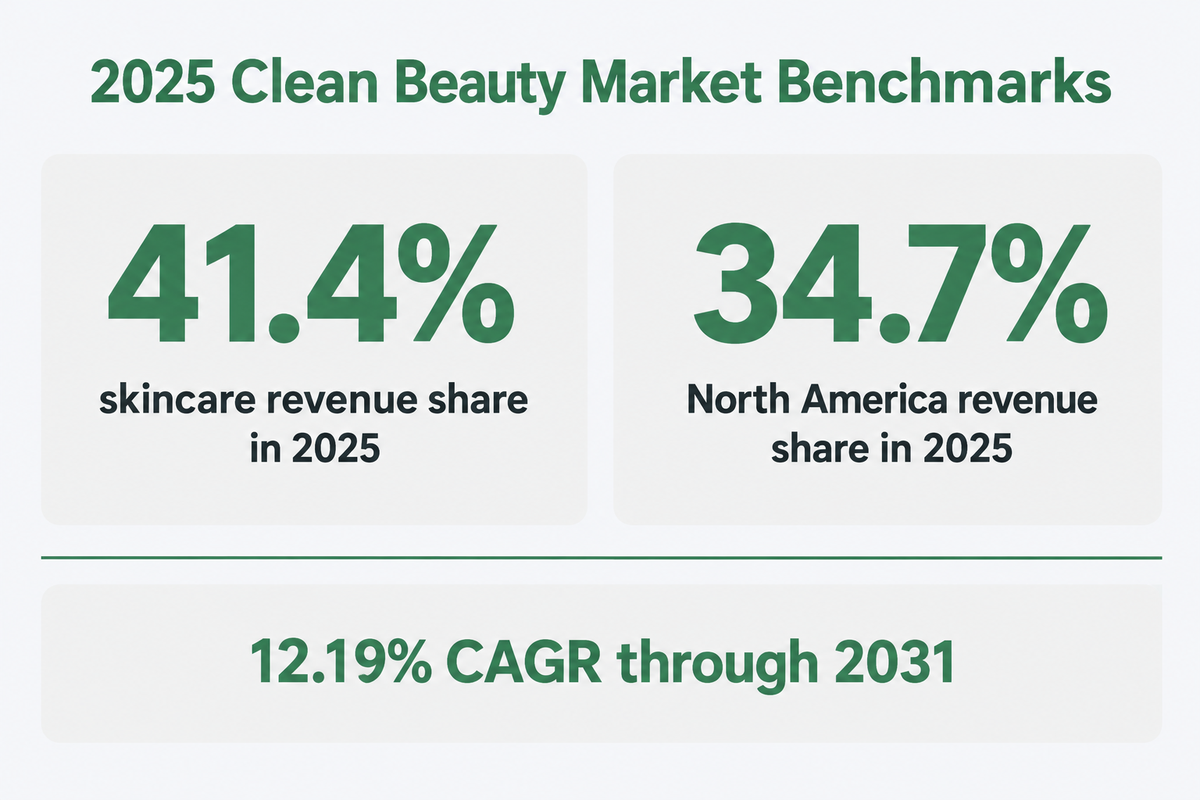
In global personal care development, there is confusion among product teams about clean formulations and natural cosmetics or Certified Organic skincare, despite both terms having their distinct formulations and market scopes. In Grand View Research’s Clean Beauty Market Analysis, which tracks dedicated clean-label brands, skin care products held the largest revenue share of the clean beauty industry in 2025, accounting for a share of 41.4%, while North America represented the largest regional market at 34.7% revenue share in 2025. Using a wider industry segmentation that also includes multi-category mass retail lines, Mordor Intelligence’s Clean Beauty Industry Report notes that skincare captured 34.02% of the broader clean beauty market share in 2025, while make-up and color cosmetics (including clean makeup products) are projected to grow at a 12.19% CAGR through 2031.
The clean beauty movement differs from other all natural positioning because it relies on toxicological screening and written ingredient policies, versus the botanical purism of other products. With the U.S. Modernization of Cosmetics Regulation Act (MoCRA), having natural or organic sources doesn’t prove safety of a product. For the clean beauty movement, a qualified cosmetic chemist examines each raw material source for batch consistency, trace contaminants, and sensitization. The cosmetic skincare is clearly distinguished from otc products (like antidandruff or sunscreen monographs) that require adherence to drug manufacturing rules. When clean beauty products are manufactured under a defined quality system, formulators can pair certified organic ingredients and cold-pressed plant oils with safe peptides, bio-fermented squalane, and food-grade organic acid preservatives. Cold-pressed plant oils and certified organic ingredients can also be used.
For an indie skincare start-up or an established brand company expanding its global beauty footprint, defining boundaries early on prevents costly reformulation late in the R&D cycle. Natural cosmetics, on the other hand, will restrict the use of certain synthetic molecules regardless of their safety records, and organic skincare will require certified agricultural provenance. Clean cosmetic development, on the other hand, places a heavy emphasis on ingredient transparency, and bans the use of cyclic silicones, parabens, phthalates and formaldehydes. Moreover, every personal care product is required to undergo a safety assessment in order to ensure product safety.
The 4-Tier Clean Exclusion Matrix: Retailer Ban Lists, ISO 16128, and COSMOS Standards
ISO 16128 calculates a formula’s natural and natural-origin ingredient definitions without banning synthetic preservatives or issuing a certification seal. To compare, COSMOS Organic maintains strict minimums for organic ingredients and third-party audits, while retailer programs, such as Sephora Clean and Credo, have their own exclusions lists of chemicals, regardless of natural-origin percentage.
What is the difference between ISO 16128 natural origin calculations, COSMOS Organic certification, and retailer clean beauty ban lists like Sephora Clean or Credo?
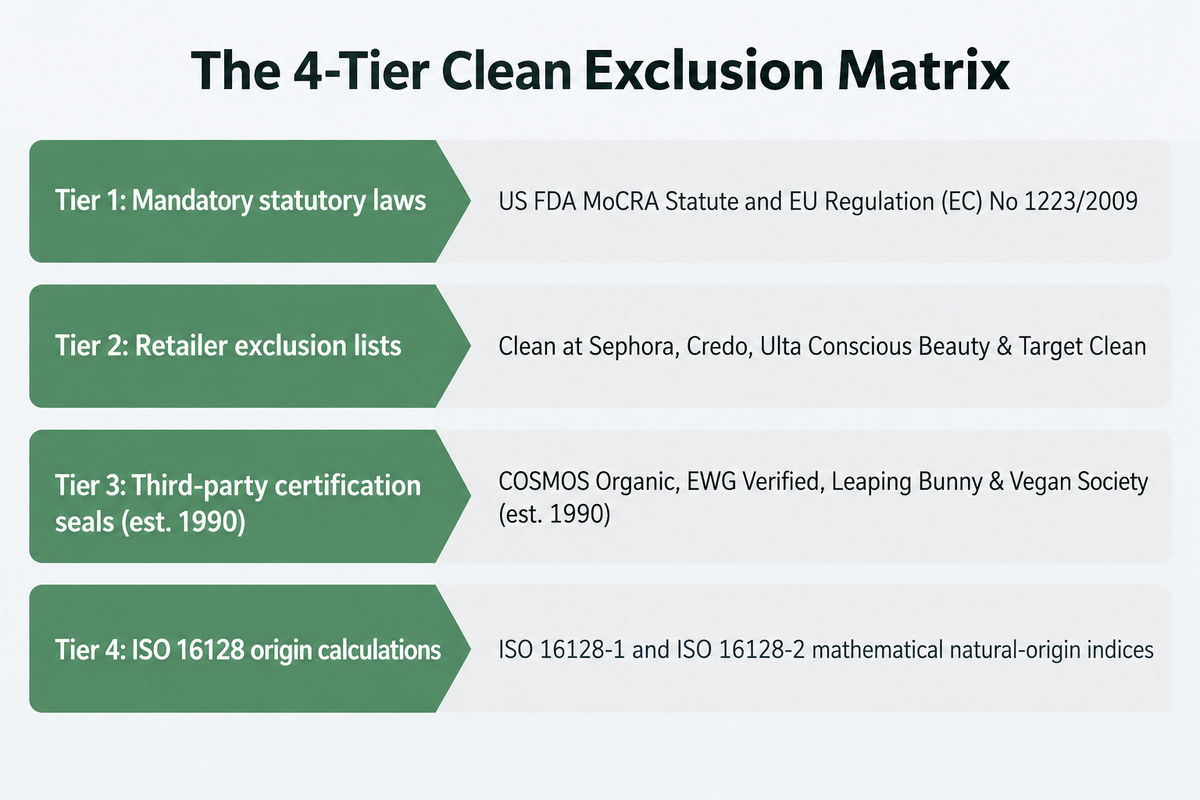
ISO 16128-1 defines natural and natural-origin cosmetic ingredients, COSMOS Organic applies third-party organic and green-chemistry certification audits, and retailer clean lists enforce channel-specific chemical exclusions; because no single government statute defines “clean,” NEXO Beauty Labs organizes project briefs with The 4-Tier Clean Exclusion Matrix.
This four-tier structure separates mandatory statutory laws (Tier 1) from retailer exclusion lists (Tier 2), third-party certification seals for organic, vegan beauty, and cruelty-free products (Tier 3), and ISO 16128 origin calculations (Tier 4) so that personal care brands never mistake an ingredient origin index for regulatory or retail approval.
ISO 16128-1 supplies definitions for natural and organic cosmetic ingredients, but its scope does not cover claims, human safety, packaging, or regulatory requirements. ISO 16128-1 natural-origin indices quantify ingredient derivation mathematically but do not verify human toxicological safety, allergenicity, or retailer ban-list compliance. Meanwhile, statutory obligations under the US FDA Modernization of Cosmetics Regulation Act (MoCRA) apply to every cosmetic marketed in the United States, where on average people use 6 to 12 cosmetics products daily. As the Personal Care Products Council MoCRA overview notes, product manufacturers must maintain records of health-related adverse events for six years (three years for some small businesses) and report serious adverse events to the FDA within the statutory reporting window after learning about the issue.
| Compliance Tier & Category | Primary Standard / Program | Core Chemical & Operational Scope | Verification Mechanism | Impact on Cosmetic Formulation |
|---|---|---|---|---|
| Tier 1A: US Statutory Baseline | US FDA MoCRA Statute | Facility registration, product listing, safety substantiation records, and serious adverse event reporting. | Mandatory FDA registration/listing by the Responsible Person and 6-year (or 3-year small business) recordkeeping. | Establishes the federal legal baseline for all skincare and personal care products marketed in the United States. |
| Tier 1B: EU Statutory Baseline | EU Regulation (EC) No 1223/2009 | Annex II banned substances, Annex V permitted preservatives (such as phenoxyethanol up to 1.0%), and PIF/CPSR safety dossiers. | EU-established Responsible Person review, CPNP notification, and qualified safety assessor sign-off. | Requires formal Cosmetic Product Safety Report (CPSR) and strict adherence to EU Annex preservative and UV filter limits. |
| Tier 2A: Prestige Specialty Retail | Clean at Sephora Program | Excludes parabens, phthalates, SLS/SLES, cyclic silicones, DEA/TEA, and restricts synthetic fragrance below 1.0%. | Retailer portal INCI screening, supplier raw material declarations, and finished-product compliance review. | Drives custom development of sulfate-free cleansers and silicone-free emollient systems for prestige skincare lines. |
| Tier 2B: Clean-Only Specialty Retail | Credo “The Dirty List” | Excludes ethoxylated PEGs, polysorbates, phenoxyethanol, BHT/BHA, petrolatum, and cyclic/linear silicones. | Ingredient-by-ingredient source transparency, processing-aid disclosure, and trace impurity screening. | Requires PEG-free polyglyceryl or olive-ester emulsifiers and phenoxyethanol-free hurdle preservation systems. |
| Tier 2C: Mass & Omnichannel Retail | Ulta Conscious Beauty & Target Clean | Tiered exclusion of parabens, phthalates, formaldehyde donors, and specific ethoxylated surfactants across mass and premium tiers. | Brand self-certification backed by formula INCI disclosures submitted through retail vendor portals. | Supports scalable clean beauty products across health and beauty stores (35.72% channel share) and online retail. |
| Tier 3A: Organic Agro-Certification | COSMOS Organic & COSMOS Natural | Strict physical/green-chemistry agro-ingredient rules, petrochemical exclusions, and biodegradable surfactant requirements. | Annual third-party inspection by accredited bodies (such as Ecocert or Soil Association) of formulas and facilities. | Requires certified organic ingredients, natural-origin emulsifiers, and approved preservative salts (such as sodium benzoate). |
| Tier 3B: Hazard & Transparency Seal | EWG Verified Program | Full INCI and fragrance transparency, avoidance of EWG “unacceptable” list substances, and documented GMP controls. | Toxicological dossier review and licensing verification managed by the Environmental Working Group. | Eliminates undisclosed fragrance mixtures and requires tight impurity controls on botanical extracts and minerals. |
| Tier 3C: Vegan & Cruelty-Free Marks | Leaping Bunny & Vegan Society (est. 1990) | Cruelty-free supply-chain declarations (Leaping Bunny) kept separate from zero-animal-derivative verification (Vegan Trademark, 1990). | Supplier non-animal-testing declarations and raw material origin/processing-aid screening cards. | Replaces beeswax, lanolin, carmine, and animal collagen with candelilla wax, shea butter, and plant-derived squalane. |
| Tier 4: Natural-Origin Calculation | ISO 16128-1 & ISO 16128-2 | Ingredient-level natural and natural-origin definitions (16128-1) and formula-proportion origin calculations (16128-2). | Supplier ISO 16128 origin data sheets and chemist calculation records; no certification seal granted. | Quantifies natural-origin percentage mathematically but must be paired with Tier 2 or Tier 3 rules to govern exclusions. |
Secure the target compliance tiers prior to prototyping: earning a COSMOS seal means adhering to strict rules around the use of organic agro-ingredients, green chemist processing and certification dossiers for natural and organic ingredients. Achieving an EWG Verified mark means disclosing full fragrance information and adhering to EWG hazard thresholds.
Functional Ingredient Substitution: Replacing Silicones, PEGs, Sulfates, and Synthetic Chelators
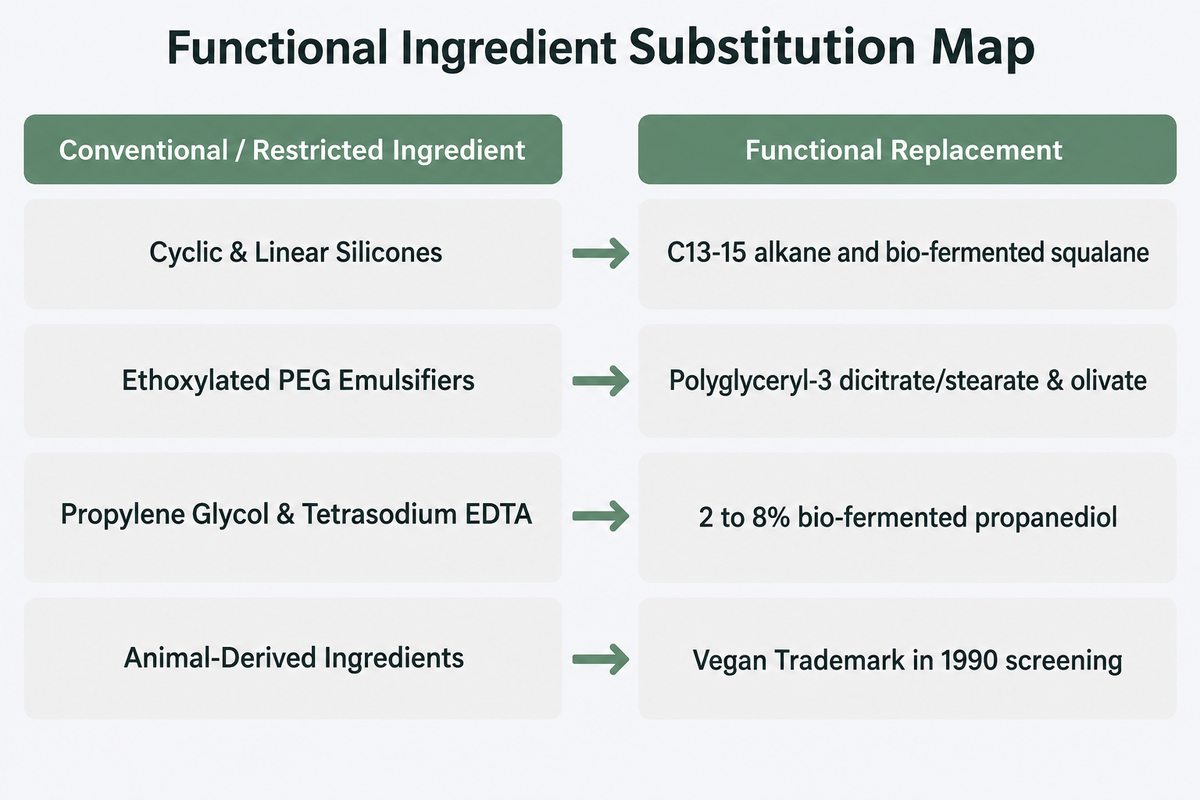
Restricted ingredients need to be chemically re-engineered. Cosmetic chemists replace volatile silicones with sugarcane-derived squalane or C13-15 alkane, substitute PEG emulsifiers with polyglyceryl esters or cetearyl and sorbitan olivate liquid crystals, and swap tetrasodium EDTA for biodegradable sodium phytate to maintain emulsion stability.
One of the common pitfalls in private label cosmetic development is assuming that a chemist can delete dimethicone, PEG-100 stearate, or sodium laureth sulfate from a legacy chassis without rebuilding the rheology network. High-HLB PEG-free emulsifiers, including polyglyceryl and sorbitan/cetearyl olivate, require tighter phase-inversion temperature and shear control than ethoxylated surfactants, which can extend pilot scale-up validation. At NEXO Beauty Labs, our chemists use a library of 5,000+ formulations built up across skincare, hair care, and body care since 1999 to create private label and custom bases that match the slip, cushion, and play-time of conventional prestige skincare.
- Conventional formulas typically use cyclic and linear silicones, such as dimethicone or cyclopentasiloxane, to lower surface tension and help prevent soaping. To achieve a silky sensory profile in a serum or cream, volatile alkanes (C13-15 alkane and isoamyl laurate) can be combined with bio-fermented squalane and coco caprylate/caprate, while tapioca starch or silica can be used to reduce oiliness.
- For PEG-free liquid-crystal emulsification, ethoxylated emulsifiers like Polysorbate 20 and PEG-100 Stearate are excluded by strict clean retailers due to potential trace 1,4-dioxane formation during ethoxylation. Our custom skincare formulation chemists offer alternatives using polyglyceryl-3 dicitrate/stearate and cetearyl glucoside as well as olive derived cetearyl olivate and sorbitan olivate systems to build lamellar liquid-crystal networks.
- For private label solutions, chemists replace petrochemical propylene glycol and tetrasodium EDTA with bio-fermented propanediol and rice-bran derived sodium phytate. As documented in US Patent US10721937B1 for natural cosmetic compositions, petroleum-free propanediol is employed in the preservative system in an amount from about 2 to about 8% by weight or from about 4 to about 6% by weight, based on the total weight of the composition.
- During vegan and cruelty-free raw material screening it’s mentioned in Bayport Laboratories’ review of vegan and cruelty-free standards that the Vegan Society established its Vegan Trademark in 1990, requiring assessment of both primary INCI ingredients as well as processing aids and carrier solvents.
The Hurdle-Preservation Triangle: Engineering Paraben-Free Systems That Pass USP 51 and ISO 11930
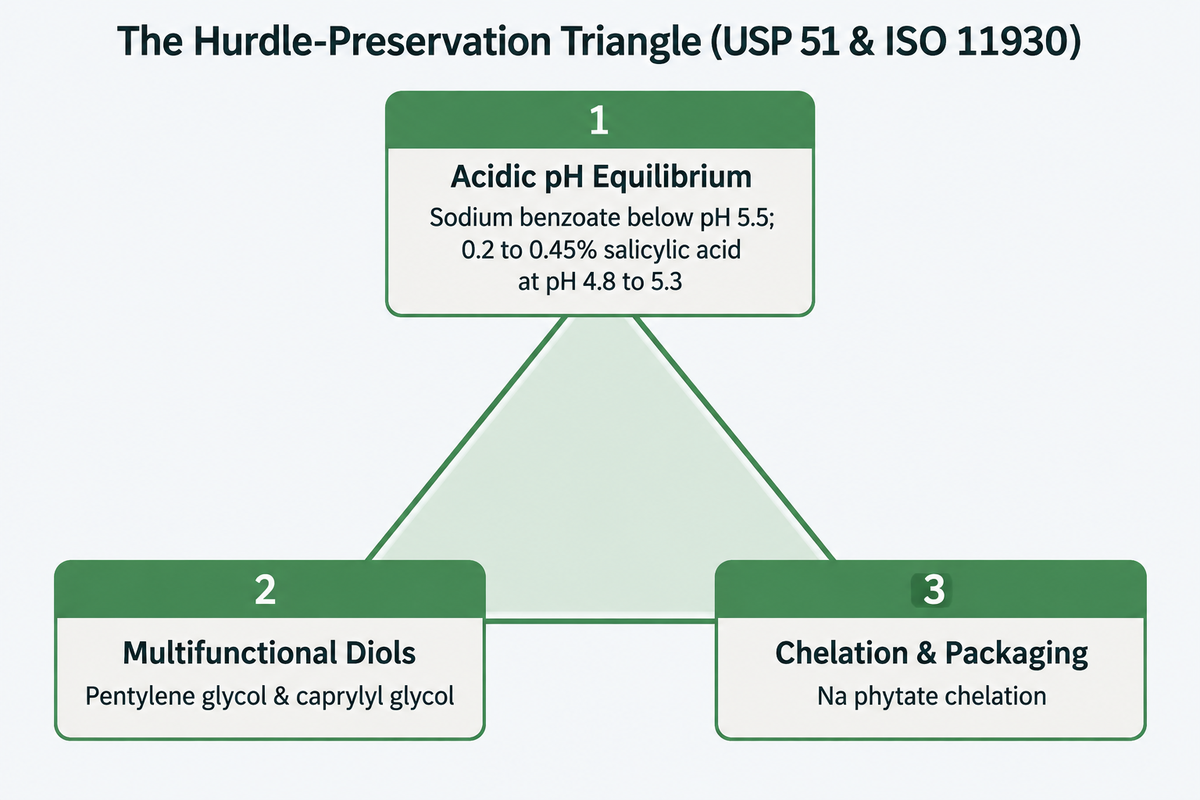
Passing USP 51 and ISO 11930 challenge testing in paraben-free and phenoxyethanol-free skincare requires a validated hurdle preservation design that combines pH control for organic acid salts, water-activity-reducing multifunctional diols, and metal-binding chelators, with antimicrobial efficacy verified across finished-product microbiological challenge tests before commercial release.
How do cosmetic chemists formulate paraben-free and phenoxyethanol-free clean skincare that still passes USP 51 and ISO 11930 preservative challenge testing?
Formulate paraben-free and phenoxyethanol-free clean skincare by combining acidic pH control, multifunctional diol boosters, and biodegradable chelators into a multi-hurdle system, and verify finished-product protection through 28-day USP 51 or ISO 11930 Criteria A challenge testing. As UL Prospector’s technical analysis on cosmetic preservation notes, in the European Union, phenoxyethanol remains listed as an approved cosmetic preservative with a maximum concentration of 1.0% in ready-for-use preparations. When a beauty brand targets strict paraben-free and phenoxyethanol-free clean label products, a single plant ferment may be insufficient for broad-spectrum protection, so formulas generally combine multiple hurdles and must pass finished-product challenge testing.
To minimize bacterial and fungal growth risk without traditional synthetics, NEXO Beauty Labs uses the Hurdle-Preservation Triangle, comprising three independent formulation barriers: acidic pH equilibrium, multifunctional diol water-activity reduction, and metal-ion chelation.
- According to Pentyl Labs’ formulation data on cosmetic preservatives, sodium benzoate is typically present in water-based and clean-label formulations and functions best in acidic systems, typically with a pH lower than 5.5; in systems with a higher pH, its performance will depend on the complete system and challenge test results. Specifically, in US Patent US10721937B1, a natural preservative composition contains a combination of 0.2 to 0.45% by weight of salicylic acid in a system with a pH of 5 to 5.5 and ideally between 4.8 and 5.3.
- Under Vertex 2 (multifunctional diols and glyceryl esters), according to Cosmetics & Toiletries research on multifunctional preservation medium chain 1,2-alkanediols ( e.g. bio based pentylene glycol and caprylyl glycol) and glyceryl caprylate and ethylhexylglycerin partition at the water/oil interface and thus lower the free water activity and assist organic acid preservatives.
- Under Vertex 3 (chelation and low-ingress packaging), Na phytate binds trace divalent metal ions and helps preservative efficiency under the tested formula conditions, while airless systems or sealed capsules limit in-use microbial ingress.
| Preservative System Architecture | Primary INCI Components | Effective pH Operating Window | Target Microbial Spectrum | Formulation & Packaging Constraints |
|---|---|---|---|---|
| Organic Acid + Diol Hurdle System | Sodium Benzoate, Potassium Sorbate, Pentylene Glycol, Sodium Phytate | Most effective below pH 5.5 | Bacteria, yeast (C. albicans), and mold (A. brasiliensis) when validated by challenge test | Requires lactic/citric buffer to prevent upward pH drift; suited for aqueous serums, toners, and O/W creams. |
| Salicylic + Ferment Co-Preservation | Salicylic Acid (0.2 to 0.45%), Propanediol (2 to 8%, or 4 to 6%), Ferment Filtrate | pH 4.8 to 5.3 (up to pH 5.5 per US10721937B1) | Gram-positive bacteria, blemish-prone skincare flora, and vegetative fungi | Described in US Patent US10721937B1; requires non-ionic emulsifier compatibility checks. |
| Levulinate / Anisate + Glyceryl Ester | Sodium Levulinate, Sodium Anisate, Glyceryl Caprylate, Caprylyl Glycol | Most effective below pH 5.5 | Bacteria and yeast; paired with diol booster for mold suppression in challenge testing | Amphiphilic esters can reduce emulsion viscosity if not balanced with xanthan or sclerotium gum. |
| EU Annex V Phenoxyethanol Blend | Phenoxyethanol (up to 1.0% max in EU ready-to-use preparations), Ethylhexylglycerin | Wide pH window (above and below pH 5.5) | Broad-spectrum bacteria and yeast; often paired with potassium sorbate for mold | ISO 16128 provides natural-origin calculations; it does not itself permit ingredients or determine retailer acceptance. |
| Anhydrous Low-Water-Activity Chassis | Squalane, Botanical Oils, Tocopherol, Rosemary Leaf Extract | Not applicable (waterless system) | Low water activity reduces microbial growth risk unless water is introduced during use | Anhydrous products still need packaging and contamination controls (such as 0.5 ml, 1.0 ml, or 1.5 ml capsules) to block moisture entry. |
Category-Specific Formulation Realities Across Skincare, Hair Care, and Body Care
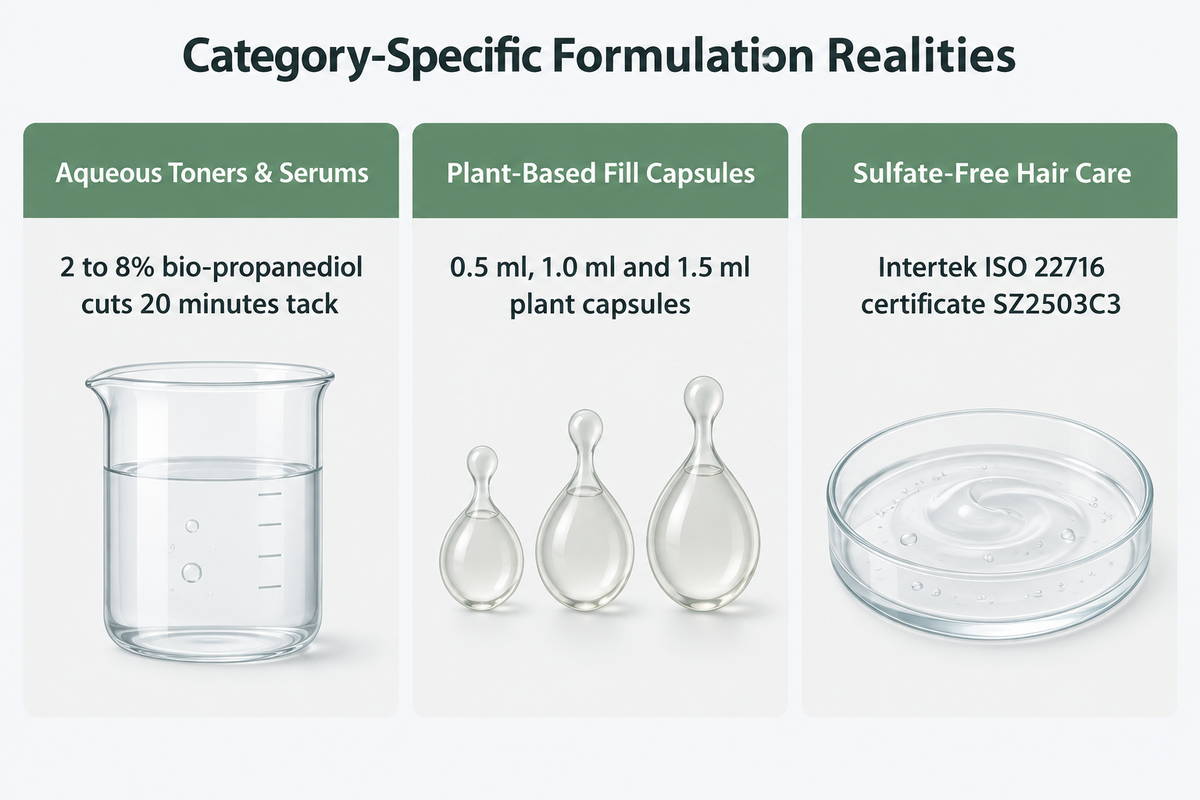
Clean beauty manufacturing constraints vary greatly by product chassis. Clean beauty manufacturing constraints vary sharply by product chassis: oil-in-water facial serums and creams require tight pH buffering and oxidation control, sulfate-free hair care relies on salt-independent rheology modifiers to build viscosity, and anhydrous balms or single-dose capsules rely on lipid networks for structural integrity and moisture-barrier encapsulation.
Expansion of personal care brands from a single facial serum to a full range of skincare products, hair care, and body care products meant the introduction of a new product type and a host of physical chemistry issues:
- In aqueous toners, serums, and emulsion creams, high-humectant clean toners often suffer from surface stickiness when formulators overload glycerin to replace volatile silicones. In sensory evaluations cited by HAPPI’s technical formulation column, the sticky stage of a high-humectant formula lasted around 20 minutes. Substituting part of the glycerin load with 2 to 8% bio-propanediol shortens that 20 minutes of tacky dry-down while maintaining hydration.
- On our private label skincare production lines and in our encapsulated skincare manufacturing guide, we endorse plant based fill capsules at 0.5 ml, 1.0 ml and 1.5 ml and give options on the color and shape of capsules. Each encapsulated application is sealed until use.
- Across sulfate-free hair care and scalp systems, replacing sodium laureth sulfate (SLES) with amino-acid and glucoside surfactants (such as sodium cocoyl isethionate and coco-glucoside) eliminates ethoxylated sulfates, and viscosity is built with natural hydrocolloids and cationic guar rather than simple salt addition. On our sulfate-free hair care manufacturing page, the site’s Intertek certificate SZ2503C3 identifies the General Liquid Unit and Cream & Lotion Unit within its audited ISO 22716 scope (valid to 12 March 2028), while FDA cosmetic GMP guidance aligns inspection recommendations with ISO 22716:2007 on water quality, raw material testing, equipment cleaning, and batch documentation.
The 5-Gate Batch Purity Protocol: Raw Material Traceability, ISO 22716 GMP, and Cleaning Validation
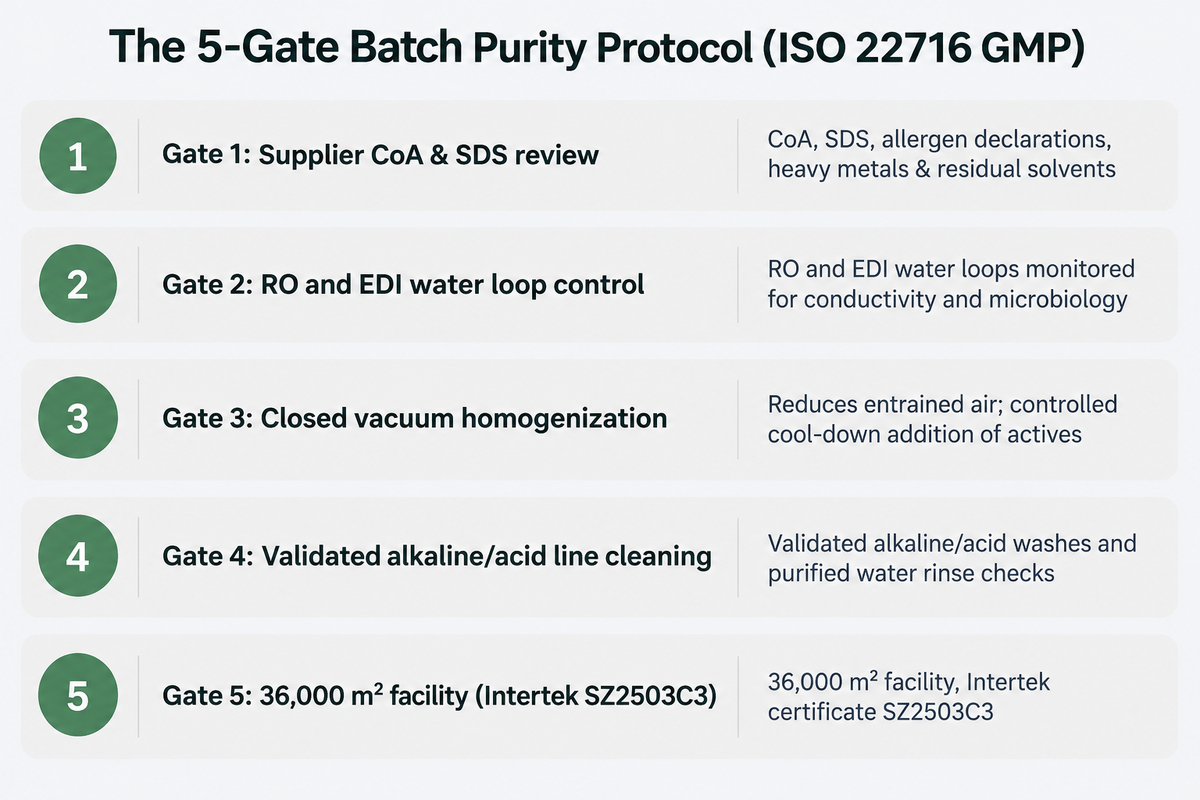
An audit of a clean beauty manufacturer can examine five operational gates matched to the product and facility: batch-level raw material CoA screening, purified water system control, vacuum homogenization and controlled cool-down mixing capability, validated line-cleaning rinse checks between runs, and ISO 22716 GMP batch traceability.
How should a beauty brand audit a clean beauty manufacturing facility for raw material impurity control, ISO 22716 GMP compliance, and batch cross-contamination cleaning?
Audit raw-material Certificates of Analysis for trace contaminants, verify purified water loop monitoring, review equipment cleaning validation records between conventional and clean runs, and confirm the certificate number and production-unit scope of the facility’s ISO 22716 GMP system before batch release. According to SGS’s technical review of ISO 22716, to reach and maintain consistency and encourage common terminology, ISO 22716 has 36 definitions specific to its application. Complementing that standard, the US FDA Good Manufacturing Practice (GMP) Inspection Checklist for Cosmetics outlines facility controls for raw material quarantine, water quality, equipment cleaning, and batch documentation.
To provide brand quality directors a structured factory audit checklist, we use The 5-Gate Batch Purity Protocol across clean production runs:
- At Gate 1 (review of quarantined raw material), quality control chemists assess the supplier Certificate of Analysis (CoA), Safety Data Sheet (SDS), allergen declarations, and test records for heavy metals and residual solvents prior to releasing botanical extracts and surfactants for production.
- At Gate 2 (purified water system control), because deionized water is the main solvent in aqueous skincare and haircare products, reverse-osmosis and electrodeionization water loops are monitored for conductivity and microbiological quality prior to batch charging.
- At Gate 3 (closed vacuum homogenization and cool-down addition), closed vacuum emulsifying vessels reduce entrained air while allowing heat-sensitive botanical actives and organic acid preservatives to be added during a controlled cool-down step when the formula permits.
- At Gate 4 (line-cleaning clearance), a validated cleaning program uses defined alkaline/acid washes and a final purified water rinse to show that residues from previous batches remain below the established acceptance limits before a clean batch is run.
- At Gate 5 (verified ISO 22716 GMP production units), NEXO Beauty Labs’ manufacturing site, Guangzhou Opseve Cosmetics Co., Ltd. (No. 88 Yongli Road, Xinhua Street, Huadu District, Guangzhou), operates a 36,000 m² facility running 56 production lines. Guangzhou Opseve Cosmetics Co., Ltd. holds Intertek certificate SZ2503C3 for its audited cosmetic GMP system against ISO 22716, covering the General Liquid Unit and Cream & Lotion Unit and valid to 12 March 2028.
Sustainable Packaging Compatibility: Airless Pumps, PCR Plastics, and Stability Testing
Clean formulations with mild preservative systems and high botanical oil loads can interact with eco-friendly packaging materials. Manufacturers perform multi-week package compatibility evaluations on post-consumer recycled resins, airless pumps and dropper elastomers to assess stress cracking, migration, dispensor wiper swelling and preservative loss.
However, the primary packaging choice impacts preservation and stability testing when formulating with natural ingredients. Preservation efficacy is assessed on the finished product by the challenge-test method in ISO 11930, and an open jar a user dips a finger into does not present the same in-use exposure as an airless pump. Airless pumps and multi-layer barrier tubes protect preservative-light clean emulsions from in-use finger contamination and oxygen ingress, but increase packaging component cost and require compatibility testing when using high-percentage PCR resins.
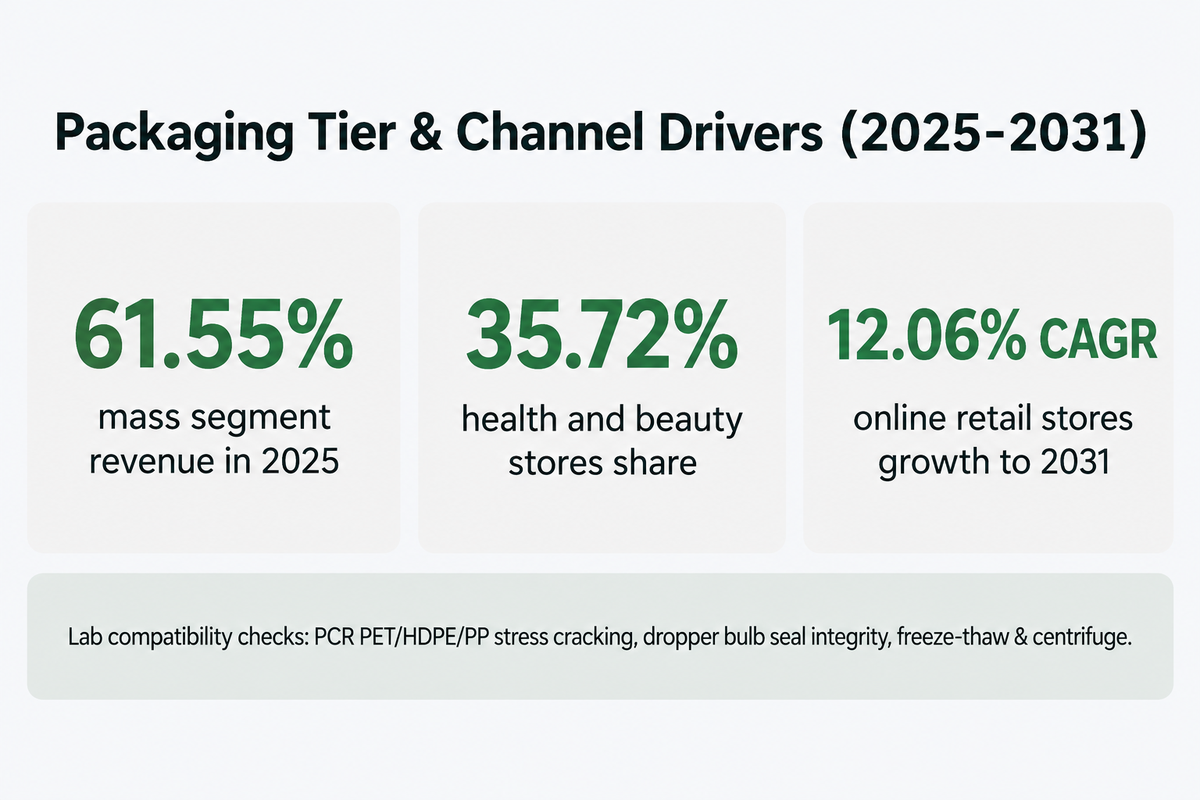
Channel and pricing structures also shape primary packaging selection. According to Mordor Intelligence’s global clean beauty market report, by price tier, the mass segment held 61.55% of revenue in 2025, whereas the premium segment is forecast to expand at a 11.74% CAGR to 2031. In the same report, by distribution channel, health and beauty stores led with 35.72% share in 2025, while online retail stores are set to grow at a 12.06% CAGR to 2031. Brands selling across retail shelves and e-commerce should evaluate packaging for thermal transit, formula-pack compatibility, and container closure integrity as part of their quality substantiation, referencing FDA cosmetic quality control guidelines:
- High-percentage PCR PET, HDPE and PP bottles are tested with the bulk formula, during the screening of PCR resins. This is to check for stress cracking and migration of color and/or odor from essential oils and buffers.
- The potential loss of seal integrity of nitrile, butyl, or silicone bulbs needs to be tested as well.
- The formula within the intended primary pack is evaluated in our laboratory by high-temperature, low-temperature, freeze-thaw, centrifuge, and leak tests during thermal, freeze-thaw, and centrifuge verifications, prior to commercial sign-off.
Private Label vs. Custom Clean Beauty Manufacturing: MOQs, Cost Drivers, and R&D Timelines
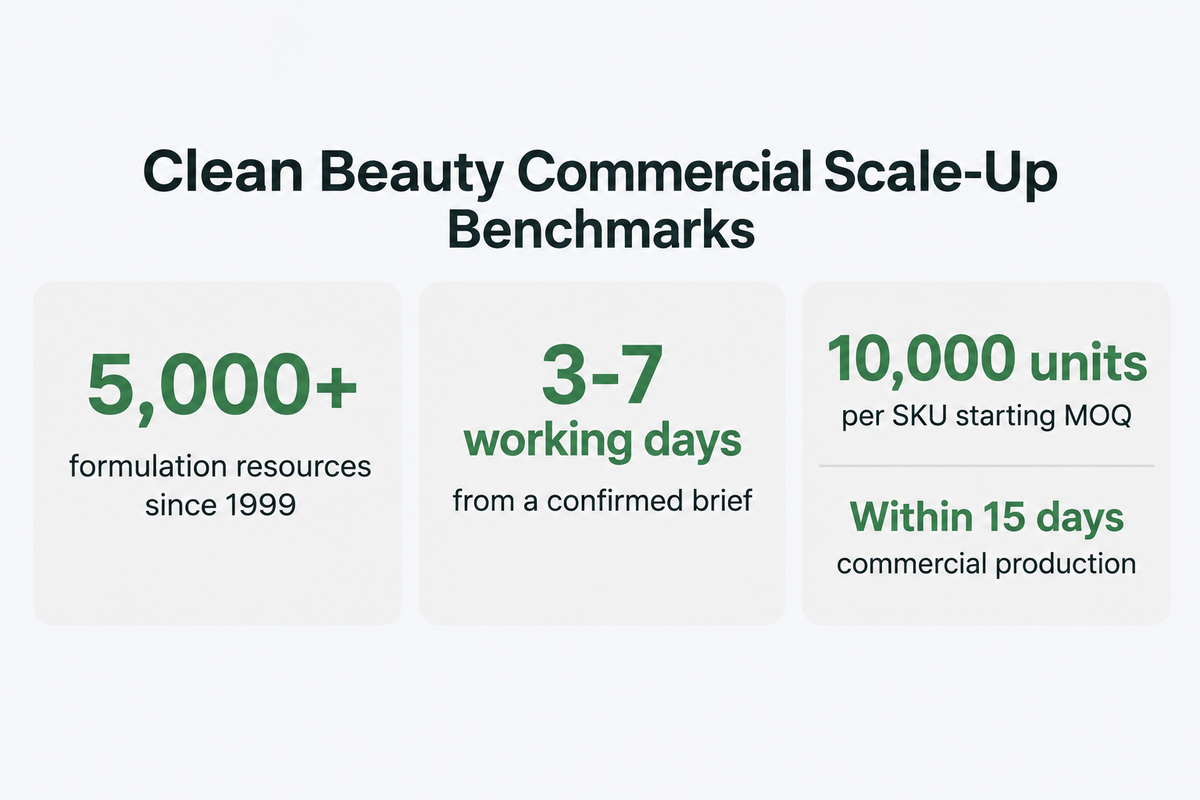
Adapting an existing base from a 5,000+ formula library delivers R&D lab samples in 3-7 working days from a confirmed brief, whereas custom clean formulation adds iterative lab development and full stability and microbiological testing before commercial production (starting from 10,000 units per SKU, completed within 15 days after formula approval and packaging confirmation).
What are the realistic minimum order quantities, R&D lab sampling timelines, and unit cost drivers when scaling custom clean beauty manufacturing vs stock private label bases?
Plan for a standard starting MOQ of 10,000 units per SKU (confirmed against formula, format, and packaging requirements), 3-7 working days for initial R&D lab samples from a confirmed brief, and 10-15 days (within 15 days) for commercial production after final sample and packaging approval.
Unit pricing for private label formulas and custom projects varies based on five project variables: product format, formula route, primary packaging, per-SKU quantity, and destination market compliance files. Making adaptations to the more than 5,000 existing established base formulations shortens early sampling time, whereas customized clean active systems require complete stability and packaging, as well as microbiological testing, prior to commercial release.
On NEXO’s clean beauty manufacturing programme, standard MOQ starts from 10,000 units for most skincare products, with the final MOQ confirmed against formula, format, and packaging requirements. Once a brand confirms its project brief, R&D lab samples are prepared in 3-7 working days from a confirmed brief. After final sample and packaging approval, commercial production runs within 15 days after formula approval and packaging confirmation as a supplier-specific commercial schedule, while applicable US facility registration and product listing duties are maintained separately under FDA MoCRA statutory requirements.
| Commercial & Technical Parameter | Library-Adapted Private Label Route | Co-Development / Formula Modification | Full Custom Clean Formulation (OEM/ODM) |
|---|---|---|---|
| Starting Formula Architecture | Adapted from 5,000+ formulation resources built since 1999 | Proven base chassis modified with custom actives, botanicals, or texture adjustments | Engineered from scratch around brand exclusion policy, target texture, and claim plan |
| R&D Lab Sample Turnaround | 3-7 working days from a confirmed brief | 3-7 working days per controlled revision round from a confirmed brief | 3-7 working days for initial prototype; revisions tracked in one project change log |
| Microbiological & Stability Scope | Existing base stability history plus primary-pack verification | Centrifuge, freeze-thaw, packaging compatibility, and microbiological check | Full high/low temperature, freeze-thaw, primary pack compatibility, and ISO 11930 assessment |
| Standard Commercial MOQ | Starts from 10,000 units per SKU, confirmed against formula, format, and packaging | Starts from 10,000 units per SKU, confirmed against formula, format, and packaging | Starts from 10,000 units per SKU, confirmed against formula, format, and packaging |
| Commercial Production Lead Time | Within 15 days (10-15 days) after formula approval and packaging confirmation | Within 15 days (10-15 days) after formula approval and packaging confirmation | Within 15 days (10-15 days) after formula approval and packaging confirmation |
| Best Fit For Beauty Brands | Fast market entry, private label wholesale expansion, and core staple SKUs | Growing indie skincare and personal care brands balancing speed with differentiation | Flagship hero products, strict retailer clean programs, and proprietary brand architectures |
While the production and listing of ultra-low-moq private label or white label stock jars by micro-batch sellers is promoted by many directory sites, building one of the best beauty lines for retail or scale-up e-commerce requires matching per SKU volume to automated filling lines and packaging component minimums.
How to Vet and Select a Scalable Clean Beauty Manufacturing Partner
Selecting a scalable clean beauty manufacturer requires auditing your prospective partner’s R&D formulation library depth, in-house microbiological and packaging compatibility testing scope, verified ISO 22716 certificate number and production units, published lead-time trigger points, and regulatory dossier support for US MoCRA and EU PIF compliance.
Which contract manufacturers specialize in scalable clean beauty formulation and OEM production for global skincare, hair care, and body care brands?
Evaluate specialized contract manufacturers in north america, Europe, and Asia-Pacific using the same six-point engineering audit checklist below; in this guide, we verify primary operational and certificate evidence for NEXO Beauty Labs (with manufacturing at Guangzhou Opseve Cosmetics Co., Ltd.) and set out the exact verification criteria to compare any domestic or international supplier. Whether your project requires a domestic supplier for a “made in the usa” label claim, a regional botanical company in india, or an export-focused OEM/ODM partner in Asia-Pacific, country-of-origin requirements and audited production units should be confirmed at the brief stage. According to Mordor Intelligence’s regional clean beauty market report, by geography, Asia-Pacific commanded 31.00% of the clean beauty market share in 2025 and is poised to record a 12.11% CAGR through 2031.
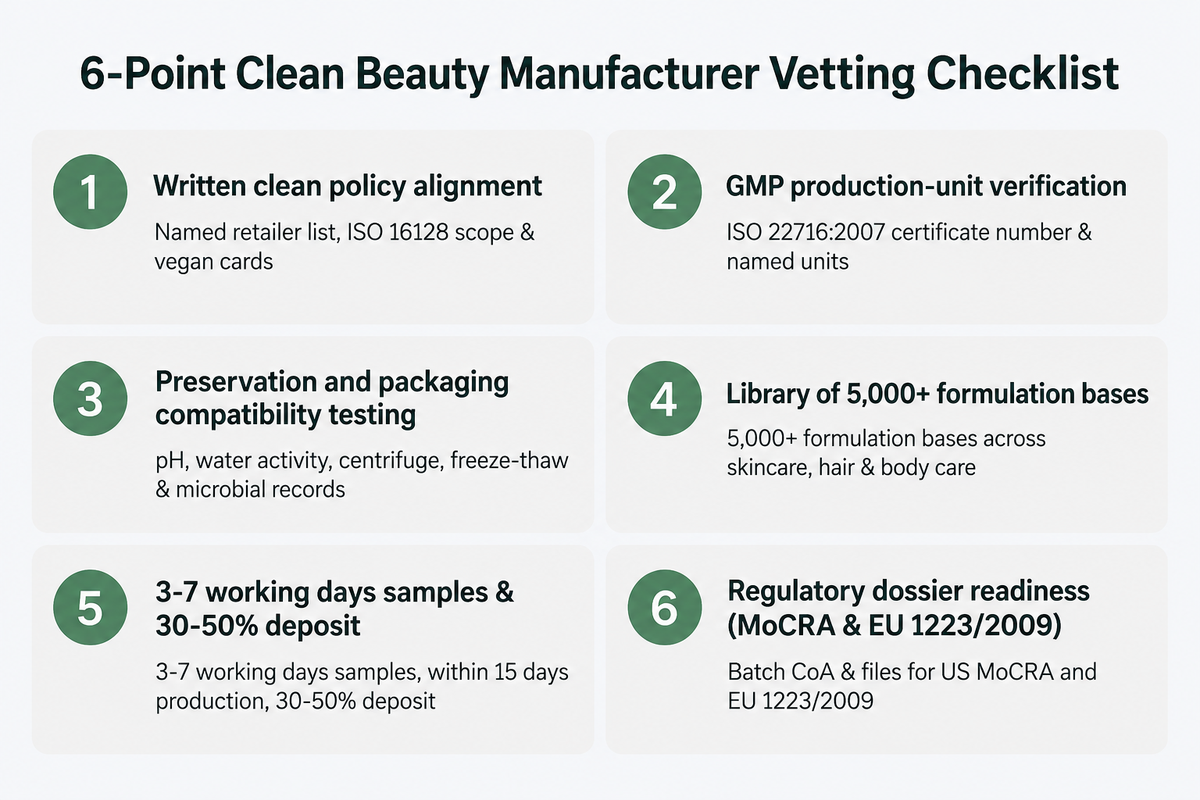
Use this 6-point checklist for private label and contract manufacturing candidates when doing technical vetting.
- In written clean policy alignment, confirm that the beauty manufacturer requires a named retailer exclusion list, ISO 16128 calculation scope, and separate vegan vs. cruelty-free verification cards before screening raw materials.
- For GMP production-unit verification, note that ISO 22716:2007 cosmetic GMP guidelines do not mandate a single certification format, so buyers should inspect the facility’s audit evidence, certificate number, named production units (such as liquid vs. cream and lotion lines), and validity dates.
- For preservation and packaging compatibility testing, confirm the R&D lab matches the preservation strategy to the formula’s pH and water activity, and generates centrifuge, freeze-thaw, primary-pack compatibility and microbial test records, prior to scale up.
- For multi-category formulation depth, check whether the partner maintains a library of 5,000+ formulation bases spanning high-quality skincare, hair care, and body care so your brand can expand across formats under one quality system.
- For commercial terms and decision-linked lead times, confirm NEXO’s 3-7 working days sample turnaround time (from a confirmed brief), within 15 days production windows (after formula approval and packaging confirmation), and 30-50% deposit for production, balance prior to shipment are included in writing.
- For regulatory dossier readiness, confirm quality provides batch CoA, ingredient breakdown and technical files, to support the Responsible Person appointed by you, under US MoCRA and EU Regulation (EC) No 1223/2009.
With operations dating to 1999 and an international business team supporting export brands since 2020, NEXO Beauty Labs provides end-to-end custom formulation and manufacturing services from Guangzhou Opseve Cosmetics Co., Ltd.’s 36,000 m² facility running 56 production lines, helping brands bring compliant products to market. To review your ingredient policy, target texture, and packaging direction with our R&D team, open a clean beauty formulation consultation or explore our clean beauty manufacturing specifications. For such consultation, kindly open a clean beauty consultation or check our clean beauty manufacturing specifications.
Frequently Asked Questions About Clean Beauty Manufacturing
Is clean beauty manufacturing regulated by the FDA under MoCRA?
Yes, clean cosmetics marketed in the United States are regulated under the Modernization of Cosmetics Regulation Act (MoCRA) even though neither the US FDA nor the European Commission defines the marketing term “clean beauty” by statute. Applicable MoCRA obligations include facility registration, product listing by the Responsible Person, serious adverse event reporting, maintaining adverse event records for six years (three years for some small businesses), and holding adequate safety substantiation records.
Can a clean beauty product be completely preservative-free?
Anhydrous (waterless) products such as pure botanical facial oils, wax balms, or sealed single-dose plant-based capsules (filled at 0.5 ml, 1.0 ml, or 1.5 ml) have very low water activity and can often be formulated without traditional antimicrobial preservatives when supported by a written microbiological risk assessment and moisture-blocking packaging. By contrast, water-containing emulsions, gels, toners, and surfactant cleansers generally require a validated preservation strategy verified by ISO 11930 or USP 51 challenge testing.
How long does it take to develop and manufacture a custom clean beauty product?
Initial R&D lab samples take 3-7 working days from a confirmed brief, and commercial mass production runs within 15 days (10-15 days) after final formula approval and packaging confirmation. The duration between initial sampling and the final sign-off for commercial manufacture varies with the type of formula adopted. With adaptation of a proven base from our 5,000+ formulation library, sign-off for commercial manufacture can typically be expected within 2-3 months. Overall development duration between initial sampling and commercial sign-off depends on whether you adapt a proven base from our 5,000+ formulation library or engineer a bespoke formula that requires multiple revision rounds, primary packaging compatibility checks, and full stability and microbiological testing.
Do clean beauty formulas require special packaging?
Yes, airless pumps and UV protected containers limit exposure to oxygen and finger dips.
Why do some clean beauty emulsions separate or change color over time, and how do manufacturers prevent it?
Emulsion separation and color drift can occur with the replacement of PEG-based emulsifiers or synthetic carbomer thickeners with natural alternatives, or if BHT antioxidants are replaced with natural alternatives, without rebalancing the emulsion’s liquid-crystal network, pH buffer, and chelation system. Experienced cosmetic chemists prevent separation by pairing olive or polyglyceryl emulsifiers with natural hydrocolloid stabilizers such as xanthan and sclerotium gum, homogenizing under closed vacuum to reduce entrained air, adding biodegradable sodium phytate to bind trace metal ions that catalyze discoloration, and testing every formula inside its intended primary packaging across centrifuge, freeze-thaw, and high- and low-temperature stability protocols prior to commercial release.
What minimum order quantity (MOQ) is standard for clean beauty contract manufacturing?
The minimum order quantity (MOQ) for standard orders starts from 10,000 units per SKU, confirmed against formula, format, and packaging requirements.
References & Sources
- U.S. Food and Drug Administration (FDA) Modernization of Cosmetics Regulation Act of 2022 (MoCRA)
- U.S. Food and Drug Administration (FDA) Good Manufacturing Practice (GMP) Guidelines / Inspection Checklist for Cosmetics
- SGS Technical Bulletin The Beauty That Is ISO 22716: Good Manufacturing Practices for Cosmetics
- United States Patent US10721937B1 Natural Preservative Systems and Cosmetic Compositions Comprising Salicylic Acid and Propanediol
- Personal Care Products Council (PCPC) Modernization of Cosmetics Regulation Act (MoCRA) Compliance Overview
- Grand View Research Clean Beauty Market Size, Share & Trends Analysis Report
- Mordor Intelligence Clean Beauty Market Share, Growth & Regional Forecast (2026–2031)
- UL Prospector Knowledge Center Phenoxyethanol: Regulatory Limits and Alternative Preservation Strategies
- Cosmetics & Toiletries Multifunctional Ingredients and Alternative Preservation in Personal Care
- HAPPI (Household and Personal Products Industry) Preservation and Sensory Evaluation in Facial Oils and Aqueous Toners
- Pentyl Labs Technical Reference pH-Dependent Efficacy of Organic Acid Cosmetic Preservatives
- Bayport Laboratories Vegan, Cruelty-Free, and Clean Beauty Formulation Standards
Why beauty brands work with NEXO
About NEXO Beauty Labs Manufacturing Support
NEXO Beauty Labs supports skincare, body care, sun care, hair care, and private label brands with formulation, sampling, filling, quality control, and export-ready launch support.
Project Review Before RFQ
Before quotation, we help clarify product category, active direction, formula stage, package choice, compliance market, MOQ, sampling schedule, and required documents.
Request a Cosmetic QuoteCompany Profile // Data Sheet
CompanyNEXO Beauty Labs
Business TypeCosmetic OEM / ODM manufacturing partner
Main ProductsPrivate label skincare, facial serums, moisturizers, cleansers, sunscreen, body care, and hair care products
Manufacturing CapabilityFormula development, sample adjustment, package sourcing, filling, QA/QC, documentation, and export support
RFQ Data NeededProduct type, formula goal, package format, target market, MOQ, claims, timeline, and benchmark samples
Websitenexobeautylabs.com