Get in touch with NEXO Beauty Labs Company


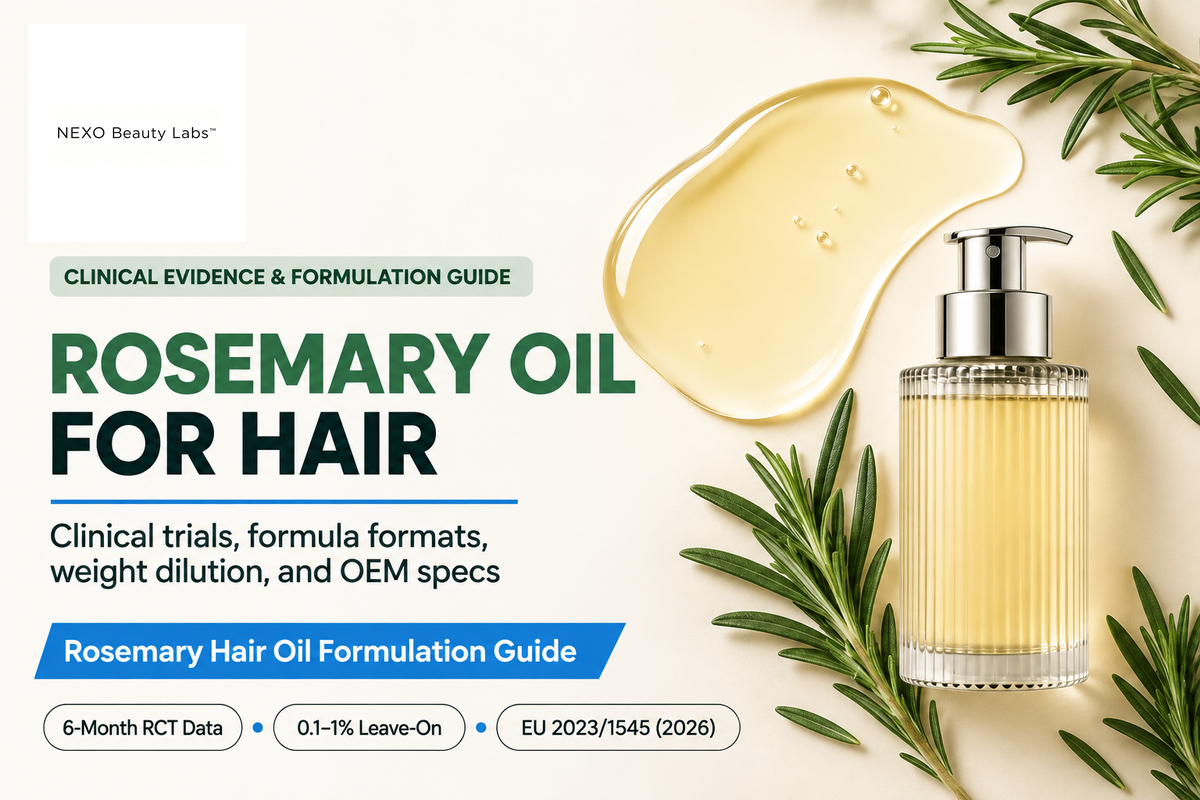
Rosemary oil for hair comes in three distinct topical formats: pure steam-distilled essential oil, rosemary-infused carrier oil, and finished hair oil formulas. Pure rosemary essential oil requires dilution before scalp contact, and even diluted concentrations may cause irritation or allergic contact dermatitis. In a six-month human trial (Panahi et al., 2015, n = 100), topical rosemary oil showed significant hair-count gains at six months alongside 2% minoxidil with less scalp itching.
Many readers looking to improve hair comfort or explore a natural remedy for hair and scalp care hit label confusion. Consumers often apply the oil undiluted, overload fine strands with thick castor oil, or expect fast results while treating hair thinning without a diagnosis. Brand buyers face another hurdle. A 2023 pharmacopoeial audit (Barak et al., 2023) found that zero of 15 marketed pure rosemary oils sampled in Türkiye complied fully with European Pharmacopoeia 10.0. Below, you’ll find the clinical evidence, format matrix, weight-based dilution math, 2026 compliance deadlines, and contract manufacturing checks.
Does Rosemary Oil for Hair Really Work? Clinical Evidence vs. 2% Minoxidil
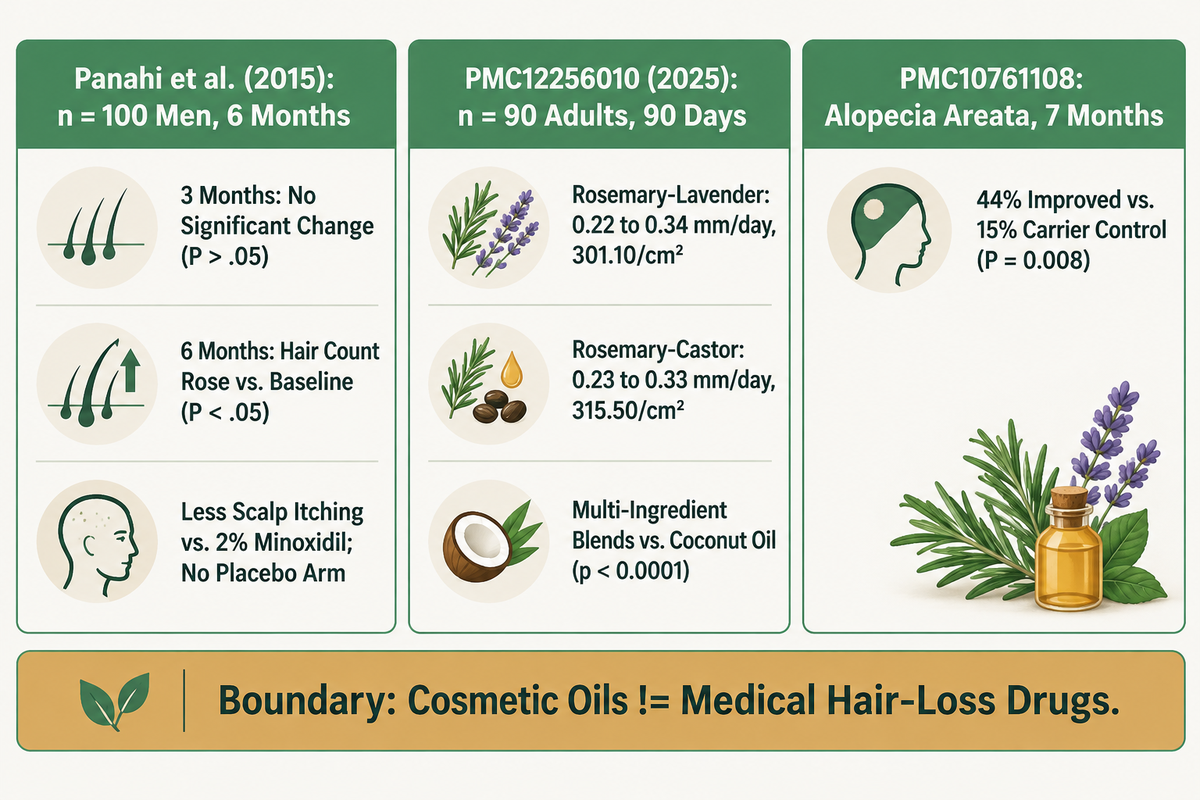
Yes, limited human trials report modest hair-count gains after six months of topical rosemary oil use, though outcomes vary by hair-loss cause and formula composition. Panahi et al. (2015, SKINmed) randomized 100 men with androgenetic alopecia to rosemary oil (n = 50) or 2% minoxidil (n = 50) for six months. Neither group showed a significant hair-count change at three months (P > .05).
By six months, both arms recorded significant hair-count increases compared with baseline and month three (P < .05). At both three and six months, both arms showed increased scalp itching, though the 2% minoxidil group reported itching more frequently (P < .05). There were no significant changes in the frequencies of greasy hair, dry hair and dandruff in either arm (P > .05).
Three trial boundaries shape how you read rosemary oil vs minoxidil 2% data: first, the trial by Panahi et al. included no placebo arm and enrolled only male participants with androgenetic alopecia. Second, the trial used 2% minoxidil instead of 5% minoxidil, which is readily available over the counter. Third, the absence of a statistically significant difference between the two arms (P > .05) doesn’t formally prove non-inferiority or equivalence.
A 2025 trial conducted at NovoBliss Research adds controlled 90-day data for finished commercial botanical oil blends (including Rosmagain). Registered as CTRI/2024/07/070860 (PMC12256010), this prospective, double-blind, three-arm study randomized 90 healthy adults aged 18–55 equally. The three arms compared rosemary-lavender oil, rosemary-castor oil, and a coconut oil control. By day 90 (p < 0.0001), mean hair growth rate rose from 0.22 to 0.34 mm/day with rosemary-lavender oil. In the rosemary-castor arm, growth rate rose from 0.23 to 0.33 mm/day. Hair thickness climbed from 17.39 to 19.66 µm and from 17.96 to 20.23 µm. Hair density reached 301.10/cm² and 315.50/cm², while anagen-to-telogen ratios rose from 0.91 to 1.94 and 0.68 to 1.84. Because both active blends combined rosemary with lavender or castor oil, these day-90 gains reflect complete formulas rather than isolated rosemary oil.
Earlier clinical research also examined essential-oil blends in autoimmune hair loss. A dermatology review (PMC10761108) summarizes a seven-month double-blind trial in alopecia areata (n = 43 active blend vs. n = 43 carrier control). In that study, 44% of participants using rosemary, thyme, lavender, and cedarwood essential oils improved. Only 15% of participants in the carrier control improved (P = 0.008). Early studies suggest that rosemary oil may help with hair growth by supporting scalp blood circulation around hair follicles. Researchers studying rosemary oil for hair growth examine whether rosemary constituents support hair growth by stimulating hair follicles. Clinical proof on whether rosemary oil can help stimulate hair growth, stimulate hair follicles, or promote hair growth still stays narrower than drug dossiers.
| Study & Design | Population & Duration | Intervention vs. Comparator | Measured Primary Endpoints | Key Scope Boundaries |
|---|---|---|---|---|
| Panahi et al. (2015), single-blind RCT (PMID 25842469) | 100 men with androgenetic alopecia; 6 months | Rosemary oil (n = 50) vs. 2% minoxidil (n = 50) | Month 3: no significant change (P > .05). Month 6: significant hair-count gain in both arms (P < .05); less itching with rosemary (P < .05). | Male-only cohort; no placebo arm; no 5% comparator; no non-inferiority margin. |
| Cureus 3-arm double-blind RCT (PMC12256010, 2025) | 90 healthy adults (18–55 yr); 90 days | Rosemary-lavender oil & rosemary-castor oil vs. coconut oil | Growth rate 0.22→0.34 & 0.23→0.33 mm/day; thickness 17.39→19.66 & 17.96→20.23 µm; density 301.10 & 315.50/cm² (p < 0.0001). | Multi-ingredient blends; cannot isolate rosemary alone from lavender or castor oil. |
| Hay et al. aromatherapy RCT (PMC10761108 review) | 86 alopecia areata patients (43 per arm); 7 months | 4-oil blend (rosemary, thyme, lavender, cedarwood) vs. carrier only | 44% of active-blend participants improved vs. 15% of carrier-control participants (P = 0.008). | Alopecia areata population; four essential oils evaluated together. |
Sensory hair conditioning, scalp care, and medical treatments for hair loss should be separated. Cosmetic oils soften dry hair shafts, reduce combing friction, and refresh the scalp. They differ from clinical interventions for telogen effluvium, postpartum thinning, thyroid imbalances, or fungal infections. Resolving telogen effluvium on its own may give the perception that oils are effective in treating it. If you notice sudden shedding, pain, redness, or heavy scaling, discuss hair loss with a dermatologist first. The cause of your hair loss should be identified before you expect these oils to treat hair loss, fight hair loss, or work for hair concerns.
Can rosemary oil cause hair loss or shedding at first?
Rosemary oil can also be the reason for increased shedding if the essential oils aren’t diluted. Undiluted essential oils can also cause an inflammation of the scalp and contact dermatitis. Scalp inflammation from contact dermatitis can lead to hair loss that continues even after you stop using the trigger. Although massage is known to release telogen hairs, vigorous massage should be avoided if irritation, itching or hives occur. Stop immediately and wash your hair gently if you feel burning, hives, persistent itching, or tender bumps.
Pure Rosemary Essential Oil vs. Infused Oil vs. Finished Hair Oil Formulas
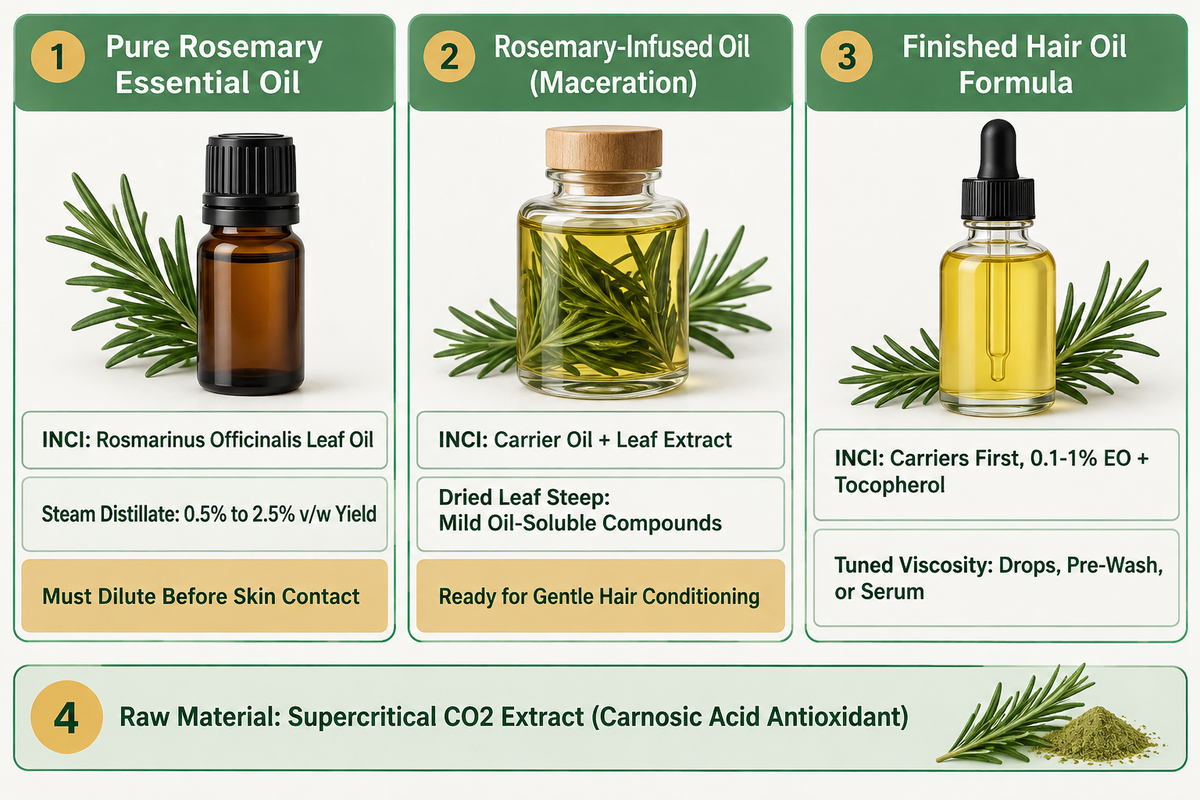
Pure rosemary essential oil is an undiluted volatile distillate that must be diluted with a carrier before use on the skin. Rosemary infused oils and other finished hair oil formulas combine carrier oils with rosemary constituents. Rosemary leaves and branchlets naturally yield 0.5% to 2.5% v/w volatile essential oil (PMC12251978). Steam distillation concentrates volatile terpenes—mainly 1,8-cineole, alpha-pinene, and camphor—without plant fats. Pure rosemary essential oil requires carrier dilution before skin contact.
Steeping dried rosemary leaf in carrier oil produces an oil with less volatile terpenes and more oil soluble compounds. Commercial hair oil formulas add emollients, measured essential oils and antioxidants to carrier bases. However, having a carrier base never makes every finished bottle safe for scalp leave-in wear. Some formulas are intended strictly for hair lengths or short pre-wash contact. Within the broader ingredient market, Global Market Insights reports global essential oils reached USD 27.49 billion in 2025, with about 330,000 metric tonnes in physical consumption.
Reading INCI lists can show consumers the difference between aromatherapy oils, blends and macerated oils, helping them avoid the mistake of adding essential oils directly to their skin. Pure rosemary essential oil lists a single ingredient, Rosmarinus Officinalis Leaf Oil, sometimes with the botanical name Salvia Rosmarinus alongside it. Oils that are macerated list the carrier oil first, followed by Rosmarinus Officinalis Leaf Extract. Commercial blends typically list carriers first and essential oils near the bottom. For example, published private-label hair care supplier benchmarks commonly list 0.1–1% rosemary essential oil with carriers and tocopherol. Pure rosemary essential oil is sold as an undiluted volatile concentrate that requires carrier dilution before scalp application. The 3-Format Rosemary Oil Selection Matrix compares all three retail formats side by side. Although the INCI list provides some information on concentration, it can’t accurately determine the exact percentage.
| Specification Dimension | Pure Rosemary Essential Oil | Rosemary Infused (Macerated) Oil | Finished Commercial Hair Oil |
|---|---|---|---|
| Extraction Method | Steam distillation of rosemary twigs and flowering tops (ISO 1342:2012) | Warm or ambient maceration of dried rosemary leaf in fixed plant oil | Formulated blend of carriers, esters, rosemary EO, and antioxidants |
| Typical INCI Label | Rosmarinus Officinalis Leaf Oil (single entry) | Carrier Oil + Rosmarinus Officinalis Leaf Extract | Carriers/Esters + Rosmarinus Officinalis Leaf Oil + Tocopherol |
| Primary Active Profile | Volatile terpenes: 1,8-cineole, alpha-pinene, camphor, borneol | Low volatile terpenes plus oil-soluble leaf phenolics and pigments | Dosed EO (e.g., 0.1–1% in published OEM hair-oil benchmarks) plus emollient lipids |
| Direct Neat Scalp Use | No; oil is highly concentrated and risks dermal irritation | Follow product directions; dried-herb prep and patch testing do not guarantee zero reaction | Follow label (some target scalp pre-wash; others target dry hair ends only) |
| Quality & Composition Standards | ISO 1342:2012 and EP 10.0 define physicochemical tests and chromatographic profiles | Batch strength varies widely; rarely standardized by GC-MS | Managed through incoming EO COAs and finished-batch QC specs |
| Texture & Hair Feel | Water-thin volatile liquid that evaporates fast | Matches carrier base; heavier if steeped in olive or castor oil | Tuned by formula across lightweight scalp drops, richer overnight blends, and oil-serum hybrids |
| Microbial Moisture Risk | Very low (anhydrous volatile distillate) | Elevated if fresh damp leaves add water into sealed oil | Low-risk assessment under ISO 29621 (aw < 0.60) if anhydrous; water-containing serums need risk-based preservation |
| Primary Use Case | Weight-based DIY dilution or B2B cosmetic raw material | Gentle herbal oil for dry hair conditioning | Ready-to-use retail scalp treatment or hair product |
| Storage Practice | Amber glass, tightly capped, at or below 25 °C | Cool, dark cabinet; strain all leaf solids cleanly | UV-protective glass; keep pipette clean and dry |
Formulators also use a fourth raw material behind the scenes: supercritical CO2 rosemary extract, extracted with high-pressure supercritical CO2 fluid. Distilled rosemary oil contains volatile terpenes, unlike a neutral maceration, and is paired with supercritical CO2 rosemary extract. Knowing which format to use for hair separates mild macerations from volatile concentrates. This also explains the differences in rosemary oil help across commercial formats.
Which rosemary essential oil chemotype is best for hair?
Select the 1,8-cineole chemotype (commonly Moroccan or Tunisian origin) for adult scalp oils because it offers higher cineole with lower camphor than Spanish oils. In the European Pharmacopoeia 10.0 ranges reported by Barak et al. (2023), Moroccan/Tunisian oil specifies 38–55% 1,8-cineole and 9–14% alpha-pinene. Spanish-type oil specifies 16–25% 1,8-cineole and 18–26% alpha-pinene. Camphor chemotypes commonly hold 10–25% camphor (Essential Oils Wiki). High-camphor lots smell sharper and raise irritation risk on sensitive scalps, while verbenone lots cost more and fit mostly facial serums.
Safe Rosemary Oil Dilution Ratios, Carrier Oils, and Scalp Irritation Risks
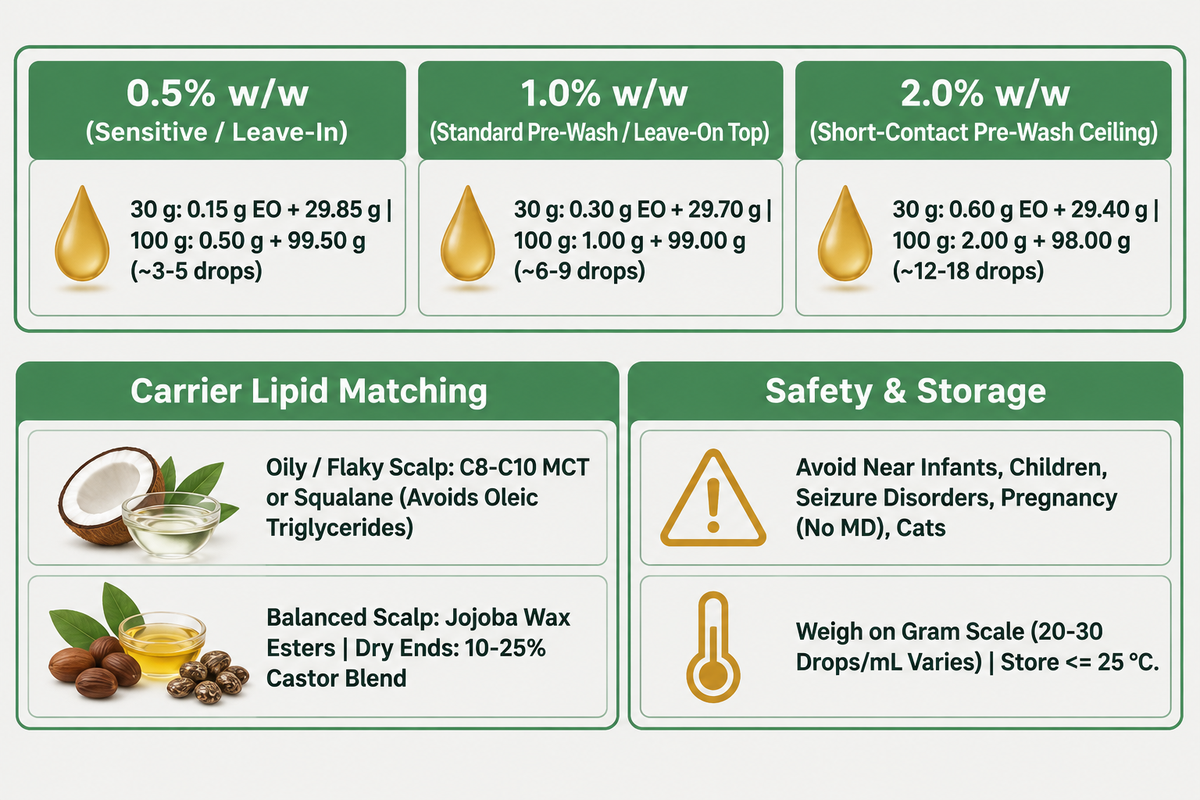
Practical adult scalp blends use 0.1–1% rosemary essential oil in finished leave-on products, matching published private-label hair-oil benchmarks. Short-contact pre-wash blends go up to 2% by weight. These figures are working formulation bands, not universally safe doses. Individual sensitivity and cumulative allergens can still cause irritation or allergic contact dermatitis. Always weigh rosemary oil with a carrier oil on a gram scale instead of estimating drops per tablespoon of carrier oil. Dropper orifices dispense anywhere from 20 to 30 drops per milliliter.
Weight accuracy prevents gross over-dosing, yet total formula composition determines skin tolerance. In its cosmetic safety assessment of rosemary ingredients, the Cosmetic Ingredient Review specifies they’re safe when formulated to be nonsensitizing. Blending rosemary oil with lavender oil, tea tree oil, or peppermint oil adds overlapping allergens. Key examples include linalool and limonene (1.5–4% in Moroccan/Tunisian and 2.5–5% in Spanish rosemary oil under EP 10.0 in PMC10445223). Commercial brands must substantiate cumulative allergen safety across the finished blend. Home users should run a 24–48 hour forearm patch test before scalp use.
Example (Worked Dilution Math): Suppose you prepare a 30 g glass dropper bottle with rosemary essential oil at 1.0% w/w. Multiply batch mass by the target fraction: 30 g x 0.01 = 0.30 g of pure rosemary essential oil (300 mg, as 1 g = 1,000 mg). Subtract 0.30 g from 30 g to obtain 29.70 g of carrier oil. Scaling by 3.33× for a 100 g bottle yields 1.00 g of essential oil plus 99.00 g of carrier oil.
| Assumed Dilution (% w/w) | 30 g Batch: Rosemary EO + Carrier | 100 g Batch (3.33×): Rosemary EO + Carrier | Rough Drop Equivalent (30 g) | Typical Adult Application Context |
|---|---|---|---|---|
| 0.5% w/w | 0.15 g EO + 29.85 g carrier | 0.50 g EO + 99.50 g carrier | ~3–5 drops of rosemary oil | Sensitive scalps, first-time users, or light leave-in drops |
| 1.0% w/w | 0.30 g EO + 29.70 g carrier | 1.00 g EO + 99.00 g carrier | ~6–9 drops of rosemary oil | Standard pre-wash blend (top of typical commercial leave-on band) |
| 2.0% w/w | 0.60 g EO + 29.40 g carrier | 2.00 g EO + 98.00 g carrier | ~12–18 drops of rosemary oil | Short-contact pre-shampoo rinse-off on resilient adult scalps |
The choice of carrier affects both ease of washing out and potential dandruff flare ups. On flaky scalps, lipases secreted by Malassezia yeasts break down triglycerides containing oleic and other long-chain fatty acids, releasing free fatty acids that can irritate sensitive skin. Pairing rosemary oil with a carrier oil built on C8–C10 caprylic/capric triglyceride (fractionated coconut ester) or squalane avoids oleic-rich triglycerides, while jojoba oil provides stable wax esters. Because no single base is suitable for all hair types, match the carrier lipid to your scalp oiliness and strand width. Carrier selection can affect both wash-out comfort and dandruff flare-ups.
| Carrier Base | Lipid Class & Feel | Best Hair & Scalp Match | Oxidative Stability | Formulation & Wash-Out Note |
|---|---|---|---|---|
| Caprylic/Capric Triglyceride (MCT / Fractionated) | C8–C10 ester; liquid, ultra-light | Oily, fine hair, dandruff-prone scalp | High (saturated short chains) | Spreads fast through roots; rinses cleanly with light shampoo |
| Sugarcane Squalane | Saturated hydrocarbon; dry-touch | Fine, thin hair, reactive scalp | Very high (no double bonds) | Minimal residue; higher raw-material cost per kg |
| Jojoba Oil | Liquid wax ester; medium-light | Normal, combination, dry scalp | Very high (wax ester stability) | Mimics skin sebum; widely paired with tocopherol in anhydrous oils |
| Argan Oil | Oleic/linoleic triglyceride; silky | Dry, color-treated, damaged hair | Moderate | Smooths rough cuticles; keep root dose modest |
| Grapeseed Oil | Polyunsaturated seed oil; light | Medium hair, budget pre-wash | Lower (oxidizes faster in light) | Pair with an antioxidant system and light-barrier container chosen during stability testing |
| Sweet Almond Oil | Oleic-rich nut oil; cushiony | Normal to dry hair strands | Moderate | Avoid for consumers with tree-nut allergy disclosures |
| Pumpkin Seed Oil | Linoleic/oleic seed oil; rich | Coarse or dry scalp blends | Moderate (deep green pigment) | Dark pigment can tint light blonde strands if over-applied |
| Virgin Coconut Oil | Lauric-rich fat; solidifies <24 °C | Coarse, high-porosity mid-lengths | High (saturated fatty acids) | Hardens in cool rooms and clogs pipettes; use liquid MCT at roots |
| Castor Oil (Blended at 10–25% w/w) | Ricinoleic-acid lipid; very thick | Coarse, curly, dry hair ends | High | Dilute with MCT or jojoba to improve spread and wash-out |
Some groups need extra care due to the presence of 1,8-cineole and camphor in rosemary essential oil. Concentrated rosemary blends should be kept away from infants, young children, pregnant users without medical advice, and those with seizure disorders. Store bottles sealed at 25 °C or below (Essential Oils Wiki), and discard oxidized oil that smells sharp or turns cloudy. Keeping bottles sealed at or below 25 °C prevents oxidized oil that turns cloudy or smells sharp, while keeping oil off your forehead avoids eye stinging.
Rosemary Oil vs. Castor Oil for Hair: Separate Roles and Balanced Blends
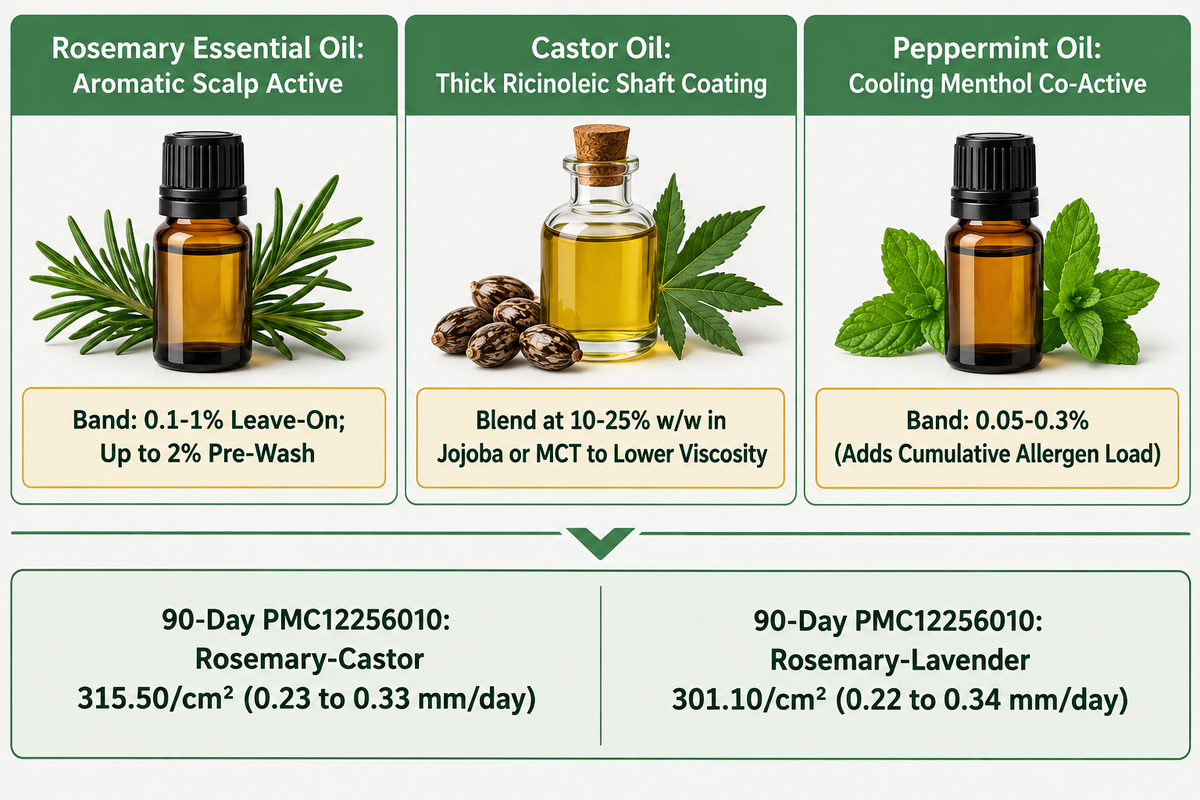
Rosemary oil and castor oil serve distinct formulation roles: diluted rosemary essential oil is studied for scalp care, whereas thick castor oil coats dry hair strands for shine and smoother combing. Castor oil is rich in ricinoleic acid triglycerides whose hydroxyl groups form strong hydrogen bonds. That molecular structure drives the high castor oil ricinoleic acid viscosity profile that glosses dry lengths but weighs down fine roots.
A dermatology narrative review (PMC12978418) notes that a short-term lotion with quaternary ammonium salts of castor triglycerides lowered skin mechanical resistance and dynamic viscosity. Another case reported contact dermatitis to ricinoleic acid. Tangling of hair is alleviated when castor oil is used in formulations; however, it may be detrimental when used neat. An expired patent (US9066952B1), granted 2015, suggests using black castor oil (5-25%) along with other carriers including olive, grapeseed, jojoba and coconut oils, in a pre-shampoo treatment. Its post-shampoo step pairs trace to 1.0% rosemary extract with 30.5–49.0% jojoba and grapeseed oil.
In the 90-day PMC12256010 study, both active oil blends outperformed the control coconut oil (p < 0.0001). The rosemary-castor arm reached a density of 315.50/cm² and showed an increase in growth rate from 0.23 to 0.33 mm/day. The rosemary-lavender arm reached 301.10/cm² density with an increase in growth rate from 0.22 to 0.34 mm/day. Diluting castor oil with a lighter carrier oil to an example concentration of 10-25% by weight lowers viscosity compared with undiluted castor oil. How well the oil flows and washes out of the hair still depends on the full formulation and the dose used.
Example (Worked Blend Math): Suppose you build a 100 g rosemary-castor pre-wash blend for medium hair. Combine 15.0 g castor oil (15.0% w/w), 58.5 g caprylic/capric triglyceride (58.5%), and 25.0 g jojoba oil (25.0%). Add 1.0 g rosemary essential oil (1.0%) and 0.5 g mixed vitamin E tocopherols (0.5%) to reach 100.0 g total. Cutting castor oil to 15.0% keeps the blend fluid enough to pipette onto parted roots.
| Ingredient | Chemical Category | Primary Hair & Scalp Role | Example Blend Level (% w/w) | Key Trade-Off |
|---|---|---|---|---|
| Rosemary Essential Oil | Volatile terpene distillate | Aromatic scalp care active | 0.1–1% (typical commercial leave-on band); up to 2% short-contact pre-wash | Must dilute; high doses irritate skin |
| Castor Oil | Fixed ricinoleic triglyceride | Cuticle gloss, dry hair lubrication, lower combing friction | 10–25% inside a light carrier base | Very viscous; weighs down fine hair if used neat |
| Peppermint Oil | Menthol-rich volatile oil | Cooling scalp feel and crisp aroma | 0.05–0.3% (published OEM benchmark) | Eye-sting vapor; adds cumulative allergen load |
When brands combine peppermint oil and rosemary oil, both oils contribute to the total fragrance allergen load and must be assessed together in the finished product safety assessment. Many shoppers comparing rosemary oil benefits and the broader benefits of rosemary oil hope one oil helps coat dry ends, helps hair feel softer, and supports hair thickness at once. Combining a modest rosemary oil dose with a light carrier and a 10–25% castor fraction helps strengthen hair feel along dry lengths while keeping scalp wash-out manageable.
How to Use Rosemary Oil for Hair Without Greasy Buildup
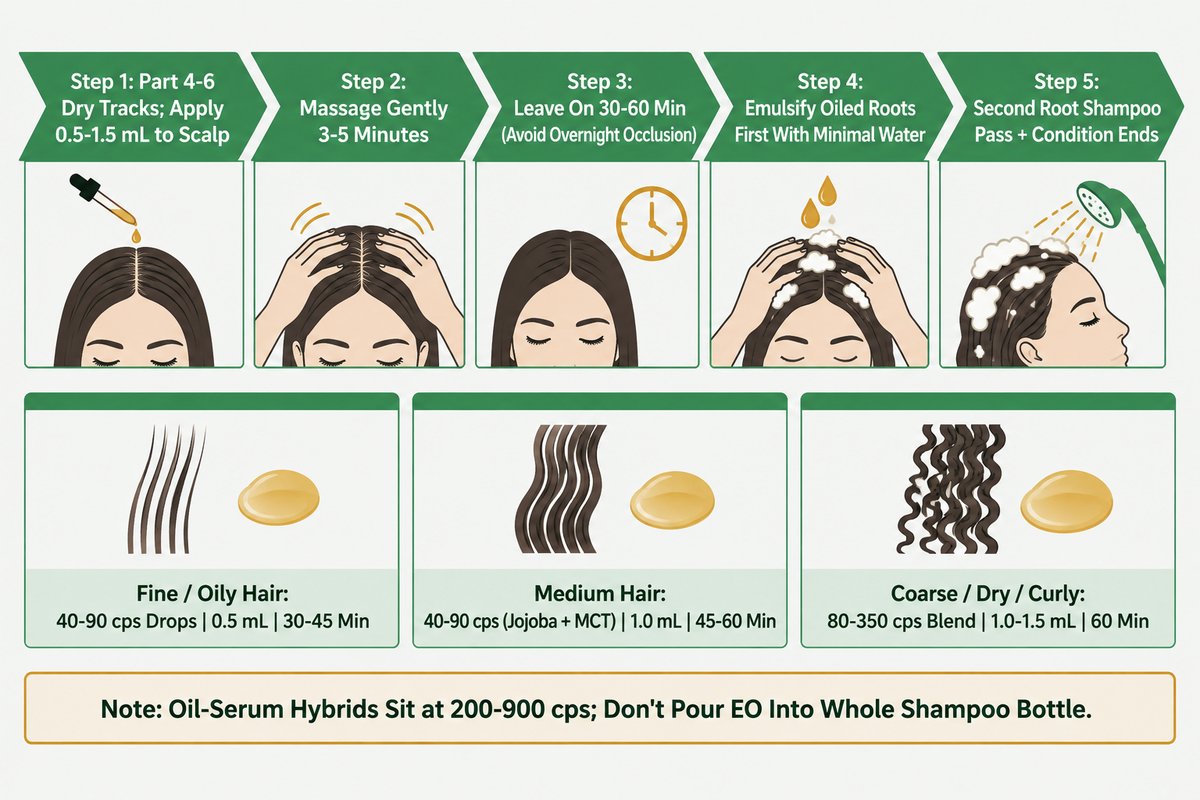
Dispense 0.5–1.5 mL of diluted rosemary oil onto parted scalp tracks for 30–60 minutes before shampooing, two to three times a week. Follow with two gentle shampoo passes to remove the oil cleanly. On Reddit r/finehair and r/longhair, heavy oily roots are the top reason people abandon rosemary oil for hair. Buildup usually starts when users coat the hair canopy instead of the scalp, leave thick oil overnight, or wash once without fully emulsifying heavy carrier lipids.
Use this five-step pre-wash sequence when you apply rosemary oil:
- Part dry hair into four to six clean tracks, hold a graduated applicator near the scalp skin—not over the canopy—and dispense 0.5–1.5 mL total.
- Use the pads of your fingers to massage the oil mixture into your scalp for 3-5 minutes. Don’t use your fingernails, as this can irritate the scalp skin and snap the hair shaft.
- Don’t use a heavy plastic heat cap during this short dwell time, as it traps sweat on the sensitive skin.
- If your hair is already oily or you used castor oil, rub lightweight conditioner or a first shampoo pass over oiled roots with minimal water so surfactants bind the lipids.
- After rinsing the first shampoo pass thoroughly with warm water, shampoo the hair roots once more, then condition the middle sections and ends of the hair to leave hair after using rosemary oil clean.
Adding two drops of rosemary oil to your shampoo palm creates a thin lather and contact time with the scalp is less than two minutes. Before showering, massage a pre-wash oil into your scalp to condition. This increases contact time with terpenes. Pouring essential oil into a whole shampoo bottle can thin surfactant viscosity or disturb preservatives. Commercial benchmarks group finished rosemary hair oils into three viscosity tiers. Those tiers are lightweight scalp drops (40–90 cps), richer overnight blends (80–350 cps), and oil-serum hybrids (200–900 cps). Use a viscosity that’s comparable to the thickness of your natural hair to avoid a greasy feel when you step into the shower.
| Hair Type | Commercial Viscosity Benchmark | Dose & Pre-Wash Contact | Wash-Out Method |
|---|---|---|---|
| Fine or Oily Hair | Lightweight scalp drops (40–90 cps; MCT or squalane) | 0.5 mL at roots; 30–45 min pre-wash | Two clarifying or balanced shampoo passes |
| Medium or Normal Hair | Lightweight scalp drops (40–90 cps; jojoba + MCT) | 1.0 mL across scalp; 45–60 min pre-wash | Two regular gentle shampoo passes |
| Coarse, Dry, or Curly Hair | Richer blend (80–350 cps; jojoba + 10–25% castor/argan) | 1.0–1.5 mL scalp + ends; 60 min pre-wash rinse-off | Conditioner emulsification + moisturizing shampoo |
When and how often should you apply rosemary oil to your hair?
Use rosemary oil two to three times a week, shortly before you wash your hair, instead of applying heavy oil every day. Spacing sessions around wash days keeps sebum, dead skin, and oxidized lipids from stacking up at the roots. Many people adopt rosemary oil as a natural addition to their pre-wash routine, and sticking to two or three measured sessions weekly keeps scalp and hair follicles comfortable across months of consistent use.
How to Make Rosemary Hair Oil by Weight: Anhydrous vs. Water-Based Formulas
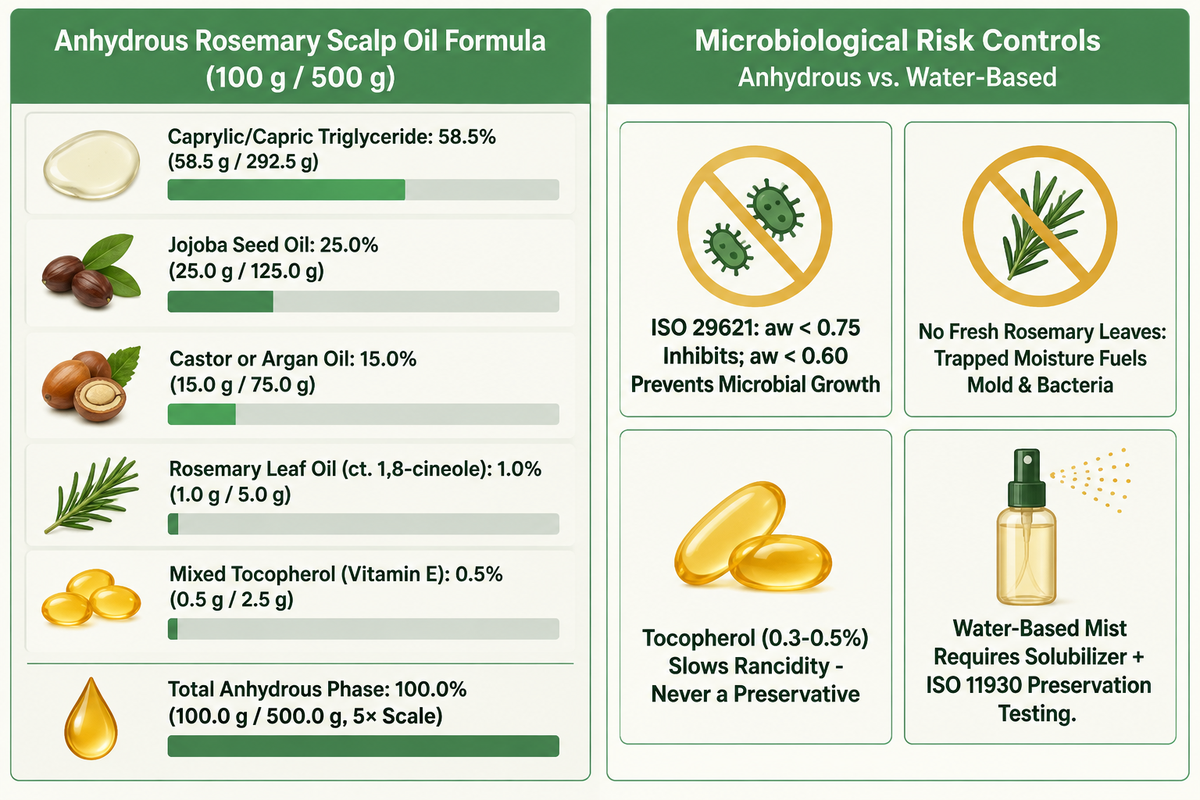
A stable anhydrous rosemary oil hair growth recipe built by weight totals 100.0% water-free ingredients, pairs stable carriers with 0.3–0.5% mixed tocopherols, and stays strictly separate from aqueous rosemary serums. Under ISO 29621 microbiological risk assessment guidance, water activity (aw) below 0.75 inhibits most microorganisms and aw below 0.60 virtually prevents microbial growth. Even below 0.60, anhydrous products still require documented formulation, GMP, packaging, and intended-use risk assessment.
There are numerous ‘home science’ guidelines on how to make hair oil and prepare rosemary infused oils, many of which involve steeping fresh rosemary sprigs in oil or adding rosemary tea to oil. Fresh rosemary leaves release moisture which collects at the bottom of the container and increases the water activity of the environment promoting bacterial and fungal growth. Adding hydrosols, aloe or other water based ingredients to oil without an appropriate emulsifier or solubilizer can also cause phase separation. Tocopherols slow down the rancidity of oils and don’t have any antimicrobial effect.
“While it is true that microbes can’t grow in a completely anhydrous system, it’s not true that you don’t need to add a preservative to these formulas. [They are touched by human hands, get contaminated, and pick up moisture.]”
That moisture-contamination risk is why narrow-neck glass dropper bottles beat open jars for anhydrous scalp oils. A water-based rosemary scalp mist needs a solubilizer to disperse the essential oil. It also requires a preservation strategy evaluated under cosmetic microbiological stability controls, including ISO 11930 antimicrobial testing where risk assessment calls for it. Example: the worked 100 g anhydrous baseline below scales linearly by 5× to 500 g.
| Ingredient (INCI) | Function | Assumed % w/w | 100 g Bench Batch | 500 g Pilot Batch (5×) |
|---|---|---|---|---|
| Caprylic/Capric Triglyceride | Fast-spreading light ester carrier | 58.5% | 58.5 g | 292.5 g |
| Simmondsia Chinensis (Jojoba) Seed Oil | Oxidative-stable sebum-like wax ester | 25.0% | 25.0 g | 125.0 g |
| Ricinus Communis (Castor) or Argania Spinosa Oil | Strand conditioning (within 10–25% cap) | 15.0% | 15.0 g | 75.0 g |
| Rosmarinus Officinalis Leaf Oil (ct. 1,8-cineole) | Primary aromatic scalp active | 1.0% | 1.0 g | 5.0 g |
| Tocopherol (Mixed Vitamin E) | Lipid antioxidant (not a preservative) | 0.5% | 0.5 g | 2.5 g |
| Total Anhydrous Formula | Blend under validated dry conditions | 100.0% | 100.0 g | 500.0 g |
Blend the anhydrous batch under validated dry processing conditions in a sanitized glass beaker, stirring gently to limit trapped air, and fill into UV-protective amber glass. Raw rosemary essential oil itself should be stored at or below 25 °C in amber glass (Essential Oils Wiki). Meanwhile, 2025 research in the International Journal of Nanomedicine investigates rosemary-based nanoemulgels for lighter aqueous scalp delivery, though emulsified systems demand high-shear mixing and validated preservation.
Does rosemary oil for hair expire or go rancid?
Yes, rosemary hair oil degrades through carrier oxidation and volatile terpene peroxidation over time. Sivaroma Naturals notes that anhydrous serums built on stable carriers like jojoba with 0.3–0.5% tocopherol generally reach 24 months of shelf life. Polyunsaturated seed oils such as grapeseed oxidize sooner in warm light. Under U.S. FDA cosmetic shelf-life guidance, manufacturers set final expiration dating from stability testing across actual formula, packaging, and storage conditions.
Purity Verification and Quality Control: ISO 1342, GC-MS, and Adulteration Checks
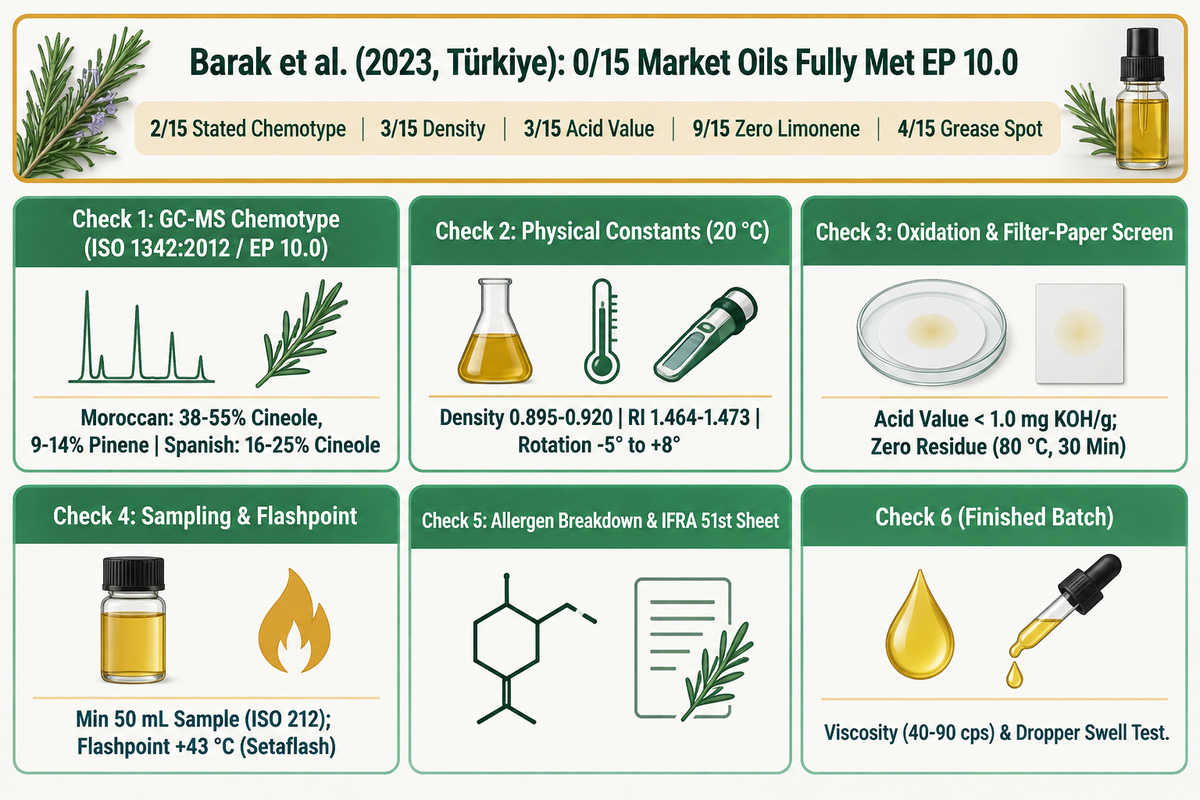
Screen rosemary essential oil labeled “100% pure” with lot-specific Gas Chromatography-Mass Spectrometry (GC-MS) profiles and physical constants compared against ISO 1342:2012 and European Pharmacopoeia (EP) 10.0. In a peer-reviewed analytical audit (Barak et al., 2023, PMC10445223), pharmacy researchers tested 15 commercial rosemary oils sold across pharmacies, herbalists, and online stores in Türkiye against EP 10.0 criteria.
“Results demonstrated that none of the samples from the Turkish rosemary essential oil market fully complied with the EP rosemary oil monograph standards.”
Measurements by Barak et al. (2023) demonstrate the rationale for screening essential oils against pharmacopoeial standards. Only 2 of 15 labels even stated the chemotype. Four samples left visible grease spots on filter paper after 30 minutes at 80 °C, indicating non-volatile material in oils sold as pure.
Physical and chromatographic checks were also widely unsuccessful. Only 3 of 15 samples fell within the EP 10.0 relative density range (0.895–0.920), and only 3 of 15 met the acid value ceiling (below 1.0 mg KOH/g). Nine of 15 samples contained zero detectable limonene despite EP 10.0 requiring 1.5–4% (Moroccan/Tunisian) or 2.5–5% (Spanish). Just one sample met the Moroccan/Tunisian 1,8-cineole window at 44.7%, while the other 14 ranged from 8.4% to 36.2%. Non-compliance can stem from natural botanical variation, oxidation during storage, or adulteration, so buyers should read lab deviations as screening signals requiring supplier investigation rather than automatic proof of tampering.
For commercial formulators and B2B buyers, the 6-Point Rosemary Hair Oil Formula & COA Release Specification organizes ISO 1342:2012, EP 10.0, and GC-MS principles outlined by wholesale essential-oil supplier HBNO into six checks. Checks 1–5 screen raw essential-oil lots, while Check 6 verifies the finished oil batch. Together, they support incoming inspection under cosmetic quality management workflows.
| Proposed Release Check & Scope | Target Benchmark / Window | Reference Source | Screening Signals Flagged |
|---|---|---|---|
| 1. GC-MS Profile (Raw EO) | Moroccan/Tunisian: 38–55% 1,8-cineole, 9–14% alpha-pinene, 1.5–4% limonene; Spanish: 16–25% cineole, 18–26% pinene, 2.5–5% limonene | EP 10.0 via PMC10445223 & ISO 1342:2012 | Out-of-spec composition shifts, missing limonene, chemotype mismatch |
| 2. Physical Constants (Raw EO) | Relative density 0.895–0.920 (20 °C); refractive index 1.464–1.473; optical rotation −5° to +8° | EP 10.0 via PMC10445223 | Physicochemical drift warranting dilution or identity follow-up |
| 3. Oxidation & Non-Volatile Screen (Raw EO) | Acid value < 1.0 mg KOH/g; zero filter-paper residue (80 °C, 30 min); carrier peroxide check | EP 10.0 via PMC10445223 | Aged oxidized lots or non-volatile residue in supposedly pure oil |
| 4. Sampling & Flashpoint (Raw EO) | Minimum 50 mL test sample (ISO 212); informative flashpoint +43 °C (Setaflash) | iTeh catalog entry for ISO 1342:2012 | Hazmat air-freight errors and non-representative drum sampling |
| 5. Allergen & IFRA Sheet (Raw EO) | Lot allergen breakdown (limonene, linalool, pinene, camphor) plus supplier IFRA 51st conformity letter | EU Reg. 2023/1545 & IFRA 51st Amendment | Missing mandatory EU label allergens or use-level miscalculation |
| 6. Batch Viscosity & Closure (Finished Oil) | Target viscosity window (e.g., 40–90 cps drops); verified NBR or fluorinated bulb swell test | Published OEM hair-oil benchmarks and Muzhpack packaging guide | Bulb swelling, leakage in transit, or clogged pipettes |
Retail consumers can still quickly filter out weak products without lab instruments. Avoid products packaged in clear glass, bottled at unusually low prices compared to steam distilled essential oils, or lacking Latin names. Additionally, avoid products lacking lot numbers.
Regulatory Compliance for Rosemary Hair Oil: FDA Claims, EU Allergens, and Packaging
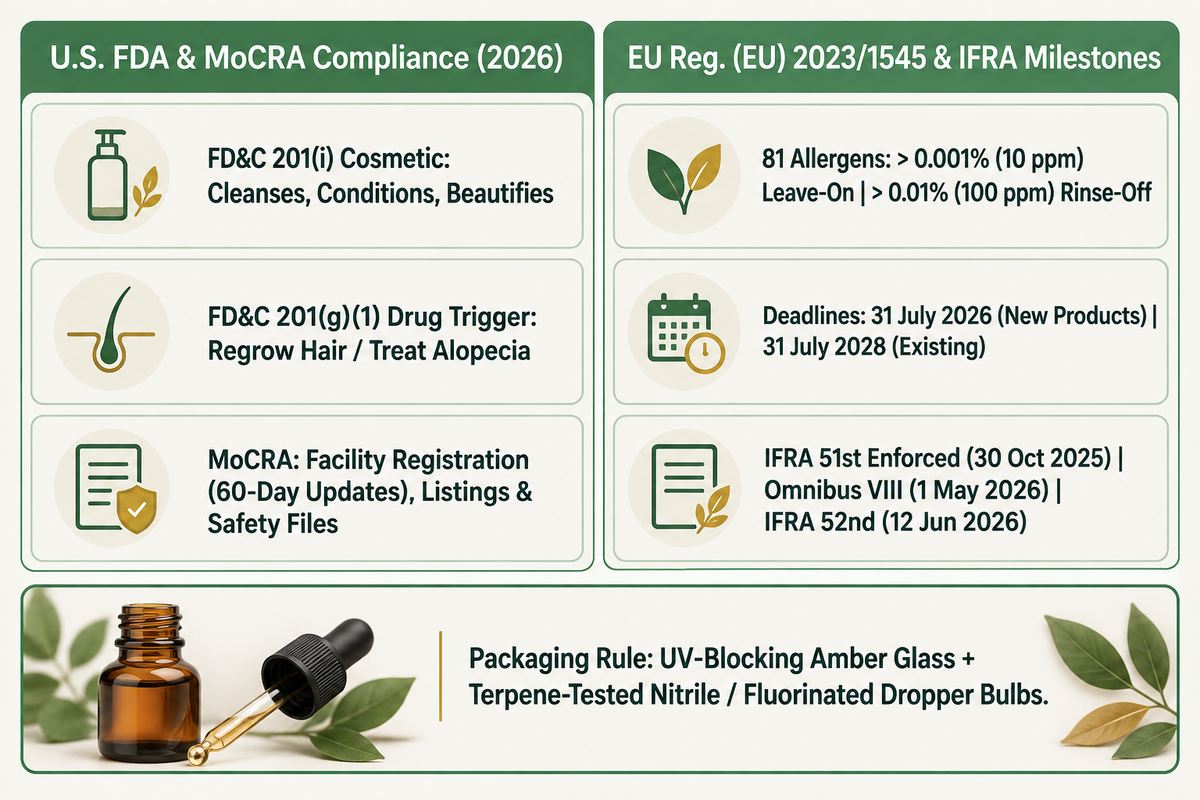
Commercial compliance in the US and EU centers on three rules. Brands must avoid drug regrowth claims under the U.S. FD&C Act and fulfill applicable MoCRA filings for non-exempt firms. They must also meet EU Regulation 2023/1545 allergen labeling for new products from 31 July 2026. Under U.S. FDA guidance on FD&C Act sections 201(i) and 201(g)(1), products intended to cleanse, condition, or beautify appearance are cosmetics. Products intended to prevent baldness, treat alopecia, or restore hair growth are drugs, and U.S. law does not recognize “cosmeceuticals.”
FDA evaluates intended use across labels, websites, clinical comparisons, and marketing context. Avoiding the word “guaranteed” on a box is never enough on its own. Placing clinical alopecia trial graphs beside a product checkout button can push a cosmetic oil into unapproved drug territory. Brands must align cartons and web copy with evidence standards for cosmetic marketing copy. Under MoCRA requirements active in 2026, non-exempt U.S. marketers and facilities must maintain facility registration (60-day updates and biennial renewal), cosmetic product listings, and safety substantiation files.
| Marketing Focus | Compliant Cosmetic Positioning (FD&C Act 201(i)) | Drug-Claim Red Flag (FD&C Act 201(g)(1)) |
|---|---|---|
| Thinning Hair Appearance | “Helps thin hair look fuller and smoother with regular conditioning” | “Regrows lost hair and reverses male or female pattern baldness” |
| Breakage vs. Hair Loss | “Conditions dry strands to reduce combing breakage and split ends” | “Clinically proven for preventing hair loss and curing alopecia” |
| Scalp Comfort | “Refreshes and hydrates a dry scalp during pre-wash scalp massage” | “Treats seborrheic dermatitis, psoriasis, or scalp infections” |
| Ingredient Story | “Botanical scalp oil for healthy hair feel and glossy strands” | “Natural oil helps hair grow and drives natural hair growth to make your hair grow like minoxidil” |
European artwork faces firm 2026 compliance dates. Per the European Commission, Commission Regulation (EU) 2023/1545 adds 56 fragrance allergens to Annex III of Regulation (EC) No 1223/2009 (81 entries total per CIRS). The required allergen name must appear above 0.001% (10 ppm) in leave-on products or 0.01% (100 ppm) in rinse-off products. Grouped entries use their prescribed common label name based on the combined total of member substances.
New EU placements must comply from 31 July 2026, while previously placed stock may remain on sale until 31 July 2028. Alongside allergens, Cosmeservice notes that Implementing Decision (EU) 2025/1175 updates the mandatory EU INCI glossary (30,418 names) from 30 July 2026. Omnibus VIII CMR bans took effect on 1 May 2026. For fragrance conformity, the IFRA 51st Amendment is fully enforced (existing-creation deadline passed 30 October 2025). The IFRA 52nd Amendment closed consultation on 12 June 2026, with formal notification expected in January 2027. Per Kanha Nature Oils, entry into force follows 11 months later for new creations and 30 months for existing ones.
Primary packaging chemistry also triggers expensive leakage and returns. Oils and fragrance terpenes may swell standard silicone dropper bulbs over shelf storage. Packaging guides from Muzhpack and Carow Packaging identify oil-resistant NBR (nitrile rubber) compounds and fluorinated treatments (such as Fluoro-Seal) as practical options for oil-rich serums. Each selected bulb elastomer grade still requires accelerated immersion testing with your exact finished oil within amber UV glass.
Private Label and Custom Rosemary Hair Oil: Cost Drivers, MOQs, and Lead Times
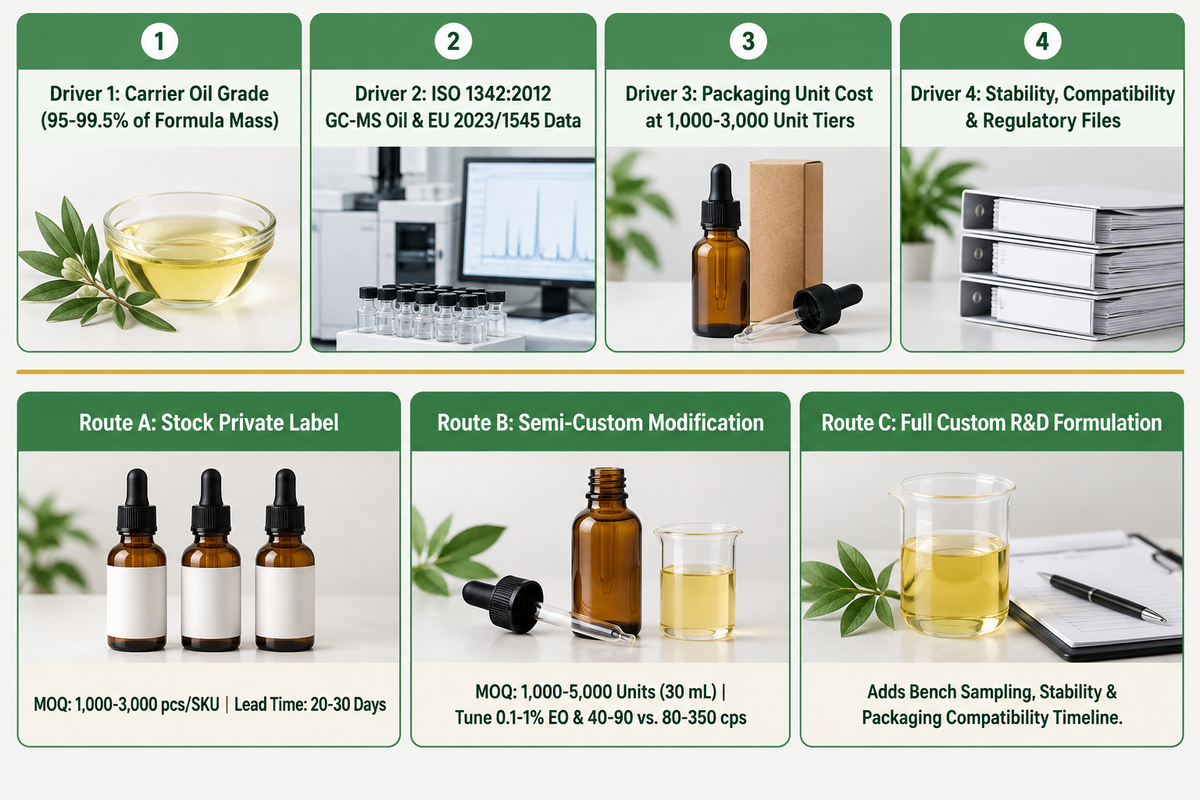
Published OEM supplier benchmarks list 1,000 to 3,000 pcs/SKU for stock base rosemary hair oil and 1,000 to 5,000 units for 30 mL custom or private-label runs, with 20 to 30 days of production lead time (see NEXO Beauty Labs’ scalp oil and serum contract manufacturing options when scoping batch sizing). Additional custom R&D projects add time for sampling and testing to assess stability and compliance with regulations. Future Market Insights (Sep 2026) estimates rosemary oil haircare rising from USD 338.4 million in 2025 to USD 360.4 million in 2026. Its forecast reaches USD 676.5 million by 2036 (6.5% CAGR), with liquid and serum formats holding 28.0% share.
Across the broader rosemary hair-care category, Grand View Research values the market at USD 980.8 million in 2023. It projects growth from USD 1,166.8 million in 2026 to USD 1,514.5 million by 2030 (6.4% CAGR for the 2024–2030 report period). Trade press in HAPPI likewise highlights rosemary oil and caffeine among top-searched scalp ingredients.
Beyond trade press focus on rosemary oil and caffeine scalp ingredients, four technical cost drivers shape landed price:
- Carrier oil grade (95–99.5% of anhydrous formula mass) is the first of four cost drivers that impact price above and beyond the bulk liquid quotation.
- Standardized essential-oil sourcing adds raw cost. GC-MS-checked ISO 1342:2012 Moroccan cineole oil with complete EU 2023/1545 allergen data costs more than unstandardized fragrance oil.
- Packaging costs per unit increase for smaller batch sizes, between 1,000 to 3,000 units. Heavyweight amber glass (30–60 mL droppers or 50–120 mL pumps), oil-resistant NBR or fluorinated bulbs, tamper bands, and printed cartons drive early tooling and MOQ commitments.
- Testing and regulatory files sit outside bare-liquid estimates. Accelerated stability, bulb immersion tests, ISO 29621 assessments (or ISO 11930 testing for water-based serums), US MoCRA files, and EU CPSR/PIF dossiers must enter the launch budget.
| Manufacturing Route | Published Catalog MOQ | Published Production Lead Time | Formula & Packaging Scope |
|---|---|---|---|
| Stock Private Label (Validated Base) | 1,000–3,000 pcs/SKU (published OEM benchmark) | 20–30 days; 22–30 days (published OEM benchmark) | Stock 30–60 mL glass dropper or pump with custom label and outer carton |
| Semi-Custom Modification | 1,000–5,000 units for 30 mL runs (published OEM benchmark) | 20–30 days bulk production plus sampling and print lead time | Adjust EO % (0.1–1% typical commercial band), carrier ratio, and viscosity (40–90 vs. 80–350 cps) |
| Full Custom R&D Formulation | Quoted per custom packaging and active tier | Lab bench, stability, compatibility, and bulk run quoted on RFQ | Bespoke anhydrous or water-based serum, custom aroma, US/EU dossier |
To get comparable quotes, ask for turnkey unit pricing, with your specified fill volume, carrier oil percentage, choice of dropper assembly, and level of compliance testing.
How to Choose a Rosemary Hair Oil Contract Manufacturer

Audit seven records before paying a deposit to any rosemary hair oil contract manufacturer. Check in-date ISO 22716 cosmetic GMP documentation, incoming GC-MS screening, carrier oxidation limits, and target viscosity with castor-oil caps. Also review dropper-bulb swelling tests, microbiological risk assessments, and 2026 US/EU dossiers. As Cosmetic Science Lab notes, cosmetic GMP raw-material controls require approved suppliers, receipt inspection, documented release, and quarantine of failing lots. ISO 22716 governs cosmetic GMP hygiene and cross-contamination, while ISO 9001 covers general quality management and cannot replace ISO 22716.
7-Item Rosemary Hair Oil OEM/ODM Technical Brief Checklist
- Audit in-date ISO 22716 cosmetic GMP documentation and written incoming-material quarantine procedures.
- Check that every incoming rosemary essential oil lot carries a GC-MS chromatogram, chemotype declaration, and physical-constant COA.
- Set carrier peroxide and acid value limits, validated blending conditions, and 0.3–0.5% tocopherol; store raw rosemary EO at or below 25 °C in amber glass.
- Set target viscosity, such as 40–90 cps for lightweight scalp drops or 80–350 cps for rich pre-wash blends, and any castor-oil percentage cap.
- Run accelerated oil immersion testing on your NBR or fluorinated bulb assembly and amber UV bottle prior to bulk fill.
- Document ISO 29621 risk assessment (aw < 0.60) for anhydrous oils, or risk-based antimicrobial protection testing under ISO 11930 for water-based serums.
- Include US MoCRA product-listing records (for non-exempt products), cosmetic claims review, and EU Regulation 2023/1545 allergen sheets. Request supplier IFRA 51st Amendment conformity files stating the formula, category, and max use level; these never replace finished-product safety assessments.
Launching a lightweight 40–90 cps anhydrous rosemary scalp drop or a richer pre-wash botanical oil demands tight control over GC-MS lots, closures, and 2026 labels. Explore private label hair care manufacturing and custom botanical formulation development with the NEXO Beauty Labs technical team. Discuss custom bench samples, formulation specifications, and project quotes tailored to your target market with the NEXO Beauty Labs team.
Frequently Asked Questions
Does rosemary hair oil grow your hair?
In Panahi et al. (2015, n = 100 men with androgenetic alopecia), rosemary oil produced significant hair-count gains at six months alongside 2% minoxidil with less scalp itching. Additionally, a 2025 randomized, ninety day trial (PMC12256010) found rosemary-castor oil and rosemary lavender oil blends to increase hair density compared to coconut oil.
Which is the pure rosemary oil for hair?
Pure rosemary essential oil lists only one ingredient Rosmarinus Officinalis Leaf Oil with no carrier oil added. Screen lots with a GC-MS report and ISO 1342:2012 specifications. Always dilute pure oil before scalp contact; published commercial blends often sit near 0.1–1%, and skin reactions remain possible even after dilution.
What is better for hair, castor oil or rosemary oil?
Choose diluted rosemary essential oil for aromatic scalp care, or choose castor oil for gloss and lower friction on dry hair strands; neither replaces the other. Because neat castor oil feels sticky and heavy on fine hair, blending castor oil at 10–25% by weight inside jojoba or MCT improves spreadability and rinse-out. Jojoba or MCT oils are good base oils for dilution.
What are the negative effects of rosemary oil on the scalp?
Undiluted or overly concentrated rosemary oil can cause stinging, redness, itching, allergic contact dermatitis and inflammation-linked shedding. Aging of the oil increases the risk of sensitization and if the oil gets in the eyes it causes burning and stinging. Wash out immediately and stop use if irritation develops.
Can you leave rosemary oil in your hair overnight?
Most adult scalps tolerate a 30–60 minute pre-wash treatment far better than overnight occlusion. Pre-wash application is gentler than overnight occlusion because leaving heavy oil on overnight traps heat, sweat, and sebum, stains pillowcases, and can worsen itching or flaking on oily or dandruff-prone scalps. If you’ve coarse, dry hair and still prefer overnight wear, patch test first and choose a light 0.5–1% blend built on squalane or MCT rather than thick castor oil.
Is rosemary oil for hair safe around cats or during pregnancy?
Cats’ exposure to rosemary essential oil should be avoided via inhalation and grooming. Pregnant women should also avoid concentrated rosemary oil scalp blends. During pregnancy and in those with seizure disorders, it’s advisable to consult a physician before use. Its camphor and monoterpenes pose toxicity risks to cats and warrant clinical caution in sensitive groups.
Does an anhydrous rosemary hair oil need a chemical preservative?
Water activity below 0.60 supports an ISO 29621 microbiological low-risk assessment when paired with documented formulation, GMP, packaging, and intended-use evaluation. Sivaroma Naturals notes 0.3–0.5% tocopherol in jojoba-based anhydrous serums to slow rancidity, not kill microbes. Formulas containing fresh herbs, hydrosols, aloe, or water carry microbial risk and require risk-based antimicrobial preservation evaluated under ISO 11930 where applicable.
References & Sources
The medical and regulatory publications and technical hair health references provided support the clinical data, analytical and compliance guidelines above.
- Panahi, Y., Taghizadeh, M., Marzony, E. T., & Sahebkar, A. (2015). Rosemary oil vs minoxidil 2% for the treatment of androgenetic alopecia: a randomized comparative trial. SKINmed, 13(1), 15-21. [PubMed PMID 25842469].
- Cureus / NovoBliss Research (2025). Rosmagain as a Natural Therapeutic for Hair Regrowth and Scalp Health: A Double-Blind, Randomized, Three-Armed, Placebo-Controlled Clinical Trial (CTRI/2024/07/070860). PMC12256010
- Barak, T. H., Bölükbaş, E., & Bardakcı, H. (2023). Evaluation of Marketed Rosemary Essential Oils (Rosmarinus officinalis L.) in Terms of European Pharmacopoeia 10.0 Criteria. Turkish Journal of Pharmaceutical Sciences, 20(4), 253-260. PMC10445223
- Commission Regulation (EU) 2023/1545 of the European Commission. Fragrance Allergens Labelling (Commission Regulation (EU) 2023/1545 amending Annex III of Regulation (EC) No 1223/2009).
- U.S. Food and Drug Administration (FDA). Cosmetic vs. Drug Classification & Shelf Life Guidance. U.S. FDA Classification | U.S. FDA Shelf Life
- ISO 1342:2012, Essential oil of rosemary (Rosmarinus officinalis L.), third edition catalog entry. iTeh Standards
- Hay et al. Summary of the Trial of Botanical Hair Oils for Alopecia Areata. PMC10761108
- Rosmarinus officinalis Essential Oil: Yield and Composition. PMC12251978
- Narrative Dermatological Review of Topical Castor Oil (Ricinus communis). PMC12978418
- Alopecia Management Potential of Rosemary-Based Nanoemulgel. Dovepress.
- USPTO Patent US9066952B1 (2015, expired) – Two-Step Castor and Rosemary Hair Oil System. Google Patents
- Pentyl Labs. ISO 29621 Cosmetics Microbiological Risk Assessment Technical Guide. Pentyl Labs
- Romanowski, P. Vitamin E is Not a Preservative — and Other Cosmetic Preservation Misconceptions. Chemists Corner
- Regulatory & IFRA Guides: MDRx Law (MoCRA); Cosmeservice (EU 2025/2026); CIRS; Stock Fragrance; Maven; Kanha Nature Oils.
- Cosmetic Packaging and Technical References: Muzhpack; Carow Packaging; Cosmetic Science Lab; Sivaroma Naturals; HBNO.
- Secondary Market & Trade Press Estimates: Future Market Insights (Sep 2026); Grand View Research; Global Market Insights; HAPPI.
Editorial guide prepared for NEXO Beauty Labs readers.